Arizona state officials recently announced that Arizona has started awarding the first round of justice reinvestment grants to nearly 20 nonprofits across the state. The state’s cannabis law, Proposition 207, created the grant program to support efforts such as substance-use prevention and treatment, public and behavioral health, mentorship programs and workforce development in economically disenfranchised regions.
Using funds drawn from cannabis taxes, the program would also support efforts to address the root causes of crime, reduce Arizona’s prison population, expunge certain cannabis-related criminal records and restore civil rights.
As per Proposition 207, the program receives 35% of Arizona’s Justice Reinvestment Fund, which is funded by 10% of Arizona’s cannabis sales tax revenue. An additional 35% of the Justice Reinvestment Fund is earmarked for county public health departments while the remaining 30% goes to the Arizona Department of Health Services (ADHS) to address critical public health issues that affect Arizona.
Recipients of the first round of grants include Northland Family Health Center, Hushabye Nursery, Axiom Community of Recovery, Stuck Community Acupuncture, Cihuapactli Collective, Phoenix Indian Center, Friendly House, Persevere, Arouet Foundation, Jobs for Arizona’s Graduates (JAG) and Constructive Circles of Peace.
The rest of the 18 grants went to the Arizona Democracy Resource Center, Our Sister Our Brother, Southern Arizona Legal Aid, the Bambi Fundjust Communities Arizona, Regional Center for Border Health Yuma, and Regional Center for Border Health Parker.
A press statement from ADHS noted that the office “identified priority communities’” in Arizona and held 18 listening sessions to highlight public interest in services that participants believed would benefit their communities. This includes improving neighborhood safety and developing community spaces such as community centers and parks, providing training on cultural awareness, culturally appropriate health services, youth development, substance education and prevention services, technology training for former inmates, and increasing access to affordable housing and healthy food.
According to ADHS, all the projects that received grants represent communities from across the state and focus on the key areas detailed during the community listening sessions.
ADHA noted that the Office of Health Equity would create a “robust evaluation process” to make sure that the program funds projects that bring a positive impact by serving the intended communities. Such a program evaluation process would assess if grant applicants meet the outlined goals and use collected data to continuously improve the program, ADHS said.
Arizona isn’t the only state that has earmarked a portion of its cannabis revenue for community reinvestment. California recently announced that applications for $48 million in cannabis tax-funded community reinvestment grants were open. New Jersey has also opened an application round for the state’s marijuana tax-funded social equity program.
The benefits that cannabis companies and ancillary companies such as Innovative Industrial Properties Inc. (NYSE: IIPR) bring through the taxes they pay in the different jurisdictions where they operate highlight some of the socioeconomic value of cannabis legalization.
About CNW420
CNW420 spotlights the latest developments in the rapidly evolving cannabis industry through the release of two informative articles each business day. Our concise, informative content serves as a gateway for investors interested in the legalized cannabis sector and provides updates on how regulatory developments may impact financial markets. Articles are released each business day at 4:20 a.m. and 4:20 p.m. Eastern – our tribute to the time synonymous with cannabis culture. If marijuana and the burgeoning industry surrounding it are on your radar, CNW420 is for you! Check back daily to stay up-to-date on the latest milestones in the fast -changing world of cannabis.
To receive SMS alerts from CNW, text CANNABIS to 888-902-4192 (U.S. Mobile Phones Only)
Please see full terms of use and disclaimers on the CannabisNewsWire website applicable to all content provided by CNW, wherever published or re-published: https://www.CannabisNewsWire.com/Disclaimer
“It is easy to go down into Hell; night and day, the gates of dark Death stand wide; but to climb back again, to retrace one’s steps to the upper air — there’s the rub, the task.” –Virgil
Ghost talker? Vision poet? Soothsayer? Oracle? Bridge between worlds?
There are many ways to describe shamans and the shamanism they practice, but basically shamanism is the most ancient spirituality, and for the most part you don’t choose it –it chooses you.
Shamanism is mankind’s primordial soul-signature, tapping the cornerstone of the human leitmotif. Shamans are psycho-ecological vehicles for spiritual entanglement, and they realize that we are all unique expressions of the same ubiquitous energy. But they also realize that very few of us are actually aware of that fact. And even fewer are able to do something about it. As such, shamans are unique expressions of the human condition who are aware of their connection to all things, and who have acquired mysterious methods for doing something about it.
Although it’s a deeply powerful form of spirituality, it should not be taken lightly; or if it is taken lightly, it should be taken with a wholesome helping of “humble pie” along with a healthy side of “a humor of the most high.” This is because shamanism is a lopsided double-edged sword. The ecstasy on the one side cuts deep and can be genuinely ecstatic, but the agony on the other side cuts to the soul and can be devastatingly dismal.
The pain that comes from such knowledge can be a crippling thing, especially coming from a culture that’s hung-up on the bliss of its own ignorance. Like Wei Wu Wei said, “In order to be effective truth must penetrate like an arrow — and that is likely to hurt.” The truth hurts, but cosmic truth hurts most of all. Shamans are the one’s becoming intimate with such pain.
Here are five ways being a shaman totally sucks but is also secretly awesome.
1.) You will be shunned by friends and family:
“What is it we are questing for? It is the fulfillment of that which is potential in each of us. Questing for it is not an ego trip; it is an adventure to bring into fulfillment your gift to the world, which is yourself. There is nothing you can do that’s more important than being fulfilled. You become a sign, you become a signal, transparent to transcendence; in this way you will find, live, become a realization of your own personal myth.” –Joseph Campbell
Shamanism grabs your Destiny by the throat and does not let go. Once it clamps on with its death-grip hold, there is no going back. The shamanic initiation can appear spontaneously, as a blunder, or as an unlucky (lucky) break. It can arrive through super-serendipity, as a chance occurrence, or a cruel twist of fate. It can come through new life, or through unexpected death, or both. It can come from another shaman, or even a raging thunderstorm. There’s no telling when or where it will happen, but when it happens you know it. The universe lines up like a divine fisherman, and you are the magical fish caught on the hook of primordial Time.
The kind of knowledge gained is a bone-knowledge, a marrow-deep wisdom, a soul-caliber comprehension. This will, in small and large ways, cause complete havoc in the hyperreal world of the average person. Such havoc is scary for most people, and since your friends and your family include most people, they will more than likely be scared of your newfound unorthodox spirituality.
Their shunning is a double-edged sword: you will be dubbed crazy, insane, and eccentric on the one side, and arrogant, conceited, and even selfish on the other side. But they don’t even understand the nature of selfishness; as Oscar Wilde wrote, “Selfishness is not living your life as you wish. It is asking others to live their life as you wish.”
You understand that it’s society itself that’s being selfish for asking you to live the way it wishes. Your refusal to be pigeonholed by the status quo is why they despise you. Anybody who takes up the lifestyle or attitude of artificiality will not be able to stand you, because you have become a natural being. You are now of the earth. You have re-discovered your roots, through soulful self-interrogation and self-rewilding.
By your very presence you catalyze. You are a great fermentation. The unconscious of anyone living in an artificial manner will sense you as doubly dangerous. Everything about you will irritate them, especially your sense of humor. They sense nature in you, and they are scared shitless of it. But don’t lose heart. You are vitally necessary to tonalize this otherwise atonal world.
2.) Love itself becomes a painful ability:
“If you love and have desires, let these be your desires: To know the pain of too much tenderness; to be wounded by your own understanding of love; and to bleed willingly and joyfully.” –Khalil Gibran
Here’s the thing: we live in a world filled with victims who have been victimized by a victimizing culture. Victims are victims precisely because they are afraid. Once they cease being afraid, once they quit allowing their fears to control them and become intimate with Fear instead, they cease being victims and become warriors.
Shamans are spiritual warriors par excellence precisely because they are healers of fear. They help people move from a state of fear and expectation to a higher state of awareness where imagination is free to reimagine itself. Like Stephen Levine said, “To heal is to touch with love that which was previously touched by fear.” They realize that fearlessness is not the rejection of fear, it is intimacy with fear. It’s in the intimacy where the healing takes place. That’s where the ashes can be transformed into a Phoenix. Like Martin Luther King, Jr. said, “Darkness cannot drive out darkness; only light can do that. Hate cannot drive out hate; only love can do that.”
Love itself is the seer’s tool, the shaman’s soulcraft. Just as only love can drive out hate, only love can drive out fear. Only intimacy with fear can transform fear into courage. The catch: this particular flavor of intimacy is excruciatingly painful.
It tears apart the soul with its counterintuitive energy, but then it puts it back together again with the unconditional glue that maintains the unity of opposites. It’s a deep, cosmic love, an absolute love that subsumes the slings and arrows of vicissitude, but also leaves its practitioner in a constant state of existential pain that he/she must be able to resolve in the hear-and-now while also understanding that it will ultimately never really be resolved. Almost like the joy of the journey is always now, whether or not the goal of the journey is ever achieved. Only the “joy” is no joy at all but rather an intimacy with pain, a primordial jouissance.
As Joseph Campbell said, “The schizophrenic is drowning in the same waters in which the mystic swims with delight.”
3.) You will experience Soul-crushing loneliness:
“The distinction between past, present, and future is only a stubbornly persistent illusion.” –Albert Einstein
Never underestimate the ignorant power of “the armor of the ‘I.’” It forms itself under the naïve assumption that things are separate. It is constructed under the desperate assertion of maintaining a separate identity. It closes you off until all of your powers of perception can only “see” through the narrow chinks of the all-too-human cavern of self-bias.
Most of us grow up in a world where this sort of armor is constantly being manufactured. We become attached to it. It becomes a kind of hyperreal skin. Shamans are the ones ripping that skin off, which is likely to hurt. But we have only to remember that it’s no skin at all –it’s metal, it’s machine-like. It is not you! It is a prison disguised as you.
A shaman can help you by opening the door to your prison, but only you can walk through it to taste the freedom on the other side. But, fair warning: it is going to hurt like hell. You will experience one of mankind’s most debilitating pains: loneliness.
Here’s the thing: you have to feel lost and lonely in order to feel the real You as you. You are a microcosm within a macrocosm, a desperate tiny thing in an otherwise calm universe, but you are also an aspect of the universe. You can no more separate the micro from the macro than you can the human from the natural; both are needed to put the whole into holistic.
This is the great lesson of loneliness: it’s only when you’re alone that you realize you’re never alone. Like Nietzsche said, “The individual has always had to struggle to keep from being overwhelmed by the tribe. If you try it, you will be lonely often, and sometimes frightened. But no price is too high to pay for the privilege of owning yourself.”
Such privilege is a double-edged sword. It will liberate you on the one side, but it will crush you with loneliness on the other side. Do not balk. Self-pity is poison for a shaman. Like Rumi said, “Wherever you stand, be the soul of that place.” Seek the center of your loneliness and transform it into interdependence. Loneliness is merely the shadow of the self. Embrace the shadow, dance with it in the abyss, and you will never (always) be alone again.
4.) You will be destroyed over and over again between worlds:
“The greatest mystery is not that we have been flung at random between the profusion of matter and of the stars, but that within this prison we can draw from ourselves images powerful enough to deny our nothingness.” –Andre Malraux
Your soul will constantly be forced to eat itself. You will face death every day in the abyss. You have to constantly be able to “die” and rebirth your own energy. Like Henry Miller said, “We must die as egos and be born again in the swarm, not separated and self-hypnotized, but individual and related.”
You must be able to destroy yourself and then rebuild yourself. This is the shamanic dance on God’s forehead, the eternal dance on the Divine Third Eye: the uncanny ability to be born, to die, and to be reborn, repeatedly, and in each new life, to become a thing which is more capable of subsuming cosmos than in the life before. Where you are receptive to stimuli to which, in the time before, you were insensate.
This is done between worlds. It’s done in the shadowy unconscious of the soul. It’s done in the abyss of the human condition, where the You of you is the same thing as the They of them. In short, it’s the death of your ego. And perhaps nothing hurts more than ego-death.
The death of the ego is no easy task. Ego-death is identity-death is self-annihilation. It leads to a dark night of the soul. And if you are lucky (unlucky) enough to have multiple ego-deaths in your life you will reap the rewards (penalties) of having multiple dark nights of the soul as well. If all that weren’t enough, you will also experience the ego-death of other people, and the dark night of their soul will usually prove to be more excruciating than your own.
In fact, the more times your soul is forced to eat itself, the more times your ego dies and is reborn again, the more interdependently connected you will become with the experiences of others. This too is a double-edged sword, but the sharper the sword the smoother the ego-death; which basically just means it gets easier with practice. Indeed, existential masochism becomes an art form at this level, and provides the perfect platform for meta-empathy to emerge.
5.) You will experience soulbreaking meta-empathy:
“Undifferentiated consciousness, when differentiated, becomes the world.” –Vedanta
Shamans are neither scientists nor priests, but artists. They are Technicians of the Sacred, immersed in the numinous tapestry of the cosmos. A vital aspect of that tapestry is the human condition, and when it comes to the human condition, the artistry of the shaman shines like gold in dark times.
The secret of their art is both very simple and very difficult: healthy detachment. It’s simple because all you have to do is realize that everything is connected and all things are in a constantly changing dance of interdependence. It’s difficult because you imagine that you have a static sense of self (ego) which seems at odds with your dynamic sense of connection (soul). But it’s not at odds at all.
Your ego is just as much a tool as your soul is, you simply have to let go of what you think your ego wants in order to make possible what your soul intends. This requires heartbreak. It requires breaking your heart so wide open that the universe has no other choice but to fall in. Heartbreak equals soul-awake. And once your soul is awake, that’s when the real shamanic process begins: soulbreak.
Soulbreak, like heartbreak, opens us up to the vast knowledge hidden within the nature of pain, but it also teaches us detachment. Soulbreak is detachment in the moment. If you are truly detached, your mental-spirit-body becomes a mighty tool for clear seeing. Detachment is existential seeing. Existential seeing is meta-empathy.
You must be able to act with compassion, but without attachment. Most love is conditional, most compassion is indiscriminate. As a shaman you have to come from a place of unconditional love.
The shamanic experience involves tremendous self-discipline and the will to be focused even when such focus is painful. And it is painful. With this ability we move to the depths of another person’s emotional state and we can “see” from their worldview and understand what makes them healthy or not. When they are unhealthy, you feel it. And in a world where the majority of people are unhealthy, you become the walking personification of pain. Indeed, meta-empathy even becomes ecological. You feel deeply the unhealthiness of the broken system and the painful disconnect between Mother Nature and the human soul.
At the end of the day, it is the job of shamans to shake people out of ordinary, habitual states of mind and to reawaken latent faculties. This can be a soul-quaking experience of world-shattering pain. But there is a vast reservoir of knowledge in such pain, and shamans are the ones seeking it out and imaginatively and courageously transforming it into soul, into art, and into new knowledge.
Through daily acts of courage and a willingness to reveal symbolic ways to transcend the darkness of the human condition, shamans personify the change they wish to see in the world. They are free to triumph over terror. They are no longer interested in the petty pursuit of meaning. They would rather seize the power that comes from creating it.
Gary Z McGee, a former Navy Intelligence Specialist turned philosopher, is the author of Birthday Suit of God and The Looking Glass Man. His works are inspired by the great philosophers of the ages and his wide-awake view of the modern world.
”Media provides propaganda for the masses but “Think Tanks” focus on “unravelling complexity” for decision makers using methodologies focused around “Problem, Reaction and Solution.”
Sociopúblico Srl is a small, privately owned “strategy and communications agency” based in Argentina with offices in Buenos Aires, Montevideo and Washington DC.
The firm focuses on “conveying complex ideas,” to world leaders though an international network of public policy “influencers” known colloquially as think tanks.
It’s even published a worldwide and searchable list, the On Think Tanks website, to “support and strengthen the work of research organizations, foundations, governments and others in support of better-informed decision making.”
On Think Tanks is a leading global source of information, support and community for people working in, with and funding think tanks. We create a space to connect, learn and exchange knowledge, ideas and resources.
We believe that progress needs better-informed decision making. We exist to build, strengthen and champion a unique community of individuals and organizations who generate, communicate, use and fund evidence on matters of public interest.
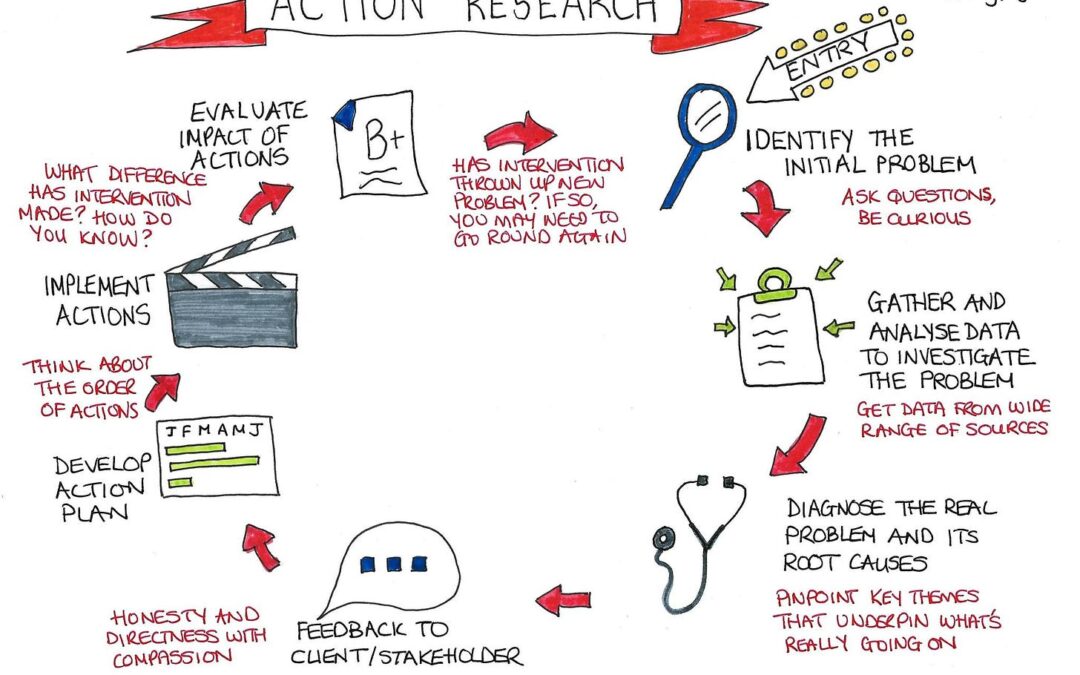
The core of most current think tank methodology is wrapped around a concept known as “action research.”
Action research is defined academically as:
… a research method that aims to simultaneously investigate and solve an issue. In other words, as its name suggests, action research conducts research and takes action at the same time.
The “action research“ strategy, first popularized in the social sciences, is at odds with the traditional methodology of science, which calls for careful observation, rigorous skepticism, independent critiques of assumptions which could distort observation, the development of testable and independently verifiable hypotheses based on such observations and the importance of peer review.
The methodology used by action researchers instead calls for repetitive cycles of:
Initial planning, mostly organized by social scientists or public figures working together and interested in solving a self-defined problem or testing out new theories.
The implementation of public policy legislation by government and private sector organizations based on the planning decisions previously decided in the “planning” stage.
A short period of “measuring results” to ascertain whether or not the initial theories have been justified and expected results have been obtained, followed by additional rounds of planning, action and measuring results.
The methodology isn’t so much science as its “trying things out to see what happens and then guessing the next step to accomplish the desired goal.”
For example, under action research:
Everyone works together, so independent peer review is impossible.
Experiments are performed on the entire system, rather than on just a small subset of the system, which makes it difficult to re-establish a baseline at the conclusion of the experiment or critique underlying assumptions.
The end result is mostly predetermined, which is why peer review and critiquing underlying assumptions isn’t needed. Additional steps are only needed to fine tune the solution, in order to obtain the originally expected end result.
It’s also interesting to note that “action research“ strategy parallels the Hegelian Dialectic of “thesis, antithesis and synthesis” which is often interpreted as “problem, reaction, solution,” by modern authors.
The planning defines the “problem” needing to be solved; while the implementation of public policy is the initial “reaction” to the problem as defined in the planning stage; and the final “solution,” which may never occur in reality, is always considered to be on the cusp of being solved by the next cycle.
While the legacy of Hegelian and its close cousin, Marxian dialectics have both been criticized as being “unscientific” by philosophers such as Karl Popper and Mario Bunge, Lewin’s methodologies have contributed to the incredible growth of “activist” government over the last eighty years.
An activist government, functioning under an “action research” methodology guided by think tanks sees no real need to solve public policy issues, since the cycles of “problem, reaction and solution” wouldn’t need to continue and activism would cease if the problem was ever solved.
Many government, think tank employees and contractors would loose their jobs if the cycle came to an end.
Think tanks promote policy research, implementation and the promotion of policy decisions to the general public. For example, the Arlington VA based Atlas Network, a conservative think tank formerly known as the Atlas Economic Research Foundation, is proud of its connections to legacy media and uses those connections as a sales aid when promoting its services to governments, other think tanks and private sector “stakeholders.” For more on the Atlas Network, please click on the image above.
…they are generally seen as a grouping of scholars, academics and other professionals who conduct policy-related research, analysis and advocacy on issues linked to a specific area of interest.
The only real differentiation between them, at least according to University Affairs, is where and how they get their money and what they advocate for.
Think tanks do benefit universities by giving academics another useful job option to test policies developed in academia under real world conditions.
But the think tanks themselves still need to support their operations. According to the post:
While some think tanks charge fees for their services, the majority rely heavily on fundraising. “The bulk of their money comes from four main sources: philanthropy, corporations, private sources and government,” says Dr. Abelson. “A very small number have endowed funding.”
Those financiers also include major governments and/or organizations intent on disrupting the existing public policy infrastructure and replacing it with something more beneficial to their interests.
Global Times graphic showing the range and reach of US based think tanks on the world stage. There is a growing bipartisan concern about the role of outside governments, such as China and Russia, seeking to exert influence over national foreign policy through lobbyists, external experts, and think tanks.”
Maybe the freedom movement needs to study the methodologies used by think tanks around the world to pressure politicians and legacy news outlet and adapt some of those tactics for freedom loving causes.
Here’s hoping.
Thank you for reading Freedom Forum News. This post is public so feel free to share it.
I am a working journalist and editor, a technology advocate, an event organizer, a public speaker and (sometimes) even an activist. My LinkedIn bio is online at https://www.linkedin.com/in/chuckblack/.
Imagination: Your Door to Hyper-Dimensional Realities
by Susan Ferguson
A veil of illusion lies over this planet. For the past 6,000 years, we in human flesh and blood have been mired in a miasma of amnesia. This collective forgetting has left us relegated to the limitations of the five senses.
Refusing or unable to see that we are but a fragment of what we once were, we are descending further and further into the stupor of density. Until we begin to accept the possibility that we are not in fact making progress, that we are not evolving, we will remain as slaves faced with an ever narrowing frequency of expression, dull and diminished, controlled lives.
Courageous souls through the centuries have labored to reveal ‘hidden’ realities and have tried to encourage others to see them by exposing the mechanics of our invisible prison. While many people have become aware, most remain in ignorance – and even those who do know the truth often feel powerless in the face of the accelerating movement towards an uncertain future.
So what can we do?
Those of us who have the Will to do so must begin to access the hidden realities within and build a higher consciousness on this, our planet. We cannot defeat the Darkside from without. It is all too obvious that they are too powerful. Anger and hatred only increase in intensity, and make our lives worse. Rather we must go within and create energies of a higher frequency so pure and powerful as to balance and eventually, neutralize and dissolve the Lords of Tyranny.
The word IMAGINATION remains undefined. No one knows what imagination is or where it comes from, or why some have more than others. Those of who are born with the gift of sight, who are sensitive to the invisible realms, are often ridiculed – and because they want to be normal, to be loved, they shut down their God-given abilities.
How many of you had imaginary friends as children?
What do you think that was?
If we along with our children watch TV for untold hours, what chance will imagination have to flourish? Our future will be reduced and limited to those experiences, which have been programmed and formulated by our controllers, which guarantee a numbing somnolence, selective forgetfulness, and Mall World profits.
Our imaginations will never stretch beyond our corporate media programmers. We will become more malleable and more manipulated, dull, and worse – boring.
The billion-dollar drug industry provides an endless array of life-style-drugs to smooth things out. These unnatural molecules shut down our imagination. The vast array of toxic chemicals – preservatives, insecticides, and 1000s of others – in our food, air, & water serve to further shut us off from the Invisible Realms because they confuse our endocrine system.
The Eye of the Mind, or as it is known in eastern metaphysics, the Third Eye, is nourished and activated by our hormones especially from the pineal and pituitary glands. Your focused concentration in a meditative state causes these glands to emit specific molecules, which open your consciousness to the Invisible Realms.
On the highest level, a truly perfected imagination will even allow you to merge with the image in your mind. In other words, you can become ONE with what you focus on – which means that you become the precise vibratory frequency of your focus by lifting your consciousness to that rate.
Your imagination is your door to hyper-dimensional realities and the key to all creativity.
Every great piece of classical music comes from traditional folk melodies. This folk music emerges naturally from people who live close to the earth and the sky. Sadly, our western culture is being used to conquer and choke every remnant of rural individual expression all across this planet. How much longer will such music of the earth find expression? Soon everyone will watch identical television programs, wear identical clothes, sing identical songs, think identical thoughts – to perhaps one day join our voices in the sacred anthem to Mall World.
The sooner the multinational corporations can get into these innocent places and stop this kind ‘living imagination’ – the better for their profit margins. These so-called ignorant people will be so much happier when they have jobs and can consume mass quantities of stuff – and forget about their spirit gods, their visions, their ancestors, and any such nonsense.
I pause to assert that I personally have nothing against entrepreneurship or capitalism – unless and until it becomes tyranny and used to strangle the creative possibilities of the beings residing here on planet Earth. I neither hate civilization nor science, but I have come to understand its limitations, its confusion.
How many of you have been laughed at for your imagination? How many of us conceal our visions to avoid the pain of ridicule? The monopoly media conditions our levels of acceptance at every turn.
Imagine for a moment that you could travel through dimensions, through space and time, and explore creation in all its myriad forms. This ability is natural to us all and is our God-given right.
How could it be possible that with over 300 million galaxies out there, we humans are all there is? How could it happen that we here on planet Earth – who for the past 6,000 years, all of written history, cannot stop killing, torturing, suppressing, and stealing from one another – are the only life forms in all of space? How could it be that within the vast amazing, awesome, perfection of the Creator’s endless mind-defying Beauty that we, lost in our miasma of amnesia, we, are all there is?
In the mechanics of the Invisible Realms, location is a function of consciousness. You are precisely where your consciousness is – exactly. Lift your consciousness and you will be beyond the reach of any and all unpleasant forms. When you move through the Invisible Realms, you don’t have to get stuck anywhere – unless you want to. Location is a direct result of consciousness.
There are many, many layers of holographic realities connected to this planet from the millions of years of thought as life experiences, religions, philosophies, etc. You could spend your time checking these realities out, if you want to. You will be attracted to and magnetized by your own proclivities developed over all your lives.
Remember this is not the only planet and that you may find yourself somewhere else. Watch out for noisy advertisers! – and don’t get stuck unless it is your choice.
There is no ‘one way’ to do this. Listen to your own intuitive reason, your own discreet imagination. Your imagination is the door to hyper-dimensional realities. There are as many ways to go Home as there are you.
We love looking into a crystal ball to see what the future of gardening holds! What gardening techniques, styles, and plant varieties will dominate in 2024? Garden Media Group (GMG) releases a trend report every year, and this time around, it’s predicting that eco-optimism will dominate the gardening world over the next several months. People want to tackle climate change and eco-anxiety by making a meaningful impact locally and in their outdoor spaces – here’s how they’ll do it!
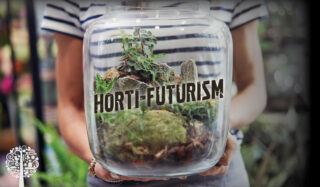
Horti-futurism
Say what, now? GMG is picking up on a trend that sci-fi lovers will undoubtedly enjoy! It’s all about brightening our vision of the future, says garden scholar and historian Tracy Qiu. “We used to view the future like we view the past, erasing its color and vibrancy,” she says. “Not anymore!”
What does this mean for the garden? For indoor spaces, closed ecosystem terrariums will be popular and are relatively easy to make. Inside and outside, survivalist gardens will likely sprout everywhere as more people grow food for their families and plan for emergencies.
And while moon gardens have been around for a while, they won’t be going anywhere as more of us look to enjoy plants in the evening hours, too. Consider selecting white flowers, evening primrose, star-flecked or silver-hued plants, and variegated leaves that give a ‘neon’ glow after the sun goes down. GMG’s report pegs lime as the color of the year, which will also add a futuristic vibe to your garden!
Goth Gardens
You may have noticed while scrolling through Netflix that things have been getting a little dark lately. There’s no shortage of horror movies, and it’s not hard to find a binge-worthy spooky cult series, either. How does this apply to gardens? I wondered the same.
Social media is exploding with #Gothgarden(ing), #VictorianGardens, #Halloweengardens, #Steampunk, and #Tombstonetourism (over 430K posts!). Cemeteries are getting in on the fun since they’re open to everyone. For example, GMG says Oakland Cemetery in Georgia offers a nature-themed light show and has plans for an African-American section featuring a plant palette unique to the culture, era, and region.
Garden centers are encouraged to get involved by offering plants for memorial gardens and trees perfect for dedicating to the memory of loved ones.
Meanwhile, home gardeners will likely choose to keep things less tidy in 2024, and eerie plant selections might be more common. Plants with darker foliage and flowers like ‘Black Prince’ Snapdragon, Blood Red Sunflower, Black Peony Poppy, and black tulips are perfect for the goth gardening trend.
All About Bugs
The world is waking up to the plight of our pollinator friends, and thank goodness that’s a trend that we’ll see continue throughout 2024!
The interior decor scene is bursting with insect motifs on wallpaper, beddings, knobs and pulls. GMG predicts this obsession will also spark an interest in the plants that feed our beautiful bugs. So, expect to see many more pollinator victory gardens emerge in your neighborhood, featuring plant choices like bee balm, daisies, salvia, rudbeckia, echinacea, and other native rockstars.
And don’t be afraid to incorporate dead wood into your garden plan to support insects. Bug hotels, wooden sculptures, and driftwood or fallen tree trunks are all excellent ideas!
Small Space Gardens
Cities are growing; the United Nations projects that 89% of people will live in urban areas by 2050. But concrete jungles are a thing of the past! Container gardens were a massive trend in 2023 that GMG predicts will continue to grow this year.
People will maximize vertical space and create privacy screens by growing food and ornamental plants in balcony and rooftop gardens. Hanging and trailing plants are predicted to be big in 2024, indoors and out. Trailing plants often require less upkeep thanks to better airflow, and gardeners also love them because they can cover a lot of ground without hogging too much space.
Trailing houseplants include String of Pearls, English Ivy, and Hoya. Edibles that do well in hanging baskets include many strawberry varieties, cherry tomatoes, cucumbers, nasturtiums, and herbs. Spilling flowers like Lobelia, potato vine, and petunias are show-stoppers and brighten any patio or balcony.
Community Calls
Technology is at our fingertips, yet we are more disconnected from people than ever. Many of us long for better human relationships, and community gardening movements are here to serve!
While the news headlines paint a bleak picture, people are compassionate and care about the planet and their neighbors. Now is the time to remain eco-positive and effect change locally. Look for various groups and workshops in your area!
GMG points to Gens X, Y, and Z as being passionate about sustainability and demanding it in their growing ventures and the products they buy, from clothing to hygiene and cleaning products.
Garden shops will answer the call for high-impact greenery by selling carbon-capturing plants and fast-growing native trees, grasses, and perennials. Expect to find more resources on growing food in cities and at home, planting native gardens, and replacing lawns with wildlife-friendly zones.
Are You Ready?
There are many ways to effect change in 2024. You have to dig around and find them. Whatever growing ventures you choose, stay eco-positive. You’re helping the cause.
Local outlet Orilla Matters spoke with several Ontario cannabis retailers—Susan Yu, owner of BudTimez Cannabis, Ayla Qualls of Tokyo Smoke, and Jay Belcourt of Bigfoot Cannabis—about what makes rural cannabis shops succeed.
CBC spoke with Vancouver cannabis retailers Mike Babins of Evergreen Cannabis and Ehren Richardson of Sunrise Cannabis about high markups by the LDB, as well as Vancouver City Councillor Pete Fry about the lack of excise tax sharing by the province, both topics StratCann readers are very familiar with. An audio version of the story is also available.
Village Farms announced the first shipment and launch of two cannabis brands in the United Kingdom, Pure Sunfarms and The Original Fraser Valley Weed Co., which will be distributed by 4C LABS, a Canadian medical cannabis company with import and distribution licences in the UK. Pure Sunfarms has also exported cannabis to Germany, Australia and Israel.
Auxly Cannabis Group Inc. announced that it has signed a non-binding term sheet to amend and restate the credit facility between its wholly-owned subsidiary Auxly Leamington Inc. and a syndicate of lenders led by the Bank of Montreal as administrative agents.
The Journal of Agricultural and Food Chemistry posted a paper on the chemical composition of commercial cannabis[love the alliteration!], compiling a list of >6,000 chemical constituents in commercial cannabis.
Calgarypolice are investigating a recent break-and-enter at the Co-Op Cannabis Store on Centre Street North. They say about $500 worth of merchandise was taken before the three suspects left.
Humble & Fume Inc. has filed for CCAA protection. It announced that the Company and its subsidiaries, Humble & Fume Inc. (Manitoba), P.W.F. Holdco, Inc., Windship Trading LLC, B.O.B. Headquarters Inc., Fume Labs Inc., and Humble Cannabis Solutions Inc. (together with the Company, collectively, the “Humble Group”) have initiated proceedings in the Ontario Superior Court of Justice under the Companies’ Creditors Arrangement Act.
A new study in the International Journal of Drug Policy made rounds this week. While many headlines have focussed on how the study did not find evidence of increases in health service use or incident cases of psychotic disorders in the first 17 months of legalization in Ontario, it did note “clear increasing trends in health service use and incident cases of substance-induced psychotic disorders” over a broader observation window (2014–2020).





















Recent Comments