New research shows that the likelihood of a patient visiting an ER and getting a cannabis use disorder diagnosis is 50% lower in legal cannabis states in comparison to prohibitionist states. The research examined data obtained from emergency departments for the period between 2017–2020. Researchers focused on the states of Oregon and Colorado, which have legalized marijuana, and Rhode Island and Maryland, which still prohibit the use of marijuana.
Specifically, the researchers assessed “treat & release” visiting rates, in which patients received cannabis-use disorder diagnoses that indicated problematic use of the substance. In total, the researchers had to analyze more than 17 million ER visits, which they did using a multivariate logistic regression model.
The researchers revealed that they naturally expected to find higher cannabis-use disorder rates in states that have legalized the drug given that previous studies had found that ending prohibition was linked to slight increases in cannabis use by adults. However, they were surprised when the data indicated that recreational marijuana states had lower odds of cannabis-use disorder in comparison to states where the drug remained illegal.
In their report, the researchers stated that their findings could inform actions of policymakers and recommended that additional studies and analysis of the cannabis use disorder-legalization interrelationship be done in emergency departments, among other healthcare settings. They added that previous studies regarding post-legalization ER visits and hospitalizations had primarily centered on the youth, which meant even slight changes could look more noticeable due to the comparatively low prevalence of marijuana use within said population.
They also noted that in legal states, providers were more tolerant of marijuana use and less likely to recognize problematic behavior associated with cannabis-use disorder, which reduced the chances of proper diagnosis and documentation of cannabis-use disorder in medical records. This, the researchers assume, could account for lower prevalence of the disorder in emergency departments in legal states.
In their report, the researchers also cited separate findings which determined that decreasing admissions for cannabis-use disorder following legalization may have reduced stigma while also increasing the societal acceptability of marijuana use.
In other news, findings from a study published by the American Medical Association show that the use of marijuana among the youth has actually been decreasing as more states scrap prohibition laws in favor of regulated recreational sales for eligible individuals. A separate study by NIDA also determined that state-level marijuana legalization was not linked to an increase in use among the youth.
All this scientific data goes to dispel some of the claims made by opponents of cannabis legalization that creating a regulated market in which companies such as Cronos Group Inc. (NASDAQ: CRON) (TSX: CRON) are allowed to operate will result in a spike in cannabis use by the youth.
About CNW420
CNW420 spotlights the latest developments in the rapidly evolving cannabis industry through the release of two informative articles each business day. Our concise, informative content serves as a gateway for investors interested in the legalized cannabis sector and provides updates on how regulatory developments may impact financial markets. Articles are released each business day at 4:20 a.m. and 4:20 p.m. Eastern – our tribute to the time synonymous with cannabis culture. If marijuana and the burgeoning industry surrounding it are on your radar, CNW420 is for you! Check back daily to stay up-to-date on the latest milestones in the fast -changing world of cannabis.
To receive SMS alerts from CNW, text CANNABIS to 888-902-4192 (U.S. Mobile Phones Only)
Please see full terms of use and disclaimers on the CannabisNewsWire website applicable to all content provided by CNW, wherever published or re-published: https://www.CannabisNewsWire.com/Disclaimer
When properly grown and cured, the complexity of flavor and effect is hard to beat.
This aesthetic difference can be attributed to the diversity of nutrients and probiotics available in living soils.
Nutrient diversity fuels the biosynthesis of complex compounds like terpenes and flavonoids that contribute to cannabis quality.
Growing organic cannabis is not rocket science, but there is some science involved.
The basics of growing in living soils is the same if you are growing five plants or five acres.
If you invest a bit of time to better understand what is happening in the root zone, your quality and yields will improve.
Living Soil Plants have co-evolved with soil microorganisms for millions of years. Cultivation systems that leverage these ancient relationships are known as living soil systems. For small scale growers, organic cultivation doesn’t need to be complicated. Cannabis plants have been growing in living soils since long before we showed up, and will thrive in fertile garden beds. If you are growing in containers, start with the best potting soil you can find, or make your own living soil mix.
Growing in organic soil is also a cost-effective way to cultivate distinctive cannabis at commercial scale in a market flooded with mediocre weed.
Consumers might not appreciate the complexities of cultivation systems, but they vote with their dollars, and organic herb is in high demand.
Root Exudates
During photosynthesis, plants absorb carbon dioxide and make carbohydrates.
Up to 40% of this energy is shared with soil microbes as root exudates. These carbon-rich exudates are composed of simple sugars and organic and amino acids.
These microorganisms don’t have access to atmospheric carbon and provide plants with nutrients and other benefits in exchange for this valuable energy source.
Plants can influence soil PH and share exudates selectively with the microbial communities that provide for their needs.
Roots, soil, and microbes create a densely populated habitat known as the rhizosphere.
Soil Food Web
The soil food web is composed of interconnected kingdoms of life that cooperate, compete, and consume each other.
Bacteria– These single-celled organisms are abundant in healthy soils, and populations can double every 15 minutes.
Fungi– Fungi form hyphal networks which enable nutrient transport within the soil and communication between plants.
Nematodes– Nematodes are microscopic worms, many of which feed on plant roots.
Protozoa– Protozoa are microbes that swim through soil water, feeding on bacteria.
Worms– earthworms consume decaying materials and inoculate them with beneficial gut bacteria.
Insects– Many insects spend part of their lifecycle in the soil. Some of these are detritivores, and consume decaying materials, others are herbivores and can emerge from the soil to feed on your plants.
Suppressive soil
Healthy soil makes healthy plants. For organic growers, a balanced and diverse soil biome plays an important role in pest suppression. Microbes can suppress pests and diseases in many ways:
Competition – Beneficial microorganisms can outcompete pathogens for food sources and physical habitat.
Parasitism – Bacterial and fungal microbes can parasitize plant pests including nematodes and soil dwelling insects.
Chemical Warfare – Some microbes produce metabolites and volatile organic compounds that inhibit pathogen growth.
Immune Response – Microorganisms can solicit plant immune responses through hormone signaling pathways.
Predation– Some bacteria practice wolf pack predation to feed on outnumbered prey.
Soil chemistry can also contribute to pest suppression. Nutrients like Silicon and Chitosan strengthen cell walls and aid chemical defence.
Cannabis Nutrients
Cannabis is a heavy feeder and is often cultivated in controlled environments.
The economics of these growing conditions favor high planting densities, and short crop cycles.
In addition to the initial nutrient charge provided by living soil, supplemental feedings during crop development can improve plant performance, and enables use of lower soil volumes.
Slow-release organic nutrients can be supplied by compost and dry amendments.
Liquid or soluble nutrients can also be fed during periods of rapid crop growth.
Liquid Nutrients
Many organic fertilizers are biostimulants which provide plant health benefits in addition to available nutrients.
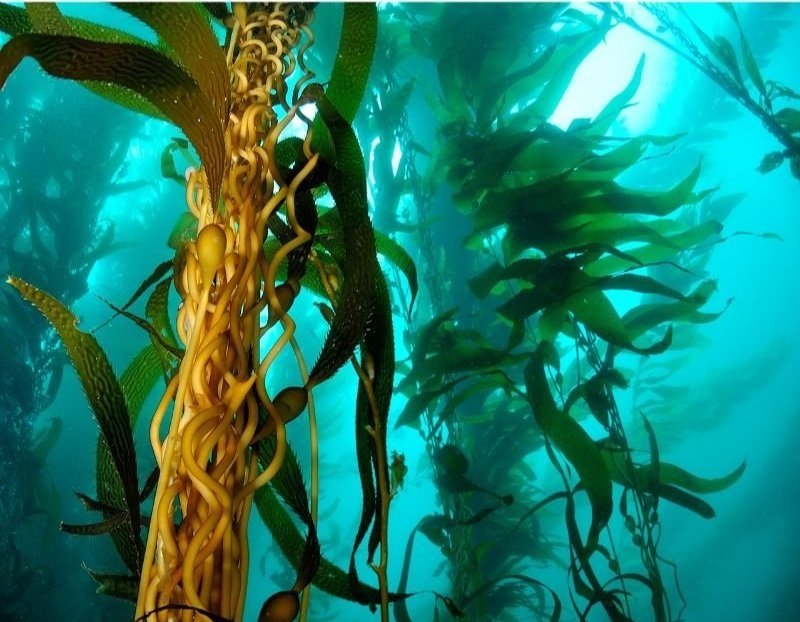
Cold processed kelp inputs are rich sources of plant growth factors, such as cytokinins. These naturally occurring hormones benefit plant development and stress coping.
Fish hydrosolate fertilizers are great sources for amino acids and beneficial bacteria. Plants make amino acids from Nitrogen, but they can also uptake them directly from the soil and save the energy.
Soluble organic nutrients are usually micronized to increase surface area and can be suspended in a liquid solution.
Organic fertilizers should never be fed through irrigation systems, or biofilm will accumulate and ruin your day.
Soil Amendments
Dry inputs are usually incorporated into soil mixes or applied early in the crop cycle to provide sustained fertility.
Protein meals are organic amendments with a high nutrient density. These products have been dried and milled to increase their bioavailability and storage life.
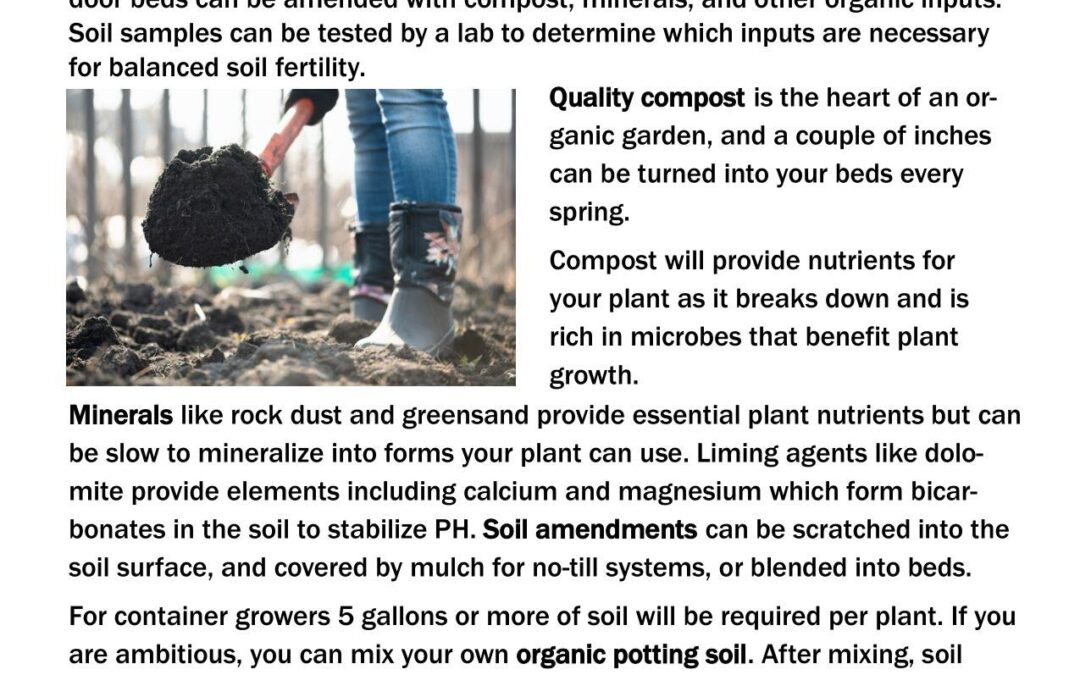
Mineral inputs are mined from natural deposits. Some of these inputs require a long time to mineralize and are better incorporated into organic mixes prior to planting.
Dry amendments can be blended to make slow-release fertilizers with specific nutrient ratios based on crop needs.
Mineralization of dry inputs requires water availability.
Fertilizer spikes can be applied by opening the soil profile with a knife and inserting dry blends for contact with soil water.
Nutrient amendments can also be top dressed on the soil surface. Mulch application and surface irrigation provide water for mineralization.
Compost Inputs
Compost is an important fertility source created through the controlled decomposition of organic residues. Compost can be used to amend beds between crops or applied during the crop cycle. Commercial composters should provide a nutrient analysis for their product that includes the Carbon to Nitrogen (C:N) ratio.
This measure is a good indicator of Nitrogen availability. Garden compost should have a C:N ratio below 35, and nutrient-dense commercial composts can have a C:N ratio in the teens. If the C:N ratio of your soil is above about 30:1, microorganisms will start competing for the scarce Nitrogen rather than sharing it with your plant.
Compost should be pleasant smelling. Foul smells indicate that bad actors are off-gassing nutrients into the environment rather than keeping them in the soil.
Organic Chemistry
Chemical elements are the basic building blocks of all matter. (Remember the periodic table?) Some of these elements are nutrients required by plants and other organisms for energy and growth.
Cations are elements that maintain a positive charge due to their ratio of protons to electrons. Many plant nutrients are available as cations including Calcium (Ca++) Potassium (K+), and Nitrogen (NH4+).
Positively charged cations bond with negatively charged soil at cation exchange sites.
Phosphorous (PO43-), Sulfur (SO42-), and Nitrogen (NO3-) are available as anions. Anions tend to be mobile and easily leached from soils, as their negative charge prevents storage on cation exchange sites.
Soil PH
Soil pH is a measure of the potential of Hydrogen in the soil water.
This determines the acidity or alkalinity of the soil and availability of nutrients.
Cations like Calcium are basic, and will raise the soil PH, while Anions are acid forming and will lower soil PH.
Slightly acidic soils in the PH range of 6-6.5 are ideal for cannabis cultivation.
When growing with synthetic fertilizers it is important to adjust the PH of inputs. This is unnecessary when growing in living soils.
Liming agents containing Calcium ions are integrated into organic soil mixes to form bicarbonates which stabilize PH at a range of 6-6.5.
This buffer allows the plant to steer the soil PH as required for nutrient availability.
Organic N-P-K
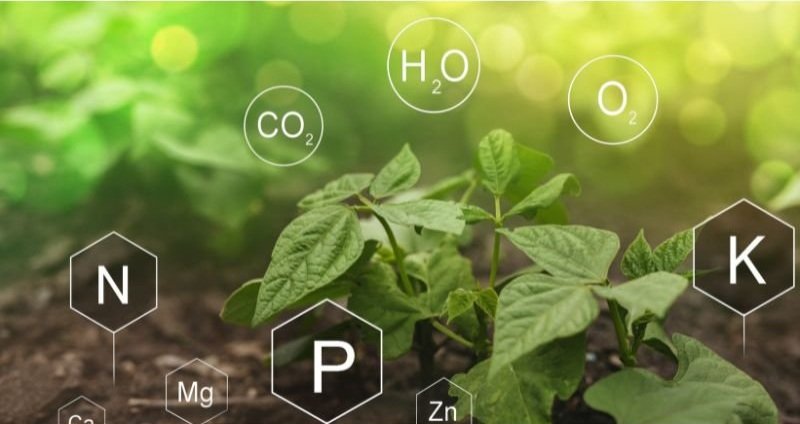
N-P-K is a measure of the available Nitrogen, Phosphorous, and Potassium in nutrient inputs. These fertilizer numbers are shown on labels as a minimum guaranteed analysis. These three elements are essential for plant growth and are the most commonly deficient in soils.
Nitrogen is abundant as an atmospheric gas and is converted to plant-available nitrates through decomposition of organic matter.
Nitrogen is required for the formation of amino acids, which are critical components of cells.
Phosphorous is a mineral element that is made plant-available by phosphate solubilizing microbes.
Phosphorous benefits root development and fruit set. It serves as a storehouse of cellular energy and is a structural component of DNA.
Potassium enters the soil through application of minerals like Langbeinite, and from breakdown of organic materials.
Potassium has important functions in plant metabolism and stress adaptations.
Essential Nutrients
In addition to N-P-K, there are several other soil nutrients that are required in abundance.
Calcium ions are critical for flower set and PH regulation.
Magnesium is the central atom in the chlorophyll molecule.
Silicon is a primary ingredient in cell walls and aids in plant defense.
Sulfur is a building block for terpenes and other volatile compounds.
Micronutrients
Plants require trace amounts of many elements for optimal growth.
Mined products like greensand, basalt, and glacial rock dust contain a diversity of trace elements but can be slow to mineralize.
Some plants hyper accumulate trace elements from the environment.
Alfalfa and Kelp meals can provide a diversity of accumulated micronutrients when used as soil inputs.
Cannabis is also a hyper accumulator. This can be problematic as some trace elements are heavy metals that can cause compliance and health concerns in cannabis crops.
The soil environment’s ecosystems that favor rapid exchange between air and water saturation are known as interface zones and tend to be productive and diverse. Tide pools, estuaries, and the upper strata of living soils share this feature.
Irrigation water with high levels of dissolved oxygen (DO) fuels aerobic microbial activity.
Water should be kept between 60 and 70 degrees and commercial growers will benefit from super-oxygenating their irrigation water with nanobubble generation.
Container design, mulch application, and irrigation practices promote soil fertility and protect feeder roots which proliferate in interface conditions.
Soil Porosity
Water infiltration and air exchange are enabled by pores of various sizes within the soil matrix.
Soil porosity is the percentage of soil volume that is made up of these pores. Air-filled porosity is the percentage of air that remains in the soil when it is saturated.
Pore characteristics are largely determined by the size and organization of aggregates and fibers in the soil.
Pore size regulates access of soil organisms to one another and to their resources.
Bacteria find refuge in micropores as protozoa and nematodes transit between linked macropores grazing on their brethren…
“There is a vital distinction between being human and human being.”
Across the Great Divide
Ample evidence exists in the alternative, mainstream and social mediums to reflect the cruelty, deception, manipulation, prejudice, supremacy and violence within contemporary society. These characteristics can be best observed in the societal conditioning of belief, heredity, ideology, lifestyle, opinion, politics and theory. The social reality we enable with our engagement is a dream within an illusion, within a nightmare. One from which most never awaken. The duplicity of our daily encounters and our linear awareness, perception and understanding enslaves us into the sophisticated matrix of social reality.
The Cost of Oblivion
Some say oblivion is bliss. Until the escapism in which we enroll is overpowered by the reality we attempt to avoid. Whether it is amusement, education, entertainment, media, politics or religion, we cannot evade the truth of ourselves, even amidst the mayhem of the current reality. Oblivion has become our pastime. We embody obscurity to desensitize ourselves from our traumatic encounters in society. It is our evasion of accountability and authenticity with our actions, behaviors, emotions, thoughts and words. Ultimately, we detach from our heart and soul, allowing ourselves to invoke and project the toxicity of our unconscious malevolence.
Something Wicked This Way Comes
We need to look no further than current events to take a pulse of humanity. With the extremity of radical interpretations and perceptions, it is evident society is in a dark age of arrogance, competition, control, entitlement, fear, judgment, negligence, superficiality and vanity. The selective lifestyles we enact, be they preoccupied with the trivialities of career, consumption, disease, domesticity, routine, wealth, tradition and toxicity, bring us closer to our premature demise. Every morning we awaken to the possibility of a new experience. Yet, we tend to hop on the human treadmill headed for oblivion.
Viral Information
We do not “know” anything. Our selective perceptions and realities blind us to what is really happening in the world. Institutionalized information via education, history, media, politics, religion and science, conditions us to abide by what authoritarian entities and organizations enforce and impose. When someone challenges these societal programs, the indoctrinated cry “conspiracy theory!” and demean, discredit and destroy all who deviate from the social norm. The information we consume is like a virus, infecting our instincts, thoughts, perspectives and emotions. It is our weapon to defend our fear, insecurity, obsession and vanity.
“Truth is a foreign language, spoken by few and dismissed by many.”
Reality Colored Vision
We invest only in what supplements our selective agendas, comforts, narratives and realities. Amidst the numerous horrors and tragedies occurring in society, we engage in the “busy-ness” of our lives, as if nothing is happening. We choose to deny the existence of abuse, death, disease, hate, genocide, inequality, injustice and war in defense of our superficiality to safeguard ourselves and our family. With our conditioned perceptions, we invent fairy tales to whitewash the malevolence of social reality, then impose them on our children to avoid the trials and tribulations of the truth. Our self-righteousness supersedes our conscience.
The Dream Within the Dream
Reality, as we experience it, is a holographic projection. Its primary purpose is to discourage, disempower and distract us from the truth. We engage in a societal simulation. Everything in our daily encounters is an illusion, engineered to enslave us into a matrix of social psychoses. Our belief in the charade makes it our personal delusion. Our inauthenticity, irresponsibility, and self-righteousness enable our linear captivity. Wealth and vanity are the dangling carrots to ensure our engagement, and the proliferation of social reality. Every day, we sacrifice our souls upon the altar of society for a fantasy of fame and fortune.
The Stand We Feign
Whatever reaction we select to focus our contempt upon the numerous social injustices we encounter, our protests wane with the absence of our vision, devotion, intention and expression. We may stoke the fires of our feelings and thoughts on social media to project our fleeting disdain with a variety of global inequities. Yet, the fulfillment we desire and the difference we intend always misses the mark. In essence, we fail to land our purpose, simply because the longevity of our commitment is compromised by our desire for instant gratification. The stand we feign is diminished and distorted by our personal agenda, ego and vanity.
Vicious Cycles of Reality
With the influences of our social conditioning and selective perceptions, our unconscious engagement in the paradigm of reality establishes the vicious cycles of our individualized matrix. We are confined in a digital, interactive network defined as society. Our oblivion to the full scope of its artificiality enables its existence, as well as our enslavement in its virtual program. It is what we choose to believe is “real.” Everything we encounter in social reality is stimuli designed to provoke our reactivity. Our personal power is acquiesced when we engage. We focus our attention (energy) on the dream to evade reality at the cost of our truth.
The Entitlement of Life
We are born into a three-dimensional construct and conditioned with a two-dimensional awareness. We are an expression of universal energy. Yet, our relativity with our soul is wagered for social conformity. As we mature, we learn all the nuances of how to distort and manipulate the societal system to serve our selective desire. We call this success, massaging our egos and pride while the world burns down around us. We could not care less about what happens to the rest of humanity. We simply want to be amused, deluded, exalted and gratified. The watermark of our madness is the exhibition of our entitlement.
A Simple Choice
Generations of social enslavement have brought us to this vital era of vision, epiphany, revelation and transformation. Relativity, truth and understanding are more prevalent than ever. The current universal energetic shift is our opportunity to empower and embody our unique expression. Within the domains of business, finance, health, media, politics, religion, science and war, we are conditioned to be victims of society. Social reality is a simulation of artificiality. Our oblivion to its influence seals our inevitable fate. The choice is to remain enslaved by our artificiality or create freedom by empowering our universality. The former ends in finality, while the latter begins in eternity.
“Choosing not to choose is a choice to live in oblivion.”
– Iam Saums
1. Use your affiliate link for either Healing Support promo or for Heartmend promo.
2. When the customer enters the floralive site (thru your link) they must add EITHER
A. add 3 Healing Support (combination essence) and 3 Blue Eyed Grass to the shopping cart, then go to checkout and enter the coupon code for this promo which is: HSHOLIDAYS (not case sensitive).
This will charge them for the Healing Support and they will get the Blue Eyed Grass free
Or
B. Add 6 Heartmend to shopping cart, go to checkout, there will be a charge for 4 Heartmend and two free when the coupon code HMHOLIDAYS is used.
Documenting the deliberate dissemination of propaganda and misinformation for control and manipulation of an intentionally dumbed-down population. Not you, of course.
Empire of Elastic Waistbands
Searching for style and substance in the first empire with an audio-visual recorded history of its own collapse.
If by the second paragraph, you sense another black-pilled doomer diatribe manifesting and would prefer your mind be massaged by uplifting and optimistic slants, remember that no effective solution to any social or personal dis-ease was ever discovered by ignoring reality in service of feelings.
The Decay Is Over
On the downward decline of a civilization’s culture, a longing for the past, often viewed through a nostalgic lens can be what Don Draper refers to in one of the most culturally important television episodes to ever air, “Delicate, but potent.”
With a cursory glance at the present, Americans are actively and more frequently looking to the past for answers. Nothing provides a more measurable perspective for which to comprehend the overwhelming dis-ease conferred by the current decrepit state of, well, everything.
During the 2012 Golden Globes, before the Big Equity Commissars of ESG hijacked the corporate advertising industry for woke virtue signaling at the expense of profits, one of the savviest commercials aired. It visually and psychologically encapsulated a shocking socio-cultural downfall.
At that moment Americans got to see a reflection of what they once had through a mirror of a cool, classy, confident, and stylish bygone era only one and a half generations departed. An era they could still see and remember but knew was barely visible in the rearview mirror, based on what stood before them in their now-undersized vanity mirrors.
The product being marketed in the commercial was an automobile, or more specifically—style—though nothing gets sold in America, or anywhere in the world, without a full-fledged psychological shelling of inner and collective voids, this essay notwithstanding.
Chrysler aimed to sell Americans their past, their longing for what they once had, back to them through the new style of their cars.
In the opening sequence, Chrysler launches its first mortar on the American psyche in the form of a question for the American people, “Whatever happened to style?”
Actor Adrien Brody’s voice proclaims, “It wasn’t too long ago. America had it.”
The confusion of regression to the culturally depraved present, now, eleven years after that commercial aired, still hits like a gut punch.
“Where has the glamour gone? It wasn’t too long ago. America had it. Looking, and feeling like a million bucks. It was practically our birthright.”
Delicate, but potent.
Americans weren’t hurried back then, overly stressed while frantically dashing everywhere to keep up with unmanageable lifestyles. They didn’t race anywhere back then proclaims Brody, “We cruised.”
The imagery plays on old Hollywood glamour at the height of American middle-class economic prosperity. The automobile was a symbol of freedom and liberation. Americans cruised the streets and boulevards of cities for fun.
The ad doesn’t use nostalgia so much as ooze nostalgia while exploiting a collective longing for a past people assumed was simply better in every conceivable way.
Americans at home watched that Chrysler commercial during the Golden Globes in 2012, quietly gnashing on Cheez-its and sipping cola, twisting in their Barca loungers to reach for the nearest deep bowl of the message washing over them as they pondered who will win best supporting actress.
Amnesia eclipses Nostalgia in late-stage empires. While looking to the past for perspective becomes habitual, others prefer forgetting the past, making it easier to cope with all the ugliness and moral confusion of the present.
Late-stage empires tend to have a period of gradual descent, called The Decay, before terminal decline sets everything ablaze, with or without space lasers.
The imperial cycle of history is a model that attempts to document the history of empires or great states. It is used by fiction and fantasy writers to set the backstory and organize the plot. I’ve taken the liberty of adjusting them in some minor places to fit the cycle of American Imperialism and decline. (It begins precisely the year the United States became a global empire.)
Phase One: Expansion—During this phase, the Empire is still young and rising. These days see the Empire’s rise from military victories, often just one. The Empire racks up massive debts from the warfare, and its economy is left largely unscathed and ready to produce through expansion. It’ll probably be able to pay off its debts over the next few generations. (1945-1960)
Phase Two: Stabilization—In this phase the conquerors die off and are replaced by administrators who help establish a system of rules and institutions used to manage their empire, overseeing an era of economic & demographic recovery and growth and gradually paying off the still-massive debts of their ancestors, though debts are still accumulating and the payoff never in sight. The greater the debt, the greater the credit. (1960-1990)
Phase Three: The Decay—The biggest problem facing The Empire is that more and more wealth and power are concentrated in private hands and not those of the state. Those private hands are often chosen by the state and rise above smaller merchants into State Monopolies. New generations of rulers take little pride in the history of the empire. Looting the state becomes an obsession, often wasting state money on expensive military campaigns with no reasonable goals or objectives. The people tend to spend their lives on never-ending consumerism or hedonism, wasting what previous generations left for them instead of trying to secure or multiply it through ‘boring’ things like building infrastructure, re-organizing the taxation system, or establishing new trade missions. (1990-2019)
Phase Four: The Long Night—The Empire exists in name only at this stage. It is now a failed state. The dissipation of The Empire’s power to rich individuals (oligarchs) is complete, with many families and even regions now only paying lip service to The Empire and its supposed rulers. The Empire must turn its power inward, on managing the perceptions of its subjects so the illusion of its might is maintained in their minds. If it needs to resort to force to keep its subjects in check, it will not hesitate. The Empire’s fiscal situation is in shambles and the state’s debts are compounding with interest payments on the debt no longer manageable. The currency has been debased to lessen the debt load, but it no longer holds value in the eyes of subjects or competing states that are now ascendant. Hedonism and decadence have wrought havoc on the people. Morale is at rock bottom and the people prefer distractive spectacles to waste away their lives. The Oligarchs also prefer the people remain distracted and demoralized as they continue pilfering whatever remains of the Empire’s coffers. (2020-????)
Empires throughout history moved more slowly, hence the final phase known as The Long Night, a reference to George RR Martin’s Game of Thrones where darkness (winter) descends upon the fictional world lasting generations.
Throughout past empires, everything advanced at a snail’s pace compared to today. However as technological innovation accelerates through all industries, the time it takes to transition from one phase to the next, from The Decay to The Long Night is shortened. The Long Night is no longer “long” and can now be measured in years.
Bloggers monitoring the collapsing American Empire have made the same cyclical analogies for decades now. Many still assume, based on the history of other empires that America’s demise will last another few decades. Accounting for the acceleration of events, and speed at which pivotal transformations occur today, it may not last the rest of this decade.
Where it took ancient Rome centuries, it took Portugal, Spain, Holland, and France decades to collapse. England survived a little longer, though by the end of the First World War, it was all but over on paper and they simply had to watch and wait for the full returns to come in from their former colonies.
These empires declined on a scale proportional to the slog of technological advances, the rate of change, and the speed information traveled.
From the Declaration of Independence to when the American Empire finished expanding geographically to its current state, transatlantic travel decreased from a month to hours.
In October 1776 Benjamin Franklin boarded the wooden vessel USS Reprisal to secure treasure and men from the royal court at Versailles, and the buffoonish King Louis XVI. The journey there took over a month.
Sending and communicating information from France to the American colonies took the same amount of time. Even locally, information traveled slowly. Throughout the next two centuries, methods of communication went from letters on laid paper delivered by horseback couriers to telegraphs and telephones, in other words, from weeks or days to seconds.
The most fascinating aspect of what makes the American empire collapse so intriguing is that no empire in history has had its terminal decline documented and displayed back to the people through visual mediums that record it all as it transpires, mainly television, and film.
These unique modern mediums have thoroughly verified the decline of American style and substance, with a full recorded history of the three-piece suited gentlemen, and dress-adorning slender ladies, to the slobification of leisure-wearing obese subjects of the elastic waistband empire.
Over two centuries there was little change. For men ties got wider, then skinnier, with the size of nots and length changing with the trends often set by public figures and movie stars. For ladies dresses got tighter, and skirts shorter, with arms removed altogether, and a shift to jackets and pants breaking all fashion norms. What remained consistent through those decades was substance and style.
As the mirror of the present reflects back the loss of both, these cultural signifiers sound the alarm of terminal decline.
One of the great digital ethnographic hobbies of our time is watching old videos of people walking the streets of an American city in any decade of the 20th century. The most popular observations of commenters beneath all these videos fall into two categories, “Look how skinny people were” and “Look how nicely people dressed.”
Substance and style.
Delicate, but potent.
The Audacity of Leisure Wear
The very first thing one notices when traveling from Budapest, Prague, Berlin, Oslo, Paris, Rome, or Madrid (or any major Middle Eastern or Asian cities) to any airport hub of the American empire is the total decrepit nature of American airports, one or two excepted. The second thing one notices is the size of people lumbering through the terminals. The third thing, and most relevant to the cultural decline is the attire adorning the American people.
The fashion choices confer a people who have surrendered to comfort and excess. They are either incapable of displaying style, having eaten their way above and beyond accessible sizes, or simply given up on life altogether.
Flying in first or business class used to come with dress codes strictly enforced by airlines. Jogging suits, yoga pants, shorts, hoodies, and flip-flops were forbidden. At one point jeans and t-shirts were also forbidden.
Oh, the horror.
Air travel was once a social event, with full-service meals in comfortable seats with plenty of legroom and elbow space. As Americans expanded in girth, the airlines went for broke, shrinking the seats while attempting to squeeze a caloric-storing population into tighter and tighter spaces.
Realizing an unsustainable business model of continuing to offer meals to such hungry people, they switched to sandwiches, and then tiny snacks, and then dispensed with them altogether inviting them to bring bags of greasy shit from fast food outlets in the terminal on board for their fellow passengers to gag and recoil.
At some point this century it became not only socially acceptable to wear pajama-like clothing while clutching those bags of greasy shit, but it also became the preferred attire for celebrities and their post-modern equivalents called influencers.
What exactly have these people “influenced” other than the acceleration of cultural decline?
What does it say about a people who can longer be bothered to put on clothing with buttons or zippers not made from elastic or jersey cotton when heading out in public?
What does it say about a civilization whose preferred footwear is made of rubber and can be washed by a garden hose?
Aspiration and Upward Mobility
The appearance of failure often coincides with the social depreciation of aspiration. In the past, aspiring to a greater social standing required dressing the part. Rampant nihilism and the desire for ease of life and comfort have obliterated aspiration.
The social ladder that was once used to climb upward became a slide in only one direction. As the middle class apexed in numbers, neighbors glanced at neighbors and said, “I’m not as fat as they are yet, and they’re wearing a hoodie and jogging pants, so why can’t I?”
The race to the bottom gathered steam and accelerated toward the making of the slobified majority. Two-thirds of Americans sought to wave the white flag of surrender in regard to substance and style, fitness, and health.
Conformity to decadence and hedonism common in other empires, was transformed into conformity to excesses of consumption and disregard for self, health, and image.
Nobody else is making an effort, why should I bother?
In a sick society that has completely lost its way, it is the duty of the non-conformist to preserve the past, to show those who have given up that they did so by choice, and that it is never too soon to change.
The American empire has made the conservation of its past, the symbol of non-conformity. Conservatives are now the rebels and the revolutionaries.
The non-conformist is fit and healthy, muscular and attractive. The non-conformist dresses fashionably and exerts a cool confident style, often appearing out of place with people glancing at them and wondering, “What’s the occasion?” If the non-conformist could hear their whispers, he would answer unashamedly, “It’s Tuesday, you slobs.” The non-conformist does not paint his hair or dermally defile his body with the permanent scarring of Nihilism’s most grotesque hobby.
The Banality of Tattoos
October 26, 2021
Less than a century ago tattoos were the exclusive provenance of distant tribes, sailors and biker gangs, or prisoners and other social miscreants willing to sacrifice a little pain to brand their allegiance to whatever group where common cause or brotherhood prevented…
Read full story
In the decade since that Chrysler commercial aired it’s clear that a loss of style is one of the least significant absences in America today in terms of imposed suffering. Yet nothing is more obvious as a visual cue of cultural decline and signifies the absence of everything else.
It’s not likely to return anytime soon.
A civilization can only afford to worry about style with triumphs, opulence, stability, the rule of law, blind justice, social cohesion, economic liberty, and maximum prosperity for a maximum number of people.
How does a single mother working full time plus two gig jobs to support two kids do so in style?
Style doesn’t require economic riches, and it never did.
The poor and working classes of the past century didn’t give up on aspiring to ascend the economic ladder. They knew they had to first invest in a self-image of self-respect that communicated their desire for ascension.
That they knew it was possible was motivation enough.
Economically wealthy individuals today often dress like slobs, by choice. Having reached a high enough rung on the ladder of upward mobility, they’ve chosen gluttony or comfort over style. While they can afford to wear anything, they often prefer loose-fitting soft fabrics and leisure wear.
Is it a sign of affluence or a signal of indifference and surrender?
I don’t make an effort, because I don’t have to.
With its Empire in terminal decline, its institutions drowning in total corruption and malfeasance, and its laws and systems used to benefit the top tier of society who are actively investing in the demoralization and illness of the masses, a return of style and substance will be impossible until all those forces of destruction are rooted out and terminated.
People have to want to care.
Until then only the strong will survive. They will probably do so with substance and style.
They will be the ones who take care to look after themselves during the final phase of their empire.
They will be the ones with the fitness, energy, and mental fortitude to withstand the onslaught against them.
Surviving the collapse of any empire that turns inward and declares war upon its subjects simply won’t be possible in a 42-inch elastic waistband on sugar high roller coasters, wearing rubber clogs.
And the powers that be know this.
Pushing Maximum Density
May 23, 2022
There’s thickness and then there’s THICKNESS. Some people are so THICK, their cellulite makes the cover of corporate bikini rags. Other people are so thick they now believe that morbid obesity is beautiful. It’s easier to believe a noble lie that feels good for the …
Read full story
1. Use your affiliate link for either Healing Support promo or for Heartmend promo.
2. When the customer enters the floralive site (thru your link) they must add EITHER
A. add 3 Healing Support (combination essence) and 3 Blue Eyed Grass to the shopping cart, then go to checkout and enter the coupon code for this promo which is: HSHOLIDAYS (not case sensitive).
This will charge them for the Healing Support and they will get the Blue Eyed Grass free
Or
B. Add 6 Heartmend to shopping cart, go to checkout, there will be a charge for 4 Heartmend and two free when the coupon code HMHOLIDAYS is used.
City Council in Centre Wellington, ON, has again opted to defer making a decision on whether they will allow retail cannabis stores. The township initially opted out of allowing retail cannabis after legalization in 2018, but directed staff to prepare a report to re-examine this decision in light of a delegation by a local resident and county councillor this past May. The decision will go to the Economic Advisory Committee for further deliberation before it returns to council for a permanent decision.
The City of Nelson, BC, plans on lowering the cost of a retail cannabis licencefrom $2,500 to $210, bringing the business licence fee in line with others in the city. Cannabis retailers will be informed of the amendment once council adopts it. In 2023, the city issued four business licenses for cannabis retailers. BC currently lists three cannabis stores in Nelson: The Kootenays Cannabis Tree, Buddy’s Place, and The POTORIUM.
SNDL and Nova Cannabisannounced their mutual decision to terminate the two companies’ implementation agreement from December 20, 2022, which would have, in part, seen SNDL vending into Nova’s retail network under the Value Buds, Spiritleaf and Superette banners located in Ontario and Alberta.
The plan had been repeatedly delayed due to what it said was continued review by one provincial regulator. SNDL and Nova reaffirm their strong commitment to their ongoing partnership under the management and administrative services agreement.
SNDL also shared its third quarter results with net revenue of $75.5 million, an increase of 14.1% compared to the same quarter of the prior year, and net revenue from its cannabis operations segment was $21.0 million, a 77.4% increase compared to the third quarter of 2022. SNDL’s cannabis sales are from the company’s 186 locations under its four retail banners: Value Buds, Spiritleaf, Superette, and Firesale Cannabis.
Nova’s proprietary data licensing program resulted in revenue for the third quarter of 2023 of $4.0 million, compared to $1.4 million in the third quarter of 2022, representing a 53.8% growth compared to the second quarter of 2023.
As of November 13, 2023, the Spiritleaf store count is 87 (22 corporate stores and 65 franchise stores), the Value Buds store count is 92 corporate stores, the Superette store count is five corporate stores, and the Firesale store count is two corporate stores.
MediPharm Labs Corp, a pharmaceutical company specializing in “precision-based cannabinoids,” announced its financial results for the three months ended September 30, 2023. The results included the settlement of a dispute with Hexo for a total of $9 million, including net cash of $7.3M collected in October, $1 million in Tilray Brands, Inc. cannabis products, and a four-year agreement where Tilray will purchase $0.5 million of MediPharm product. (Tilray acquired Hexo earlier this year). The company posted a gross profit of $2.4 million.
Delta 9 Cannabis released its Q3 financials for 2023l, with net revenue of $18.4 million. The cannabis producer and retailer attributes its increase in year-over-year and sequential net revenue to increases in retail revenues relating to the Company’s acquisition of Uncle Sam’s Cannabis and Discounted Cannabis and the Company’s acquisition of the Garden Variety cannabis stores in the third quarter of 2022. The Company’s loss from operations for the three-month ending September 30, 2023 was $4.5 million.
Dried flower constitutes about 70% of the company’s sales, while pre-rolls are 15%, and oils, extracts, derivatives, and other products occupy the other 15%.
Auxly Cannabis Group Inc. released its financial results for the three and nine months ended September 30, 2023, showing total net revenues of $28.2 million in Q3 2023, representing an increase of $8.4 million or 42% compared to the same period in 2022.
Nova Scotia based Aqualitas Inc. received a European Union Good Manufacturing Practices (EU-GMP) Certification issued by Beizirksregierung Köln (District of Cologne, Germany) and a Drug Establishment License (DEL) issued by Health Canada. Aqualitas’medical products have been distributed across Canada and exported to Germany, Australia, Poland, Israel, and the USA.
Toronto-based Avicanna Inc., a biopharmaceutical company focused on the commercialization of proprietary cannabinoid-based products, released a Q3 2023 report with revenue of $6.27M. Avicanna operates MyMedi.ca, which absorbed 96% of active patients from Medical Cannabis by Shoppers when it moved away from cannabis earlier this year.
Trees Corporation, a cannabis retail chain, shared its second quarter financial results for the three and six month periods ending September 30, 2023. The chain saw revenue from sales for the last three months at $4.6 million, with a 35% profit margin from product sales.
MTL Cannabis CEO Mike Perron spoke to Steve Darling from Proactive Investors to discuss the “ethos and operations of their family-founded company,” which places a high value on the quality and potential of the cannabis plant.
Canopy Growth says it has found a buyer for its Biosteel sports drink business and received a court’s approval to go ahead with the sale of the company.
The Simpson Foundation issued a press release touting the presence of RSO in many provincial markets in Canada.
Herb ranked what they claim are Canada’s top “cannabis colleges.” The article highlights five Canadian institutions—Seneca College, Niagara College, Durham College, McMaster University’s Continuing Education, and NACPT Pharma College, each offering different cannabis education programs.
Law enforcement
York Regional Policeraided an unlicensed dispensary in Newmarket that recently opened despite the city’s ban on legal cannabis stores. Police attended Newmarket Smokes Loud on Leslie Street on November 16 and 17. Newmarket district Det.-Sgt. Sherwin Bachoo confirmed police executed a search warrant, cleared the store, and arrested two people found to have been operating it over the past two days. The store first opened on October 20.
The Sûreté du Québec announced Thursday that it made seven arrests and seized cannabis and other illegal drugs, as well as nearly $1 million in cash, during a series of raids a day earlier on Montreal’s South Shore. Among the products seized were nearly 470 kilograms of cannabis and 1,400 “wax pens”.
International
A 27-year-old woman suffered a fatal asthma attack last year in what health and workplace safety officials said was the US cannabis industry’s first reported occupational asthma death.
Snoop Dogg says he’s stepping away from the herb, at least for a while. Many fans have noted he has made similar comments in the past, only to eventually return to the sweet, sweet Mary Jane. But a lil’ T-break never hurt no one, no how. Do your thing, Snoop.
“The seat of the soul is there where the inner and outer worlds meet.” ~Novalis
There is true medicine in this world, but it belongs not in a pill or potion but in the energetic tuning of one’s body and soul. Of course, herbs, plants, foods, minerals, light, air, breath, water and more can all help.
They will, if we allow, tune us, or perhaps it’s re-tune us towards our true harmonious nature, one with ‘the all of everything’.
In my opinion there is not ‘magic solution’ to anything without us also putting in the effort of change. After all, we are all born with everything we need for a happy, healthy and long life, I would say. But through our own efforts, even if suggested by others and we listen, we cause disharmony in our bodies, heart, soul and more.
Thus, it is up to us, in fact it can only be us that heals ourselves from the self-inflicted challenges we are participate in through these lives in our days/daze.
Full Frequency Flower Essences have helped me to ‘see’ and feel some aspects of myself that were hidden. Perhaps it’s more accurate to say they were ‘deadened’ but a life of shallow indulgence and petty concerns. Like the being that eats too much sugar and thus can no longer tell the subtle differences between natural sweet and much sugar, we’ve all allowed parts of ourselves, let’s say our birthrights, to remain or grow fallow, and thus can no longer access the ‘maps’ we need to move ourselves back to a well tuned life.
Love, health, joy, harmony and the like are all possible. I have gone from there in childhood to darker places during my young adulthood back towards all of these as I work ‘my ass off’ to see how I’ve allowed my life to be led away from these joyful ways of being here in this body, in this time, in my heart.
With FlorAlive Dr. Brent Davis has discovered, perhaps it’s uncovered, many gifts that nature has placed in our path to allow us to remember what has been forgotten. In Brent’s case he literally followed his path over 30 years plus, to these flowers, all the while developing a means to ‘harness’ their frequency while do no harm. How amazing and wonderful that we can all benefit from his ‘life-long’ journey and sacrifices to bring them to the world.
Honestly, I see people spend so much on so many silly things, all for a moments ‘respite’ from the challenges of modern life, while for the cost of a ‘gourmet night out’, even much less these days, we can all be given the keys to our ‘Happy Destiny’. I have mine now….and I invite you all along to claim yours.
"Truth can be simply defined as a calm and self-complete state of
knowing, needing neither allies nor defense."  Vernon Howard
Cheers Lorenzo
Perhaps a ‘tricky painting’ to see as healing, and yet, with the title ‘Medicine Woman’ I can see the power in this image!
2. When the customer enters the floralive site (thru your link) they must add EITHER
A. add 3 Healing Support (combination essence) and 3 Blue Eyed Grass to the shopping cart, then go to checkout and enter the coupon code for this promo which is: HSHOLIDAYS (not case sensitive).
This will charge them for the Healing Support and they will get the Blue Eyed Grass free
Or
B. Add 6 Heartmend to shopping cart, go to checkout, there will be a charge for 4 Heartmend and two free when the coupon code HMHOLIDAYS is used.
Cannabis extracts and concentrates are not completed with a single process. In fact, extraction is only the first stage of the processing procedure. Once the desired cannabinoids are isolated and extracted, there are additional steps required to purify the compounds into their purer form. After the initial extraction, the first stage of the post-processing purifying procedure comes in one of two forms: winterization or de-waxing. To a certain extent, these processes are similar and can both achieve the desired effect of removing additional contaminants like wax, lipids, cellulose, or oil. However, the differences between them can alter the finished product.
Winterization
In the simplest terms, winterization is the process of removing unwanted compounds from the cannabis extract. [1] These unwanted compounds can be fats, lipids, or oils still present in the cannabis extract. These contaminants are all non-polar, and if left in the distillate can alter the taste and flavor of the final product.
By bringing the solvent to its freezing point, each part of the solution separates into clearly defined layers of constituents. This is where the term “winterization” comes from. To a lesser extent, this same type of physical reaction can be witnessed with fatty foods that are put in the refrigerator. When the dish is warm, the oils in the food exist in the liquid form that mixes all the ingredients together. When cooled, the oils in the dish harden into a layer of fat that separates it from the rest of the ingredients. [2]
Aside from the solvent used in winterization, there are two other variables that affect this process: how cold the freezer is and how long the solution is allowed to sit. Winterization usually relies on standard freezers, and the temperatures range from -20 °C to -40 °C. Ethanol freezes at -114 °C, which is significantly lower than the lipid freezing point of 4 °C. This is why winterization is so effective at isolating the remaining oils and lipids from the cannabis extracts. The fats solubilize in ethanol, freeze, and then are easily separated from the rest of cannabis extract during the filtration process. At this point it is easy to separate the unwanted lipids, oils, and chlorophyll. The winterization and filtration procedure are often performed more than once, to make sure the remaining cannabinoids are free from any unwanted fat, lipids, waxes and chlorophyll. There are two strategies when it comes to winterization: static or continuous. [3] Static winterization is the process described above where the solvent sits in a freezer for an extended amount of time. Using a more aggressive approach, continuous winterization can help speed-up the filtration process.
De-waxing
One form of continuous winterization is called de-waxing, which gets its name from the wax it removes in addition to the lipids and chlorophyll. [4] To effectively de-wax a cannabis extract, the sample is placed into a closed loop system, typically a vertical hydrocarbon extraction system or some other glass reactor, where it is then washed continuously with a solvent. [5][6] Instead of ethanol, de-waxing more commonly uses butane as a solvent. The entire system is then cooled below freezing, which has the same physical effect as static winterization in separating impurities from cannabinoids. De-waxing has a targeted temperature ranging from -40 °C to -80 °C, which means the entire process lasts for one to two hours. This continuous washing and aggressive freezing allows de-waxing to speed up the filtration, but it requires a more complicated set-up to be performed correctly.
Determining the Advantages
The amount of time each technique takes and the differences in solvents will both play a role in determining which process is ideal. Starting with static winterization, the clearest advantage is the simplicity of setup. It requires a standard freezer, and some ethanol to isolate the cannabinoids. In this regard, even smaller extraction operations can effectively purify their extracts with lower upfront costs. De-waxing requires complex equipment configurations, but the time saved allows for more frequent filtration to occur. Additionally, with a closed system it is possible to reclaim some solvent used, which may lower the operating costs in the long run. Financially, de-waxing may prove beneficial for larger institutions. The ultimate determining factor comes down to how the final products are intended to be used. With static winterization, it is possible for a significant amount of terpenes to be removed with the lipids and oils. [7]
Because de-waxing occurs in a closed system, terpenes remain trapped within the sample, allowing more of the subtle flavors to be preserved in the final product. That being said, because static winterization removes more unwanted compounds, it leads to a higher purity of cannabinoids. If the manufacturer desires a purer extract with less additional terpenes influencing the taste or smell, static winterization provides the advantage.
Preserving the flavor profile with a shorter filtration period puts de-waxing ahead of static winterization. When only focusing on equipment, solvents, and filtration time, the differences are minor. Both strategies lead to highly concentrated forms of cannabis extracts, but how these extracts will be used by consumers may be the deciding factor in determining which filtration system is best.
References:
Grijó, Daniel Ribeiro, Ignacio Alberto Vieitez Osorio, and Lúcio Cardozo-Filho. “Supercritical extraction strategies using CO2 and ethanol to obtain cannabinoid compounds from Cannabis hybrid flowers.” Journal of CO2 Utilization 28 (2018): 174-180.
Tominaga, Toshihiro, and Shigetoshi Matsumoto. “Diffusion of polar and nonpolar molecules in water and ethanol.” Bulletin of the Chemical Society of Japan 63.2 (1990): 533-537.
Skau, Evald L., et al. “Phase relations pertaining to the solvent winterization of cottonseed and peanut oils in acetone.” Journal of the American Oil Chemists Society 27.12 (1950): 556-564.
Fairbairn, J. W., and J. A. Liebmann. “The extraction and estimation of the cannabinoids in Cannabis sativa L. and its products.” Journal of Pharmacy and Pharmacology 25.2 (1973): 150-155.
Haleyur, Nagalakshmi, et al. “Comparison of rapid solvent extraction systems for the GC–MS/MS characterization of polycyclic aromatic hydrocarbons in aged, contaminated soil.” MethodsX 3 (2016): 364-370.
Pérez, Ángel, et al. “Winterization of peanut biodiesel to improve the cold flow properties.” Bioresource technology 101.19 (2010): 7375-7381.
Galal, Ahmed M., et al. “Naturally occurring and related synthetic cannabinoids and their potential therapeutic applications.” Recent Patents on CNS Drug Discovery (Discontinued) 4.2 (2009): 112-136.



























Recent Comments