The Australian Greens tabled a bill to legalize cannabis on Friday, August 10, the Greens Legalising Cannabis Bill 2023.
The bill, introduced by Greens Senator David Shoebridge, seeks to establish a national framework for legalizing and regulating cannabis across Australia.
The Party also recently released a report based on feedback received on the proposed legislation. The report included commitments to address much of that feedback, such as ensuring it will be legal to make edibles at home, stricter labelling requirements, and medical cannabis laws are preserved.
It is the chance for tens of thousands of quality green jobs, new small businesses, enriched regional economies and the boon for tourism that will come with establishing a totally new legal industry.
Senator David Shoebridge, Australian Greens
The bill itself proposes to create an age of access of 18, up to six cannabis plants per home, with retail sales in “cannabis cafes” that can also facilitate outdoor consumption spaces. It includes provisions for production and retail licences, and proposes that any applicable fees for such licences will not apply to Indigenous Australians.
It also includes stiff proposed penalties for violations of the rules, with imprisonment of up to two years and up to 2000 “penalty units”. The value of these units varies by location, with one unit equaling around AUD$1-200.
The bill’s future is still being determined as the majority Labor Party in Australia has not signalled support for legalization. But Shoebridge believes now is as good a time as any to move the conversation forward.
In a speech to parliament, the Senator explained the bill is a common sense approach to addressing legal injustices from cannabis prohibition, as well as an opportunity for revenue generation and new job creation in the legal industry.
“It is the chance for tens of thousands of quality green jobs, new small businesses, enriched regional economies and the boon for tourism that will come with establishing a totally new legal industry. It is the opportunity to regulate the quality, strength and safety of a product that millions of Australians are already using, and it’s the chance to radically reduce harm, literally overnight, by saving some 80,000 Australians a year from being caught up in the criminal justice system for possession of cannabis.”
He also notes that a federal approach to legalization, rather than a state-by-state approach, will bring the country into an emerging global legal industry. The Australian Capital Territory (ACT) became the first jurisdiction in Australia to legalize cannabis for adult use in 2019, and legislation has been introduced in South Australia.
“We also see the obvious benefits in a single national legal market,” added Shoebridge. “This not only allows for a national justice win, it also means we will have a single well-regulated and coherent national market. While the moves by such a large number of US states to legalise cannabis have been extremely positive, the lack of a national market there has produced some unhelpful friction points at borders and ongoing tensions between State and Federal laws.”
“The Bill takes lessons from the Canadian model, with Cannabis able to be purchased by adults from licensed dealers and cannabis cafes [retail spaces]. We also have tried to learn lessons from Canada’s experience of legalization, and our draft legislation looks to have a market that is more democratic, more decentralized and less corporate.”
The Act also calls for a five-year review, if passed.
The bill received first and second reading in Australian Parliament on Friday, August 10, 2023. If it moves beyond second reading, it will go to Consideration in detail and then third reading and, if it has support, would then be passed.
The Australian Greens have four seats in the House of Representatives and eleven Senators. The Australian Parliament has 151 MPs in the House of Representatives and 76 Senators. The centre-left Labor Party holds the majority of power with 78 seats in the House of Representatives.
The Australian Greens tabled a bill to legalize cannabis on Friday, August 10, the Greens Legalising Cannabis Bill 2023.
The bill, introduced by Greens Senator David Shoebridge, seeks to establish a national framework for legalizing and regulating cannabis across Australia.
The Party also recently released a report based on feedback received on the proposed legislation. The report included commitments to address much of that feedback, such as ensuring it will be legal to make edibles at home, stricter labelling requirements, and medical cannabis laws are preserved.
It is the chance for tens of thousands of quality green jobs, new small businesses, enriched regional economies and the boon for tourism that will come with establishing a totally new legal industry.
Senator David Shoebridge, Australian Greens
The bill itself proposes to create an age of access of 18, up to six cannabis plants per home, with retail sales in “cannabis cafes” that can also facilitate outdoor consumption spaces. It includes provisions for production and retail licences, and proposes that any applicable fees for such licences will not apply to Indigenous Australians.
It also includes stiff proposed penalties for violations of the rules, with imprisonment of up to two years and up to 2000 “penalty units”. The value of these units varies by location, with one unit equaling around AUD$1-200.
The bill’s future is still being determined as the majority Labor Party in Australia has not signalled support for legalization. But Shoebridge believes now is as good a time as any to move the conversation forward.
In a speech to parliament, the Senator explained the bill is a common sense approach to addressing legal injustices from cannabis prohibition, as well as an opportunity for revenue generation and new job creation in the legal industry.
“It is the chance for tens of thousands of quality green jobs, new small businesses, enriched regional economies and the boon for tourism that will come with establishing a totally new legal industry. It is the opportunity to regulate the quality, strength and safety of a product that millions of Australians are already using, and it’s the chance to radically reduce harm, literally overnight, by saving some 80,000 Australians a year from being caught up in the criminal justice system for possession of cannabis.”
He also notes that a federal approach to legalization, rather than a state-by-state approach, will bring the country into an emerging global legal industry. The Australian Capital Territory (ACT) became the first jurisdiction in Australia to legalize cannabis for adult use in 2019, and legislation has been introduced in South Australia.
“We also see the obvious benefits in a single national legal market,” added Shoebridge. “This not only allows for a national justice win, it also means we will have a single well-regulated and coherent national market. While the moves by such a large number of US states to legalise cannabis have been extremely positive, the lack of a national market there has produced some unhelpful friction points at borders and ongoing tensions between State and Federal laws.”
“The Bill takes lessons from the Canadian model, with Cannabis able to be purchased by adults from licensed dealers and cannabis cafes [retail spaces]. We also have tried to learn lessons from Canada’s experience of legalization, and our draft legislation looks to have a market that is more democratic, more decentralized and less corporate.”
The Act also calls for a five-year review, if passed.
The bill received first and second reading in Australian Parliament on Friday, August 10, 2023. If it moves beyond second reading, it will go to Consideration in detail and then third reading and, if it has support, would then be passed.
The Australian Greens have four seats in the House of Representatives and eleven Senators. The Australian Parliament has 151 MPs in the House of Representatives and 76 Senators. The centre-left Labor Party holds the majority of power with 78 seats in the House of Representatives.
By Marcus Bankuti, Local Journalism Initiative Reporter
THE EASTERN DOOR
When members of Ionkwatehontsenhne decided to speak with The Eastern Door, they wanted to meet in the Pines, where a white sign reads “Onen’to:kon preservation area. No cutting trees.”
Around it, piles of branches and logs lay in tidy piles. Keep Their Heads Ringin’ by Dr. Dre blasted from a nearby cannabis store. From another, a man walked out and wanted to know why someone was taking pictures. He said it was private property.
Advertisement
In fact, he stood on community land.
When members of Ionkwatehontsenhne — committed to protecting the Pines — arrived, the man returned to ask why the group had assembled here. “This is our land,” one replied. The man went inside again.
“I think that’s the very thing that fuels us,” said Alana — not her real name — referring to the pressure. “It takes very strong people to stand here and say you’re not doing this, this is not right.”
She and two other Kanehsata’kehro:non women who met with The Eastern Door — who have been given the pseudonyms Brenda and Clara — expressed fears for their safety, which is why their identities are being concealed. “If anyone’s pinpointed as a leader or to be outspoken, we get targeted. So it’s very important that there’s no real names,” said Alana.
“What happened here in 1990 was bigger than all of us,” she said. “And the Pines represent that for us, and it’s sort of like our backbone in Kanesatake to say we’re real Onkwehon:we, and we’re proud of it. So we decided to dedicate this area for a memorial site to remember 1990 and honour the Warriors, the women, everyone who fought to stand for us. If we didn’t do that, this would be a golf course, apartment buildings owned by Oka. We would have nothing.”
The group of women previously intervened in tree cutting in 2020, with more than 10 women gathering in freezing weather to halt the felling of trees for the expansion of cannabis stores.
Within the past couple months, an agreement to leave the tree line around the preservation sign was violated, they said, and a once dense patch of forest is now gone.
“It’s what it symbolizes,” said Brenda. “In 1990, I was there. We fought for these trees. And we want people to become aware that these are majestic. This is health. There are medicines in here.”
Their goal is all about awareness, the women said, trying to work to create common ground in the community around the importance of the pine forest.
“There’s a lot of people who are really against seeing the Pines getting cut. But there is the other half where it’s like, `Get over it. The trees have already been cut. It’s too late.’ But it’s not too late. There are still a lot of trees left that we can save,” said Clara, who said she was too young to intervene when the stores were first being built.
“A lot of these stores aren’t backed up either by all Onkwehon:we here. These people are greedy. They’re not from here, so they’re just going to keep pushing, pushing, pushing to take everything they can here, because there are no laws here. It’s a free-for-all.”
Despite the calls to halt cutting, Alana said the group is not seeking to get rid of the cannabis stores on the strip, but rather insisting they not expand into the forest.
“We’re not going to start digging up pavement and destroying buildings. We want to save what little we have left,” said Alana.
“I just want to make it very, very clear that we are not against economic development of any kind. What we are doing here is seeing how much one individual can take.” She said it would be wrong and unnecessary to cut deep into the pine forest. “You don’t need that,” she said.
“Do your thing, but do it in a way that is true. We can take being Native and making a business and make it work together where you have your store, you do your thing, but you’re not going to take acres and acres of community land just because you have the manpower or the intimidation tactics behind it.”
The group declined to speculate on what their next steps might be if the cutting of trees continues.
Increasing interest in phytotherapy has led to a focused exploration of plant-derived bioactive compounds, particularly terpenes, for their potential therapeutic properties. The analgesic effects of major terpenes have piqued the interest of the scientific and medical communities. There is an extensive amount of published research on terpenes that highlights the pharmacology, mechanistic pathways, and potential applications of these potent compounds.
Terpenes are known for their wide-ranging biological activities. They offer promising avenues for pain management due to their analgesic properties. For this reason, we’ve narrowed down our focus to not only analgesic research, but also the major terpene classifications, and terpenes that have been studied the most.
You will find terpenes in all plants, but one plant in particular that has sparked a dramatic increase in terpene awareness and research is cannabis. The rise of legalization of cannabis in the United States and around the world has led to a boom in research over the past decade as more researchers have gained access to this once somewhat elusive research topic.
A scientific review of available published research regarding the analgesic potential of terpenes derived from cannabis was recently published in Pharmacological Reviews. After reviewing over 200 published studies there was enough evidence to conclude that, “Overall, cannabis terpenes have a high potential for pain management, alone or as adjunctive therapeutics, and are attractive compounds for the development of terpene-based analgesics given their generally-recognized-as-safe status with low side effect and toxicity profiles.”
The Classification of Terpenes
Terpenes are classified into subclasses according to their carbon unit count. The most common terpenes found in cannabis are monoterpenes and sesquiterpenes, composed of two and three isoprene units respectively.
Monoterpenes
Monoterpenes, with 10 carbon atoms (C10), are categorized into acyclic, monocyclic, and bicyclic types, often characterized by their strong aroma and presence in plant essential oils.
Limonene
Limonene, a cyclic monoterpene prevalent in Citrus species, exhibits significant anxiolytic and anti-inflammatory properties. Used as an analgesic against chemical irritant-induced pain, it effectively blocks pain behaviors at doses of 50 mg/kg or more. Although limonene doesn’t reduce thermal measures of pain effectively, it shows efficacy against inflammatory and neuropathic model-induced mechanical allodynia, suggesting potential therapeutic value in pain management.
Terpinene & Terpineol
Terpinene, found in Eucalyptus species and C. sativa, have anti-inflammatory effects. Essential oil from fingered citron, which contains γ-terpinene, may reduce inflammation. α-Terpineol, a constituent of tea tree oil, exhibits dose-dependent antinociception in certain pain models, and non-dose-dependent antinociception in others. It can reduce pain directly and indirectly by decreasing inflammation.
Pinenes
α-Pinene, a monoterpene present in many plants, hasn’t been widely studied for its analgesic properties. However, antinociceptive effects have been noted in essential oils containing this terpene. β-Pinene, on the other hand, has demonstrated analgesic and anti-inflammatory effects in various models, as have other β-pinene-containing oils.
Linalool, a monoterpene found in essential oils of various aromatic plants, exhibits significant antinociceptive properties. It is used in traditional medicine as an analgesic and anti-inflammatory remedy. Studies have observed its effectiveness in different pain models, including capsaicin-induced pain and acetic acid-induced writhing response. Its anti-inflammatory, anticoagulant, anticonvulsant, and antioxidant properties have also been recognized. Overall, linalool is a potent bioactive agent with potential therapeutic benefits in managing pain and inflammation.
Myrcene
β-Myrcene, a monoterpene found in cannabis, hops, and other plants, has been studied since the 1990s for its potential pain-relieving properties. Initial research showed that β-myrcene could produce antinociception in certain pain tests when administered intraperitoneally or orally. Despite these findings, the exact mechanisms through which β-myrcene works remain largely unknown due to limited published research.
Geraniol
Geraniol, a sweet-smelling monoterpenoid found in cannabis and other aromatic plants, is known for its analgesic, anti-inflammatory, and anticancer properties. Recent studies have shown it to be a potent anti-inflammatory agent that operates by blocking the MAPK/NF-κB signaling pathways, as evidenced in experiments with human mast cell line 1 and allergic rhinitis mice models.
Sesquiterpenes
Sesquiterpenes, with 15 carbon atoms (C15), are secondary metabolites found in cannabis in various forms – linear, mono-, bi-, and tricyclic.
Caryophyllene
β-caryophyllene (BCP), a bicyclic sesquiterpene alkene, is one of the most abundant terpenes in C. sativa extract. It’s highly regarded for its low toxicity and safety. It’s believed to act as a full agonist for the CB2 receptor. A study demonstrated its effectiveness in altering antinociceptive thresholds to thermal stimuli in naïve animals after oral administration at doses ranging from 1 to 10 mg/kg.
Bisabolol
Bisabolol, or levomenol, is a minor terpene in cannabis and a major component in chamomile. Widely used in cosmetics, it has shown significant antinociceptive properties in animal pain and inflammation models. It notably reduced orofacial nociceptive behavior in mice and displayed anti-inflammatory effects, suggesting potential therapeutic use.
Humulene, also known as α-humulene or α-caryophyllene, is a common terpene in Cannabis species and hops. Despite being a major component, few studies have explored its analgesic and anti-inflammatory properties. Given its potent antinociceptive and anti-inflammatory effects, humulene warrants further in-depth research to fully understand its potential benefits.
Nerolidol
Nerolidol, also known as peruviol or penetrol, is a sesquiterpene alcohol found in C. sativa and other aromatic plants. It has demonstrated antinociceptive and anti-inflammatory properties in animal models, significantly reducing paw edema, acetic acid-induced abdominal contraction, and licking in the formalin test. These benefits were achieved without impairing motor function, suggesting nerolidol could be used for its analgesic effects.
As you can see, there is compelling evidence of the analgesic effects of many major terpenes found in cannabis and other plants. Highlighting their significant antinociceptive and anti-inflammatory properties, the research available underscores the need for further exploration. The findings suggest that these terpenes could potentially contribute to breakthroughs in pain management, opening up new avenues for natural, therapeutic interventions.
References:
Busa, E. Et al. Analgesic Potential of Terpenes Derived from Cannabis sativa. Pharmacological Reviews. 2021, 73 (4) 1269-1297; DOI:https://doi.org/10.1124/pharmrev.120.000046 Journal Impact Factor: 20.479 Times Cited: 21
Employees who engage in off-duty marijuana consumption do not display a higher likelihood of encountering workplace injuries when compared to abstainers, according to recent research that challenges the sweeping zero-tolerance policies commonly adopted by employers. On the other hand, individuals who use marijuana during work hours exhibit a nearly twofold increase in the probability of being involved in a workplace incident, in contrast to both nonusers and those who consume marijuana during their personal time.
This discovery stems from a collaborative effort by researchers hailing from the Toronto Rehabilitation Institute, the University at Buffalo and the University of Toronto. The findings were recently published in the “Canadian Journal of Public Health.”
In two years, the study tracked 2,746 Canadian workers who occupied positions spanning both safety- and nonsafety-sensitive roles. The exhaustive analysis paid specific attention to the 11.3% subset of the sample who sustained workplace injuries during the specified timeframe.
Among the diverse pool of respondents, the investigation highlighted that 10.2% of those affected by workplace injuries were classified as nonusers, with 11.14% identified as off-duty consumers. Meanwhile, a notable 20.13% reported marijuana consumption either within two hours before or during their working hours.
According to study findings, individuals who admitted to using marijuana within the confines of their workplace exhibited a 1.97 times greater risk of encountering workplace injuries in comparison to those who refrained from such consumption. Conversely, no significant association was observed between nonworkplace usage and the occurrence of workplace injuries.
Consequently, the researchers deduced that the critical factor influencing workplace injuries is the proximity of marijuana use to work hours rather than consumption outside of professional settings.
Stratifying the data for safety-sensitive workers revealed that injury rates stood at 20.14% for nonusers, 23.3% for off-duty consumers, and 31.35% for on-the-job indulgers. For nonsafety-sensitive roles, the figures were notably lower, with nonusers experiencing injury at a rate of 4.27%, off-duty users at 4.19%, and those consuming marijuana during work at a higher 12.3%.
The researchers affirmed that their study provides a more lucid perspective on the connection between marijuana use and workplace injuries, an area that previous conflicting studies have clouded. They explained that prior research had neglected the temporal aspect of consumption concerning workplace injuries, which their study effectively accounted for.
Ultimately, the researchers concluded that solely workplace-related marijuana use poses a genuine risk of future workplace injuries, regardless of whether the job role falls within the safety-sensitive category.
Some of the concerns about marijuana use will likely disappear as more enterprises bring to market cannabis-based formulations along the lines of what IGC Pharma Inc. (NYSE American: IGC) is developing for chronic pain management. These medications will move many medical marijuana users away from taking unprocessed cannabis, which is a source of concern for employers and some authorities.
NOTE TO INVESTORS: The latest news and updates relating to IGC Pharma Inc. (NYSE American: IGC) are available in the company’s newsroom at https://cnw.fm/IGC
About CNW420
CNW420 spotlights the latest developments in the rapidly evolving cannabis industry through the release of two informative articles each business day. Our concise, informative content serves as a gateway for investors interested in the legalized cannabis sector and provides updates on how regulatory developments may impact financial markets. Articles are released each business day at 4:20 a.m. and 4:20 p.m. Eastern – our tribute to the time synonymous with cannabis culture. If marijuana and the burgeoning industry surrounding it are on your radar, CNW420 is for you! Check back daily to stay up-to-date on the latest milestones in the fast -changing world of cannabis.
To receive instant SMS alerts, text CANNABIS to 21000 (U.S. Mobile Phones Only)
Please see full terms of use and disclaimers on the CannabisNewsWire website applicable to all content provided by CNW420, wherever published or re-published: http://CNW.fm/Disclaimer
Do you have questions or are you interested in working with CNW420? Ask our Editor
Earlier this week, Dr. Robert Malone released a short substack piece on his observations in California. “Demonic Nihilism” is a keen descriptive piece of his time in Cali not too long ago. From it, we read:
“But these adults did not look like enlightened leaders of the free world; they were disheveled, clothing unkept and worn shoes dirtied. Others wore athletic clothes – mostly mismatched. As this was mostly an under-40 crowd; one would expect a certain level of fitness, but in fact most were over weight. Rolls of fat peeking out of too tight clothing. Surprisingly, women in particular seemed to care less what they looked like. All eyes were glued to screens – phones and computers. Even those in groups were quiet – as their attention was fixated on their personal entertainment devices. The absence of passion, the lack of vitality seemed to permeate the air. If there is one word for how people presented themselves, it would be dull. As if some vital essence of life had been sucked from their very souls.”
It is very descriptive indeed, and I encourage everyone to check it out. I’ve been meaning to write an article comparing Newsome’s Cali to DeSantis’s FL. In my research, I’ve found that while Cali is one of the largest economies in the world, socially, it’s a hell on earth.
The city is plagued with homelessness and unsanitary conditions, far from the ideal image painted in the media.
Not only was Dr. Malone’s piece a recommended read, but the comment left by the substacker Cate was beautiful. It’s lovely that it describes everything perfectly in such a succinct way. It told the truth of our reality, how we got here, what it is that we’re fighting, and the solution, all in one comment. This was such a moving piece that today’s article will be dedicated to Cate’s statement, where we’ll break down each aspect and reflect on the insight given.
I recommend checking out Cate’s substack and website, and without further ado, let’s dive into her comment!
“You point out the issue … the degeneration, the weary, indifferent, nihilistic fatigue so well. When the Covid debacle hit and the world went insane practically overnight, I descended from my ivory tower spirituality bubble, looked around and asked the question: “What the BLEEP is really going on?” After two years of research, I’ve finally come to the shocking yet unsurprising conclusion that our world is in the grip of a powerful, intelligent, anti-life Force—an unseen influence that has been involved in the deliberate programming and degeneration of humanity for thousands of years.”
I’ve also come to a similar conclusion in the last couple of years. When you take a step back and look at history from an unorthodox, scientific, and factual perspective, you see things differently. This revelation is not only why I wrote my first book bu
t also why I started this substack, Unorthodoxy. This is also why I’m working on my current analysis, “The Spirituality of Reality.”
Once we, the public, begin to see reality from this perspective, everything, from politics to government, from history to religion to our economy, all starts to make sense.
“Priests and shamans, philosophers, and mystics of every culture in the world have described this hostile, inhuman Presence and named it. For the ancient Greeks, it was the Archons—the Powerful Evil Ones. In Christian literature, it’s Beelzebub, the devil, Satan, and Shaitan. For the Hebrews, it’s Abaddon. In Islam, it’s Iblis or AshShaytān. To Native Americans, it’s wetiko and windingo. To the Hawaiian kahunas it’s e’epa.
Swiss psychiatrist Carl Jung called this deceiving force “antimimos, the imitator and evil principle” and equated it with the Antichrist. The Russian mystic philosopher George Gurdjieff called it “the machine.” Sri Aurobindo, an Indian philosopher and guru, called it the Hostile Forces. Hollywood portrays these entities as physical vampires. Modern-day philosophers and science fiction writers often refer to this Presence as the mind parasites.”
One of the lessons I’ve learned in my professional career is that one needs to develop a multi-disciplinary approach. This simply means that you have to be able to take lessons from one discipline and apply it to others. You have to understand the concepts of art and use them in physics. From science and apply it to mathematics. This mental framework helps you see how things that appear differently are similar. When you apply this to problems, you can find valuable and impactful solutions.
By applying this way of thinking to history, religion, and philosophy, you start to see descriptions of the same entities, and ultimately, you realize that all disciplines are referring to the same topic.
Some use the term demons, some say spiritual energies, but the takeaway is that there’s a mental, energetic force that affects everyone.
Whether it be anxiety or paranoia, demons or psychotic issues, there’s a vital mental component to our individual reality and collective existence.
We cannot think that the two (our personal experience and the collective experience) are different.
If we are anxious and paranoid, are we, as a community and society, under a paranoia that we see reflected in our laws and policies? We cannot simply ignore this spiritual aspect of life because if we don’t acknowledge it in either religion or philosophy, it will appear in the realm of our psyche, mental health and our world.
“Despite world-wide recognition of the reality of this insidious “other,” humanity has not yet caught on to this presence. Why? Because over the millennia, these advanced yet apparently soulless beings have created a thought matrix of lies—a false reality for us to live in that keeps us fundamentally blind to their presence and cooperative with their ultimate agenda.”
This passage may have been the most powerful of all. So many areas have touched on this topic, this “matrix of lies.” I attempt to do this in my book, and I’ve touched on some cases here, such as dinosaurs and the physics of our reality. When we begin to see just how far this reality spreads and how this reality has been built on lies, we begin to see the revelation.
PS: I recommend reading my piece, The Religious Tenents of Scientism. Here, I discuss how our world was built on these fake principles and how we can return to the true spiritual nature of our reality.
“By nature, humans are spirit beings of pure love. And yet media, education, spirituality, religion, and politics have been skillfully infiltrated and subtly programmed to hold up an altogether different mirror.”
I have an upcoming article I’m thinking of calling “Religion as the Greatest Weapon” because when you study the psychological effects of religion on the psyche, we begin to see just how it can be weaponized, and a very effective one.
In my article, Black Man’s Guide to Reality, which everyone (white, black, yellow, everyone) should read, I talk about how the early Africans communicated with God before the Bible and how that was reflected in how they lived.
Once “Religion” was introduced by the Church, we can see how the destruction of the continent began to occur.
We must understand that religion is a potent political tool. Once we see how it has been used to write history, we start to see the truth of reality even more clearly.
“Religious concepts such as original sin, scientific theories such as “the survival of the fittest,” and the relentless violence in the news, TV shows, movies, and games have successfully convinced us that competition, self-destruction, aggression, and corruption are our true nature. This means we don’t spend any time searching for outside influences driving our spiritual, moral, and social malaise.”
I cover these topics not only in my book but also in my course on Udemy, which contains the raw manuscript of my book. In both, I talk about evolution and how the theory of evolution, once introduced to the public, began to shift humanity from a spiritual species to a “mindless, raging animalistic species.” We stopped living from our hearts and were led toward a war-raged future for the next two hundred years, which featured two world wars propagandized by an elite few.
“Educated to believe that unseen realities and the devil are superstitious nonsense (never mind the exploding popularity of evil/supernatural storylines in the entertainment industry), we are also trained to laugh at conspiracy theories. And yet many global financial leaders, corporate media conglomerates, and NGOs such as the World Economic Forum and IMF are notoriously aligned with this dark force, implementing its agendas.”
In my article, Art of Theoretical Science, I discuss how we need to look into conspiracies. Yes, there’s some crazy stuff there, and yes, some individuals will purposely distract us. Still, we can genuinely understand reality, our past, and our future when we truly know both sides of the story. Not just the “public” history but also the past hidden from us or labeled “conspiracies.”
“Materialism, hierarchy, wars, drugs, porn, AI, The Great Reset, Covid—components of the matrix all—are fearful drivers purposefully designed to accomplish one thing: To keep us divided and at each other’s throats, forgetting our unified spiritual nature and our ability to set ourselves free by tapping into the unfathomable power of pure love that lies within us. Not a namby-pamby, romanticized, castrated, “nice” version of love, but LOVE—the force of nature itself that builds, and yes, destroys, worlds.”
This is the most powerful part of Cate’s comment: Love is the force of nature that builds, but let’s not forget that love can destroy worlds as well. Love can and must destroy this archonic world being constructed in front of our eyes.
I end my book by discussing where our society goes from here, and if we look around us now, we can see where we’re heading. As we see “trans” rights as the next social movement and “AI” on the rise, we can see that, if we look at these two together, we can see a “transhumanistic” society on the rise. Again, by factoring in the conspiratorial aspect of things, even though we’ve been taught not to explore them, by doing so, we can see the actual reality of things.
“Zombies are indeed amongst us …. people who have allowed themselves to become divorced from their own true nature and “know not what they do” or what they are becoming. Fortunately, not all of us have fallen under Wetiko’s spell.”
And fortunately, if under Wetiko’s spell, we can break free from it. As I wrote in my analysis of Brave New World, this time in human history was bound to occur. But what’s also bound to happen is our salvation, and that’s simply by being aware of what’s occurring.
By knowing the truth of our reality and seeing the chains put on us, we can break free of those chains.
And as we do so individually, we begin to, as a collective, free ourselves from the mental health crises, the paranoia, the demons, the archons, the parasite energetic force that has its grip on humanity.
All we need to do is walk in love, genuinely understanding what love truly is, its power, and how we can apply it to our daily lives.
I provided many links and references throughout the article. Still, if you want to know more, my substack is a great place to start. Thanks again to
for that beautiful post and to
for the space for where that comment arose from.
I wish you all success in this journey of life.
Call to Action
If you enjoyed this article, please consider taking action to show your appreciation.
You can share it with a friend or leave a comment with feedback.
If you really enjoyed it, you can become a paid subscriber or make a small donation.
Your support, no matter how big or how small, means a lot and is greatly appreciated.
Thank you and best of luck in your journey.
Unorthodox views are not uncommon
Unorthodoxy
By Franklin O’Kanu
Examining spirituality within our material reality
[An essay taken from Ch.3 of New Revolutions for a Small Planet written by the author in 2010-2011 and published in 2012]
[A] mood of universal destruction and renewal … has set its mark on our age. This mood makes itself felt everywhere, politically, socially, and philosophically … This peculiarity of our time, which is certainly not of our conscious choosing, is the expression of the unconscious human within us who is changing. Coming generations will have to take account of this momentous transformation if humanity is not to destroy itself through the might of its own technology and science … So much is at stake and so much depends on the psychological constitution of the modern human.
Carl Gustav Jung
The rapid cultural rise towards a technological state of mind – a Western-birthed epoch of modernization and scientific technique – is simultaneously in danger of rushing humanity towards an irreversible abyss. We are an infant species that is literally ‘growing up in public’, and thus forced to live out – and hopefully outlive – all our errors and transgressions. As a relatively new addition to our planet, we have passed through consecutive waves of civilization and civilizing processes to emerge at the cusp of a new era: the transition from species infancy to species adolescence. This transition, I argue, will itself involve a collective ritual experience, not dissimilar to the initiation rites of indigenous societies: a species rite of passage. It is becoming increasingly evident that we will need to pass through such an intense ‘initiatory experience’ if we are to continue the evolutionary unfolding upon our terrestrial Earth. Upon this journey we have passed through various phases of socio-cultural organization, energy utilization and communication revolutions. In each epoch these traits have converged to characterize its specific phase; i.e. social organization is intrinsically related to energy use and communication technologies. These reconfigurations have defined social relationships and the temporal-spatial perceptions of the time which, in turn, influences the way human brains perceive their reality. It has been noted that there has been a general succession from mythological consciousness (oral cultures), to theological consciousness (script cultures), to ideological consciousness (print cultures), to psychological consciousness (electricity cultures).1 Modern technocultures are very much tied to an underlying psychological consciousness, aided in the last 100 years by the birth of psychoanalysis and a wealth of psychiatric studies and applications. Our modern forms of warfare embody a mixture of ideological consciousness (nationality, religion, etc.) and psychological consciousness (fear of loss/scarcity, need for security, etc.) that have only exacerbated a mental warfare against individuals and pushed us collectively towards a global state of psychosis. In a similar manner philosopher Jean Gebser described the five structures of consciousness as archaic, magical, mythical, mental and integral. We are thus struggling with our mental stage, an unbalanced and overly rational era, until we can be thrust into the age of integral consciousness – the next transformation.
Yet whilst the Earth is in ecological turmoil, humanity is in psychological and spiritual turmoil. As turbulent events on both sides are accelerating exponentially, time is running out in which this almost vertical curve can continue. The natural equilibrium between human and Earth seems to have been lost, and this disequilibrium is now feeding upon a kind of chaotic energy that pushes the situation further out of balance. In the past, human societies managed their time, work and social balance by integrating their activities with seasonal time and movements, whereas our mega-societies have now virtually abandoned these cycles and bodies of knowledge. With this loss of functional cosmology and planet-solar-cosmic rhythm we have glided into a period of technical progress divorced from a grander significance and belonging. The once enchanted human mind, inspired by epiphany, revelation, intuition and cosmic connection, has ventured into disenchantment and what for many is drudgery.
Despite having developed through various stages of consciousness, of states of mind, and having reached the final step in this sequence, we are now desperately in need of leaping into a new mind. In other words, our current psychological consciousness may seem to be a new mind, even a radical mind, yet I argue that it is a mindset that represents a successive growth of the old consciousness; as such, it is the final stage of the old sequence. Just as the octave of the musical scale needs an interval to ‘jump’ to the next pitch, so too does our present octave of consciousness require an interval in which to jump to a new sequence. Our present sequence (which I shall refer to as the old consciousness or old mind) has culminated in creating an artificial context for our present living. Through extravagant use of energy and a leaning toward ‘mechanism’ we have slipped away from the organic flow of an ever-renewing world. In the words of one 20th-century commentator:
The civilization of our time, with its unlimited means for extending its influence, has wrenched man [sic] from the normal conditions in which he should be living. It is true that civilization has opened up for man new paths in the domain of knowledge, science and economic life, and thereby enlarged his world perception. But, instead of raising him to a higher all-round level of development, civilization has developed only certain sides of his nature to the detriment of other faculties, some of which it has destroyed altogether … modern man’s world perception and his own mode of living are not the conscious expression of his being taken as a complete whole. Quite on the contrary, they are only the unconscious manifestation of one or another part of him. From this point of view our psychic life, both as regards our world perception and our expression of it, fails to present an unique and indivisible whole.2
This suggests that we have adopted a lopsided, inharmonious manner of development. Our old mind has spurred the growth of particular physical aspects of life – science, technology, management, control, etc – to the detriment of a holistic, integrated ‘whole mind’ that incorporates the sustainable, natural cycles of an organic Earth. A shift to alternative cultural forms, one that would serve to place humanity within the dynamics of our planet, is required. We need to adapt to an evolving, changing planet rather than attempting to force a much more resilient planet to adopt an ego-driven, ravenous late-comer species.
Nothing short of a global revelatory experience is required. An experience that would be able to awaken a collective human consciousness towards the grand evolutionary journey ahead: both for our species and for planet Earth. We have moved into our Crisis Window – a period for intense change whereby we are called upon to make the leap from the octave of the old mind (characterized by the pathology of power) to the beginning sequence of a new integral mind (characterized by collaboration and compassion). For the past several thousand years the human race has defined itself through crisis and calamity, struggle and greed. We have crammed ourselves into conurbations; densely-packed city spaces where, daily, we pass thousands of people, with tens of thousands more living within a few minutes of where we are, and yet we each act independently of each other, unaware of our intrinsic interdependence. Individually we act out our differentiated roles, utilizing bonds, networks when we need to, often feeling isolated at the same time. Psychologically we are separated, placed alone in our endeavours, whilst collectively being socially organized and effectively regulated and managed. Such a state of collective existential aloneness (perhaps aloofness?) reflects the old-mind energies of competition and struggle, which is an anti-social psychology and behaviour, and one that is damaging to our planet and may be forced into sudden change. In some ways this state-of mind behaviour reflects the mythological ‘Fall’ which supposes an underlying form of subconscious collective guilt. As mythologist Richard Heinberg notes:
As human consciousness lost contact with its internal, heavenly source of power, technology emerged as a power substitute. Its first appearance was as sympathetic magic and as the invocation of spiritual beings to change Nature for human benefit. However, as human awareness became increasingly restricted to the material world, purely mechanical technologies appeared.3
Our relatively modern mechanical-technological societies are in need of an overhaul – a psychophysical transformation – if we are to successfully navigate a global shift/initiation toward a future that is sustainable for the planet.
We are struggling through a corridor of dwindling energy; as we are extending our reach through ever more extensive infrastructures (communication, travel, supply chains, etc) we are relying more and more upon structures that are energy-intensive. Further, people are racing to reach out to one another while corporate and national interests race to control, store, utilize and manage the fundamental resources of civilization. We need to fundamentally alter how we use and manage both our material and psychic energies. It is for this very reason that I state we are heading towards a psychophysical transformation of life on planet Earth.
It is almost certainly a race between an emerging global consciousness (a new sequence of p
sychic evolution) and major social and cultural disruptions. Despite our modern era of social and human rights, ethnic sensibilities and ethical sensitivities, we have already been pushed to a critical threshold whereby a dramatic, and relatively sudden, change is upon us. Indeed, we may already have reserved our ticket for a collective near-death experience: the shock initiation required for our global wake-up call and psychophysical transition.
Rites of Passage
Michael Grosso echoes the words of Russian sociologist Pitirim Sorokin when he says that:
… ours is a disintegrating sensate culture on the threshold of becoming a new ideational culture, a culture of higher consciousness. We are, we could say, in the midst of the near-death experience of our sensate civilization.4
Although our ‘sensate culture’ (read ‘secular culture’) is beset by the denial of death, the signs of a dying cycle – a death before renewal – are all around us. We have accelerated (exploded) towards the overstretched reaches of our energy-intensive systems. The only alternative available to us, if we do not now wish to face a sudden implosion, is to undergo a rite of passage: an initiatory experience of death and renewal to mark our passage from species infancy to species adolescence. According to Elizabeth Kubler-Ross, a psychiatrist in near-death studies, the terminal condition is a challenge to growth; it shakes up the basic structure of personality and allows new possibilities of perception and relationship. In a play by Luigi Pirandello – The Man with a Flower in his Mouth – a man emerges from the doctor’s office with a fatal diagnosis; with this knowledge of impending death the man’s world suddenly changes and every small thing has significance. He undergoes a conversion of consciousness: a bleak diagnosis and shock followed by a courageous renewal. Similarly, humanity may be caught up in a forced fatal diagnosis for change as our global civilizations begin to enter their near-death throes. Perhaps ours is a world with a flower in its mouth.
Another way to view the passage of Western civilization is as a preparatory stage towards an initiatory event; a movement geared towards arriving at a rite of passage, a transition period, in which we must encounter a dark period. This dark period is to be characterized by warfare and the nuclear crisis; environmental degradation and the ecological crisis; cosmic alienation and spiritual crisis; to arrive finally at a transformation for individuals, our species, and our planet. It is perhaps an historical encounter with mortality on an epic scale, signalled by spiralling unrest in the collective consciousness of humanity. Just what this encounter will entail cannot be entirely known, yet the signs of global stresses are now becoming increasingly visible: problems with natural resources (fuel, food and freshwater); climatic disruptions; biodiversity loss; deforestation; ocean acidification; loss of agricultural land; chemical pollution of the stratosphere; weakening of the Earth’s magnetosphere, and more. Our initiation encounter is thus likely to place us face to face with the darker, mortal aspects of our existence; with death, disruption, chaos and a crisis of community and civilization. That we have no cultural memory of having encountered such an epochal transition before places us in frightening new territory. As Richard Tarnas states:
Perhaps the fact that our culture does not provide rituals of initiation is not simply a massive cultural error, but rather reflects and even impels the immersion of the entire culture in its own massive collective initiation. Perhaps we, as a civilization and a species, are undergoing a rite of passage of the most epochal and profound kind, acted out on the stage of history with, as it were, the cosmos itself as the tribal matrix of the initiatory drama.5
Tarnas goes on to say that as a species we may now be engaged in a race between initiation and catastrophe.
At the same time, however, we do not fully understand the process of initiation – of having to face our dark side, pass through a series of struggles, and emerge the hero. Part of the initiation – the suffering and the inner/outer struggles – is an intrinsic search for meaning; the journey to the underworld and back is not only an external test of fortitude, willpower and determination, it is also a necessary journey to purge and prepare. The ordeal sets us up to emerge after the trial as a matured and, hopefully, wiser being. The collective consciousness of humanity is currently manifesting tremors that are all too often manipulated by social forces into fear and insecurity. Yet we are required to transform our species mind, our global thinking, into a more energized, focused and integral mind-at-large. We are teetering on the edge of the hero’s journey – the descent into the underworld and back – the initiation, rite of passage, our dark night of the soul.6 The ‘dark night of the soul’ may involve a personal and collective crisis of meaning, a disorientation (perhaps even despair) where identity of the self is dissolved and renewed. This process has often been depicted in myth as rites of passage. According to famed mythologist Joseph Campbell there are three phases in the rites of passage: separation, initiation and return. The middle phase – the initiation – is the transformative stage, the transitional impulse, the transfiguration, that sets up the way forward for the return: a return to the world as a renewed force.
Our own global ‘dark night of the soul’ may very well symbolize humanity’s own death–rebirth ritual that shamanistic and indigenous cultures recognize during transitions, such as from childhood to adulthood; from dependence to independence; from innocence to maturity. By passing through a global initiation period, a mass psychical immersion, we may be provided with the energies and impulses to catalyse a growth in psychical awareness and understanding – a transition from a psychological to integral stage of consciousness. As Duane Elgin says:
At the core of our history as a species is the story of our movement through a series of perceptual paradigms as we work to achieve our initial maturity as a self-reflective and self-organizing planetary civilization.7
Elgin believes that we are passing through a series of ‘superheated decades’ from which a ‘new human alloy may emerge’. Yet such fiery decades will see the suffering of millions as destruction and disorder compel us to act against our collective complacency:
Needless suffering is the psychological and psychic fire that can awaken our compassion and fuse individuals, communities, and nations into a cohesive and consciously organized global civilization.8
Physical discomfort, distress, anguish and insecurity may have to be the price we pay in order to catalyse integral consciousness and a new planetary era. As Elgin puts it:
Eventually we will see that we have an unyielding choice between a badly injured (or even stillborn) species-civilization and the birth of a bruised, but relatively healthy, human family and biosphere.9
A shared psychological trauma combined with a series of profound physical crises may be the necessary requirements – the minimum price of admission – for the global initiatory immersion towards a psychophysical transformation of life on planet Earth
.
On a related matter it is interesting to note that in the early to mid-1980s two hypnotherapists in the US – Chet Snow and Helen Wambach – performed a series of hypnotic future-life progressions with groups (in both the US and in Europe) consisting of varied age ranges. This experimental project initially began as a means to affect a patient’s cure, then expanded as it became clear that a series of unusual data was being gathered. It began to emerge that nearly all of the patients, when progressed to a future life, witnessed living in a post-disaster scenario. All groups of patients were then progressed to a time much further into the future; again, all accounts were of civilizations that had emerged after a global cataclysm of some unknown type. Snow and Wambach were able to classify 90 per cent of these future scenarios into what they termed as four future types:
1 In-Space Habitats – off-Earth in space stations, colonies, or other planets;
2 New Age Communities on Earth – usually near mountains or the coasts, in natural surroundings;
3 Hi-Tech Urban Centres – usually in domed cities, artificially enclosed centres, or underground;
4 Rural Survivors – in more basic villages with little resources, living amongst the rubble of once-great cities.10
Whilst this is not a verification of future catastrophes, what it does show, at the very least, is a subconscious concern, or anxiety, about our future. It also demonstrates a potential collective unconscious psychosis that acts to warn us of potential impending worldwide crises. Chet Snow, one of the initiators of the future-life progressions, comments that:
If a species or planetary consciousness does exist, then today’s subconscious premonitions of impending catastrophes … may mirror collective unspoken fears that only drastic, dramatic change can solve our current world order’s many thorny problems.11
Snow goes on to say that in order to choose and develop positive alternatives for our future it is first necessary to face our ‘deeply programmed fears of disaster’; in effect, stepping into the underworld journey, struggle through the initiatory event, and to return/emerge as a renewed hero.
Somewhat surprisingly this mythological hero’s journey of darkness and return is also mirrored in the now extensively documented cases of individual near-death experiences (NDEs). As in the case of future-life progressions, many people who experienced a close call, to the extent that they had an out-of-body experience as a result of nearly dying (or in some cases being clinically dead for a short period), reported unusual insights. Psychologist Kenneth Ring, who has studied the near-death experience for nearly 40 years, has found that people return from the experience with a changed worldview, often one that leans towards a (re)energized psyche and consciousness. Perhaps, to use the previous symbolism, they returned with a flower in their mouth. In one series of sessions Ring noted how more than 50 per cent (compared to less than 20 per cent of control group) stated that after the NDE they were flooded with more information than they could absorb, and that they also claimed to be able to process new information better than before. There was also widespread agreement across all of Ring’s groups that those who had the near-death experience felt that humanity was in the midst of an evolutionary shift toward greater spiritual awareness and higher consciousness:
… all groups tend to agree that these experiences reflect a purposive intelligence and that they are part of an accelerating evolutionary current that is propelling the human race toward higher consciousness and heightened spirituality.12
Ring remarks that the real significance of the ‘extraordinary encounters’ of NDEs may in fact lie in their ‘evolutionary implications for humanity’. Similarly, another NDE researcher Margot Grey came to an almost identical conclusion in her book Return from Death:
It would seem that similar physiological mechanisms are operating in both the NDE and kundalini phenomena and that they are both aspects of the same evolutionary force. Taken together, these spectacular instances of transformation add up to a surprisingly large and increasing percentage of the population and might therefore be expected to have a growing influence on the collective awareness of the rest of the species, at both a conscious and subconscious level … It would appear that a new breed of mankind may be about to be born, and that in order for this to happen our consciousness and biological structure is undergoing a radical transformation. What we seem to be observing is a rebirth process which … will eventually culminate in bringing forth an enlightened human being who has knowledge of the life and order of the universe.13
These are indeed weighty and profound speculations – that the near-death experience is a forerunner, or part of a grander process, that provides a ‘rebirth process’ that will culminate in the next stage of humanity’s evolution.
These ‘otherworld’ or out-of-body experiences (OBEs), including the hypnotic future-life progressions, all share similar patterns in that the mind-at-large (a phrase used initially by philosopher Michael Grosso), or the collective consciousness of humanity, is working with images/signals that tell of both physical and psychical grand shifts. In other words, the Earth herself may be entering a period of instability and disruption whilst simultaneously catalysing a dramatic, and perhaps unsettling, transformation in human consciousness. The global initiation – our rites of passage – may thus entail a collective near-death experience that will not only affect us physically and psychically but also directly involve our planet Earth.
1 Rifkin, J, The Empathic Civilization: The Race to Global Consciousness in a World in Crisis, 2010, Polity Press.
2 An extract from the writings of G I Gurdjieff taken from http://www.gurdjieff.org/needleman2.htm
3 Heinberg, R, Memories & Visions of Paradise: Exploring the Universal Myth of a Lost Golden Age, 1990, The Aquarian Press
4 Grosso, M, The Final Choice: Playing the Survival Game, 1985, Stillpoint Publishing, p5
5 Tarnas, R, ‘Is the Modern Psyche Undergoing a Rite of Passage?’, 2001, http://www.cosmosandpsyche.com/Essays.php, p19
6Dark Night of the Soul is the title of a poem and treatise written by 16th century Spanish Roman Catholic mystic Saint John of the Cross
7 Elgin, D, Awakening Earth: Exploring the Evolution of Human Culture and Consciousness, 1993, William Morrow & Company, p24
8 Elgin, D, Awakening Earth: Exploring the Evolution of Human Culture and Consciousness, 1993, William Morrow & Company, p121
9 Elgin, D, Awakening Earth: Exploring the Evolution of Human Culture and Consciousness, 1993, William Morrow & Company, p150
10 Snow, C B, Mass Dreams of the Future, 1989, McGraw-Hill
11 Snow, C B, Mass Dreams of the Future, 1989, McGraw-Hill, p50
12 Ring, K, The Omega Project: Near-Death Experiences, UFO Encounters, and Mind at Large, 1992, William Morrow, p190
13 Cited in Ring, K, The Omega Project: Near-Death Experiences, UFO Encounters, and Mind at Large, 1992, William Morrow, p170
In other Canadian cannabis news, in no particular order:
Leafly and Greenline announced an expanded partnership that will drive operational efficiencies for cannabis operators across Canada. Greenline operates exclusively in Canada, providing cannabis POS Software for retailers. The Leafly-Greenline integration will be rolled out to hundreds of retailers across Canada over the coming months, with support and training offered to ensure a seamless transition for all retailers.
The Elevate Cannabis Industry Expo is taking place in Toronto, Ontario, from September 12-15, 2023. It promises to be a transformative experience for all participants. Jazz Samra, Owner and Founder of VIP Media Group, which is organizing the event and Sativa Bliss Cannabis Boutique says “We understand the needs of retailers but also the aspirations of licensed producers. Our collective needs are at the heart of this endeavour.”
In cannabis-related news, Tilray Brands announced it had entered into a definitive agreement to acquire eight beer and beverage brands from Anheuser-Busch. Upon satisfaction of customary closing conditions, Tilray will acquire Shock Top, Breckenridge Brewery, Blue Point Brewing Company, 10 Barrel Brewing Company, Redhook Brewery, Widmer Brothers Brewing, Square Mile Cider Company, and HiBall Energy.
The owner of Planetary Pride, Sault Ste. Marie’s first-ever cannabis accessory shop, is selling the business after 25 years. The owner, Rob Waddell, told SooTodaythathe’s hopeful his cannabis accessory shop will be purchased by a like-minded business owner who can keep his vision alive.
Delta 9announced they will now be supplying cannabis to Northwest Territories. “This marks Delta 9’s eighth Canadian provincial and territorial supply approval after Manitoba, Saskatchewan, Alberta, British Columbia, Ontario, Newfoundland and Labrador, and Yukon Territory,” said Alexa Goertzen, Vice President of Cannabis Sales. There are six locations to purchase cannabis in NWT, as well as one licensed online store.
Indiva is launching its “No Future” cannabis Gummies and Vapes, with competitive pricing it says will “reset the floor price” of legal market gummies and 1.2g vapes across Canada. BC and Alberta have already begun to receive their first shipments of the gummies and Ontario is expected to receive its first shipments in September and have them in stock at retailers by October 2023. The No Future Vapes have been delivered in Alberta and are expected to land in Ontario on the same timeline as the gummies.
Nova Cannabis Inc, which operates Value Buds and Firesale Cannabis,released its unaudited condensed interim consolidated financial statements and management’s discussion and analysis for the three and six months ended June 30, 2023. Nova recorded revenue of $64.0 million, net earnings of $1 million, and has 92 stores operating as of August 9, 2023.
Nova took proactive steps to optimize its proprietary data licensing program in the first half of 2023, which has no direct associated costs. Data licensing revenue is expected to increase the company’s gross margin by approximately two percentage points in each quarter.
Pending completion of Nova’s Reorganization—announced by the Company on December 20, 2022 and pushed back recently due to “continued review by one provincial regulator”—it will acquire 29 additional stores located in BC, Alberta, Ontario, Saskatchewan and Manitoba from SNDL’s retail network.
Village Farms announced its financial results for the second quarter ended June 30, 2023. Its two cannabis ancillaries, Pure Sunfarms and Rose LifeScience, combined net sales were relatively even with the previous quarter, at C$38.0 million and $37.7 million respectively. Export sales increased 217 percent. Net income, $1.7 million, was down from the previous quarter’s $2.3 million.
Village Farms maintained its top-three producer market share ranking nationally for the second quarter of 2023, and became the number one producer for Quebec by market share for the second quarter of 2023 (based on data from HiFyre). It was the number two ranked cannabis producer in the dried flower category nationally (but held number one position prior to acquisition of market share by a competitor).
Village Farms also saw net sales of $5.3 million through its US cannabis brand, Balanced Health Botanicals.
The mask is a vital aspect of Toltec mythos; it is also an integral part of shamanism, as a whole.
Don Juan said a warrior can wear any mask they like, however, there comes a time when the mask, must be removed. This is because of the need to be authentic, which is the quest of the warrior – They thus must show their true face at some time. A mask of permanence is pointless; There is no point wearing a mask, if there is no face beneath… In the African religion of Orisha which is pure shamanism; the practitioners traditionally believed, that daily life depends on proper alignment and knowledge with one’s Orí… This is the Head or the Personae – it is the determinant. The Head represents in turn the Soul or one’s destiny. Masks can be physical or they can be metaphysical; most people wear masks of one kind or another. Most people, put on a different mask as they go about their daily business; never letting the mask down – they have a mask for each occasion! Within the process of becoming a warrior however, the warrior must learn to drop the mask and present a true face. It is part of becoming conscious…
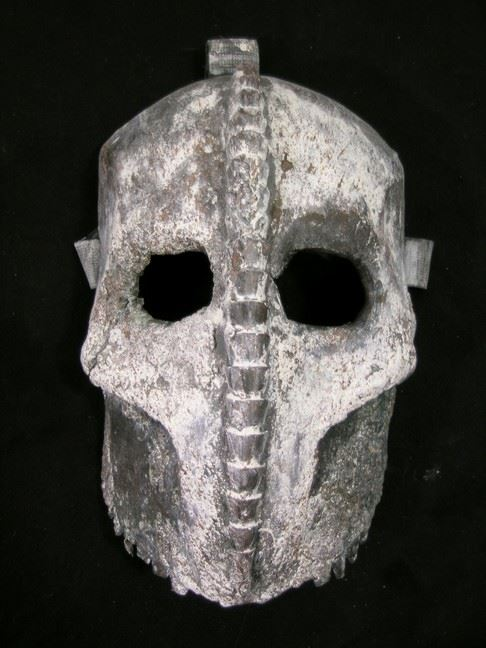
However, the mask is obviously a powerful and useful tool for the warrior. The mask can be a thing of terrifying significance – for example when entering battle – a warrior, enraged, with a mask is expressionless – the masked is a necessity – hiding the warrior’s agony, blood lust, nervousness, and fear, and creates a static image of warrior ready for battle – unflinching!
The Cumans – the fierce Warriors of the Steppe; whose warrior elite were known for wearing iron masks, shaped and formed in the likeness of a human face.
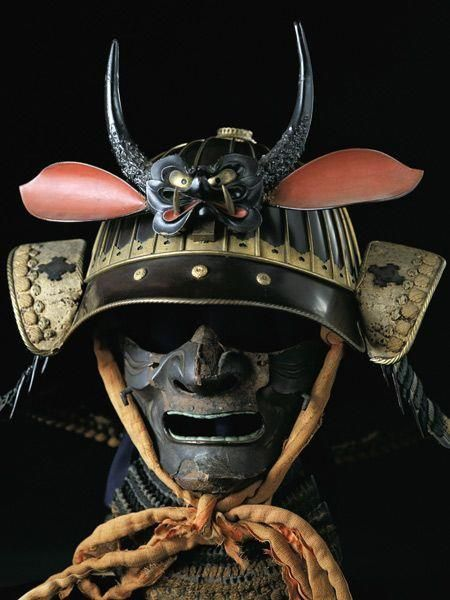
The Immortals were an elite infantry division of 10,000 soldiers in the army of the Achaemenid Empire. These Immortals wore Mengu-style metal masks, which appeared to be inhuman or disfigured faces. Japanese warriors, the Samurai, wore also fearsome masks.
The purpose of the mask is best demonstrated, I believe, in the masks of the African indigenous peoples; in the tribes of the great continent. African tribal masks play an important role in their traditional rituals and ceremonies. When used in ceremony and ritual they ensured a good harvest, address tribal needs, in times of peace or war, and convey spiritual presence in burial rituals. Some masks represent the spirits of dead ancestors. Others symbolise totem animals, creatures important to a tribe or family group. In many African tribes, masks symbolise the unseen, supernatural forces which benefit the communities. The mask is also intrinsically linked to the initiation of the warrior. The young warrior goes into the bush for his initiation, and he wears the mask for the first time, in his bid for manhood.
The Kpelie mask is a fine example of a face mask. This mask is not directly attached to the dancer’s head but is held in front of the face as part of the costume or head covering. Members of poro, a Senufo initiation association, wore small, finely carved face masks as insignia. The masks, known as kpeliye’e, feature delicate oval faces with geometric projections at the sides. Raised and incised scarification patterns ornamented, their smooth glossy surfaces. The feathers and animal horns attached reflected the power to counteract negative forces. One particular type of mask, called the Tiriki Seclusion Mask, represents the transition into adulthood. Young men must wear this fullbody mask for six-months, while entering a period of total seclusion as they train for the adult world. But it is only in the wearing and then removing the mask; that the contrast is created – a bid to become the true Self.
After all…
“What you hide in your heart, appears in your eyes”
The cannabis-infused beverages segment of America’s state-legal cannabis market seems to be performing admirably in one of the most unexpected states: Minnesota.
Favorable market conditions in the state have helped cannabis-beverage producers and retailers in the state earn millions of dollars in recent months, making Minnesota one of the best markets for marijuana drinks in not only the United States and Canada but Europe as well.
With recreational cannabis sales slated to begin in less than a year in the state, the recent success of the cannabis-infused drinks segment could be an indication that demand for cannabis and cannabis products among Minnesotans is quite high. Thanks to factors such as easy access, less cannabis-associated stigma and Minnesota’s location, cannabis-infused beverage retailers have been selling an average of more than $1 million worth of products every month.
State regulators allow Minnesotans to purchase cannabis drinks at grocery chains. restaurants, and liquor stores, meaning a significant percentage of Minnesota residents have easy access to cannabis drinks. Furthermore, with the closest states that allow recreational cannabis sales (Michigan and Illinois) being hours away, most residents and consumers from neighboring states have nowhere but Minnesota to purchase low-THC beverages.
Minnesota’s low-THC product segment was born when federal lawmakers passed the 2018 Farm Bill, legalizing the cultivation and sale of industrial hemp (cannabis with less than 0.3% THC) and its derivatives. Since Minnesota doesn’t require that retailers have a license to sell products infused with hemp-derived THC, the segment kicked into overdrive as soon as the Farm Bill became law close to five years ago.
According to Blunt Strategies partner and principal Leili Fatehi, the measure allowed millions of Minnesotans to purchase low-THC offerings as easily as they could buy alcohol.
Furthermore, Fatehi explains, consumers seem to be interested in engaging and learning more about marijuana-infused drinks and how to consume them safely.
Local manufacturers such as Surly Brewing Co. in Minneapolis and interstate players such as California-based Cann have been major winners in the recent cannabis-infused beverage sales boom.
The segment largely owes its success to a 2022 measure that legalized the sale of hemp-derived THC edibles in retail outlets, including convenience and grocery stores that are typically prohibited from taking part in the cannabis market in other states. While some pundits say the explosion in sales is indicative of the market’s demand for recreational cannabis, others believe that changes in adult-use cannabis policy in Minnesota could impact sales.
Minneapolis-based marijuana attorney Jason Tarasek says that recreational cannabis legalization could lead to increased licensing requirements and regulation for players in the hemp-derived THC segment.
On a plus side, the launch of recreational cannabis sales will also bring welcome business opportunities to nationwide ancillary companies such as Advanced Container Technologies Inc. (OTC: ACTX) as well as lead to the mushrooming of many marijuana enterprises.
NOTE TO INVESTORS: The latest news and updates relating to Advanced Container Technologies Inc. (OTC: ACTX) are available in the company’s newsroom at https://cnw.fm/ACTX
About CNW420
CNW420 spotlights the latest developments in the rapidly evolving cannabis industry through the release of two informative articles each business day. Our concise, informative content serves as a gateway for investors interested in the legalized cannabis sector and provides updates on how regulatory developments may impact financial markets. Articles are released each business day at 4:20 a.m. and 4:20 p.m. Eastern – our tribute to the time synonymous with cannabis culture. If marijuana and the burgeoning industry surrounding it are on your radar, CNW420 is for you! Check back daily to stay up-to-date on the latest milestones in the fast -changing world of cannabis.
To receive instant SMS alerts, text CANNABIS to 21000 (U.S. Mobile Phones Only)
Please see full terms of use and disclaimers on the CannabisNewsWire website applicable to all content provided by CNW420, wherever published or re-published: http://CNW.fm/Disclaimer
Do you have questions or are you interested in working with CNW420? Ask our Editor












Recent Comments