(Globe Newswire) Toronto — Lifeist Wellness Inc., a health-tech company that leverages advancements in science and technology to build breakthrough companies that transform human wellness, today highlighted the continued growth for Zest Cannabis, the cannabis brand acquired by Lifeist on July 21, 2023. While not yet a material portion of CannMart’s cannabis business, its growth is impressive and July marks the highest sales month on record for the brand.
Zest’s month-over-month sales has experienced steady growth from its initial market entry in August 2022. July 2023 marks its largest monthly unit sales to date, growing 39 per cent compared to the previous month in the key sales markets of Alberta and Ontario; driven substantially by the success of Zest Liquid Diamond vapes.
CannMart has expanded trade marketing and sales efforts for Zest, with an increase of points of distribution in the main sales provinces of Ontario with 16 per cent growth, 13 per cent in Alberta and 41 per cent in Manitoba. This accounts for a 22 per cent store penetration across Canada, 19 per cent in Ontario, 29 per cent in Alberta and 44 per cent in Manitoba, with continued growth expected in every region over the next quarter.
“On-boarding our new in-house brand Zest has been a great success as the combined efforts of the sales and marketing teams have continued to develop and broaden the brand’s in-store presence which has been very well received by our retail network and partners. The brand is competing well in saturated sub-segments, making a name for itself as a go-to liquid diamond vape and strong contender in the infused pre-roll sub-segment. The complementary aspects of the acquisition to CannMart marketing and distribution network are real and we believe it will contribute significantly to CannMart’s future top and bottom lines.” — Daniel Stern, CEO, CannMart
Advertisement
Corporate update
The company also announced that Barbara Boyd has resigned from the board of directors of the company effective August 1, 2023, to pursue other opportunities.
“Barbara has been an invaluable member of the Lifeist Board, and we have greatly benefited from her extensive knowledge and experience, as we worked to improve our corporate governance, and introduce efficiencies to our processes in general. On behalf of the Board, management, and the Company’s shareholders, I extend our heartfelt appreciation and best wishes to Barbara for continued success in her future endeavors.” — Daniel Stern, CEO, CannMart
The company also announced the grant of 1,650,000 restricted share units to members of the board of directors as part of their compensation and in accordance with the rules of the TSX Venture Exchange and the company’s restricted share unit plan. The RSUs vest on the date of the grant and are subject to TSXV approval.
(Globe Newswire) Vancouver — Agra Ventures Ltd., a company focused on the cannabis industry, will be proceeding with the previously announced consolidation of its issued and outstanding share capital, changing its name to “Digicann Ventures Inc.” and changing its stock ticker symbol on the Canadian Securities Exchange to “DCNN.”
The consolidation will be on the basis of every 25 old common shares into one new common share. The company has set Tuesday, August 8, 2023 as the effective date of the consolidation and the expected date of trading of the common shares on a post-consolidation basis on the CSE. The record date of the consolidation will be Wednesday, August 9, 2023. The company received approval from its shareholders for the consolidation at its annual general and special meeting that took place on July 21, 2023.
In association with, but not as a result of, the consolidation, the company’s name will be changed to “Digicann Ventures Inc.” and the symbol under which the common shares trade on the CSE will be changed to “DCNN”. The company’s new name is expected to take effect on the effective date of the consolidation and a new website will be launched at www.digicann.io. The name change was approved on July 21, 2023 by way of directors’ consent resolution in accordance with the articles of the company.
As a result of the consolidation, the issued and outstanding common shares will be reduced to approximately 6,531,785. No fractional shares will be issued by the company under the consolidation and any fraction will be rounded to the nearest whole number. The exercise or conversion price and the number of common shares issuable under any of the company’s outstanding convertible securities will be proportionately adjusted upon the consolidation. Shareholders of record as at the record date will receive a letter of transmittal providing instructions for the exchange of their common shares as soon as practicable following the record date.
The head of a regional Conservative electoral district association in New Brunswick has put forward a policy proposal to abolish excise tax on medical cannabis.
The proposal will be considered for inclusion in the Party platform as the Conservatives prepare for their upcoming national convention from September 7–9 in Quebec City.
The submission calls on the Conservative Party of Canada to adopt a policy that will “abolish the excise tax on medical cannabis, fostering compassionate patient care and promoting its potential as a ‘Made in Canada’ safer alternative to addictive opioids.”
It argues that ending this tax would encourage economic growth, support healthcare affordability, and could lessen opioid use.
The big thing is making sure that it’s done in a way to ensure that the [savings] are passed down to patients.
“Canadians seeking relief through medical cannabis face undue financial burdens due to the current excise tax,” reads the proposal. “This policy removes such inequities, emphasizing compassionate care. Moreover, amid an opioid crisis, medical cannabis may serve as a safer, homegrown alternative to highly addictive opioids. Simultaneously, it bolsters our local cannabis industry, spurring economic growth. Removing this tax also aligns with principles of fiscal conservatism, eliminating a regressive levy that disproportionately impacts those with chronic health conditions. This policy aligns compassionate care, potential reduction of opioid dependence, and economic growth, demonstrating a balanced approach to health and industry.”
Max Monahan-Ellison, board chair with Medical Cannabis Canada (MCC), a national, non-profit medical cannabis advocacy group, says MCC is broadly supportive of the proposal and points out individual Party members have previously supported similar messaging.
His main concern is that any such efforts are done in a way that benefits medical cannabis users, not just the companies they purchase from.
“Medical Cannabis Canada is very supportive of any progress on medical cannabis taxation,” Monahan-Ellison tells StratCann. “The big thing is making sure that it’s done in a way to ensure that the [savings] are passed down to patients.”
“How is this going to be done in a way that is the most effective for the patient?”
Blair Gibbs, a policy consultant based in Vancouver and a former advisor to the UK Prime Minister and a member of the Stanford Network for Addiction Policy, wrote an opinion piece earlier this year suggesting that Poileivre’s Conservatives could better take advantage of gaps in federal cannabis policy, including taxes on medical cannabis.
“Cutting taxes in the right way is always something Conservatives should do, and this proposal is long overdue,” Gibbs tells StratCann. “It was bad policy to apply the excise tax to medical products, undermining the distinction between two separate regulated products.
“Pierre Poilievre’s national party needs a balanced platform on cannabis that accepts the reality of a well-established, safe, legal recreational market, but they must also fix some of the flaws of the Trudeau regime. Changing the tax on cannabis to focus on potency and investing more in road policing and border enforcement against traffickers in illicit cannabis would be other steps the Conservatives should pledge to take if elected.”
Cannabis and Conservatives?
Although some Conservatives have made similar calls for the end of taxes on cannabis for medical purposes in the past, the platform proposal does stand in contrast to other conservative party messaging on cannabis, both medical and non-medical.
The Party’s former Shadow Minister of Health, Marilyn Gladu, who has a history of interesting comments on the subject, told the Globe and Mail in 2019 that the party would seek to ban home grows as well as personal and designated medical grow licenses while supporting larger companies over smaller craft and micro growers. She had also said the party was looking at paring back allowances for cannabis edibles and beverages.
“Conservatives believe that prescription medications should not be taxed. For consistency, this means that prescriptions for cannabis should also not be taxed,” Gladu said at the time.
Cannabidiol has been known to induce several pharmacological effects. CBD is approved as a medicinal product subject to prescription. However, regulatory difficulties arise from its origin being a narcotic plant or its status as an unapproved novel food ingredient.
Cannabis sativa L. naturally contains several different cannabinoids that are related to the elementary structure of cannabinol (CBN). The most prominent representative among the class of these compounds is Δ9-tetrahydrocannabinol (Δ9-THC). Due to the well-known psychotropic properties of Δ9-THC, only the cultivation of plant varieties with low THC contents is authorized in the European Union (EU). [1]
There is a discrepancy in terms of the legality of products derived from the hemp plant. Cannabis products have been listed in the United Nations (UN) single convention on narcotic drugs from 1961 and are therefore prohibited regardless of their Δ9-THC content. However, processed products, if the Δ9-THC content does not exceed certain levels and abuse as a narcotic drug can be ruled out. [2]
As explicitly excluded by the definition of cannabis in the UN single convention, seed products (e.g., hemp seed oil), without the cannabinoid-rich resin, are generally regarded as safe and may be marketed in the EU. [3]
Pharmacological experiments with mixtures and/or single cannabinoids can be traced back to the 1940s and 1950s, when some studies regarding THC, CBN and CBD were published although structures were only elucidated in the mid-1960s. The known psychotropic effects of cannabis were mainly attributed to Δ9-THC consequently to substantial research during the mid-1960s and early 1970s. [4]
In 1971, the UN released a convention listing psychotropic substances in four schedules ranging from Schedule I (most restrictive), including five Δ9-THC derivatives, to Schedule IV (least restrictive). While Δ9-THC is listed in Schedule II (controlled). [5]
A controversial topic discussed in the recent scientific literature, is the potential conversion of CBD into psychotropic cannabinoids. [6]
To better understand the pitfalls of cannabinoid research with controversial results, we may need to explain some major analytical challenges: studies reporting conversion of CBD under acidic conditions and invitro conditions (using artificial or simulated gastric juice).
The current debate is about whether results of invivo studies in animal may be transferred to invivo conditions in humans. Finally, the debate about the conversion is expanded by the question of whether CBD converts to other potentially psychotropic cannabinoids under storage conditions. [7]
Analytical Challenges
Despite the various problems arising from analytical challenges in the field of cannabis research, only 2% of all publications on cannabis deal with analytics. [8]
From their first detection, cannabinoids were mainly analysed by colour reactions, some of these tests were highly sensitive and enabled the proper differentiation. Besides that, thin layer chromatography (TLC), photometric and spectroscopicmethods were used as well. [9]
The development of gas chromatography (GC) in the early 1950s very soon reached the field of cannabis research.
The most important drawback of GC is due to high temperatures in the injector port and the column oven, acidic forms of cannabinoids are decarboxylated and are thus not detected in the resulting chromatogram. While this causes an underestimation of such compounds, it may also lead to a substantial overestimation of the decarboxylated active forms. [10]
Like GC, the invention of the high-performance liquid chromatography (HPLC) technique in the late 1960s quite immediately paved its way to the field of cannabis research. First reports on the use of HPLC started in 1975.
As multiple cannabinoids (e.g., Δ9-THC, CBD, and CBC) are isobaric isomers, they form identical signals and massspectra even with LC-MS/MS measurements. Hence, chromatographic methods with high separation performance are required for an unambiguous
peak assignment and avoidance of false positive results. [6]
Conversion of cannabidiol under acidic conditions
The acid-catalyzed conversion of CBD has been studied since the early 1940s. There are reports of the treatment of CBD with various acids and the conversion product was described to be a psychotropic cannabinoid, which the authors assumed to be either Δ9-THC or Δ8-THC. [11]
Later in 1966 other experiments described the correct structures of CBD, Δ9-THC and Δ8-THC based on careful spectroscopic studies (i.e., UV, IR, and NMR). Researchers were further able to verify the above-mentioned hypothesis that Δ9-THC was the main product if CBD was subjected to treatment with hydrochloric acid (HCl). The addition of p-toluenesulfonic acid, though, rather resulted in the formation of Δ8-THC. [12]
Conversion of CBD invitro conditions
In sight of the reported results, some may wonder if similar acid-catalyzed reactions are also possible in the acidic conditions of (artificial) gastric juice. The first report on the biotransformation of CBD to a derivative of the psychotropic Δ9-THC was presented in 1993. In their experiments, the authors incubated a CBD solution with hepatic microsomes of guinea pigs, rats, and mice, extracted the mixture, analyzed with GC/MS, and identified 6β-hydroxymethyl-Δ9-THC. [13]
More recently, studies investigated conversion products of CBD, which were formed upon subjection with simulated gastric juice and a physiological buffer solution.
Based on UPLC/UV and UPLC-MS/MS analyses, Δ9-THC and Δ8-THC were detected in simulated gastric juice and buffer after one to three hours of incubation. This led the authors to the conclusion that relevant levels of Δ9-THC and Δ8-THC may be formed in humans after oral consumption of CBD. [14]
In opposition to the above study, some researchers reported no observation of the formation of THC when CBD was incubated with artificial gastric juice or even stored under stress factors such as heat or light under moderate conditions. This study attached great importance to the physiological study design, especially about incubation times, temperatures during incubation and concentrations of solvents and analytes. [6]
Conversion of CBD invivo conditions
Even though the metabolism of CBD was studied in several animal species, in the early 1990s two researchers were the first to report on the human CBD metabolism. [15,16]
As they measured human urine samples with a GC/MS method after CBD was orally administered to, they found over 30 metabolites. Interestingly, they also reported the detection of two cyclized cannabinoids, which they termed “delta-6-THC” and “delta-1-THC” (the latter one most likely corresponds to Δ9-THC as termed by present nomenclature). [15]
They concluded that these analytes rather emerged artifactually in the urine sample than being metabolites formed in humans, as this would have caused visible “psychoactivity with obvious adverse effects for the patient”. [15]
This hypothesis was supported by the results of 14 patients with Huntington’s disease treated with a dose of CBD of 10 mg/kg/day and by the comparison of plasma levels of CBD with a group treated with a placebo. Over the course of six weeks, Δ9-THC was never detected in the plasma. [17]
Similar results were also reported while conducting a double-blinded study with16 healthy volunteers treated with either Δ9-THC (10 mg), CBD (600 mg) or a placebo. Nor were other psychotropic cannabinoids detected in insignificant quantities in the blood of patients treated with CBD, while the oral administration of Δ9-THC itself had both effects on the plasma concentration and measurable psychotropic potential. [18]
Conversion of cannabidiol during the storage
In a recent publication, after some consumer complaints noticing “THC-like effects” after taking CBD products, scholars listed multiple CBD products, which contained significant amounts of Δ9-THC and were thus reported in the Rapid Alert System for Food and Feed (RASFF) of the EU. [19]
The authors discussed three hypotheses for this effect:
CBD may have a psychotropic action itself; this idea was immediately ruled out due to missing scientific evidence that CBD exhibits psychotropic effects;
The transformation of CBD to Δ9-THC under invivo conditions; even though the authors rather neglected that option due to the results of their own conversion studies;
Δ9-THC may already be present in the CBD products as contamination. [6]
A further hypothesis is that other psychotropic cannabinoids are not present in the original CBD extract or CBD product, but potentially result from reactions under storage conditions. [6]
The mechanism of the main decomposition route for Δ9-THC ultimately leads to the formation of CBN. [20] This was proven when researchers found low levels of Δ9-THC but increased levels of CBN in marihuana samples stored for nearly 100 years. [21]
Another long-term study reported on the decomposition of Δ9-THC but also CBD to the final product CBN in samples stored for four years in different conditions. As the decay of CBD was half the difference between the decay of Δ9-THC and the formation of CBN, the authors postulated the degradation route of CBD to start with a cyclization to Δ9-THC, which is followed by the decomposition to CBN.
Notably, room temperature and daylight were found to increase the decomposition rates in the studies. [22, 23] A recent report also highlighted the role of oxygen in the decomposition process, as samples stored in contact with air showed higher decomposition rates of Δ9-THC and CBD both in daylight and dark conditions. [24]
Hence, considering the effects of acidic conditions, decomposition processes and their dependence on temperature, it is necessary to consider exposure to light and oxygen when storing CBD products, to keep their composition intact and make consumers feel safe not to incur adverse effects.
The most significant development in Europe’s marijuana market took an unexpected turn this year. Despite expectations, Germany decided against legalizing the recreational use of marijuana. Instead, the country diluted its plans for law reform following consultations with regulatory bodies.
Now, one might wonder if this decision sets a negative precedent for venture capitalists (VCs) investing in European cannabis startups. Surprisingly, it may not be all bad news; in fact, it could prove beneficial for some. Óskare Capital cofounder Oliver Lamb views Germany’s cautious approach positively, especially for the medical and pharmaceutical sectors.
Drawing lessons from North America’s experience, Lamb highlights the potential pitfalls of a hybrid recreational-medical market. The U.S. witnessed the adverse consequences of blurring lines between medical and recreational cannabis, hampering targeted medication development.
Matt Hawkins, founder of Entourage Effect Capital, concurs, stressing the importance of learning from past experiences to avoid such mishaps. Despite concerns about the limited addressable market for legal cannabis in Europe, influenced by Germany’s recent decision, some funds are not entirely discouraged. Hawkins admits that the scaling back in Germany has made the firm more cautious about investing in Europe. Nevertheless, officials still hold hope for the continent’s ability to create a commercial adult-use market, albeit recognizing the challenges.
Adding to the complexities, European cannabis startups are currently grappling with a global repricing wave initiated by investors. Many consider these companies to be overvalued, prompting caution in the investment landscape.
In this light, Emily Paxhia, cofounder of Poseidon Investment Management, advises cannabis entrepreneurs buckle down and persevere amid the slowdown, with survival becoming the top priority.
For companies aware that they might not endure these tough times, seeking potential buyers through consolidation emerges as a viable option. It is anticipated that mergers and acquisitions will become more common in the coming months. However, the market currently favors buyers, making it a challenging environment for sellers, as highlighted by Lamb.
Ultimately, while Germany’s decision to hold back on recreational legalization surprised many, it has opened up conversations about the delicate balance between medical and recreational cannabis markets. Investors and entrepreneurs alike must navigate these waters carefully, learning from the lessons of the past and making strategic decisions to thrive in this evolving industry. As the European cannabis market continues to develop, key attributes such as adaptation, resilience and foresight will be the essential ingredients for success.
As the approach in Germany shows, the medical side of marijuana isn’t as controversial as the substance’s recreational use. It is therefore no wonder that several entities such as IGC Pharma Inc. (NYSE American: IGC) are seeking to develop pharmaceutical-grade formulations from marijuana compounds, including THC. Such an approach sidesteps the politics often linked to marijuana and follows the clearly defined drug development process.
NOTE TO INVESTORS: The latest news and updates relating to IGC Pharma Inc. (NYSE American: IGC) are available in the company’s newsroom at https://cnw.fm/IGC
About CNW420
CNW420 spotlights the latest developments in the rapidly evolving cannabis industry through the release of two informative articles each business day. Our concise, informative content serves as a gateway for investors interested in the legalized cannabis sector and provides updates on how regulatory developments may impact financial markets. Articles are released each business day at 4:20 a.m. and 4:20 p.m. Eastern – our tribute to the time synonymous with cannabis culture. If marijuana and the burgeoning industry surrounding it are on your radar, CNW420 is for you! Check back daily to stay up-to-date on the latest milestones in the fast -changing world of cannabis.
To receive instant SMS alerts, text CANNABIS to 21000 (U.S. Mobile Phones Only)
Please see full terms of use and disclaimers on the CannabisNewsWire website applicable to all content provided by CNW420, wherever published or re-published: http://CNW.fm/Disclaimer
Do you have questions or are you interested in working with CNW420? Ask our Editor
Bugs! Just the word itself has connotations of annoyance and intrusiveness. Not to mention that there’s an entire industry dedicated to destroying bugs on our grass and in our gardens. But that doesn’t mean that all bugs are bad. Some are even good for your garden and yard!
Ladybugs
Despite their name, Ladybugs aren’t very “ladylike.” Especially when it comes to their larval stage. Rather than sitting around drinking afternoon tea like the ladies of Downton Abbey, larval ladybugs attack and feed on aphids like the bad guys who killed her family in one of those kick-ass revenge movies. Aphids are sap-sucking insects that can kill your plants, and ladybug larvae can chow down on up to 40 of them every hour.
Dragonflies
Dragonflies lay their eggs near water, so if you don’t have waterfront property, you’ll want to install a little pond or fountain in your garden to attract them to the area. Then sit back and let them do their thing. Dragonflies eat flying pests – flies, mosquitos, moths, and midges. And with the ability to fly at speeds up to 35 mph and eat their weight in bugs every half hour, few will escape these beneficial predators.
Braconid Wasp
If you’re looking for a pollinator, stick to bees. While wasps pollinate, the lack of fuzzy legs makes them less efficient at this essential task. However, certain wasps can be helpful for things other than pollinating. As tomato gardeners know, the tomato hornworm is no friend to your bright red fruit. But you know who isn’t a friend to the tomato hornworm? That’s right, the braconid wasp.
Robber Flies
No one likes flies, and robbers aren’t something we want either. However, before you go swatting the robber flies away, allow me to illuminate how they can be positive in your garden. Robber flies, also known as assassin flies, get their name from being so aggressive in their predatory nature. And this is good for you because they put that predatory aggressiveness to use attacking other insects – many of which are garden pests. Also, unless threatened, they don’t attack humans.
Green Lacewing
Adult green Lacewings eat pollen and nectar, which isn’t beneficial to your garden. However, they also lay up to 200 eggs at a time, and those little guys are what you’re waiting for regarding benefits. From aphids and spider mites to whiteflies, thrips, grasshoppers, small caterpillars, and some beetles – green lacewing larvae eat them all. And they can consume up to 200 pests per week. Do the math: 200 larvae times 200 pests equals fewer destructive bugs in your garden every week. And they’re also commercially available for purchase at certain stores and online.
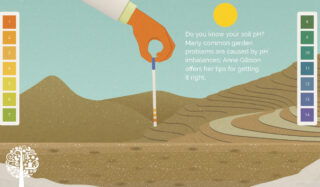
Soil pH (or hydrogen ion concentration) indicates how acid or alkaline our soil or growing medium is. It is measured in pH units to show on a scale of 0 to 14 whether the soil is neutral, acidic or alkaline. Soils with a pH value of 6.5 to 7.5 are considered neutral. Over 7.5 indicates an alkaline soil pH, whereas below 6.5 is acidic.
Why Testing Your Soil pH Is Important
Soil pH directly affects the availability and uptake of nutrients and chemicals soluble in soil water by plant roots. The further from neutral the soil pH is, the less total nutrient uptake occurs, leading to nutrient deficiencies. However, the maximum mineral nutrient availability occurs between pH 6.5-7.5.
In Australia, our native soils vary widely. Coastal lime soils tend to be alkaline. Volcanic acid soils, compacted poor quality ‘fill’ soil in urban new housing areas, and those with higher organic matter, like compost, influence soil pH. Other factors that impact pH include soil type (sandy, clay or loam), temperature and high rainfall. Commercial blends of potting soils are pH tested, so consumers are confident they are getting a reasonably balanced input.
Many common garden problems are due to soil pH imbalances, so it’s vital to test, monitor and adjust the soil to maintain it within the optimal range. This also applies to working with a potting or seed-raising mix.
I recently worked with a client who amended her potting medium with several ingredients, including coir peat, compost and vermiculite. She had poor seed germination and seedling failures. When testing the pH of the mix, we found it to be highly alkaline at 8.5. I suggested she test the individual inputs to see where the problem lay, and surprisingly, the compost supplier was the culprit! It was a good lesson in testing every batch and understanding the imbalances and negative consequences.
Soil pH Impacts Nutrients, Minerals and Growth
Plants obtain 14 of the 17 essential nutrients in a dissolved form in soil water. Highly acidic soils (pH 4.0-5.0) can contain toxic concentrations of minerals like aluminum, manganese and iron that can affect plant growth.
Beneficial soil bacteria that perform a vital role in decomposing organic materials are hampered in highly acidic soils. This impacts the breakdown and availability of nutrients, especially nitrogen. Essential minerals become ‘locked up’. So, a balanced pH is a key to plant and soil health, including the biology.
Tips for Taking a Soil Test using a Kit
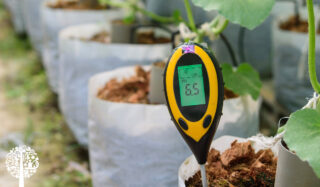
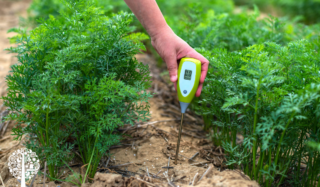
An accurate method of determining the soil pH is by using a pH meter. This is simply inserted into the soil, and a reading is taken. Another easy method uses special indicators or dyes that are matched against a color chart. The steps are quite simple:
You may need to test multiple soil samples individually for the best results if you have many garden beds and pots.
I test each zone and batch of the potting mix to know if there are any pH issues I need to address.
If you want an average pH of your garden soil, you can take multiple samples and combine them for testing. However, you may risk missing an issue in one area that could need remediation to correct a strongly acidic or alkaline soil.
If you are collecting soil from a sizeable in-ground garden bed, dig a hole down to 10 cm from the surface. Take at least five labeled samples from different parts of the bed. Test each separately; this will provide you with data to compare. If all samples are pretty close in pH values, you can make any soil amendments to the entire area. If one or more of the samples are significantly different, you can treat them individually.
Remove any fibrous organic materials or stones by hand or sieve before testing.
When testing potting mix – either homemade or commercial – thoroughly mix the blend before taking an average sample. I’ve found results vary considerably by missing this step!
For small potted plants, remove the plant from the pot. Take a sample of the potting mix immediately around the rootball.
For potting mix in large tubs where you can’t remove the plant, take a sample as deep as possible around the rootball. Use a sharp trowel to dig down along the inside wall of the tub to collect the sample and blend it thoroughly before testing.
Kit directions are easy to follow:
Add a flat teaspoon of the soil or potting mix sample to the test plate surface.
Squeeze a few drops of the purple dye indicator liquid onto it and mix well into a thick paste.
Dust the white powder over the paste and wait about one minute for the color to change.
Use the color card with pH values from acidic to alkaline to match as closely as possible to your sample. Compare the soil sample in natural light for an accurate color match.
I record my pH tests in a Garden Journal. This provides accurate data to work with if any amendments need to be added to adjust soil pH. Keeping a record is so valuable. You can look back to compare the pH and any improvements over time. An annual soil test will reveal any action you may need to take. If it’s within your budget, start with a professional soil test. Lab results provide you with exact inputs to correct the pH and avoid any potential nutrient deficiencies.
If the soil is too acidic: less than 6.5 = low pH (most common for Australian soils):
The quickest solution is to add high-quality organic matter in the form of compost with a neutral pH, so you can start planting ASAP. Adding humus (broken down compost) is the best way of changing pH naturally. Let the soil biology do the work!
Acidic soils tend to attract fungi and may be fungally dominant.
Make a ‘compost tea’ with a handful of compost in an old sock or stocking dangled over a bucket. You can add a small lid of liquid seaweed, fish emulsion, worm leachate from a worm farm and a tablespoon of molasses to help feed beneficial microbes. Ideally, use a pump to aerate the compost tea for 12-18 hours and use immediately. Dilute and water in or spray over your soil and plants.
You can also plant into ‘pockets’ of compost or potting mix while you remediate a larger area of the garden. Simply dig a hole bigger and deeper than the plant you want to grow, and fill this with your compost or potting mix. This strategy will enable you to keep growing while improving the soil in your garden. As the plant establishes, its roots will use the balanced nutrients and moisture in the potting mix or compost so it won’t suffer while you work on the surrounding soil.
If you are not getting a professional soil test done, it may be appropriate to add agricultural lime, not builder’s lime, to raise the pH if it’s too acidic. As a guide, carefully apply 100g/meter. The most accurate way to apply lime is after a professional soil test analysis, which will show you which minerals are deficient or in surplus. Again, it will take a while to increase the pH when you amend the soil using lime. You could expect to see a change in the pH within six months.
If soil is too alkaline: greater than 7.5 = high pH:
This soil will be harder to rebalance than acidic soil (<6.5) and likely contain more bacteria than fungi.
The quickest solution is to add high-quality organic matter in the form of compost with a neutral pH so you can start planting ASAP. Adding humus (broken down compost) is the best way of changing pH. Again, let soil biology do the work!
You can also plant into ‘pockets’ of compost or potting mix while you remediate a larger area of the garden.
Add green manure crops every season to improve soil health, organic matter content and increase microbial activity.
In an extreme situation, you could use powdered sulfur. However, this option has pros and cons! Be careful, as sulphur is anti-microbial and can kill off your biology if applied regularly. You could take the approach of making an initial application by using one handful/square meter and again annually after testing if still needed. Unfortunately, adding sulfur to the soil is a slow method of adjusting the pH and is affected by moisture and soil life. In highly alkaline soil, it’s likely you would not notice a change in the soil pH for about six months.
When a plant expends energy adjusting the pH inside its cells and outside in the soil, its overall growth suffers. This is why we sometimes have to step in to adjust the pH to create a more balanced environment for our plants to grow. But ultimately, plants are in control! As Jeff Lowenfels, author of ‘Teaming with Microbes’ explains, “Plants synthesize and release exudates of various components that adjust the pH to where it should be.” Now and then, though, we can give them a helping hand for a healthier, thriving garden.
The basic rules are to add compost, mulch and apply compost teas. These steps will help improve your soil pH, increase soil biology (fungi, bacteria and worms) and create a buffer for both acidic and alkaline soil types.
If you’re reading this article, chances are that you’ve been a spiritual seeker for a while.
You may have explored many different paths and dabbled in a variety of practices. But at some point, you might wonder whether your efforts are reaping deeper benefits. In other words, how can you spot the fruit of your labor?
Spiritual maturity is a sign that you’ve not just learned and accumulated a lot of knowledge, but you’ve actually turned that knowledge into wisdom. In other words, you’re walking the talk.
Like a caterpillar that undergoes a process of dissolution and transformation, you also have experienced many breakdowns and breakthroughs. And you’ve emerged on the other side feeling somehow different, but at the same time, the same.
How can you tell whether you’ve matured or not? I’ll explore this question with you in this article and share with you some signs to look out for.
Table of contents
What is Spiritual Maturity?
Spiritual maturity is the experience of embodying the qualities of compassion, wisdom, and discernment. When a person is spiritually mature, they have moved from a self-centered way of living life to an other-centered way of approaching life.
What Spiritual Maturity Isn’t
Here I want to emphasize that spiritual maturity isn’t some egotistical badge of honor signifying how “wise” or “enlightened” someone is. After all, when we really self-inquire into the nature of the self or the “me,” we will soon realize that it’s just a bundle of thoughts and that, in reality, the me doesn’t exist outside of the mind. So how can “I” be “spiritually mature”? That’s just the ego talking.
As such, spiritual maturity is a process that happens organically without “our” doing. Just like it takes a while for grapes to turn into wine, rings to form in a tree trunk, or a diamond to be formed in the depth of the earth, so too does it take a while for maturity to happen.
9 Signs of Spiritual Immaturity
We’re all spiritually immature at one point or another, and I don’t think there’s any point at which we can say that we’re “100% spiritually mature” (after all, that would be a very immature thing to brag about!).
In reality, spiritual maturity is a process, a wild unfoldment of life. Having humility and knowing areas where we might still be spiritually immature can be helpful and illuminating.
Some examples and signs of spiritual immaturity include the following:
Having rigid black-and-white ideas about spirituality, life, self, and others
Difficulty embracing paradox and nuance
Being overly idealistic
Believing that freedom, peace, happiness, etc., is somewhere in the future or past
There are many other signs, but these are a start.
Psychospiritual therapist Neil M. Goldsmith shares an interesting perspective on spiritual maturity and immaturity and the intersection with psychology, writing:
With the exception of these biologically based illnesses, psychology must come to be seen as the science of spiritual maturity. We call people neurotic when, in reality, it’s not a medical illness they are suffering from, but spiritual immaturity. We must redefine spirituality, too, not as supernatural, but as simply the natural unfolding toward the wise, mature end of the normal curve of human developmental psychology.
Focusing only on spiritual growth while totally neglecting psychological development is, therefore, another sign of spiritual immaturity. Both spirituality and psychology must come together for there to be well-rounded development.
Here are the eleven signs of spiritual maturity broken down in a way that I hope, is easy to understand:
1. Realistic, Not Idealistic
An idealistic approach to life seeks perfection: a perfect mind, a perfect body, a perfect family, a perfect job, and so on. However, spiritual maturity involves understanding that these utopian ideals are ultimately unhelpful and unrealistic.
Furthermore, when applied to the spiritual journey, idealism is harmful because it romanticizes certain teachers and states of consciousness, which can lead to becoming trapped and walking down the wrong path. Therefore, instead of being idealistic, spiritual maturity involves non-idealism or being realistic and down-to-earth.
2. Being Kind and Compassionate
Kindness comes from an open heart, and an open heart is a sign of spiritual maturity. Without practicing kindness toward ourselves for our shortcomings and human flaws and others for their imperfections, we live a constricted and unhappy life. And the more constricted and mind-centered we are, the more immature we are.
Practicing self-love and coming from a place of compassion toward others helps us to step outside of the judgmental and rejecting mind and into the wise all-embracing heart.
3. Patience, Persistence, and Commitment
We live in an instant gratification world where we want fast results, and we want them now. But that’s not how the spiritual path works. A big part of spiritual maturity is understanding that everything in life works in cycles. Birth, death, and rebirth are part of our inner and outer landscapes, and there is a season for everything.
As such, being patient, persistent, and committed are all signs of a spiritually mature approach to life, knowing that awakening isn’t linear, but is instead cyclical.
4. Present-Moment Focus
Having a present-moment focus means finding the doorway to peace, freedom, and love right here and right now. The mind tends to imagine that peace, freedom, and love can only be found in the future, in some ideal situation. But spiritual maturity is about finding the gateway to freedom in whatever situation we find ourselves in within life. As Buddha said, “Only here can we find true liberation.”
5. Down-to-Earth and Integrated
At the start of our inner paths, it’s normal to compartmentalize our spirituality and file it away neatly from the rest of our “everyday mundane lives.” But at some point, to move into more spiritual maturity, we need to merge both the sacred and mundane – and that is what making our spiritual lives down-to-earth and integrated is all about.
The best way to directly experience all that we learn about is to actively incorporate it into our life at work, our personal relationships, and even the way we run our households. In this way, our spiritual paths aren’t merely a separate practice we dedicate 15 minutes to in the morning – they become our entire lives. In other words, everything we do is done in service to the divine.
6. Questioning Everything and Being a Freethinker
Being able to question those who teach us is the next aspect of spiritual maturity. Blindly following or naively believing everything that others in positions of authority say isn’t a wise idea. In fact, it’s very dangerous to go along with what certain spiritual teachers and gurus say without asking our own questions. (This is how cults and destructive groupthink are born.)
We need to be freethinkers and find the truth out for ourselves directly. We need to be the wolf, not the sheep, and sniff out what’s true from what’s false – it’s our right to do this!
There’s no point in accepting everything someone says without experiencing it for ourselves (yes, especially if they appear all-knowing and in a special place of high authority!). Questioning and cultivating spiritual discernment are of utmost priority and importance and are central to spiritual maturity.
7. Ability to Be Flexible
Being flexible means understanding that there’s no one “perfect and absolute way” to walk the spiritual path. Dogmatically holding onto beliefs about how something “should” or “shouldn’t” be done on the awakening journey is just a sign of immaturity and an egocentric fixation on beliefs. Flexibility allows for nuance, differentiation, and diversity which fosters an environment of peace and tolerance. Rejecting others because of what they believe creates fear and resentment, which is certainly not a sign of spiritual maturity.
8. Embracing Polarities
Black-and-white thinking results in a dualistic and painfully divided way of seeing and experiencing the world. However, when we learn how to embrace opposites and polarities: human and divine, sacred and wild, happy and sad, angry and peaceful, right and wrong – we find harmony and wholeness. We touch into non-duality, which is a mature way of relating to life because it goes beyond the mind and into the very nature of being.
9. We-Centered Instead of Me-Centered
Spiritual maturity is about moving from a me-centered way of experiencing life to a we-centered approach where we can experience the interconnectedness of everything. When we are in relationship with life, we find a sense of harmony and flow. But when we are in resistance to life (the opposite of relating), we feel cut off, disconnected, and alone. Spiritual maturity involves moving from resistance to relating with the various situations, people, and experiences that emerge, no matter how difficult.
10. Embracing the Simple Things in Life
Wanting to look, behave, or feel special and “super enlightened” or “extraordinarily awakened” is a sign of immaturity and that the ego is at work behind the scenes. Embracing ordinariness and the simple things in life, on the other hand, is a sign of spiritual maturity because it embraces ourselves and life as it is. There’s no need to behave a certain way, look a certain way, speak in a special way, or add or subtract anything from life. Life is seen to be fine as it is. The ordinary is extraordinary. Spiritual maturity means being comfortable with being yourself just as you are and operating in a very down-to-earth way.
11. Nondual Consciousness
Nondual consciousness sees unity within everything, and as such, it’s a sign of spiritual maturity. When we live through the mind, we divide and cut up the world into concepts and ideas, missing the wholeness that is already right here, right now, underneath thought. This tendency to divide the world and to operate from an isolated little “me” (which is another thought) is at the root of suffering.
As such, nondual consciousness is a return back to life-as-it-is before the overactive mind came in and dissected and divided it into various labels, beliefs, and ideas. The return to this way of seeing is what has been referred to through the ages as the path back to heaven, freedom, oneness, enlightenment, or Self-Realization.
You can read more about this topic in my article on non-duality.
***
Spiritual maturity isn’t something you can artificially cultivate, force into your life, or wear as a badge of honor. Instead, it’s a byproduct of being sincere, committed, humble, and open-hearted on the spiritual awakening journey. In other words, spiritual maturity is something that is earned through consistent effort and a lot of trial and error.
I hope this guide has helped to illuminate the various aspects of spiritual maturity so that you can see areas of your own life that may be imbalanced or unhealthy (or areas in which you’ve grown!).
I’d love to hear your reflections in the comments!
About Aletheia
Aletheia is a prolific psychospiritual writer, author, educator, and guide whose work has touched the lives of millions worldwide. As a survivor of fundamentalist religious abuse, her mission is to help others find love, strength, and inner light in even the darkest places. She is the author of hundreds of popular articles, as well as numerous books and journals on the topics of Self-Love, Spiritual Awakening, and more. [Read More]



























Recent Comments