The article covers the concentration of cannabidiol in hypertensive women and men using the company’s patented DehydraTECH(TM)-processed CBD
The global cardiovascular drugs market is expected to grow from $146.51 billion in 2021, reaching $173.48 billion in 2026, growing at a CAGR of 3.1%
The article supports Lexaria’s efforts as it pursues IND status from the FDA for DehydraTECH-CBD as a potential treatment for hypertension
Company is planning to begin preparations for a clinical trial that could start as early as the fourth quarter
Lexaria Bioscience (NASDAQ: LEXX), a global innovator in drug delivery platforms, recently announced that its groundbreaking research utilizing its patented DehydraTECH(TM)-processed cannabidiol (DehydraTECH-C
BD) has been published in eight peer-reviewed articles across six different publications. Lexaria’s research into DehydraTECH-CBD is being considered for indications including hypertension, diabetes, epilepsy, and more. Hypertension, heart disease, and diabetes are broad fields of interest for the company, with DehydraTECH-CBD generating positive pilot-study data.
“We’re proud of the impressive amount of research that our Company has been able to develop through its HYPER-H21 series of clinical studies that has now been assessed by a variety of our respected peers,” said John Docherty, President of Lexaria (https://cnw.fm/U97ZK). “Lexaria is establishing itself as one of the world’s leaders in the investigation of cannabidiol for the purposes of controlling human blood pressure, and we are now focused on launching an FDA-registered IND program to formally investigate DehydraTECH-CBD for hypertension this year.”
The global cardiovascular drugs market is expected to grow from $146.51 billion in 2021, reaching $173.48 billion in 2026, growing at a CAGR of 3.1%. The market’s growth is supported by the increase in sedentary jobs, busy lifestyles, and changing consumer preferences – factors affecting the disease profile in world populations. North America contributed as the largest cardiovascular drug region in 2021 (https://cnw.fm/xu8bk).
The most recent publication in June 2023 in the peer-reviewed International Journal of Molecular Sciences is “Differences in Plasma Cannabidiol Concentrations in Women and Men: A Randomized, Placebo-Controlled, Crossover Study” (https://cnw.fm/mmsva). The addition of this research article builds on the growing body of peer-reviewed literature developed by Lexaria’s leading research team into the effects of DehydraTECH-CBD and human health.
The findings and conclusions from the most recently published article revolve around the concentrations of CBD in a subject’s plasma and the bioavailability of the drug, examining the potential therapeutic benefits of CBD in the triple-blind study. Of the 62 hypertensive volunteers, concentrations of CBD were found to be higher in women and correlated with the proportion of adipose tissue. Lexaria found that the difference between the sexes was attributed to higher levels of fat tissue in women compared to men, and the men’s higher metabolism contributed to lower levels of CBD during the study.
Lexaria’s patented DehydraTECH technology improves how active pharmaceutical ingredients (“APIs”) enter the bloodstream by promoting healthier oral ingestion methods and increasing the effectiveness of fat-soluble molecules. DehydraTECH is covered by 34 granted patents and many pending patents.
The benefits of using DehydraTECH technology include:
Improves the speed of onset, with effects felt in minutes
Increased bioavailability by more effectively delivering the drug into the bloodstream
Increased brain absorption, with testing suggesting up to 17x improvement
Reduction in drug administration costs through a higher ratio of drug delivery
Lexaria’s next steps for its hypertension program include IND submission and additional preparations for its clinical trial. If the FDA clears the IND, Lexaria could begin its Phase Ib study as early as the fourth quarter of this year.
NOTE TO INVESTORS: The latest news and updates relating to LEXX are available in the company’s newsroom at https://cnw.fm/LEXX
About CannabisNewsWire
CannabisNewsWire (CNW) is an information service that provides (1) access to our news aggregation and syndication servers, (2) CannabisNewsBreaks that summarize corporate news and information, (3) enhanced press release services, (4) social media distribution and optimization services, and (5) a full array of corporate communication solutions. As a multifaceted financial news and content distribution company with an extensive team of contributing journalists and writers, CNW is uniquely positioned to best serve private and public companies that desire to reach a wide audience of investors, consumers, journalists and the general public. CNW has an ever-growing distribution network of more than 5,000 key syndication outlets across the country. By cutting through the overload of information in today’s market, CNW brings its clients unparalleled visibility, recognition and brand awareness. CNW is where news, content and information converge.
To receive instant SMS alerts, text CANNABIS to 21000 (U.S. Mobile Phones Only)
Please see full terms of use and disclaimers on the CannabisNewsWire website applicable to all content provided by CNW, wherever published or re-published: http://CNW.fm/Disclaimer
Do you have questions or are you interested in working with CNW? Ask our Editor
States with medical cannabis markets have begun sharing data with the Biden administration to aid in the government’s review of marijuana’s federal classification. While more than 30 states may have legalized medical cannabis use over the past two decades, cannabis still remains illegal at the federal level, classified as a Schedule I drug with no medical applications alongside dangerous drugs like heroin, and cocaine.
However, the fact that cannabis has several proven medical applications and is already being used by millions of Americans for therapeutic reasons shows that cannabis doesn’t belong in the same class as cocaine or heroin. Efforts to legalize the plant at the state level have been quite successful, but it doesn’t seem federal legalization will happen any time soon.
Still, regulators are taking their time reviewing federal cannabis policies, and the medical cannabis data provided by states will be sure to aid their efforts. MJBizDaily recently reported that the Department of Health and Human Services (HHS) and the U.S. Food and Drug Administration (FDA) acquired this critical data from at least five medical marijuana states. The data will let federal researchers obtain a much more comprehensive look into cannabis use in America and the controversial plant’s potential as a medication than any peer-review study would allow.
President Joe Biden ordered a review of the country’s federal cannabis policies in late January and asked the secretary of the HHS and the U.S. attorney general to begin the review process. He said that Schedule I of the Controlled Substances Act where cannabis is classified is meant for the “most dangerous substances,” noting that it is a higher classification than methamphetamine and fentanyl, which are both playing a key role in America’s overdose epidemic.
Officials from Massachusetts, Maryland, Utah, Illinois and Minnesota, the states which shared their medical cannabis data, hope they can help accelerate the review of the Controlled Substances Act (CSA) because it is the sole barrier to legalizing cannabis at the federal level.
Federal prohibition makes it extremely difficult for cannabis businesses to operate as it prevents them from accessing banking services, tax relief and even capital. It also prohibits interstate cannabis commerce and forces each state market to be its own ecosystem.
If the ongoing review results in marijuana’s removal from Schedule I of the CSA, it could result in lower federal cannabis taxes, significantly greater access to financial services and capital and interstate commerce. It could even pave the way for federal legalization.
Over time, marijuana has demonstrated its medical potential, which is probably why companies such as IGC Pharma Inc. (NYSE American: IGC) are willing to stake millions of dollars to research and develop THC-based formulations for chronic pain. These formulations are expected to go through the FDA-approval process before being put on the market.
NOTE TO INVESTORS: The latest news and updates relating to IGC Pharma Inc. (NYSE American: IGC) are available in the company’s newsroom at https://cnw.fm/IGC
About CNW420
CNW420 spotlights the latest developments in the rapidly evolving cannabis industry through the release of two informative articles each business day. Our concise, informative content serves as a gateway for investors interested in the legalized cannabis sector and provides updates on how regulatory developments may impact financial markets. Articles are released each business day at 4:20 a.m. and 4:20 p.m. Eastern – our tribute to the time synonymous with cannabis culture. If marijuana and the burgeoning industry surrounding it are on your radar, CNW420 is for you! Check back daily to stay up-to-date on the latest milestones in the fast -changing world of cannabis.
To receive instant SMS alerts, text CANNABIS to 21000 (U.S. Mobile Phones Only)
Please see full terms of use and disclaimers on the CannabisNewsWire website applicable to all content provided by CNW420, wherever published or re-published: http://CNW.fm/Disclaimer
Do you have questions or are you interested in working with CNW420? Ask our Editor
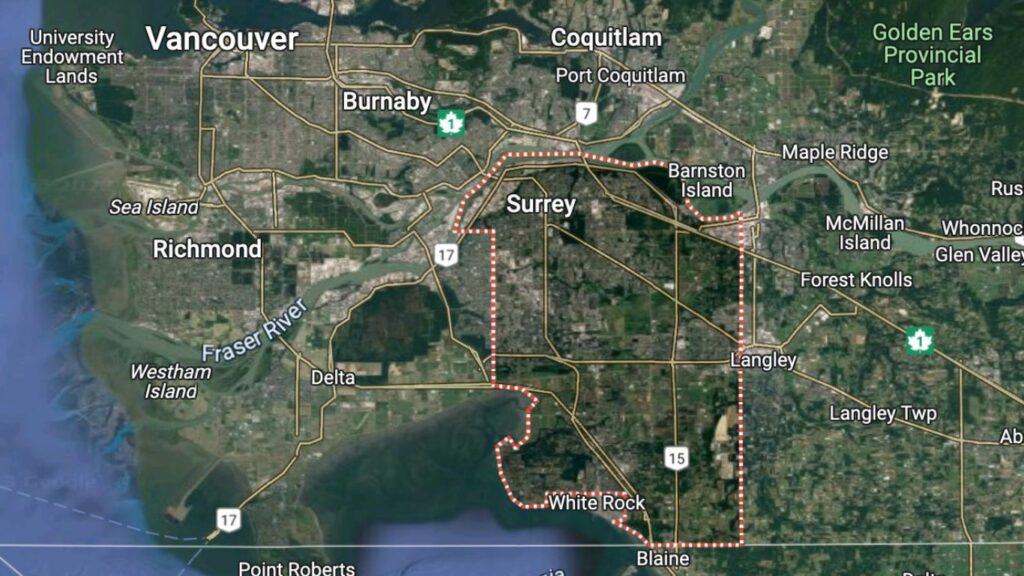
Surrey City Council may soon consider allowing cannabis stores in BC’s second-largest city.
Surrey initially banned cannabis stores entirely. In March, Mayor Brenda Locke told StratCann that the city is developing a plan to potentially consider applications.
The city’s Planning & Development Department and the Engineering Department posted a staff report on July 20, to be considered at the next council meeting on July 24, that seeks council approval of a policy framework for regulating cannabis retail stores.
There is an opportunity for Surrey to create a structured, strategic, and responsible policy to allow cannabis operators to exist in Surrey.
Anita Huberman, President & CEO of the Surrey Board of Trade
Staff are proposing a general framework for regulating cannabis retail stores in Surrey and recommending a city‐owned site at 13455–72 Avenue in the Newton Town Centre as an initial “pilot” location for a cannabis retail store.
The plan would also initially limit the number of store locations to one in each of Surrey’s six Town Centres as designated in the Official Community Plan (City Centre, Guildford, Fleetwood, Newton, Cloverdale, and Semiahmoo), with a preference for a city‐owned site in each Town Centre.
For these locations, the city would hold a competitive process to select a business operator based on specific criteria and a scoring system that is still to be determined. If no city-owned site is available in a Town Centre that meets locational criteria, a competitive process would be held to select both a site and business operator.
If Council supports the Newton Town Centre pilot site location, staff will prepare a city‐initiated rezoning proposal for Council’s consideration in the Fall of 2023, along with a concurrent selection process of a business operator for this location.
Staff also recommend that the city close and refund application fees for two locations previously filed with the city before any regulatory framework. These locations are 7380 King George Boulevard (7923‐0066‐00) and 13650–102 Avenue (7923‐0048‐00).
If Council approves the recommendations in this report, city staff will bring forward a more detailed report regarding the retailer selection process, licensing conditions and criteria, as well as a proposed monitoring and reporting process for council’s consideration.
“I understand that each city and community has its own specific needs. I am enthusiastic about collaborating with the City of Surrey to ensure the success of their approach.”
Vikram Sachdeva, Seed & Stone
Vikram Sachdeva, the CEO of Water Leaf Management Services, a Songhees Nation business initiative, says he’s pleased with these initial plans for a cannabis policy framework. Acknowledging that the city has taken a cautious approach to cannabis retail policy compared to other municipalities, Sachdeva says, “I wholeheartedly embrace this unique approach because I understand that each city and community has its own specific needs. I am enthusiastic about collaborating with the City of Surrey to ensure the success of their approach.”
Water Leaf Management provides operational services to all Seed & Stone and Songhees Cannabis stores. Seed & Stone holds the distinction of being the first to obtain licenses in Delta, Hope, and Coquitlam, and has recently applied to be the first retailer in Pitt Meadows.
The Surrey Board of Trade released a report earlier this year calling on the local government to begin allowing cannabis retailers to operate in the municipality.
“There is an opportunity for Surrey to create a structured, strategic, and responsible policy to allow cannabis operators to exist in Surrey,” said Anita Huberman, President & CEO of the Surrey Board of Trade at the time.
“This includes implementing an efficient cannabis regulatory framework, including amendments to zoning bylaws, business licence bylaws, bylaw notice enforcement bylaws, and municipal ticket information bylaws. This type of framework will provide regulations on the locations and operations of cannabis production and processing facilities and retail stores for Surrey.”
Related Articles
Featured image of Queensborough Cannabis Co in Delta, on the border with Surrey. Both images via Google.
In order to free humanity from the invisible chains that have been put on every single human being on this planet, except for the rulers, of course, you will need to examine your own belief system. There is one big lie that most humans still believe and the belief in that lie is keeping them and others enslaved.
“The best slave is the one who thinks he is free.” ― Johann von Goethe
“If you want to improve society, there is a clear answer. Yet, that answer won’t be so clear if you partake in the problem and don’t realize it.” ― Cory Edmund Endrulat
It is only a matter of time before everyone realizes this lie and we start to see real change. If you are still reveling in your slavery, boring for your new master, and think that others have the right to rule you and steal from you while you may only obey, you’re still their perfect slave. The ruling class truly doesn’t care what side you are on (right or left, democrat or Republican) they only care that you pick a side. This makes the division among slaves easier and readily available for their control.
The belief in “authority” has been proven to be the most disastrous dogmatic belief human beings have held for millennia. There have been psychological experiments proving that humans are willing to harm others and themselves if an “authority” figure tells them to. They willingly turn off their morality in exchange for servitude.
The belief that some have the right to rule and others have only the obligation to obey is keeping the planet locked in a perpetual slave state. The chains are invisible, but nonetheless there. If we ever want to be free, the first step is shedding this belief and stop thinking others are better than us because they were (s)elected or wear a badge (enforce the whims of the ruling class.)
“Government has every law backed by violence,” says Endrulat. That means they make the commands, and you obey or get punished. That’s the definition of slavery. “So somebody who’s a cop or a politician, which they are getting their paycheck from stealing people’s money which is backed by violence,” he says.
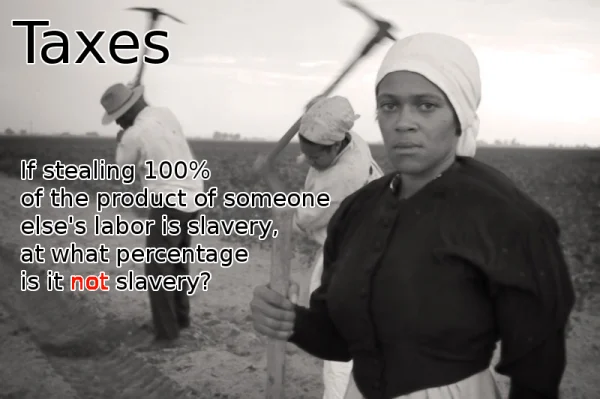
The world has changed, and chattel slavery, the overt type of slavery that has pretty much been eliminated, has been replaced with mental slavery. The only way this works is for people to believe they are the rightful obedient ones, while the ruling class dictates their lives and decides how much of the fruits of their labor they get to actually keep. That is not freedom and once again, it is the literal definition of slavery.
Other people determining other people’s lives and what property they want to take is slavery. Belief in it only makes it worse. If we want to end slavery for good, we need to wake up and start calling a spade a spade.
This lie, the belief in authority, is not helping humanity at all and it’s actually holding us back from being the best we can be. And it’s enslaving those who believe it. Your chains can be removed by you. It’s time. Once you understand the lie, you will never go because you will understand the roots of slavery and freedom and will own yourself. Freedom requires your self-ownership and the responsibility of understanding the invisible chains we’ve placed on ourselves.
When they say chromatography, we mean the various techniques that have the aim to determine or separate single compounds from a mixture, to permit qualitative identification and quantitative analysis.
The separation is due to the differentialdistribution of the varied components between two phases: stationary phase and mobile phase, or eluent, that flows continuously through the stationary phase.[1]
From one spot of a mixture, at the end of the chromatographic process, we will obtain many spots, and each one of them is a single compound. In some cases, the stains of the single compounds are visible with normal light, other times it will be possible to use a UV-lamp to see them, or other times the spots have to be sprayed with a reactive complex to make them visible.
Thin-Layer Chromatography
TLC is a qualitative and semi-quantitative method of analysis of the variety of non-volatile components of mixtures.TLC is a planar chromatography. Plates can be made of silica gel, with a small amount of inert binder and water; this mixture is spread as a stick slurry on an unreactive carrier sheet, mostly glass, thick aluminium foil, or plastic.
Differences in the thickness of the adsorbent layer mark if the TLC is intended for analytical or preparative purposes. Other adsorbent coatings include aluminium oxide (alumina), or cellulose. [2]
In normal-phase TLC the stationary phase is polar (i.e., silica gel, alumina). With a polar stationary phase, polar compounds in a sample mixture will interact strongly. If the stationary phase is non-polar (i.e., C18-functionalized silica plates) it is called reverse-phase TLC, and in this case the non-polar compounds will be adsorbed strongly than more polar ones.
The separation of compounds depends on the difference in their affinity to the stationary phase and the relative solubility in the solvent, or mobile phase. The result is that the mobile phase competes for binding sites on the stationary phase. [3]
The different compounds in the sample mixture are eluted at different rate, due to their partition coefficients: different solvents, or mixtures of different solvents, gives different separations. [4]
In choosing the solvent, an eluotropic series can be useful: this list sorts the eluents according to how much they move certain compounds and are used to explain the power of a solvent. [4]
The retention factor (Rf) quantifies the results, and it is the ratio between the distance traveled by a substance and the one traveled by the solvent. The compounds identification is based on Rf values compared to authentic standard compounds that are run in the chromatographic process together with the sample. [5]
Single ascending development is predominantly reported for TLC analysis, but double (2D) or triple (3D) mobile phase development has been used in cases that needed to improve sample resolution, rotating of 180° and again of 90° the plate.[6]
TLC in Cannabis Analysis
TLC is often used for cannabis analysis, and it is usually performed in order to choose the best solvents for a more accurate chromatographic process such as high performance liquid chromatography (HPLC) among others. This type complements the more expensive and difficult to perform methods such as HPLC, HPLC/mass spectrometry (HPLC/MS) among others. Thin-layer chromatography is especially valuable and often sufficient for use in resource-limited countries. [7]
A case study of qualitative and quantitative analysis of cannabis varieties showed that male and females contained similar ratios of Δ9-tetrahydrocannabinol (Δ9-THC) and cannabidiol (CBD).
The analysis was performed by TLC, GC, and MS.
Four parts of each sex were compared:
Flowering tops;
Small upper leaves surrounding the flowers;
Large leaves from the lower parts of the stem;
Lower parts of the stem.
The cannabinoids were extracted with light petroleum by grinding with a pestle in a mortar. Extracts were separated on silica gel plates with the correct organic solvent and the spots detected with an alkaline solution of color reactive. [8]
The analytical monograph Cannabis flowers included a TLC identification method. Flowers were ground and extracted. Silica gel plates were developed in a saturated chamber and sprayed with a reactive coloured solution. Bedrocan, Bedrobinol, Bedica, and Bedropuur varieties gave a red tetrahydrocannabinolic acid (THCA) spot, and Bedolite and Bediol gave an orangespot of cannabidiolic acid (CBDA); the Rf values of all these characteristic spots in sample solutions matched the Rf values of reference extracts run on the same chromatographic plate. [9]
Preparative Thin-Layer Chromatography (PTLC)
Preparative chromatography allows the use of large quantities of sample to separate into fractions and identify the PrincipalActiveComponents (PAC) in crude extracts.
Cannabivarichromene (CBVC), a cannabinoid found in Asian hashish extract, was separated from other cannabinoids by PTLC prior the determination of it through GC-MS. Chromatograms, under UV-light showed two unusual, intense cannabinoid spots besides the major components Δ9-THC, CBD, and cannabinol (CBN). [10]
TLC in the analysis of synthetic cannabinoids
Designer drugs, also called newpsychoactivesubstances (NPSs), include compounds that are produced to mimic the effects of cannabis. Molecules like JWH-018 have been identified as an adulterant in an herbal product being sold in Japan (Spice) for its narcotic effect after isolation by PTLC. [11]
TLC in forensic analysis
TLC was employed to obtain detailed information on the age and origin of cannabis samples with significance in forensic analysis. The absence of CBD and, if present, its ratio to Δ9-THC in extracts were the most useful criteria in origin assignment, while the apparent CBN content reflected the sample age. This analysis was also performed with “doubled 2D TLC” developed per each side of the plates rotating it two times to obtain extra resolved diagnostic spots. [12]
Recording of morphological features plus two thin layer chromatographic systems were used to determine cannabinoids present in forensic cannabis samples. Analysis provided separation and identification of various cannabinoids including Δ8-THC, Δ9-THC, cannabichromene (CBC), CBD, cannabigerol (CBG), and CBN. [13]
Analysis of urine
Cannabis use is determined by detecting the metabolite Δ9-tetrahydrocannabinol-11-oic acid in urine by employing double development thin-layer chromatography for identification based on its characteristic Rf value and color after spraying the plate with a reagent salt. [14]
Thus, the scientists reviewed The use of TLC for screening abused drugs in urine. It included cannabinoids such as Δ9-THC. Preliminary identification by TLC was confirmed using more specific analysis by GC-MS. [15]
The advantages of TLC method are:
Low equipment cost;
Rapid analysis;
Simultaneous determination of several drugs and metabolites.
Analysis of hair
Hair samples of cannabis users were qualitatively analysed by TLC and quantitatively determined by GC-MS. Amounts of the cannabinoids in hair ranged from 0.25-2.82 ng/mg according to the validated GC-MS method. [16]
“…Propaganda works best when it converts the previously uncommitted or apathetic into true believers, much like a religious conversion.…It was fun while it lasted, exploiting the supercharged-cons of hyper-financialization and hyper-globalization, but those cons have been tapped out and there are no replacements.”
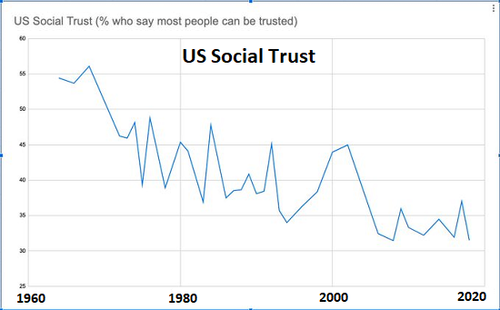
Now that America has been transformed from a high-trust social order into a low-trust social order, there’s no going back.
The birth of financialization in the early 1980s was morning in America because finance– the collateralization of previously low-risk assets and the resulting explosion of credit and leverage–gooses demand and asset valuations.
Now that we’ve at long last reached the demise of financialization, it’s mourning in America as the hyper-stimulation has reached its zenith and is beginning its inevitable end-game of uncontrolled implosion. The hyper-financialization of American life has fatally distorted the nation’s production, politics, values and social order.
Regardless of our political persuasion, we’re all mourning for what’s been lost to either decay or erosion, both of which are so gradual that we cannot discern the full extent of the damage. We sense it, though, and this fuels the nation’s distemper.
The decay, erosion and distemper remind me of a quote from French author Michel Houellebecq:
“I have the impression of being caught up in a network of complicated, minute, stupid rules, and I have the impression of being herded towards a uniform kind of happiness, toward a kind of happiness that doesn’t really make me happy.”
Substitute con for happiness and we have an insight into the source of mourning in America: we’re being conned 24/7, on every level and in every nook and cranny of the economy and society.
The key to any good con is to persuade the mark (victim) that it’s not a con. The most direct approach is to claim the con is true, factual, etc. Once this claim starts unraveling, then the con switches to an alternative reality that has enough shreds of credibility to be plausible.
This is why so many confuse the con and propaganda. Both are self-serving, of course, as the goal of propaganda is to generate compliance and conformity in the populace by constructing an emotionally compelling context that is both appealing and plausible. Those spewing the propaganda do so to secure their power and further their own self-serving agenda.
For example, that we’re all enjoying unprecedented prosperity in the best of all possible worlds. Look at all the low-quality rusting junk we can buy from manufacturers in totalitarian nations at low, low prices–wow! It doesn’t get any better than this. Stainless Steal (February 26, 2023).
The difference is that those spewing propaganda can be true believers in whatever cause is being pushed. In most cases, propaganda is issued by cynical, manipulative sociopaths who are merely hired guns for whomever seeks all the advantages of persuading people that enriching and empowering the few at the expense of the many is not only allowable, it’s the right thing, the only option, etc. But propaganda works best when it converts the previously uncommitted or apathetic into true believers, much like a religious conversion.
A con, on the other hand, is a swindle, a fraud, a bezzle, that takes advantage of the mark’s naive trust. This trust might be in a blood relative, a friend, an enterprise, an organization or an institution. The con exploits this trust to defraud or break the mark into an unknowing patsy.
The fundamentals of the con are:
1. The gains are guaranteed, i.e. low risk.
2. The benefits are exaggerated while the costs and consequences are left unsaid.
Here’s the metaphor the con presents: I’m leading you to a glorious fruit tree loaded with ripe fruit. All you have to do is harvest as much as you want.
Since we’re all still hunter-gatherers in Wetware 1.0, this greatly appeals to us. We’re inherently risk-averse and greedy to exploit windfalls, and the con promises us near-zero risk and one windfall to stripmine after another. It’s irresistible.
The con always has an end date, when the mark discovers they’ve been fleeced. Trust is destroyed, and the mark, bitterly enlightened to their own credulity, laziness and greed, vows to never fall for such a con again.
The higher-order con never lets trust be completely destroyed. Instead, the con-man either rushes to console the mark and apologize for the unexpected loss, (Jeez, this never happened before–it must have been a glitch in the Matrix), or the con-man brazenly blames the victim for misjudging the situation and failing to take advantage of the unbeatable deal.
You blew it, pal, I can’t help you with that. But hey, since I’m such a nice guy, and you’re deserving of a second chance, I’m gonna let you in on another deal, not quite as good as the one you blew, but still a gem.
This is America in a nutshell: a continuous cacophony of cons. This is why trust in institutions such as the media, corporations, political interest groups, government and education are in free-fall, along with social trust in our fellow Americans. Every node of power is dominated by people out to maximize their personal gains at the expense of the public, customers, voters, members, students, etc.
Listen, kid, you’re gonna be on Easy Street if you go borrow $120,000 and give it to us for a college diploma. You’ll be set for life, it’s like shooting fish in a barrel once you pony up the dough and we give you the paper. Don’t be a chump, kid, you gotta look out for yourself, and we’re trying to help you here.
This medication is safe and non-addictive, you’re gonna feel a lot better as soon as you start taking it. Here’s ten pages of side-effects, but don’t worry about all that, it’s just boiler-plate. We’re here to help you, pal, and the $27,000 a month cost is mostly on the government, so it’s a slam-dunk win for you.
Gee, I’d like to answer your questions about the district budget, employee salaries and overtime, it must be in this 293-page annual statement somewhere. You can buy a copy for only $25.
And so on, in an endless profusion of self-serving cons. Ernest academics ponder this decay and propose all sorts of scholarly possibilities, while never mentioning the obvious source: every node of power in America is hopelessly corrupt, covering its cons with tsunamis of propaganda aimed at “trust-building” among “stakeholders,” whipping up the conned faithful, cherry-picking evidence to string along the marks just a little longer, and pointing to the long history of the institution as trustworthy–a reputation that is being pillaged to benefit the few at the expense of the many.
The most successful cons divert attention from the con-men to some other group of marks / victims. You got fleeced because of them. The fact that everyone outside the nodes of power has been fleeced is left unsaid, as this realization might generate a common cause of the marks against those benefiting so richly from the cons.
It was fun while it lasted, exploiting the supercharged-cons of hyper-financialization and hyper-globalization, but those cons have been tapped out and there are no replacements.
It’s tough recognizing that we’ve been credulous, naively trusting, and greedy for low-risk riches. Every one of the countless skims, scams and cons has exploited our willingness to trust and our self-interest in easy wealth.
Now that America has been transformed from a high-trust social order into a low-trust social order, there’s no going back.
This is why it’s mourning in America. Trust can only be rebuilt slowly, first by opting out of all the self-serving cons and then re-establishing trust at the local level.
It’s always fun when one of our blogs sparks discussion! We love hearing from our readers and learning about what they do in their gardens. I wrote an article in 2021 about harvesting, curing, and storing garlic, and boy, did I get some feedback. While many enjoyed the piece, others were a tad miffed that I’d suggested curing garlic before eating it. With the garlic harvest quickly approaching in many regions, now’s a good time to dive into that topic: to cure or not to cure garlic bulbs?
Stepping On A Few Toes
In my original post, I recommended curing garlic for about two weeks in a shady, dry spot with good airflow instead of eating it fresh out of the garden.
A couple of our readers were outraged.
One demanded where I got my information (The Old Farmer’s Almanac, which I consider pretty reputable).
Another wanted to know why I’d deprive myself of the taste of super fresh garlic (a valid question, for sure).
So Sorry!
So, let’s clear the air. For the record, eating garlic right after harvest is perfectly acceptable! Curing the bulbs is an option, not mandatory, and I should have been clear about this in the post from 2021.
Living in a cooler climate in Canada, my growing season is shorter than others.
I plant dozens of bulbs every fall before the snow comes. It’s unrealistic for me to harvest them in the summer and expect to eat them all so quickly. Curing most of the crop allows me to preserve it longer.
If you’ve only planted a small row or two of garlic, then by all means, enjoy them fresh for those few weeks in the summer.
Fresh garlic has a shelf life of about three weeks. My ‘aged’ garlic lasts several months after harvest. It saves me from continually buying this culinary staple at the supermarket. And it tastes just as fresh as the day I harvested it!
Garlic Growers, Unite!
So, to cure or not cure? That’s a personal choice with no right or wrong answer.
Ultimately, all that matters is that we all enjoy this medicinal, tasty, homegrown crop, no matter what we do with it after harvest.
Outside of that, it was a relatively slow week in cannabis news in Canada.
Several news agencies made rage-bait hay by reporting that Aurora’s CEO Miguel Martin received a base salary of about $590,500 as well as about $3.8 million in share-based options and almost $1.1 million in option-based awards in the past fiscal year, as well as about $815,000 in non-equity incentive plan compensation and $416,000 in other compensation.
Mission, BC Mayor Paul Horn says he wrote to Canadian health minister Jean-Yves Duclos on July 6, describing the impact legalization has had on his community, especially regarding the impact of designated and personal grows. The mayor also expressed concern with licensed commercial production sites.
Stats Canada’s Monthly Retail Trade Survey collects data on sales, e-commerce sales, and the number of retail locations by province, territory, and selected census metropolitan areas from a sample of retailers.
New monthly figures from Stats Canada show that cannabis retailers sold more than $415 million in May 2023—an increase of about $5 million from the previous month and an increase from $373 million in May 2022. The monthly increases were seen across most provinces and territories, with declines in BC and PEI. Sales in BC were down about 5 percent from the previous month, while sales in PEI were down nearly 36 percent ($1,868,000 vs $1,196,000).
Meanwhile, police in Ontario say a 20-month-old baby in Prince Edward County was treated in hospital after consuming a quantity of cannabis chocolate. The origins of the edible were not reported.
Also, a Canadian man was charged with importing cocaine and cannabis into Bermuda. According to prosecutor Carrington Mahoney, the cannabis in question has an estimated value of almost $474,000, and the cocaine has a value of about $201,300.
Manitoba Liquor & Lotteries’ Cannabis Operations team says it has a plan in place to ensure a strike action from the Manitoba Government and General Employees’ Union does not impact cannabis producers’ ability to send products to suppliers and retailers in the province.
In a memo sent to cannabis producers on July 21, Manitoba Liquor & Lotteries (MBLL) says that while it is “severely impacted” by the work stoppage from the Manitoba Government and General Employees Union (MGEU), it has developed a contingency plan in advance to mitigate any industry concerns.
The government regulator was informed on July 14 of the pending job action by the MGEU, which includes staff from Cannabis Operations. The union issued a one day walk out on July 19, which has now developed into a more long-term strike.
During the strike, the MBLL’s Cannabis Operations are required to operate with a skeleton staff, limiting the ability to process new purchase orders. As such, the agency will be pausing or delaying these activities:
Support resolving order discrepancies and resending packaging slips.
Issuing financial credits and refunds.
Tracking open purchase orders and providing status updates.
Providing Cannabis Customer Self Service troubleshooting support.
Password resets and account set-up support (for CCSS and MBLL Partners) will continue with some delays.
Limited to no product price changes or new product set-ups in the product catalogue.
Cannabis Tracking and Licensing System (CTLS) (seed-to-sale) reporting on behalf of Retailers Account administration (changes to supplier and retailer information).
The Cannabis Contact Centre, Cannabis PO, and Cannabis Buyers email accounts will be monitored for urgent matters, but responses will be limited or delayed.
Any suppliers dealing with a product list status change should still inform the MBLL, who will take action when they can.
If a supplier has a list status change (to a Pending/Terminated status), continue to advise MBLL, they will take action accordingly as time and resources permit.
Job actions in other provinces have caused challenges for producers and retailers. In 2022, British Columbia’s central distribution system was temporarily halted due to a government employee’s union strike. Strikes in Quebec have also temporarily closed or otherwise impacted some stores in the province.
While the MBLL does not run a warehouse for cannabis like other provincial governments, it does approve products and suppliers into the province. Producers can then ship directly to retailers, or go through private distribution systems.
Michael Gruber, the owner of Parrot Pot Shop, with two locations in Winnipeg and a third on the way, says his main concern is if sales are impacted. Customer loyalty is important in such a highly saturated market like Winnipeg.
“Our main concern would be if we can’t service customers. That’s what really counts. If there are issues with purchase orders or credit notes, it can wait. As long as we can get product to our customers the rest can wait.”
Kerri Michell of Farmer Jane Cannabis, with five locations in Winnipeg, says she is optimistic that this will not negatively impact her business, as long as the strike doesn’t go on very long.
“MBLL has been really good with communicating so far and seem to care about the impact on the industry.”
Gord Nichol, the owner of North 40 Cannabis, a micro producer in Saskatchewan that sells into the Manitoba market, says he’s happy with how the MBLL is handling the issue.
“I’m glad to see them focusing on making sure that products are still flowing. We’ll get the returns fixed up, any overages or any issues, those can go on the back burner because that’s not going to affect anyone’s ability to do business. So it sounds to me like they’re focused on the right things.
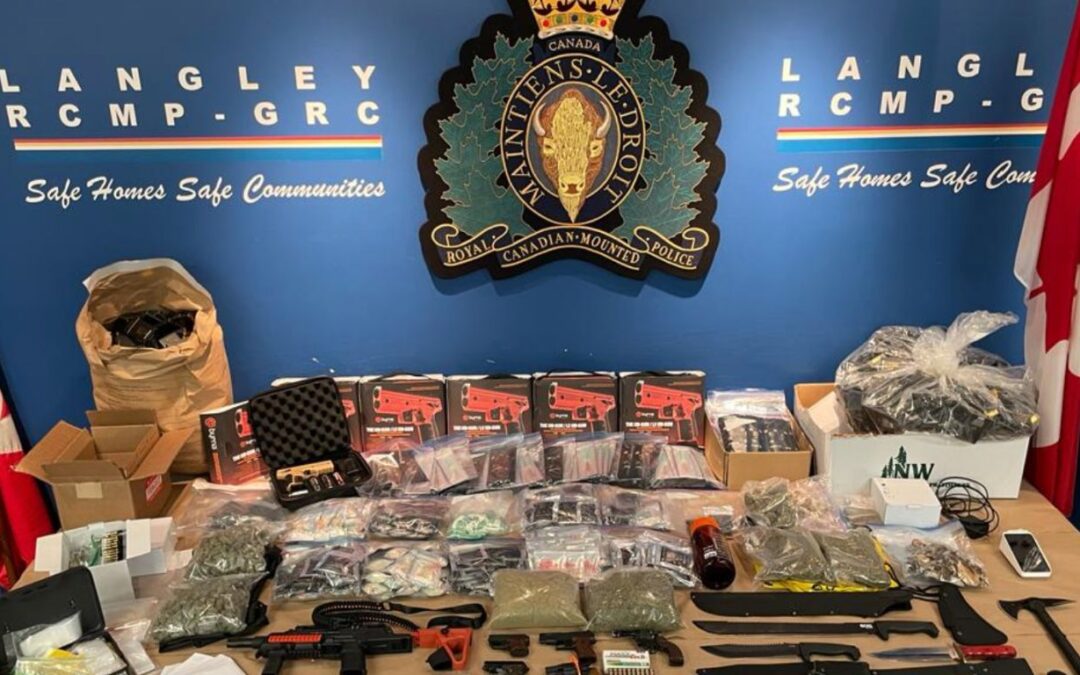
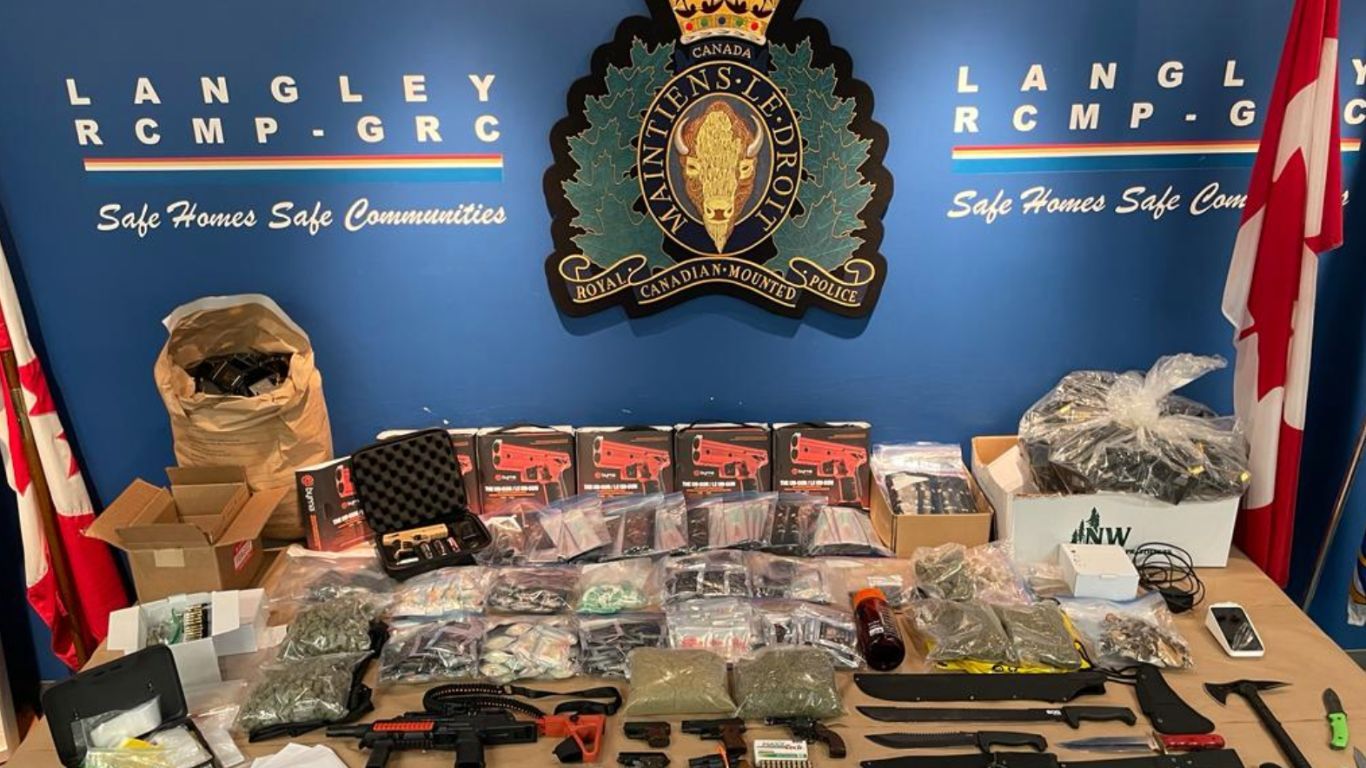
Langley RCMP say they have seized $618,000 worth of illicit drugs, including cannabis and cannabis gummies, cash, weapons, cocaine, fentanyl, crystal meth, and mushrooms from a suburban neighbourhood.
The Langley RCMP’s Special Response Team executed a search warrant at a cannabis manufacturing lab on July 19 in a neighbourhood in the city located in Vancouver’s Lower Mainland.
In addition to drugs and weapons, police seized cash, $40,000 in jewellery, and a vehicle.
The search, in coordination with Langley RCMP, led to the seizure of 3,230 plants beyond the licensed amount, and approximately 136 kg (300 lbs) of packaged cannabis prepared for distribution from a rural property. RCMP say the property was using medical cannabis personal or designated production licences for the purpose of distribution.
















Recent Comments