

Cronos Launches Leading Medical Brand PEACE NATURALS® in Germany
Lifeist Announces Sale of Non-core Subsidiary Australian Vapes
Canopy Growth Announces Private Placement of up to US$50 Million

Into the sweet grass Muskoka grown weeds
Disclaimer: The below producers all grow indoors. “We really feel that you’re able to hit a more fuller flavour expression and terpene profile with the living soil.” – Brian Rusk, Into the Weeds
There are a variety of different approaches that licensed producers can take towards cultivating their products. Those techniques can vary depending on the purpose of the product. This past summer, Grow Opportunity spoke with three Canadian LPs about how they employ cultivation techniques for their purposes.
Ontario’s Muskoka Grown
Muskoka Grown has a goal of being the top independent supplier of flower and pre-rolls in Ontario. “I think when you have good people, you focus on happy customers and you focus on consistency, you can be successful,” says John Fowler, president of Muskoka Grown. “That’s what’s allowed us over the last two years to go from being a bankrupt company to a profitable company, from being, quite frankly, a pretty crummy grower to, I think, one of the best growers in the country. And to go from being a nothing in Ontario to a top-30 brand and a top five private company in the province.”
Fowler says that the company thinks of themselves as being in the craft flower business and as manufacturers. One of the first things they did in service of that goal was to increase the company’s transparency.
Advertisement
“The second thing we did, in that idea of being a manufacturer, we actually got rid of the title of master grower,” says Fowler. “We have horticulturalists that are wonderful, we have consultants that are wonderful, we have experts, but day to day, we try to run on a procedural basis.
Ram Davloor, Muskoka Grown’s general manager, says that the specific cultivation techniques the company employs have broadly remained the same – a hydroponics system with climate controls. However, the lessons learned over the last several years regarding management practices and using data to guide decision making have paid off.
“Our average yields have increased two times, our average THC is over 30 per cent and our sales increased almost four times over the last year,” says Davloor. “Today, when I walk into a cannabis store, I’m proud to say I work at Muskoka Grown.”
B.C.’s Sweet Grass Cannabis
British Columbia-based Sweetgrass Cannabis focus on an organic approach, growing cannabis in living soil. Master grower Julien Leclair describes their approach as being like a farmer in his field, adding nutrients to the soil and letting them break down.
“Most people would apply lime in their field or adjust pH or calcium,” says Leclair. “It’s the same idea here, what we add to the soil takes a while to be available but once it’s in balance, the plants can choose what they like instead of being forced to take it.”
While it would be tempting to say that Sweetgrass Cannabis’ approach is one taken for ideological reasons, Leclair notes that is not necessarily the case.
“We’re in the middle of a very rural area, and we have very good, pure water from the ground,” says Leclair. “There could be some runoff if people used fertilizers. We don’t want to pollute the environment we’re in.
Leclair says the company grows their product in a large room with 14-inch-tall, four-foot-wide and 24-foot-long flower beds. Those beds are filled with living soil that the soil then needs time to ‘cook,’ to allow the worms and other bacteria to break down the nutrients and make them available.
Cloning is done first in a smaller ‘veg space,’ before the plants are brought to the larger beds. “We call that the flower room, but they’re still going to veg in there for a few weeks, then we transition into flower,” says Leclair. “We brew compost tea throughout veg and early flower. We also do the top dressing every two weeks and we add dry amendments to the surface.”
Alberta’s Into the Weeds
Another company taking the living soil approach is Into the Weeds, formerly known as Rusktic Greens after c0-owner Brian Rusk. The Alberta-based small craft grower has been in production for about a year.
“It actually started when Chanttelle [Rusk’s wife and business partner] was in a car wreck years back,” says Rusk. “She wound up being on a pile of pain medication and a neurologist told her, ‘why don’t you try cannabis instead of these pain pills?’ She did and it worked great, and she was able to get off all the pain pills eventually.”
Chanttelle found securing a consistent supply to be difficult and expensive, so Rusk started growing at home for her. “A core of our cultivation process is that we use living soil,” says Rusk. “We use more of a compost base in our soil and then we’re adding dry amendments to keep the soil at a sufficient range and the microbes in the soil deliver that to the plant. We feel we can get a fuller expression on the plant by allowing the natural process to deliver what it needs.”
Rusk says that their use of the living soil approach and other general low-tech aspects of their operation are both because they benefit the plants but also due to an interest in more sustainable practices.
“In my experience, the best cannabis I’ve had is grown this way,” says Rusk. “Not to say that there can’t be really great cannabis grown other ways, but we really feel that you’re able to hit a more fuller flavour expression and terpene profile with the living soil.”
Into the Weeds’ production is decidedly low-tech – they use drip irrigation and other simple techniques. They utilize soil testing to ensure that the soil is feeding the plants exactly what they need. Their biggest challenge, however, has been scaling-up their operation and the labour costs associated with that.
Cronos launches leading medical brand Peace Naturals in Germany
(Globe Newswire) Toronto — Cronos Group Inc. announced today that it shipped its first order of bulk cannabis, which will be sold under the PEACE NATURALS brand in Germany. In July, Cronos signed a distribution agreement with Cansativa Group, one of the leading distributors of medical cannabis in Germany. Cansativa is a market leader in the medical cannabis market and is a driving force in the German cannabis industry. Cansativa has a network of approximately 2,000 pharmacies domestically; they currently supply around 300,000 patients in Germany’s medical market.
“Re-entering the German market, which has about 83 million people, is a significant milestone for Cronos and we look forward to expanding our reach and brand awareness in Germany with the help of Cansativa,” said Mike Gorenstein, Chairman, President, and CEO, Cronos. “We intend to establish our PEACE NATURALS brand as a top medical brand, similar to the brand’s reputation in Israel. We will continue to push forward on new market growth opportunities and expand our portfolio of borderless products.”
The recently announced regulatory changes in Germany, to reschedule cannabis and no longer label cannabis as a narcotic, are expected to unlock significant growth in the market. Cansativa’s wide distribution network of pharmacies provides Cronos access to patients in Germany, including those with insurance coverage for medical cannabis. Additionally, in August 2023, a bill was introduced in the German parliament to legalize adult-use cannabis. Re-establishing Cronos and its PEACE NATURALS brand in the German market will position the Company to capitalize on this growing market, fueled by potential future legislative changes.
Advertisement
The economic roller coaster of a small Ontario town fuelled by chocolate and cannabis
By Liam Fox
SMITHS FALLS, Ont. — A small eastern Ontario town that was once known as the province’s chocolate capital is preparing for the sweet return of Hershey’s.
“It’s like an old friend coming home after being gone for 15 years,” said Smiths Falls Mayor Shawn Pankow.
That return is the latest in a slew of changes around a facility that has been essential to the town’s identity and economic prosperity.
Advertisement
For 45 years.
Hershey’s once operated a factory in the community of around 9,000 people, which is located about 75 kilometres southwest of Ottawa.
There was an image of a chocolate bar on the water tower. School groups making field trips to the capital to see Parliament often sweetened the deal with a stop at the Hershey’s visitor centre.
The factory employed about 400 locals, including Richard Kirkwood, who worked there for 35 years.
“It was a good place to work. It paid my mortgage for 30 years,” he said, reminiscing about family barbecues, Christmas parties and track and field days organized by the company.
But that all changed in 2007 when Hershey’s outsourced the jobs to Mexico and closed shop.
Kirkwood said he was among the last to be laid off, but the suddenness of the closure left many people in the lurch. “Now I don’t have a paycheque, I’m not buying a new car, I’m not buying a new home. I’m just buying what I have to have.”
“The town was hurting,” Kirkwood said.
“We saw decline in our population, decline in our tax base, decline in revenues coming into our town,” said Pankow, who was first elected in 2010. “It left a real gap (that) took us a while to recover from.”
The town went through an identity crisis, too.
“It’s like, who are we now if we’re not Hershey town?” Pankow said of the time.
The legalization of recreational cannabis in 2018 brought on a brief economic high after Canopy Growth Corp. moved in to 1 Hershey Drive.
Canopy, best known for its Tweed brand, is one of Canada’s largest licensed cannabis growers. Its opening initially brought tourists from all over to see the so-called cannabis capital of Canada.
Tweed hyped up its opening, hosting an event on Aug. 25, 2018, featuring one of its most famous partners: Snoop Dogg. Sean Lawrence remembers locals looking on from their porches as the rapper smoked a blunt, months before the company started selling the cannabis-infused products it was making at the factory.
“There was an awful lot of hype in the cannabis industry,” said Lawrence, now the president of Smiths Falls chamber of commerce board. “I think people felt that it was going to take off more than it actually has.”
But he said strict government regulations on legal growers have hampered the market.
In February Canopy laid off 800 employees, around 35 per cent of its workforce, and announced it would sell the factory. Tweed will still employ just over 175 people in Smiths Falls at another facility.
It announced last month that it would sell the 700,000-square-foot facility back to its original owner for around $53 million.
That has set the stage for a reunion, but the chocolate-maker is returning to a town that is very different from the one it left.
A growth in small businesses, population and housing has made the town less dependent on a single employer, said Lawrence.
“We’ve had a real economic boom in this town,” he said.
Smiths Falls has long endured boom-and-bust cycles, going back to the 19th century.
It was an important transportation hub in eastern Ontario after the construction of the Rideau Canal. The waterway that links Ottawa and Kingston was completed in 1832.
Smiths Falls also saw the rise and fall of steam engine railway transportation. It was chosen as the regional headquarters for the Canadian Pacific Railway’s main line in 1885, and the Canadian Northern Railway built a second line through the town in 1912.
But that good fortune came to a close with the rise of diesel engines and cars, putting the brakes on the railway repair, maintenance and service business.
After decades of decline, the town was stabilized by the opening of a centre for developmentally disabled people in 1951, which at its peak housed around 2,500 people and employed over 800.
The facility was abandoned in 2009 and was later named in a class-action lawsuit against two Ontario psychiatric institutions accused of abusing former residents. Former residents of the Rideau Regional Centre in Smiths Falls and the Huronia Regional Centre in Orillia settled the case for $32.7 million.
On a recent sunny Wednesday, the town’s heart of Beckwith Street was busy, with people stopping in at restaurants, cafes and shops.
Some of those are among the 43 new businesses that opened in 2021 and 2022, according to the municipality’s business survey.
Between 2016 and 2021 the town’s population grew by more than five per cent, and its median household income went up by nearly eight per cent. Unemployment has also lowered.
Municipal tax revenue increased by around 50 per cent over the last eight years, while the average annual tax rate hike was approximately 1.5 per cent. Its annual budget this year stands at $20.5 million.
Pankow said more than 500 new residential units have been developed since the 2021 census data was gathered, partially thanks to the urban exodus sparked by the COVID-19 pandemic, which saw city-dwellers from Ottawa and Toronto settle into smaller communities.
Lawrence said the sale of the old chocolate factory solidifies the recent growth, and he thinks Hershey’s is back for the long term.
Though details about the company’s reopening plans are scarce at the moment, optimism for the town’s future has never been higher.
“Let’s get the town back up and running again, and let’s get the smell of chocolate back in the air,” said Kirkwood.
Dried flower price outline August 2023
The legal Canadian recreational cannabis market opened in October of 2018, and with its arrival, the accompanying market for legally produced and sold recreational cannabis was opened.
This article offers a comprehensive analysis across nine provinces and two territories exploring average whole-flower product prices.
Our data is derived from publically accessible listings in both private and provincial webstores, from January 2021 to August 2023 inclusive. We hope this analysis can provide the reader with insights into the Canadian legal cannabis market.
Scope
Provinces and territories under consideration are Alberta, British Columbia, Manitoba, Newfoundland, Nunavut Territory, Ontario, Saskatchewan, Yukon Territory, New Brunswick, Nova Scotia, and Prince Edward Island. All prices are in Canadian dollars (CAD). Please note that sales taxes are not included in these prices.
Prices are displayed as an average and separated into main package sizes. The package sizes under consideration are 1 gram, 3.5 grams (often referred to as an eighth or as a half quarter, which refers to the fraction of an ounce 3.5 grams approximates), 7 grams (a quarter ounce), 14 grams (a half ounce), and 28 grams (an ounce).
Price Averages
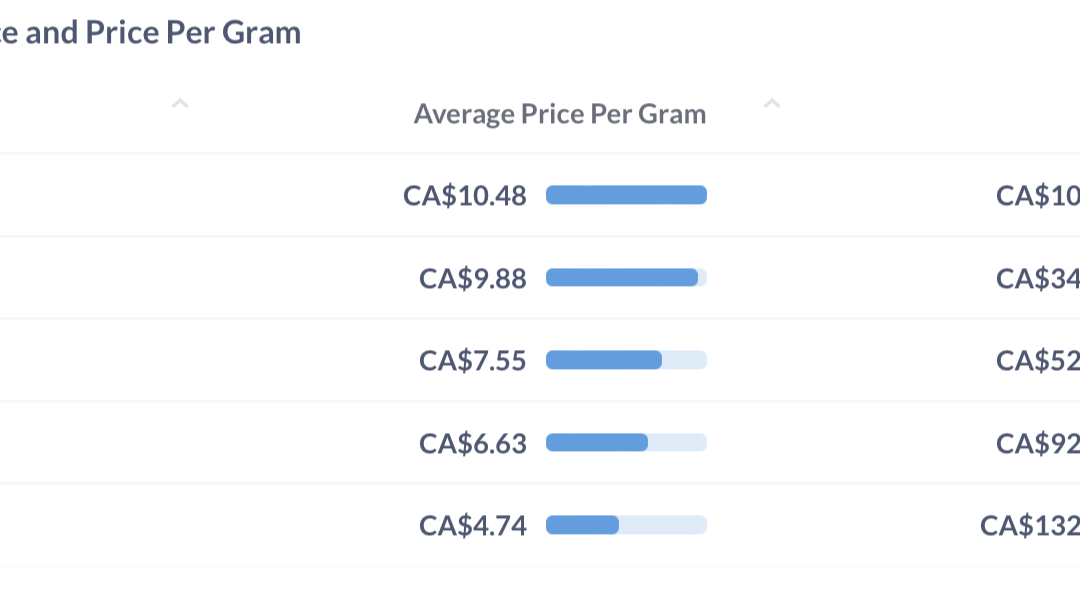
This section examines the static average retail prices of whole flower cannabis sales by package size. The date range is from January 2021 to August 2023 inclusive. The averages from this time range vary from $10.48 for the 1-gram package size to $132.58 for a 28 gram (1 ounce) package.
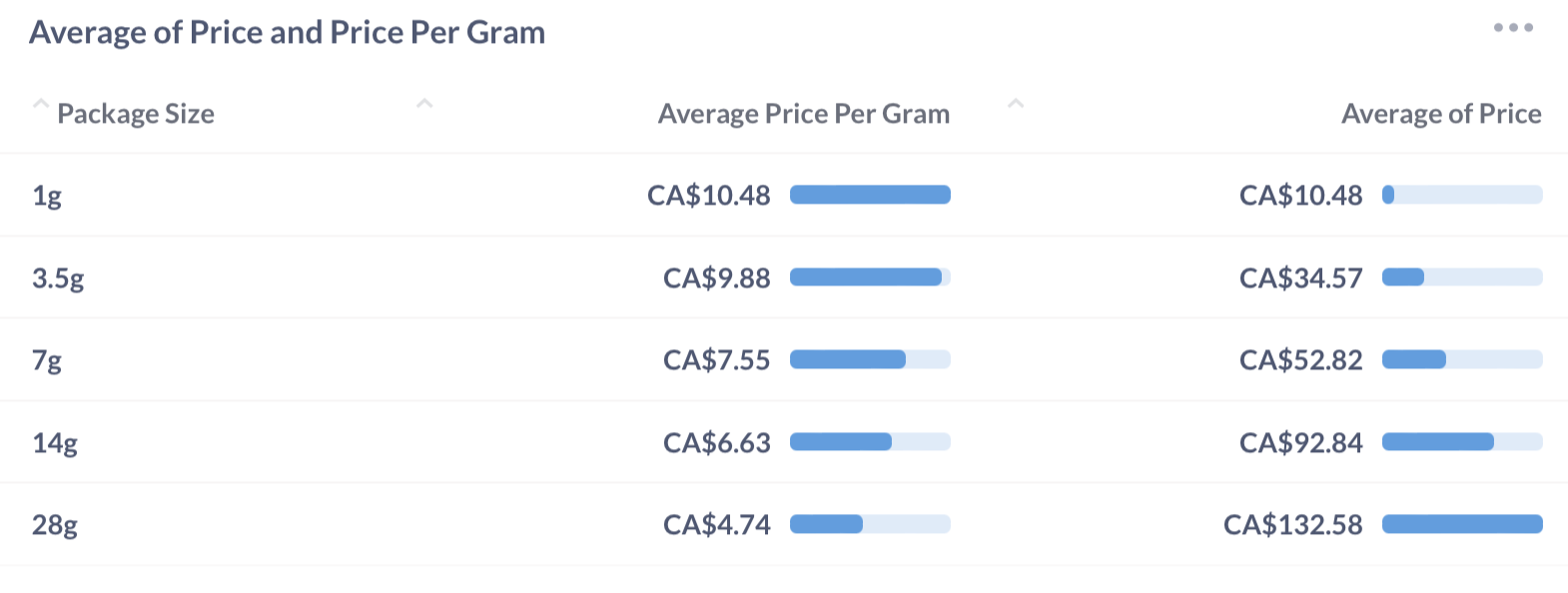
The average price per gram of whole flower cannabis decreases as the package size increases. The difference between a 1 gram package at $10.48 per gram and a 3.5 gram package at $9.88 per gram is $0.60 per gram, or a 5.72% decrease. Between a 3.5 gram package at $9.88 per gram and a 7 gram package at $7.55 per gram, we have the most significant decrease of the set in absolute dollar amounts at $2.33, representing a discount of 23.6%. Between the quarter-ounce and half-ounce package sizes with prices per gram of $7.55 and $6.63 respectively, we have a difference of $0.92, which represents a 12.2% decrease in price. Finally, between a 14 gram package at $6.63 per gram and a full-ounce package at $4.74 per gram, we have a difference of $1.89, representing a discount of 28.5%, the largest percent decrease between tiers in this set.
Finally, if we compare the average price per gram of 1 gram packages at $10.48 to the average price per gram of 28 gram packages at $4.74, then the difference in average price is $5.74 or a discount of 54.8%.
Monthly Price Per Gram Trends
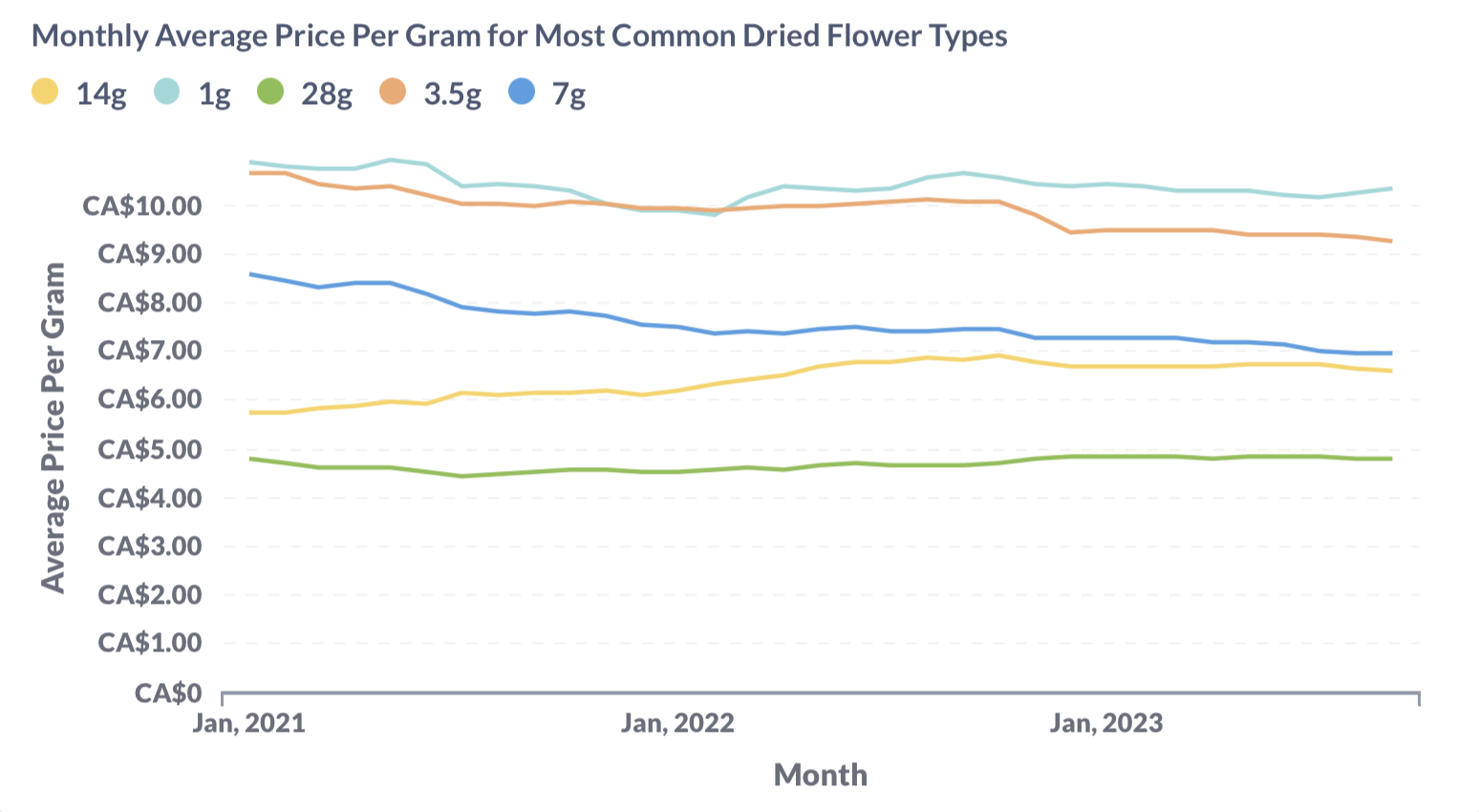
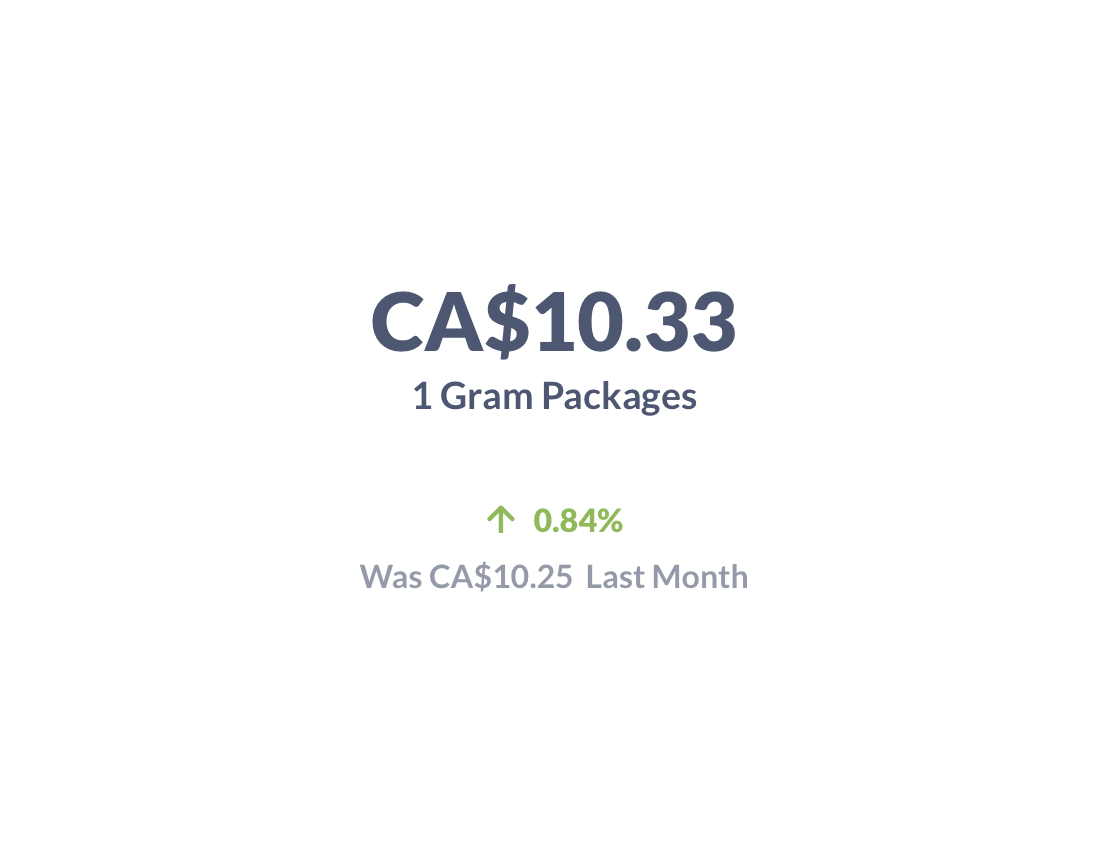
One Gram Packages
In August 2023, the average price for a 1-gram package was $10.33, which is up $0.08, or an increase of approximately 0.84% from July’s average of $10.25.
Eighths
For a 3.5 gram package in August 2023, the average price per gram was $9.28, which is a decrease of approximately 0.87% or $0.08 from the average price of $9.36 in July 2023.

Quarter Ounces
The average price per gram for a 7 gram package in August 2023 was $6.96, down from the July average of $6.97 by $0.01, marking a decrease of 0.12 percent.

Half Ounces
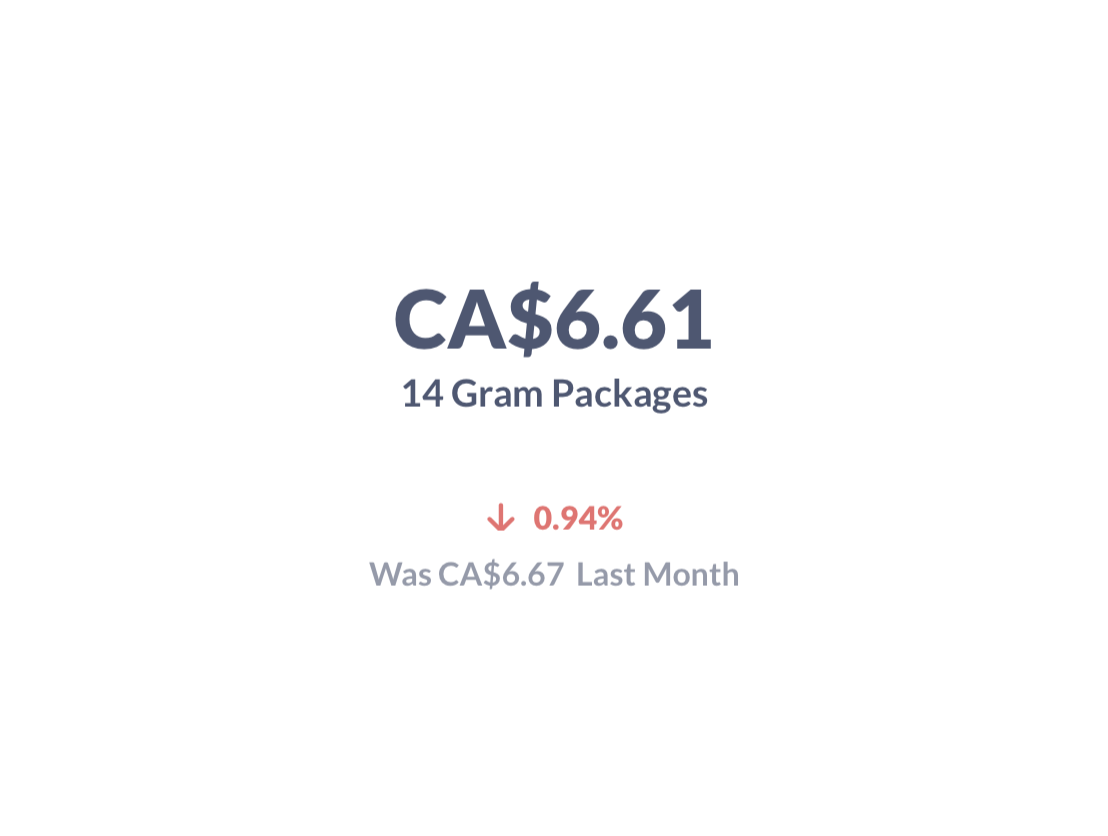
For a half-ounce package, the average price in August 2023 was $6.61 per gram, which is a decrease of 0.94% from the July price per gram for this package size of $6.67, representing a downward change of $0.06.
Ounces
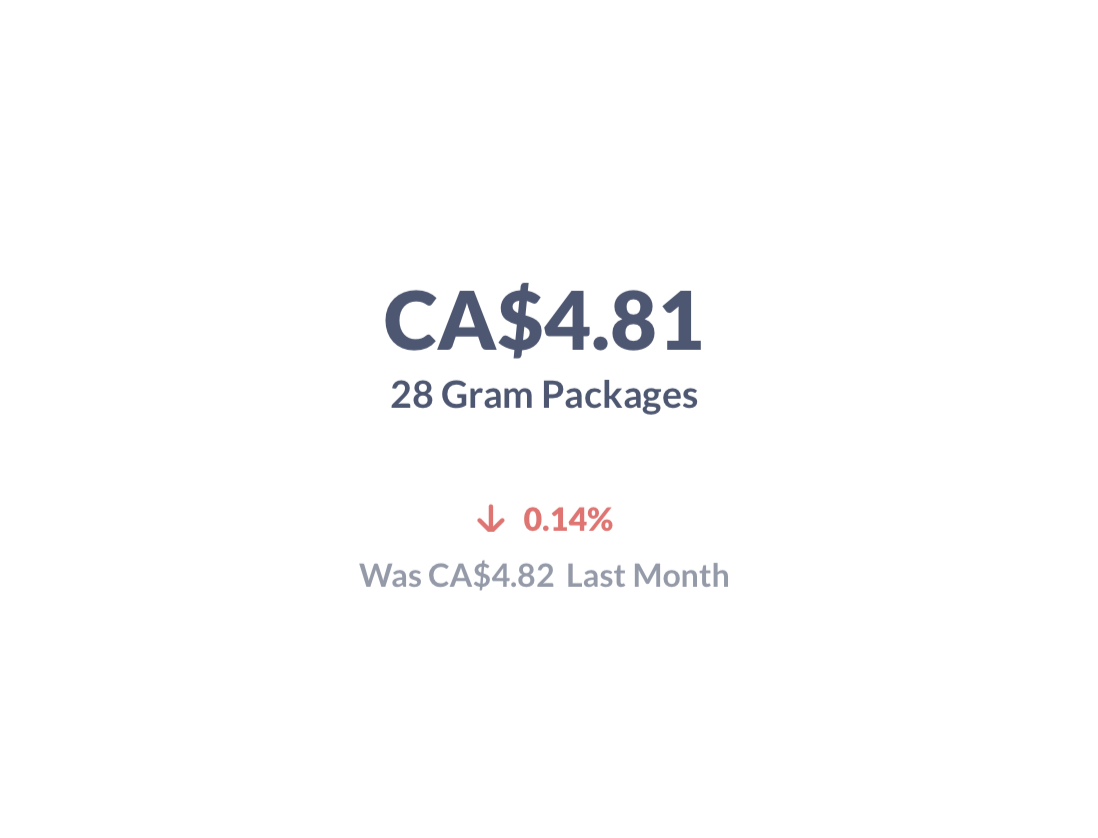
The August 2023 average price per gram for an ounce package was $4.81, representing a decrease of 0.14% or $0.01 from July 2023’s average of $4.82.
Brand Level Price Averages
We now focus on the maximum and minimum average prices per gram at a brand level.

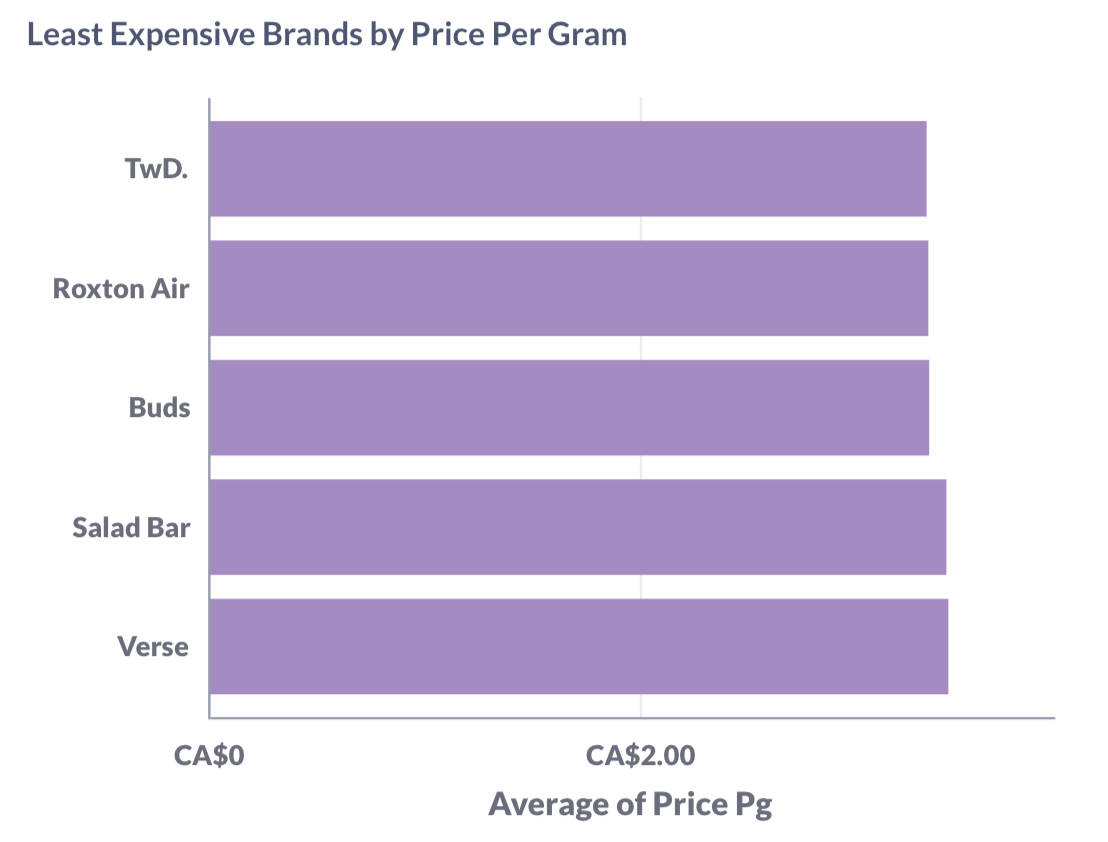
Beginning with the least expensive brands across all package sizes, we have a three-way tie at the low end with TwD., Buds, & Roxton Air all at $3.33 per gram, followed by Salad Bar at $3.41 per gram. Finally, we have Verse with an average price per gram of $3.43. Of note, from floor to ceiling of the bottom five in price per gram, the difference is a mere $0.10.
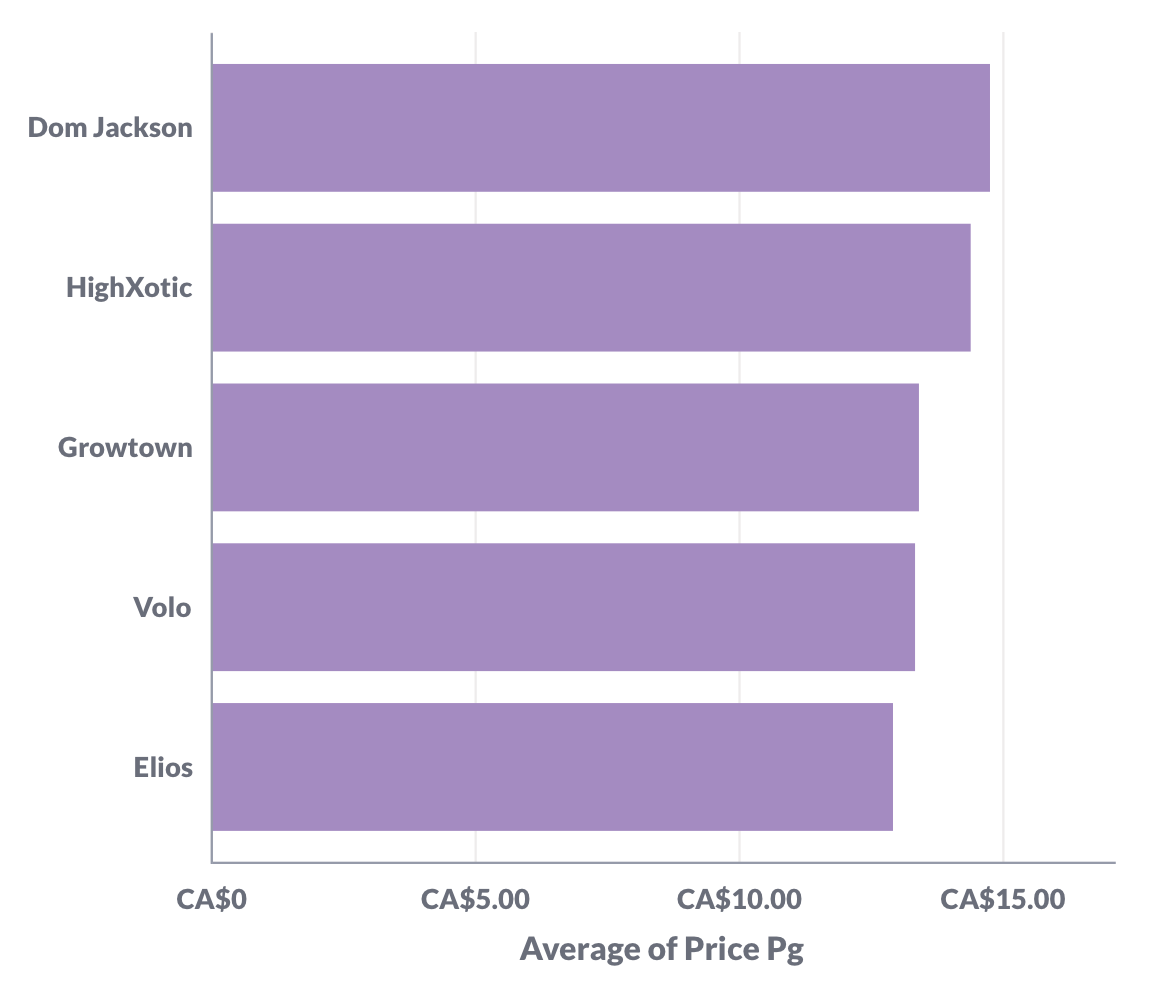
Finally, we examine the most expensive price-per-gram brands across all package sizes. Here we proceed from the most to least expensive, starting with Dom Jackson, which was listed with an average price per gram of $14.75, followed by HighXotic at $14.30 per gram average, third most expensive from our research is Growtown at an average price per gram of $13.40, then Volo at $13.33 per gram and finally Elios with an average price per gram of $12.91.
This report is available in full on CannStandard.ca. Sign up for a free trial for a live filterable version.
Written by: Adam Lewis (@squidgrow)
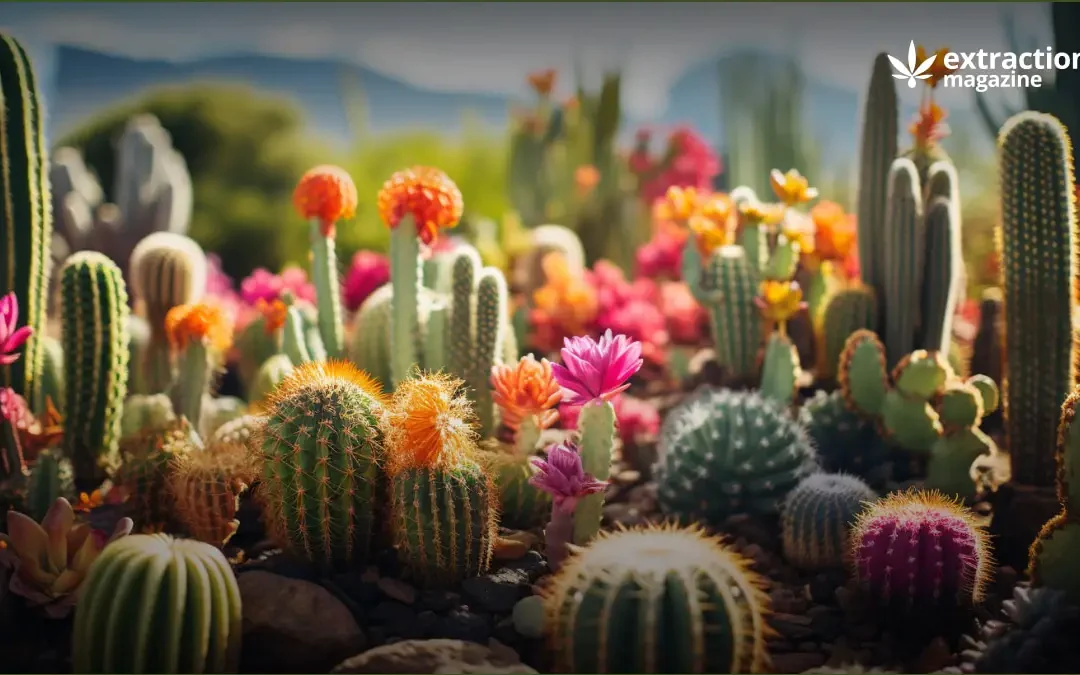
The Psychedelic Cactus San Pedro: History, Use and Extraction
The San Pedro cactus (Echinopsis pachanoi, also known as Trichocereus pachanoi) is a psychedelic cactus, native to the Andes. One can find it growing in Argentina, Bolivia, Ecuador, and Peru.
Today, its primary use is home decoration: big box stores often sell it as a cultivar for gardening or indoor decoration. It has to be said that San Pedro has much more to offer. Something that the vast majority of indoor plants can’t: centuries of history and psychedelic effects.
San Pedro Historical Roots
The San Pedro cactus has been used for millennia by the indigenous peoples of the Andes for religious and shamanic rituals. Archaeological evidence suggests its use dates back at least 2000 to 2300 years. [1] Mochica culture ceramics from ancient Peru depict the cactus and its use. [2]
Indigenous groups have used San Pedro for its psychoactive properties in healing ceremonies and rituals. The primary psychoactive compound in the San Pedro cactus is mescaline.
San Pedro Psychedelic Cactus Today
The cactus gained attention in the wider world largely during the 20th century, as anthropologists, ethnobotanists, and adventurers began to explore and document traditional practices in the Andes.
The active compound, mescaline, was isolated from the related peyote (Lophophora williamsii) cactus in 1897 by German chemist Arthur Heffter. [3]
In recent decades, there has been a renewed interest in the San Pedro cactus, especially among the younger US population, seeking alternative spiritual or recreational experiences.
This has led to a global spread of San Pedro ceremonies, rivalled only by the more pop-culture-famous Ayahuasca alternative.
San Pedro Cactus and Mescaline
The San Pedro cactus contains mescaline, a psychoactive alkaloid also found in the peyote cactus and some other cacti.
Mescaline belongs to the phenethylamine class of psychoactive compounds.
Mescaline is a naturally occurring psychedelic alkaloid of the phenethylamine class (the same one that includes amphetamines). However, its mode of action is quite different.
Mescaline primarily exerts its psychedelic effects through the activation of certain serotonin receptors, especially the 5-HT2A. [4] The 5-HT2A receptor is a subtype of the serotonin receptor and has been implicated in the mechanism of action of several other classic psychedelics like LSD and psilocybin. [5]
Activation of this receptor leads to a cascade of intracellular events, which ultimately modifies the usual patterns of serotonin transmission, leading to altered perception.
There’s also evidence to suggest that mescaline interacts with dopamine, norepinephrine, and adrenaline, though this isn’t fully understood and likely plays a secondary role. [6]
The Pharmacokinetics of Mescaline
Whether you’re just curious or plan a trip to the native country of San Pedro for a ceremony, it’s always a good idea to understand what’s happening in your body while you experience the effects of a psychoactive substance. Here, step by step, is the mode of action of mescaline:
- Stage 1: Once you ingest the substance, it’s absorbed in the stomach;
- Stage 2: As the result of absorption, mescaline enters the bloodstream;
- Stage 3: It crosses the blood-brain barrier, reaching the central nervous system;
- Stage 4: Mescaline, the absorbed molecules of it, activate the serotonin receptors (you can expect the onset in 45-60 minutes);
- Stage 5: While the dosage of the compound is still being processed by your body, at some point, you will experience the peak of its effects (varies greatly, strictly individual);
- Stage 6: The effect of altered perception will last, depending on the dose, from 6 to 15 hours; [7]
- Stage 7: By hour 4 to 6, mescaline effects will start to wear off. Your body will start to excrete its metabolites;
- Stage 8: In a maximum of 48 hours, all remaining minor effects of mescaline will disappear.
Psychedelic Effects of Mescaline (from San Pedro Cactus)
It’s important to understand the mechanism of action of psychedelic substances if you ever plan on trying them. But in the moment, you are most likely to be focused on “the trip”: a spiritual experience that the mescaline-altered perception produces.
What can you expect to feel, hear and see?
Before we start, note that these effects are strictly individual. They depend on your mind-set and the setting, your personal response to San Pedro, your unique brain chemistry, your age and your mental health.
In general, however, we can define several important parts:
Visual effects
Many of those who tried San Pedro report a range of visual distortions, including:
- Intensified colours;
- Geometric pattern;
- Visual hallucinations;
- Alterations in the perceived forms of objects;
- Unusual clarity and “high level of detail”.
Altered Perception of Time
It may seem to slow down or speed up, depending on your personal response to the substance. A sense of “eternity in a moment” is the most common way to describe it.
Emotional and Spiritual Effects
These revelations are the primary reasons for San Pedro popularity. Some of the ways to describe it are:
- Interconnectedness;
- Unity with nature;
- Being one with the universe (or the universe itself);
- Deep introspection;
- Deep reflection.
Expect feelings of love, compassion, and empathy to be heightened.
Physical Sensations
These can range from a feeling of lightness, energy, or bodily warmth to nausea (especially during the onset after ingestion). Some people also report a tingling sensation throughout the body.
Other Effects
Most people focus on the positive effects: altered thought processes, so-called “default mode reset”, a major boost in creativity, “deep thinking”, synesthesia (a blending of the senses, described as being able to “see” sounds or “feel” colours).
While a psychedelic “trip” can definitely be a positive experience, if performed with a professional guide in a suitable setting, it’s even more important not to take it lightly. Though rare, the infamous “bad trip” is also a possibility. Paranoia, intensified by the psychedelic cactus effects, can be an unpleasant experience, to say the least.
How to get San Pedro’s Psychedelic effects?
First of all, you should know that eating raw San Pedro is dangerous for your health. It’s nauseating. And it’s not efficient as well, since cacti are succulents, and San Pedro consists of pure, mescaline-free water by approximately 90%.
Today, two primary methods are used to get the effects:
- San Pedro cactus tea;
- And mescaline extracts.
While there are plenty of guides about mescaline tea preparation available on-line, we will focus on the extraction details.
What About Psychedelic Cactus Extraction?
Mescaline extraction from San Pedro cacti, specifically the pachanoi variety, is a complicated process. At its core, it’s about harnessing the desired compound, mescaline, from natural sources, and purifying it for concentrated use through solvent-based extraction. [8] Mescaline can be relatively easily extracted through an acid-base extraction process.
After an initial acidified aqueous extraction, it is possible to perform the de-fattening of the extract using a non-polar solvent such as xylene. The alkaloids from San Pedro will stay in the acidic water layer, while the other unwanted fat plant compounds will be extracted in the xylene layer and separated from the mixture using a separatory funnel.
The basification of the mixture using NaOH till pH 10 will lead to formation of free base alkaloids that can be further removed from the aqueous layer using a non-polar solvent such as xylene. The repeated washing of the aqueous solvent with xylene will higher the final product yield. Further steps can be performed using acidified water and solvents like ether in order to obtain pure crystals of mescaline. The mescaline concentration in the plant matter can be low so take care of performing each step carefully in order to obtain visible crystals and an adequate amount of final product.
Note of Caution
Since San Pedro extraction requires the use of several chemicals, we do not recommend attempting it in a DIY setting. It’s neither safe nor legal in the United States, unless you perform the extraction in a controlled environment with research purposes in mind. [9]
References:
- https://www.ncbi.nlm.nih.gov/pmc/articles/PMC1637095/
- https://www.sciencedirect.com/science/article/pii/S0305440322001467?via%3Dihub
- https://www.heffter.org/about-dr-heffter/
- https://pubchem.ncbi.nlm.nih.gov/compound/Mescaline
- https://www.ncbi.nlm.nih.gov/pmc/articles/PMC6864602/
- https://www.ncbi.nlm.nih.gov/pmc/articles/PMC2763256/
- https://recovered.org/hallucinogens/mescaline/how-long-does-peyote-last
- https://www.unodc.org/pdf/publications/st-nar-19.pdf
- https://www.dea.gov/sites/default/files/2020-06/Peyote%20and%20Mescaline-2020_0.pdf

420 with CNW — California Senate OKs Marijuana Cafes Bill

The California senate has passed a marijuana cafe bill that would give dispensaries permission to provide noncannabis drinks and foods to customers who have approval from local authorities. State senators passed Assemblymember Matt Haney’s Bill AB 374 in a 33 to 3 vote before sending it back to the assembly for a concurrence vote thanks to slight amendments made in a Senate committee.
If the assembly votes in favor of the amended cannabis cafe bill, it could head to California Governor Gavin Newsom’s desk for his signature.
The marijuana consumption cafe bill would grant local governments the authority to allow cannabis consumption lounges within their jurisdictions to sell noncannabis-infused soft drinks and foods. It would also prohibit the sale of alcoholic beverages and the consumption of tobacco at these facilities. Furthermore, the measure would also allow “live music and other performances” and the sale of tickets to these performance events in cannabis consumption lounges.
Microbusinesses and retailers where marijuana consumption is allowed would only be permitted to sell freshly prepared drinks and foods to customers. However, only retailers would be allowed to offer prepacked food.
These regulations are in line with policies adopted by the California Department of Cannabis Control (DCC) in late 2022.
Assemblymembers also revised the bill to make it clear that hemp-based drinks and foods did not qualify as noncannabis products that could be sold at cannabis consumption lounges. The measure was also revised to include stipulations requiring that cannabis products and noncannabis products be stored and displayed in separate locations.
Although some businesses in California have found ways to circumvent laws banning on-site consumption establishments from providing food to guests, these establishments currently operate in a grey area.
Cannabis consumption sites have been controversial since they were first introduced. Most states with legal cannabis programs have banned public consumption and require that users only consume cannabis in their private residences. This means that tourists who travel to states with recreational cannabis programs often have no way to legally consume the cannabis they buy from licensed dispensaries, potentially depriving states of billions of dollars in cannabis tourism revenue.
Most of the consumption lounges in California were located in Oakland and San Francisco by the end of last year. However, municipalities in Central Valley and Southern California are giving consumption lounges the green light. With new lounges opening in Coalinga, Central Valley, Desert Hot Springs and Palm Springs in Riverside County along with Port Hueneme in Ventura County and National City in San Diego County, the number of consumption lounges in California is expected to grow by two to three times over the next couple of years.
As different jurisdictions move to create enabling laws for marijuana consumption lounges, entities such as Tilray Brands Inc. (NASDAQ: TLRY) (TSX: TLRY) are likely to see higher demand for their products as consumers have public locations within which they can consume the marijuana products they buy.
About CNW420
CNW420 spotlights the latest developments in the rapidly evolving cannabis industry through the release of two informative articles each business day. Our concise, informative content serves as a gateway for investors interested in the legalized cannabis sector and provides updates on how regulatory developments may impact financial markets. Articles are released each business day at 4:20 a.m. and 4:20 p.m. Eastern – our tribute to the time synonymous with cannabis culture. If marijuana and the burgeoning industry surrounding it are on your radar, CNW420 is for you! Check back daily to stay up-to-date on the latest milestones in the fast -changing world of cannabis.
To receive SMS alerts from CNW, text CANNABIS to 844-397-5787 (U.S. Mobile Phones Only)
For more information, please visit https://www.CannabisNewsWire.com
Please see full terms of use and disclaimers on the CannabisNewsWire website applicable to all content provided by CNW, wherever published or re-published: https://www.CannabisNewsWire.com/Disclaimer
CannabisNewsWire
Denver, CO
www.CannabisNewsWire.com
303.498.7722 Office
Editor@CannabisNewsWire.com
CannabisNewsWire is powered by IBN
Recent Comments