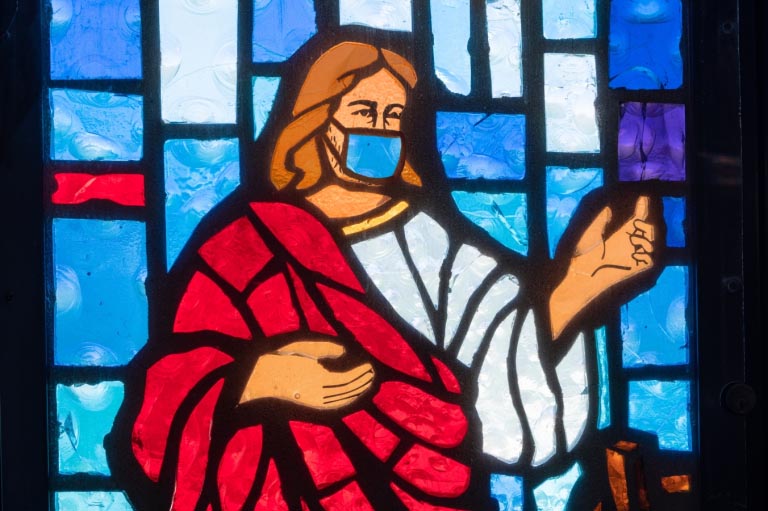
What do burkas, tichels, yarmulkes, hijabs, kapps, fezzes, dukus, and surgical masks all have in common? Religious cultures mandate or strongly encourage these head coverings to comply with dogma. Although most of these are rooted in ethnic and religious traditions of any denomination to reflect humility before G-d and modesty before man, surgical masks have become the morality trend of the Western world for those who fear The Science before they fear any god.
As absurd as that last sentence may sound, the People of the United States are under siege–a war that is targeting our greatest claim to fame, our pride and joy: our freedom. Our Forefathers determined at the inception of this nation that all men have the inviolate right to life and liberty. Recognizing some freedoms that are indelible to the identity of a human are especially at risk of infringement, the Founders drafted the Bill of Rights to expressly protect freedom of religion, freedom of speech, freedom of the press, freedom to peaceably assemble, and freedom to petition the government among other activities.
Yet over the last three years, our government has encroached on these unalienable freedoms in the name of public health and following The Science. The few government officials and bureaucrats sitting in D.C. and Georgia imposed their beliefs on what makes the public healthy on the masses, without regard for dissenting opinions or contrary beliefs. Such factional tyranny is exactly the breach of social contract the Framers aimed to prevent.
After initially telling the country that masks would not work against this virus, Anthony Fauci fell in step, ordering persons be masked and directing both government and non-government actors alike to hold their fellow citizens accountable for failing to mask. A futile exercise in the name of “public health” given research predating the pandemic had already put to bed the idea that masking could prevent respiratory infections. Even following the Cochrane Review’s pandemic masking study showing little-to-no efficacy at masks preventing infection, the Biden administration still tells the People we should be masking.
Beyond inefficacy, recent studies are also researching possible adverse consequences from constant mask-wearing, now termed “Mask-Induced Exhaustion Syndrome.” The illness bears many of the same symptoms as “long covid,” begging the question: are the health risks of long-term masking worth the miniscule efficacy? I digress. Masking mandates began to die down when the CDC lost a legal battle where the court only addressed the agency’s statutory authority to impose such a mandate. The question of whether such mandates are constitutional at all was never reached. Despite the open question in the courts, I firmly believe mask mandates do not pass constitutional muster.
Recalling my extreme parallel of religious head coverings to surgical masks, compare this scenario: one day, the bureaucrats in Washington decide that for public health and decency, everyone must wear a burka. The land would cry, “Foul!” Non-muslim citizens would lose their minds that Sharia law was being imposed on them in violation of their First Amendment right to be free from the establishment of religion! Only the worshippers of the public health fascists would gladly adorn the dress as a testament to their true belief that the burka would save them from illness. I ask you, how is our current masking guidelines any different? Because masking is not a teaching from an institutionalized religion? Is trusting The Science not a form of having faith?
In truth, our courts have held time and time again that government actors cannot infringe on our clothing under both freedom-tenants of religion and speech. Our Constitution contracts our appointed government to respect and defend our human right to liberty, which includes our ability to express ourselves and beliefs through our clothing and appearances. After all, our appearance is all a part of our individual identities. Covering one’s face, one’s physical identity, must be a choice and not a requirement.
Moreover, our individual identities are not just linked to our physical attributes. Nay, our speech is also core to our humanity and identities. Speech is the expression of one’s soul, subjective based upon the speaker’s own perceptions and experiences. How I speak and what I say is part of how others (and I) recognize me as who I am!
Like any painting serves as a window into the artist’s being, so is speech into a person’s mind, heart, and soul. It is as complex as the human body that produces such words and sounds: the speaker’s larynx, vocal chords, pharynx, palate, tongue, teeth, cheeks, lips, and nose are all coordinating in harmony to make what we think in our minds come out of our mouths. Speech is as unique to each individual as a person’s fingerprints or DNA. Muffling a person’s voice, covering the delicate facets producing speech, hiding non-verbal facial cues, and restricting air flow via masks is not natural.
Masking inhibits self-expression. Even prior to physical masking, virtue-signalers touted policing one’s own speech as being “politically correct.” Policing and masking speech is toxic to both individuals and humankind. It evokes the same hesitancy as does domestic abuse–the feeling of “walking on eggshells” for fear your words will trigger and bring you harm. It further causes an identity crisis–a dissociation within oneself, wherein the mind is policing the heart and soul for fear of offending any listener (or observer). Both perpetuate the victimhood complex where one believes she cannot live without fear because others will not do “what they are supposed to do.”
It is true that internal perceptions expressed outwardly are not always correct or palatable. Such is the beauty of allowing one to convey his opinions and beliefs in his own words: the listener can understand the person with whom she is speaking and take the opportunity to debate and educate, correct her own misunderstanding, or completely discredit the speaker of value within her own mind. Speech is not just about speaking, but about hearing and deciding what one believes to be true. Speech of our own and listening to others’ speech helps us understand and develop our own identities.
It is not that constant expletives and hyperboles should become the norm of self-expression through speech. No, language itself is so vastly malleable that it can be morphed to rise to any situation–to connect with one’s listeners. For instance, there are different ages of communication. You would not use the same words with a child as you would with adults, unless your intention is to be misunderstood or completely unintelligible like the unseen adult characters of Charlie Brown. To be understood by your listeners, you must change your speech to be appropriate for the venue and target audience.
How is any of this relevant to the topic of mask mandates eroding freedom? Requiring people to cover the face and bodily member responsible for speaking and being heard and understood is inhumane. It strips children of their ability to learn how to speak, how to use their body to produce sounds and words and sentences, and how to connect those words to facial expressions to add context for listeners. It socially distances people from each other, deteriorating the human connection that allows us to communicate and understand each other.
There is no replacement for that connection. As I discussed in a prior article, humans are a social species. Although we are capable as individuals, we fail to thrive when deprived of interacting with others. During lockdowns, people yearned to visit family, go out to restaurants, to resume “normalcy.” Zoom meetings, video calls, and text messages were not enough to curb the cravings for human connection.
Masking is just another degree of separation from one another. Although it is less obvious than the isolation of quarantines, it is just another lonely reminder that we are not free. Not free to be ourselves, not free to connect, not free from fear, not free to breathe, not free to decide for ourselves what is in our own best interest. Even President Biden joked during a recent press conference that, “they keep telling me… I got to keep wearing [a mask], but don’t tell them I didn’t have it on when I walked in,” defiantly waving his surgical mask away from his face.
Who are “they” to decide what is in any individual’s best interest? Are we children and “they” our parents? Do we lack the mental capacity to think for ourselves? Are we not developed and educated enough to decide what is healthy and what is not? Are our God-given immune systems so defective that we can no longer survive colds? I find it a hard blue pill to swallow that humanity has survived on this planet for hundreds of thousands of years for a coronavirus variant to suddenly confound our natural biological defenses.
Who are “they” at all? “They” are not our duly-elected legislators who oathed to uphold and defend our Constitution and who are the only branch of government who the People gave authority to create laws. In fact, Senator JD Vance (R-OH) is now fighting this usurpation of legislative authority by “them.” On September 7, 2023, he brought to the Senate floor the “Freedom to Breathe” Act, which would prohibit mask mandates. Senator Ed Markey (D-MA) objected to the call for unanimous consent, arguing that this legislation would infringe on the health powers of the states.
An interesting and seemingly Constitution-based argument by Senator Markey, but it presupposes masking mandates on the public are a health-related decision at all, which is not supported by scientific evidence, and that such mandates are not otherwise constitutionally prohibited.
Though the People granted health powers to the states, those powers are still limited by the People’s ultimate right to life and liberty, including the free exercise of religion without a state-sanctioned religion (The Science) and free speech without intrusions on the speech-producing orifice or physical identity of the speaker.
Masking restrictions are not a “health power” the state governments are permitted to enforce. Masking mandates are not a public health measure the federal government is permitted to sanction. Both impede life and liberty guaranteed to the People by being human and safeguarded by the People through enforcing our Constitution. As such, the People will not comply.
Gwendolyn Kull is an attorney who coauthored the prosecutorial ethics guide for the Pennsylvania District Attorney’s Association and developed a youth anti-gun violence engagement program within her jurisdiction of practice. She is a mother of two boys, dedicated public servant, and is now zealously advocating to defend the United States Constitution against bureaucratic tyranny. A graduate of University of Pennsylvania Law School, Gwendolyn has focused her career primarily on criminal law, representing the interests of victims and communities while ensuring proceedings are fair and defendants’ rights are protected.
The Power of Narratives and How They Shape Our Reality
”The Creative and Destructive Potential of Stories We Tell Ourselves and Others”
Narratives are the stories that are told about reality. These narratives paint pictures of how things have been and how things came to be.
Narratives frame our perspective on how we see reality. Narratives create realities. Narratives have power.
The problem with this is that these narratives, at times, are acted upon even though they contradict the actual factual events. Reality is built based on the narrative rather than the actual real events of the situation (e.g., data).
We’ve seen that narratives can be told to either populations or individuals.
And narratives, as we mentioned, are powerful because they are what build societies.
For an example of a mass narrative, we have the pandemic.
Within the pandemic, the narrative was that this was the deadliest virus ever.
The reality was that it had a 99% survivability rate.
However, we enacted policies based on the narrative versus the actuality of what the data showed
The truth, however, is when the narrative meshes with the data, the reality.
The problem is that we often build realities off narratives versus the data.
We did this with 9-11, with the stories outweighing the data. We’ve been told a plane hits, but the data supports bombs going off
We do this with all other narratives.
We spend billions of dollars for the narrative of space, even though there’s no data to support the concept of space
We have individual narratives as well. The narratives that we tell ourselves. The narratives of what has occurred in our lives – even though it may not be the best factual data perspective that occurred
However, with the narratives we tell ourselves, we make decisions based on those narratives, which can be positive or negative.
The same thing occurs with the mass narrative.
This is why the narrative is always very tightly controlled. It’s better to ignore something than to change the narrative. The narrative must always be upheld.
Narratives frame realities.
Narratives build realities.
It’s up to us to realize when a narrative is being told – when it could be uplifting or degrading. Whether it’s creative or destructive.
It’s up to us to identify what the narratives are. And if needed, it’s up to us to change those narratives. It’s also up to us to create new narratives – especially narratives that are more creative towards our ultimate goal and what we want to do.
The term “fact-checker” has become a euphemism for those designated as arbiters of truth and assumes the general population needs help sorting fact from fiction. However, personal responsibility in discerning facts is essential since fact-checkers themselves can be biased, overlook falsehoods, and promote a false sense of certainty. Personal responsibility means not only verifying a fact but also understanding the context and questioning the credibility of those doing the “fact-checking.”
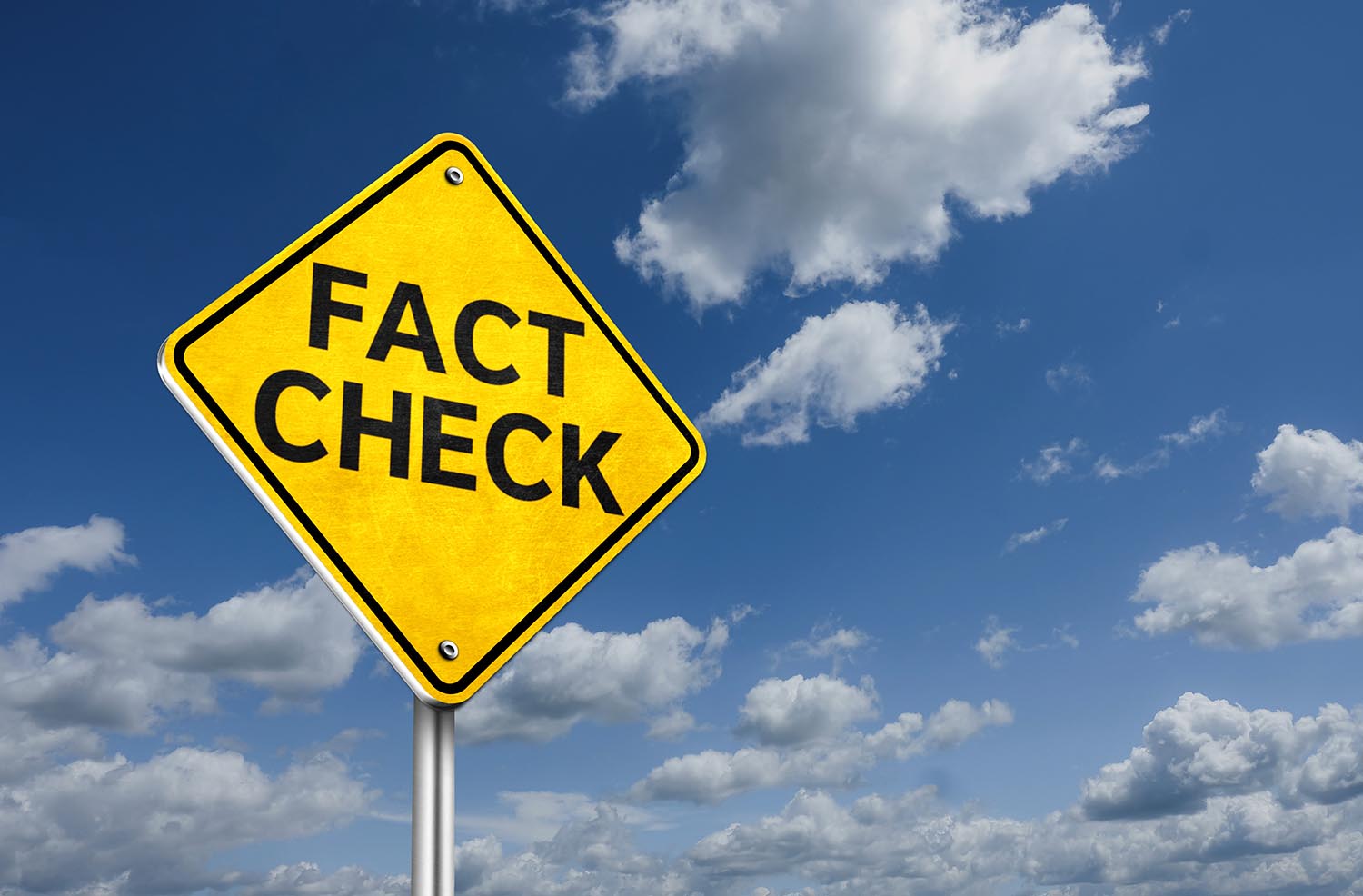
Fact Check information road sign
The Brownstone Institute recently published an insightful article written by Thomas Buckley, a former newspaper reporter, called: How “Fact-Checking” Obliterates the Truth. The article is helpful in exposing the biases of fact-checking organizations and should be shared to educate those who put even a shred of faith in these individuals and institutions.
Here’s why:
Fact-checkers themselves can be prone to bias.
Although fact-checkers promise to stay objective and impartial, they, too, carry their opinions and beliefs. Their political, ideological, or personal predilections can lead them to cherry-pick facts that fit their narrative and ignore those that go against it.
Fact-checking can be manipulated.
Fact-checking is a tool for disinformation. Politicians and other public figures use it to delegitimize their opponents or to put out their agenda. By labeling their opponents’ statements as untrue or misleading, they can undermine their credibility and cast doubts on their character.
Fact-checking promotes a false sense of security.
Fact-checking suggests that there are definite answers to questions or issues when, in reality, there may be none. This can give people a false sense of security, thinking that they now have all the information they need to make an informed decision, when, in fact, the truth is much more complicated than what fact-checkers present.
On the upside, when a fact-check notification is attached to online articles or social media posts, it’s a helpful queue that there is more to explore about the issue. Those who dismiss information simply because a fact-checker says its false will find themselves persisting in ignorance.
We will remember the summer of 2023 for many things, like wildfires, high temperatures, drought, and severe rainstorms that caused unprecedented flooding! The World Meteorological Organization reported that July 2023 was the hottest month on record for the entire planet. In my hometown, cool days were few and far between. We hovered at around 25°C or higher – sometimes into the low 30-degree range. The garden just sat there, sweltering. Here are a few things I learned about growing and how adaptable nature can be during one of the hottest summers ever.
Mulch
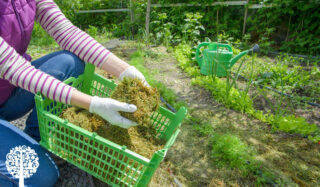
I added a layer of compost and leaves to the garden beds in June, topping it with a layer of regular garden soil. My goal was to insulate the roots of shrubs and perennials from the heat and keep more moisture in the ground longer. It paid off. Even in the hottest days, the soil stayed moist longer. I still had to water, of course, but not every day.
Limit Watering?
It’s a common misconception that we should water the garden every day in the summer, which can lead to over-watering and cause roots to stay close to the surface instead of traveling deeper into the soil for moisture and growing stronger. I looked for telltale signs the garden was thirsty before watering. Light-colored dirt, drooping leaves, and, most importantly, I used my water meter to gauge the water content in the soil. If below normal, I watered; if average or above, I waited.
Nature’s Reset
The early June heat that typically would have been felt in August caused summer stalwarts like Rose of Sharon, Buddleia, and heliopsis to form buds much earlier in the season than usual. Would they bloom earlier and leave me no color in August?
According to Oregon State University, the length of darkness a plant receives triggers when it will bloom. This explains why some perennials open up in the longer daylight hours of early summer, and some wait until the shorter days of late summer. Right on cue, starting in the middle of August, the Rose of Sharon managed to hold off and bloom when I hoped it would.
Never Underestimate Mother Nature
Science tells us that nature’s rhythms will be affected as climate change turns up the planetary thermostat. But I learned this summer while observing my garden that Mother Nature adapts. If we keep doing what we know works and is good for our gardens, we can help her find a new normal in this hot new world.
Last but not least, STU Farms, a cannabis facility in Arthur, Ontario, is looking for a buyer, and High Tide announced a new consumer-facing digital magazine to expand their sometimes controversial Cabanalytics data program.
Events
There were two prominent cannabis industry events this week: the Elevate Cannabis Expo from September 12–15 at the Mirage Banquet Hotel in Toronto, and the Montreal Cannabis Expo at the Palais des congrès, from September 13–14.
Hall of Flowers is coming to the Enercare Centre in Toronto on September 19 and 20.
And, of course, StratCann’s Growing Relationships event series will be in Winnipeg on October 16.
Cannabis Education
OCS launched a new “social impact platform,” Good All Around,” to help people learn about how they are driving positive change and exploring their OCS’s social responsibility work.
Jenna Valleriani, Senior Manager, shared that Social Responsibility for the Ontario Cannabis Store, “I’m grateful to be a part of building something new that will help demonstrate transparency and accountability to Ontarians around how we are driving positive change, establishing meaningful partnerships, and promoting cannabis literacy across the province.”
A free public information session about medical cannabis is happening on Saturday, September 16, at the WISH Centre in Chatham, Ontario. The Unifor Local 127 Retirees chapter organized the event to talk about removing the stigma from medical cannabis use.
Speakers include Tina Lively, a clinical pharmacist with Thamesview Family Health Team, and scientist and educator Abhishek Chattopadhyay of Chatham-based AgMedica Bioscience, Inc.
Business
Custom Cannabis Inc., an Alberta-based cannabis company, was adjudged bankrupt on August 31, 2023, on application by Connect First Credit Union Ltd. Connect First is owed over $12 million.
High Tide shared its Q3 2023 financials, with a gross profit of $34.6 million compared to $25.8 million during the same period in 2022. Net loss was $3.6 million, compared to $2.7 million during the same period in 2022.
Sales from High Tides Cabanalytics “business data and insights platform” increased to $6.5 million from $5.5 million during the same period in 2022. High Tide is the largest Canadian non-franchised brick-and-mortar cannabis retailer, with 156 Canna Cabana locations operating nationwide and a loyalty base exceeding 1.1 million Cabana Club members. Its stated long-term goal is 250 locations across Canada.
Avtar Singh Dhillon, a former B.C. doctor turned cannabis stock promoter, has admitted to the US Securities and Exchange Commission (SEC) that he participated in a massive billion-dollar stock fraud scheme partly orchestrated from Vancouver. Dhillon directed Vancouver-based Emerald Health Therapeutics, a medical cannabis producer, and had served as a board chair with the Cannabis Council of Canada (C3).
Nextleaf Solutions’ Board of Directors announced the departure of Paul Pedersen from his role as CEO and President, effective September 8, 2023. Pedersen had been Nextleaf’s CEO and President since inception and remains on the Board of Directors. Nextleaf welcomes Emma Andrews to the role of Interim CEO.
Fire & Flowercompleted its sale to FIKA Cannabis. Retail chain Fika had previously won an auction to purchase Fire & Flower. Fika currently lists 19 locations in Ontario. Fire and Flower lists 79 locations across Canada.
Pelham Today ran a story on Tilray closing the RedeCann facility on Foss Road. Residents and politicians say the loss of jobs is unfortunate but point to ongoing odour complaints from the community as now being rectified.
Residents in Middleton, BC, are again complaining about odours coming from a cannabis production facility operated by Avant Brands (Formerly GTEC), a parent company behind cannabis brands like BLK MKT and Tenzo. These are ongoing complaints, with Avante saying they had previously “been able to satisfactorily address all inquiries from the City of Vernon and Health Canada concerning odour at the facility.”
In this most recent complaint, one city councillor says she can attest to the aroma, while another mistakenly referred to the BC government as a relevant regulatory authority. The licensing authority, in this case, is Health Canada.
Rolling Stone did a writeup on the cannabis industry’s “transformative phase” as countries worldwide embrace the medicinal and adult-use potential of the plant.
Reuters had a sober analysis of what rescheduling to Schedule III would mean for the cannabis industry. It’s not known when, if ever, the DEA will respond to the HHS recommendation reported by Bloomberg in August.
A bill allowing “Amsterdam-style cannabis cafés” to open in California cities has been approved by both chambers of the state Legislature and only needs the governor’s signature to be turned into law. If signed, it will come into effect on Jan. 1, 2024, and the “cafés” would only be allowed in cities and counties that approve them.
The legislation would authorize cannabis stores to sell food and non-alcoholic drinks and provide live music or other performances on the premises.
A German Government plan for the “controlled legalization” of cannabis that could come into force next year has met with opposition from a range of groups, including the German Medical Association, judicial and law enforcement officials, as well as those who favour decriminalization but say it is too bureaucratic, reports The Lancet.
Klaus Reinhardt, President of the German Medical Association, says the proposed age of access of 18 is too low and that the judicial and regulatory bodies in Germany are “hopelessly overburdened” and would be unable to handle enforcing cannabis regulations. These echo similar concerns previously posed in Canada that are yet to come to fruition.
Law enforcement
Galen Simmons at the Beacon Herald covered a recent meeting with the Stratford Police Board on September 13, with local police saying they won’t be focussing on a local unlicensed dispensary.
Indigenous-owned retail store Organic Solutions operates within Stratford city limits in a mixed industrial and residential neighbourhood. Despite the store not being licensed by the city or the province, Stratford police Inspector Mark Taylor told the board that there had been no further discussion of enforcement with either the Crown or local bylaw office.
After conversations with the chief, Chair Tim Doherty said that the board was satisfied with the “status quo” while waiting for further direction. “I don’t think there needs to be any extra attention paid to this particular business. We’ll carry on as we have in the past,” Doherty said.
The BC Supreme Court has ordered the extradition of a BC man to the US to face charges as part of an investigation alleging a drug ring moving cocaine and cannabis between the US and Canada.
The Attorney General of Canada said the record of the case submitted by the US is sufficient to show that Ellingson furthered that conspiracy by recruiting pilots to traffic cannabis and cocaine, arranging meetings to coordinate conspiracy efforts, and arranging for encrypted communications for the smuggling group to avoid legal detection in the early 2000s.
The Sûreté du Québec and the Royal Canadian Mounted Police (RCMP) carried out operations on September 14 to dismantle outdoor production sites for illegal cannabis in several regions of Quebec. Police say these seizures of plants will be added to the provisional results of operations that began last June. During this season, thousands of illegal cannabis plants have been seized throughout Quebec, tickets relating to the Cannabis Control Act have been issued, and arrests have been made under the Cannabis Act.
Sorel Tracy Magazine ran images from one of the raids where 600 plants were seized and hauled away via helicopter.
“A truly spiritual person is not one who is encrusted with beliefs, dogmas, rituals. He has no beliefs; he is living from moment to moment, never accumulating any experience, and therefore he is the only revolutionary being.” ~Krishnamurti
In a world that’s addicted to belief, anti-belief is a gamechanger. Indeed. In a world that is “encrusted with beliefs,” anti-belief is a superpower.
Why is this? Because anti-belief reconditions cultural conditioning. Anti-believers have removed the “crust.” They’ve shaken off the dross. They’ve pierced the veil. They’ve seen through the charlatan shams and kneejerk mollycoddling. They’ve shaved away the superfluous and found the Equation wanting. They’ve stared into the abyss and laughed.
Beneath the torn-away band aide of belief, they’ve discovered a world that is weak and petty, plotting and placating, confused and deathly afraid of its own mortality. But, rather than balk, they’ve decided to step-up. They’ve decided to take a stand, draw a line in the sand, flip the script on religion, turn the tables on tyranny, push the envelope of what it means to be a thinking being in an unthinking universe.
They don’t believe, they think. They think through fallibility, insecurity, imperfection, and the tendency to make mistakes. In fact, it is precisely because of these human frailties that they refuse to believe in anything the human mind could conceive.
For, as Scott Adams said, “The mind is a delusion generator, not a window to truth.” Therefore, a keen observer always questions the delusion generator. Always! Never settling. Never giving in to comfort, security, or false promises of a fairytale afterlife. That’s anti-belief, and it’s revolutionary.
For the anti-believer the buck stops here: at four ways anti-belief is your greatest super
1.) Anti-belief gets you ahead of the curve:
“I have often laughed at the weaklings who thought themselves good because they had no claws.” ~Friedrich Nietzsche
When you don’t believe anything, you can’t be trapped. Rather than belief, you choose thought. Rather than certainty, you choose curiosity. Rather than rigid laws, you choose the mighty question mark.
This gives you a cutting edge: It gives you claws. It gives you teeth to bite holes through the flimsy beliefs that have kept you toothless and meek. You become capable of discernment, not because you believe, but because you think. Not because you are certain, but because you are curious. Not because you are prideful, but because you have tasted humility.
You discover new ways of being human in the world. You become a force of nature first, a person second. You become capable of taking risks, turning tables, flipping scripts, pushing envelopes, and challenging the Powers That Be.
You become a force to be reckoned with rather than a thing to be forced.
This puts you out front, piercing the veil, stretching comfort zones until they snap, transforming boundaries into horizons, pioneering cosmos, outmaneuvering entropy, and outfoxing the infinity that outflanks you by being so over-the-top mortal that the gods weep with envy.
If, as Aristotle said, “It is the mark of an educated mind to be able to entertain a thought without accepting it,” then it stands to reason that we stay ahead of the curve by not accepting our thoughts (which is belief) but, instead, “entertain” them by questioning them and being curious about them rather than certain.
Thus, you become the mighty question mark itself, slicing through the universe, unstoppable, unconquerable, uncontainable. Nothing rules over you because no rule is off the hook for being questioned. Cosmic sea’s part before you, revealing the unknown. And you are there to spearhead reason despite all beliefs.
2.) Anti-belief makes life more about the journey and less about the destination:
“You can’t study the darkness by flooding it with light.” ~Edward Abbey
For an anti-believer there is no settled state, there is no final stage. There is always a destination to overcome. There is always an “answer” that needs to be questioned. Mastery is always recyclable. The journey is always the thing. The sword is always sharpened dullness. The diamond is always pressurized coal.
As James Hillman said, “the pearl is also always grit, an irritation as well as a luster.”
The journey is the thing that will sharpen and hone you. It is a path of triumph and tragedy, creation and destruction, adaptation and annihilation. It’s paradoxical and it asks the same of you. You must become a torn thing—torn between discipline and humor, courage and humility, passion and indifference.
The tearing is the thing. It is in the tearing where you are the most human. Torn between flesh and spirit. Torn between living life to fullest despite knowing you’re going to die. Torn between standing on earth and longing for the stars.
The tearing is your sacred space. It’s the place where you craft your own philosophy. Where you hone your soul, sharpen your character, and perfect your rebellion. It’s where you develop a master strategy for playing the game of life despite the inevitability of death.
When the journey is the thing, you’re more teachable, more open, more adaptable to reality. Belief in a destination can bog down the soul. It boxes it in. It gives the believer false hope in a universe indifferent to hope.
As Paul Bowles warned, “Security is a false God. Begin to make sacrifices to it and you are lost.”
To hell with security! Comfort zones are for licking wounds and recouping. Anything more than that is wasted time. Stop wallowing in pie-in-the-sky aftermath scenarios. Stop placating yourself and those around you. Stop playing the victim to your perceived destination. Transform yourself from a sacrificial lamb into a mighty lion by acquiring the sword of anti-belief.
Use it to disable closemindedness, self-importance, attachment, certainty, expectation, assumption, and dogmatism. Security blankets be damned! In the war between delusion and truth, there’s no time to vacillate. Clinging to a “truth” is a waste of time. The Truth Quest is all that matters.
As The Buddha said, “It is better to travel well than to arrive.”
3.) Anti-belief leads to non-attachment:
“You can never be certain about anything. You never know the truth. You can only approach it and hope to get a bit nearer to it each time. You iterate towards the truth. You don’t know it.” ~James Lovelock
Anti-belief gets you out of your own way, so that the Way can have its way. You’re better able to surrender to Flow. You’re better able to, as Krishnamurti said, “Die to everything of yesterday so that your mind is always fresh, always young, innocent, full of vigor and passion.”
There are no limits. No boxes to think outside of. No desperate pigeonholing. No exasperating placations. You are free to transcend the lot. Transcend yourself. Transcend culture. Transcend nihilism. Transcend even transcendence itself. Because it’s all put on blast. God’s feet are always in the fire. The universe is always put to the test. Nothing is free from the chopping block of your mighty question mark. Let it fall.
Then let it go. Let your imagination thrive. Free your soul. Free it from the tyranny of belief. All beliefs, no matter how well-intended, are a hinderance to clear thought. The greatest fight in the war between belief and delusion is against our own bewitchment. Beliefs are reinforced bewitchment. Clear thought breaks the spell by ushering in a mindful nonattachment to ideas and ideals.
Think clearly. Test the thought. Let go of the thought. Repeat. Never accept it. Never settle. For therein lies the trap. Therein lies the beginnings of a shrink-wrapped comfort zone. Therein lies the muck and mire where lies become “truth.”
Never assume. Transcend instead. Think clearly. Think precisely. Then get outside of your head and analyze the data. Use the question mark sword to shave away the superfluous, the ignorance, the illogical, the unreasonable, and the untruthful. Use it to embolden the most powerful virtue in the human arsenal: a good sense of humor.
Go Meta with that humor. Utilize the Over Eyes of the bird’s eye view. Tap the Oversoul of the Overman. Laugh at the rigmarole, the seriousness, the pettiness. Trump your small picture thoughts with big picture imagination. Get above politics and religion, above good and evil, above time and space. Lighten your heart even as the world goes dark with its petty certainties and incessant seriousness.
Certainty is a cesspool. It’s clogged, closed-off, and stale. Its water is murky, poisonous, and undrinkable. Purify it with the question mark sword. Let it flow. Then cleanse the waters with the keen curiosity and healthy nonattachment of anti-belief.
4.) Anti-belief gets you closer to God:
“The center is everywhere.” ~Black Elk
Ironically, it is the lack of belief in God (the culturally/religiously conditioned version) that orients you with God (Infinity, the Great Mystery, the Ultimate Unknown, the Interconnected Spirituality, the Dancing Nothing, the Blooming Haha).
This is because God doesn’t require belief. It requires openness. It requires perspective. It requires curiosity. It requires faith.
Faith is the opposite of belief. Faith is letting go of your interpretations and renouncing your attachment to a particular result. It’s a deep curiosity regarding the absolute, whether it’s easy to swallow or not.
Belief, on the other hand, is what happens when you become attached to your flawed interpretations. It’s a vain attempt at pigeonholing the absolute into a nice little digestible package.
In short: belief is limiting; faith is limitless. Belief is mental slavery; faith is mental liberation. Belief is attachment; faith is nonattachment. Faith is a vulnerable posture regarding reality, a sacred hope. Whereas belief is an invulnerable wish and whimsy about what the truth “absolutely” is.
Break the spell. Use anti-belief to usher in faith and hope and get rid of wish and whimsy. Through the faith and hope of anti-belief the Truth is laid bare. The emperor is naked and always has been. God is stripped of religion and dogma and jealousy and judgment.
What’s left over is the piercing light of infinity and the daunting darkness of mortality. You become torn. You become eclipsed. “You” becomes a trivial thing: petty, paradoxical, finite, and all-too-mortal.
But you also become blessed and beset with a profound responsibility: to create meaning in an otherwise meaningless universe. You become lit with that light and illuminated by that darkness. You become the sharpened edge of the Golden Ratio, the sword of God. Yin-yang prominent, your true power is revealed. You are the perceiver. You are the creator. You are the process of Truth unfolding.
The center is everywhere. Thus, you are the center. Once but a mere moth, now full-frontal fire. Before this realization, you were merely God asleep. After this realization, you become God awake.
So, Nietzsche said, “God is dead”? Yes and no. It depends on how you look at it. Yes, the old caterpillar God of religious dogma had to die for the spiritual butterfly God of all things to reveal its true nature: Infinity itself penetrating in and through all things and connecting everything to everything else.
Anti-belief leads to this powerful revelation: The old gods had to die for God to shine its true light. No belief required. Just open, honest, circumspection, and curious thought.
Now, free of the mindset of a believing mind, you move into the mindfulness of an inquisitive mind. You become a question-generator that counter-balances the delusion-generator of the human condition. You get ahead of the curve, surfing Aslam’s Infinite Circle on the surfboard of Occam’s razor, in absolute awe over the beautiful unfolding of an ultimately unknowable universe. On the edge of your own curiosity, questioning all “answers” countering all beliefs, elusive of all delusions.
But not even God is safe from your ruthless inquiry.
About the Author:
Gary Z McGee, a former Navy Intelligence Specialist turned philosopher, is the author of Birthday Suit of God and The Looking Glass Man. His works are inspired by the great philosophers of the ages and his wide-awake view of the modern world.
This article (The Power of Anti-belief In a Belief-ridden World) was originally created and published by Self-inflicted Philosophy and is printed here under a Creative Commons license with attribution to Gary Z McGee and self-inflictedphilosophy.com. It may be re-posted freely with proper attribution, author bio, and this statement of copyright.











Recent Comments