Lisbon, Portugal — SOMA Pharmaceuticals Unipessoal LDA, the largest European pharmaceutical cannabis product manufacturer, is pleased to announce that it has received authorisation for its facility located in Lisbon, Portugal from the Portuguese Health Authority INFRAMED (authorisation number 42/V01 de 25/08/2023).
This authorisation permits the company to manufacture, import, and export medicinal cannabis products to numerous global markets and represents a significant step for the company towards revenue generation. The company also announces that it has successfully raised (euro)5 million of new capital to fund its ambitious growth plans.
This INFRAMED authorisation awards the company a GMP Certificate Part I and Part II, enabling it to execute its plan to own distribution channels in Australia and Germany and to establish distribution partnerships in another eight countries whilst developing a comprehensive brand of medical cannabis products. SOMA’s goal is to be a singular brand that services all doctors’ and patients’ needs through multiple delivery systems and novel formulations.
Michael Sassano, SOMA’s Founder and CEO, stated: “We started construction in November 2021. We began manufacturing after an initial inspection 12 months later. Now, after receiving full GMP Part I and Part II, we have proven that it is possible to be in the market with pharmaceutical products in under two years. Furthermore, not only are products continually rolling out of stability from earlier this year, but we continue to create a full suite of next-generation products based on the future needs of patients.”
Advertisement
Anton Nakhodkin, Board Member and Managing Director, stated: “Our focus pivots from development to full commercialization and growth by servicing all the current major markets and preparing smaller and new markets to open to medical cannabis. Management hit and exceeded all targets and unlocked another (euro)5 million euros of new investment to build out an international sales and distribution force.”
SOMA remains extremely confident that the market for finished dosage form medical cannabis products has enormous potential. With the largest suite of products, SOMA is invested in that future, and the company is already witnessing global demand and interest in its products from both legacy and new markets.
Toronto — Embattled Canadian cannabis stocks jumped Thursday on the hope that the U.S. may ease restrictions on the substance.
The Associated Press reported that the U.S. health department has recommended marijuana be moved from a schedule one to a schedule three controlled substance.
U.S. Senate leaders hailed the recommendation Wednesday as a first step toward easing federal restrictions on cannabis.
Shares in Canopy Growth Corp. rose more than 28 per cent Thursday, after climbing nine per cent Wednesday.
Advertisement
Tilray Brands, Inc. shares rose almost 11 per cent, after its stock rose more than 10 per cent Wednesday.
Shares of Aurora Cannabis Inc. rose almost five per cent.
Substance Law began in June 2018 as Harrison Jordan Law, offering services for cannabis clients across Canada, focusing on the Ontario retail cannabis market.
Since then, Harrison Jordan has built upon his personalized approach to cannabis law, assisting retailers, licensed producers, and ancillary businesses in navigating a complex array of federal, provincial, and even local municipal rules and regulations.
With a focus on the Ontario sector, where Jordan lives and operates, he says his focus is national and international, taking into account the realities of operating in the Canadian market.
“I support clients across the country. I am only called to the bar in Ontario, but inevitably, some matters require a cross-country approach. I do take on work from clients in other provinces when it makes sense. Each province has its own regime when it comes to retail sales and promotions, and you have to know the contours of those. Some are quite strict with their cannabis laws and enforcement (looking at you, Alberta) while some are more laissez-faire.”
Billing itself as Canada’s law firm for regulated substances and industries, Substance Law offers services on matters relating to the federal Cannabis Act and Regulations, how to open a cannabis store in Ontario, Health Canada labelling and packaging compliance, Ontario AGCO budtender training, as well as incorporations for businesses, drafting and reviewing agreements–such as employment agreements and franchise agreements–and much more.
With its history of focus on the cannabis industry, Jordan says he can provide unique insights into the market for his clients. The story of the growth of his business is one of the growth of the market in general, he explains.
“Almost right after I was called to the bar in Ontario, I hung up my shingle (as it’s called), essentially putting up a website and seeking cannabis industry clients to assist. That summer, I started working at MNP as a consultant on a contract basis on cannabis files for their clients, and the idea was that during weekends, I would bring on and assist my own clients while working at MNP during the week. There were very few Toronto-based lawyers with a presence on Google at that time stating they were focused on the cannabis industry; that was when interest in lining up to apply to open a cannabis retail store in Ontario was heating up. At a certain point, I had to tell the team at MNP, “Look, my phone’s ringing off the hook. For better or worse, I’ve got to stop working here,” and since then, I’ve been building my law practice full-time.”
Jordan’s passion for cannabis and law was an obvious combination for him.
“When I was applying to enter law schools, in my entrance essay to Osgoode Hall at York University, I wrote how it intrigued me that they tenured Alan Young as a professor. He was a lawyer who fought for the rights of individuals to safely practice “consensual crimes” such as cannabis use, sex work, and gambling. That fascinated me. Coincident or not, I was accepted into Osgoode Hall, placed in his first year Criminal Law class, and ended up working for him. Once I graduated from Osgoode Hall, I articled at Lewin & Sagara, where noted cannabis lawyer Paul Lewin taught me the ropes of cannabis law and where I obtained in-court experience.”
Being a small business, Jordan says he can relate to other small businesses in this space in ways that larger firms might not.
“All clients get my direct line, and I pride myself on timely service. Our focus is on small businesses and doing what we can to prepare them to enter the industry successfully, even when they have very little, if any, experience in the industry to begin with. We know what it’s like to be a small business because we’re one too!”
Despite challenges in the industry, Jordan says he’s hopeful that there are still many opportunities for those seeking to make their cannabis business work.
“The best is yet ahead. The federal government is aware that the current excise duty regime – essentially $1 per gram – is knee-capping producers. They recently released a consultation asking how they could reduce red tape. Yes, there will be setbacks, including an ill-advised planned move by Health Canada to restrict the smell or taste of inhaled cannabis extracts from being anything other than what is “typical” of cannabis – but I think the best is yet to come. Companies are becoming smarter, and more are moving to an asset-light approach that, for some, makes the most sense.”
Officials in Ohio have approved language for a measure that would appear on the November 2023 ballot giving voters the chance legalize marijuana in the state. The Ohio Ballot Board unanimously approved a recently drafted and certified summary from the secretary of state’s office in a meeting that saw no discussion of the legislation’s text or testimonies from supporters and opponents.
State officials announced two weeks ago that the activists behind the Ohio cannabis legalization measure had collected enough valid signatures to qualify the proposed legislation for the November ballot. A statement from Secretary of State Frank LaRose’s office revealed that the Coalition to Regulate Marijuana Like Alcohol (CTRMLA) ultimately submitted 127,772 valid signatures, around 3,000 more than the number required by state law.
The summary approved by the Ohio Ballot Board indicated that the proposal would legalize and regulate cannabis cultivation, processing, purchasing, home cultivation and consumption by adults aged 21 years and older. It would also allow the possession of up to 15 grams of cannabis concentrates, up to 2.5 ounces of cannabis, cultivation of up to 6 cannabis plants for one individual’s personal use, and up to 12 plants max per home.
Furthermore, the summary stated that the measure would require the formation of a Division of Cannabis Control to regulate and penalize recreational cannabis operators, testing laboratories and people who require cannabis-related licenses. It also noted that the adult-use cannabis measure would create a social equity program, sustain landlords’ and employers’ rights to ban cannabis use in specific circumstances, and tax cannabis sales revenue.
The measure would channel cannabis tax revenue to different accounts, offer protections for financial institutions that serve licensed cannabis businesses and protect the identities of individuals taking part in the recreational cannabis market.
CRMLA spokesperson Tom Haren noted in a recent statement that the measure would provide hundreds of millions of dollars in new tax revenue and the same level of regulation seen in the medical marijuana market. According to Haren, the campaign is looking forward to eliminating Ohio’s cannabis black market once official sales begin.
Since cannabis has been the most consumed illegal drug in the United States for years, a massive black market is supplying the country’s immense demand for marijuana. Even now that more than 20 states have recreational cannabis markets, America’s illicit cannabis market still supplies most of the country’s cannabis, undercutting state-legal adult-use programs, funding criminal enterprises and harming the environment.
If Ohio voters choose to legalize cannabis in the upcoming ballot vote, the legal recreational market will likely have a hard time competing with the illicit market. However, major cannabis players, such as Aurora Cannabis Inc. (NASDAQ: ACB) (TSX: ACB), in different markets have always found a way to attract customers, so the licensed players in Ohio will thrive as best they can once the recreational market launches.
About CNW420
CNW420 spotlights the latest developments in the rapidly evolving cannabis industry through the release of two informative articles each business day. Our concise, informative content serves as a gateway for investors interested in the legalized cannabis sector and provides updates on how regulatory developments may impact financial markets. Articles are released each business day at 4:20 a.m. and 4:20 p.m. Eastern – our tribute to the time synonymous with cannabis culture. If marijuana and the burgeoning industry surrounding it are on your radar, CNW420 is for you! Check back daily to stay up-to-date on the latest milestones in the fast -changing world of cannabis.
To receive instant SMS alerts, text CANNABIS to 21000 (U.S. Mobile Phones Only)
Please see full terms of use and disclaimers on the CannabisNewsWire website applicable to all content provided by CNW420, wherever published or re-published: http://CNW.fm/Disclaimer
Do you have questions or are you interested in working with CNW420? Ask our Editor
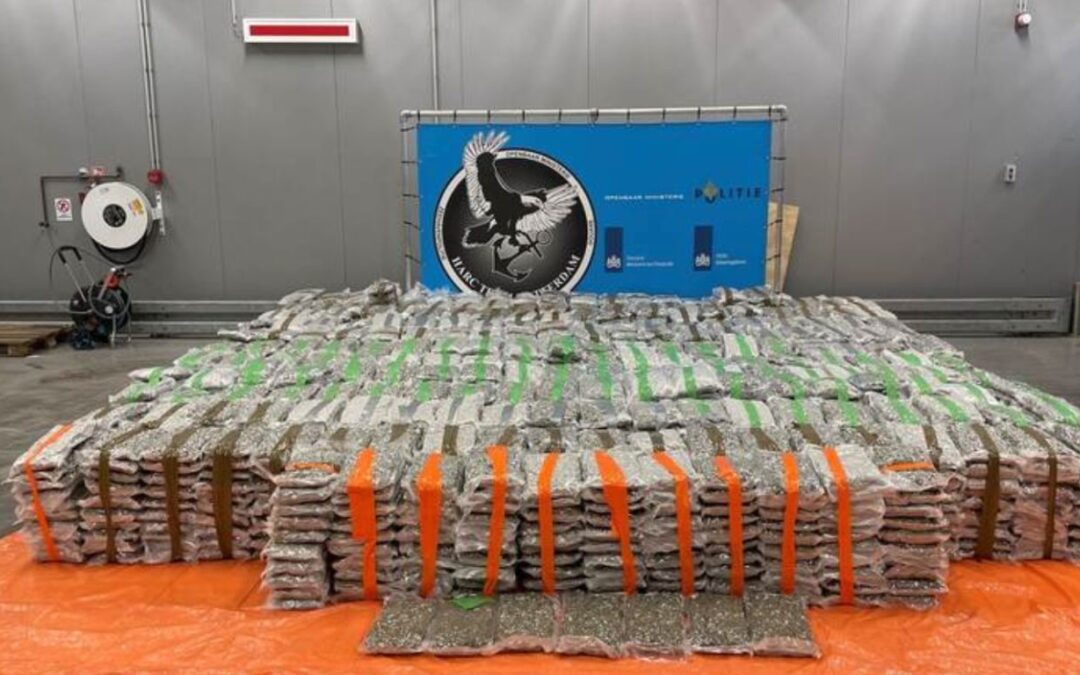
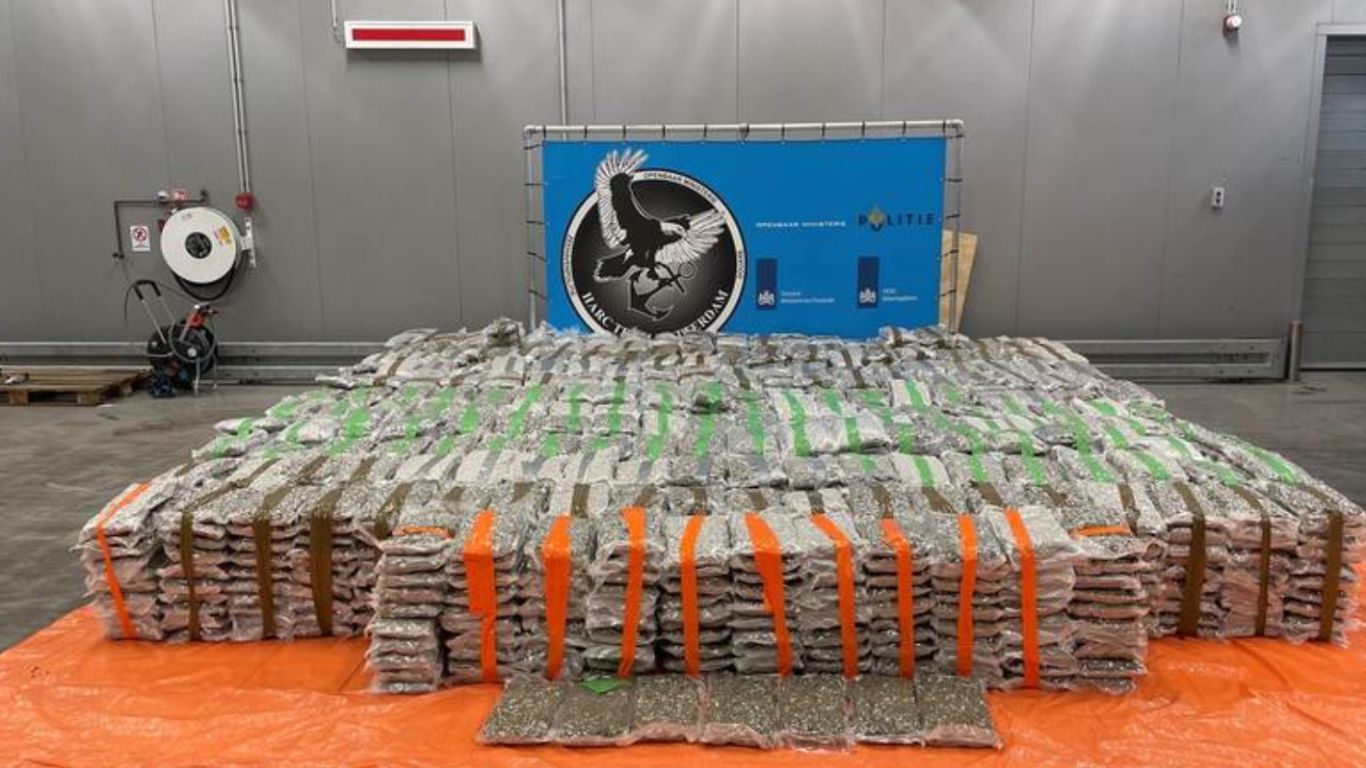
More than 1,000 kilograms of cannabis shipped from Canada was recently seized in the Netherlands.
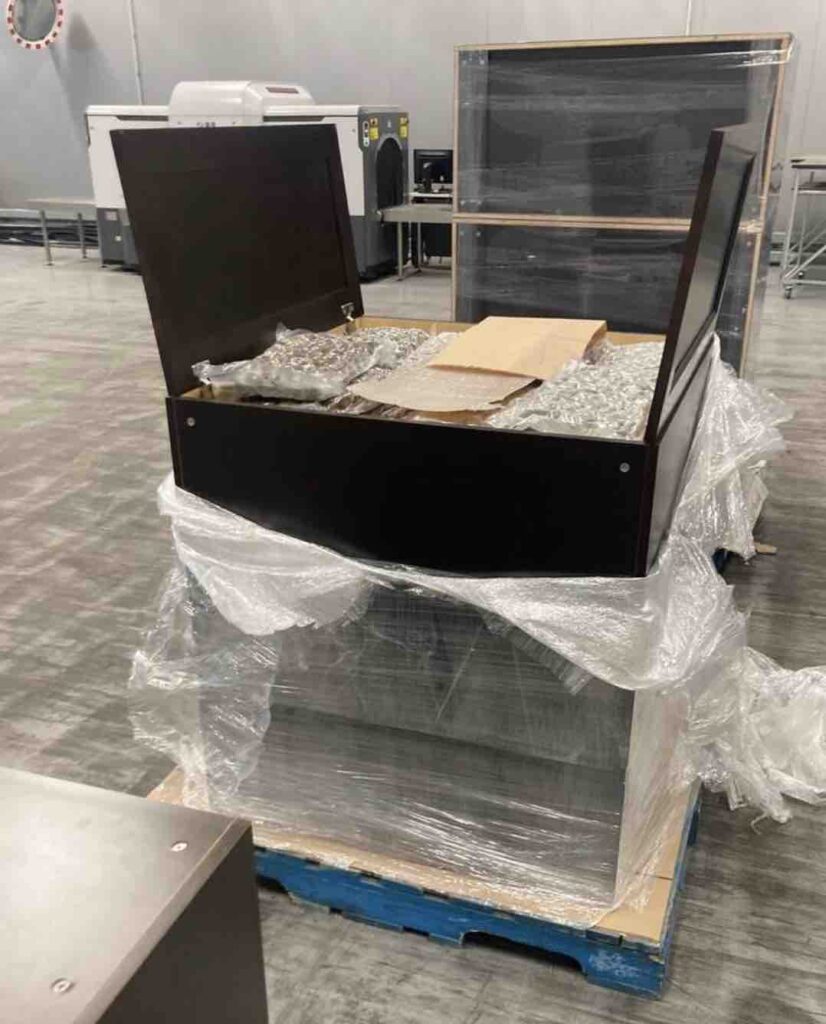
Customs officers at the Port of Rotterdam, one of the largest ports in Europe, discovered the cannabis inside a shipment of kitchen cabinets destined for a company in Germany on Wednesday, August 30 of this year.
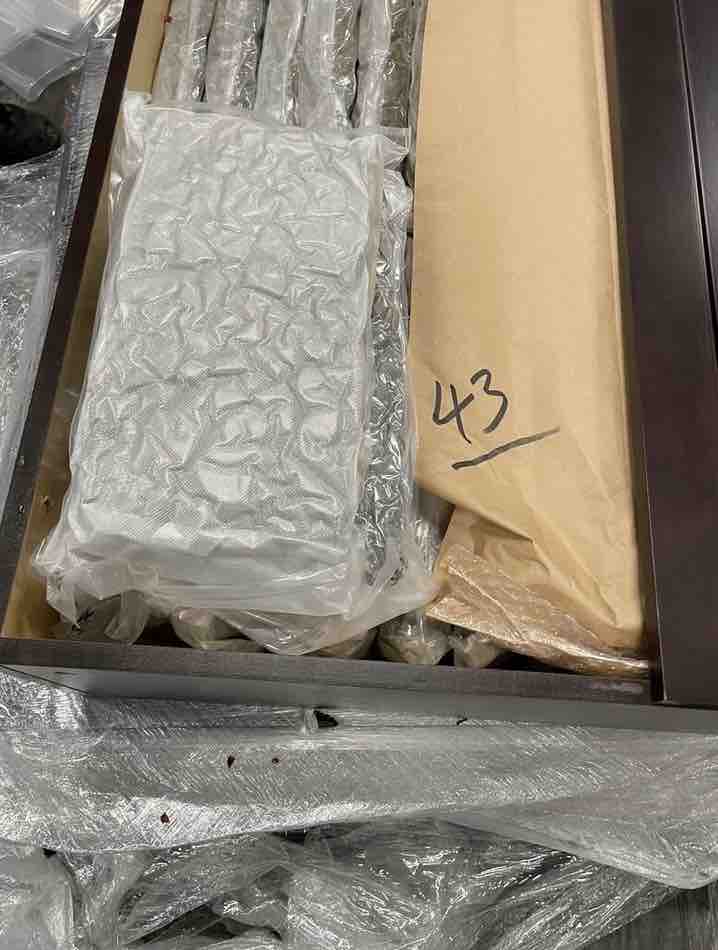
The cannabis was found during a scan of the cabinets after an aroma was detected, with 2,317 shrink wrapped packages of cannabis ultimately uncovered for a total of 1,042 kilograms. Authorities say the value of the cannabis is worth more than five million euros, or about $7.3 million Canadian.
The cannabis has reportedly been destroyed by authorities. Law enforcement is investigating the case further. No arrests have been made.
Can the government take control of the land after a natural disaster and then deem it off limits? Is government capable of creating the “natural” disaster?
Land Grab?
I’m already thinking about ways for the state to acquire that land so that we can put it into Workforce Housing and to put it back into the families or to make it open spaces in perpetuity as a memorial. – Gov. Josh Green interview with Michael Henessey, Snowflake news, Green Wants State to Own Lahaina, August 15, 2023, [13:00 minute mark].
The new governor of Hawaii, Josh Green M.D., a licensed medical doctor, resident of Hawaii, but not a Hawaiian, became governor in December of 2022 and took office in January of 2023. In similar fashion, Maui also elected a new mayor, Richard Bissen, at the same time. But where was the mayor during the disaster? And why is he now facing calls to resign?
I’m not sure who was in charge. – Maui Mayor Richard Bissen
Was the unspeakable Maui disaster the result of incompetence or was it orchestrated by design?
According to an article in the California Globe, Josh Green has been a puppet for the United Nations and a spokesperson for the Build Back Better (bbb) 2030 agenda, which seeks to create “Stack-N-Pack” housing in Smart™ Cities all over the world by 2030.
According to the July 13, 2020 World Economic Forum Playbook, the “bbb” agenda includes: “destruction,” “green recover,” “reset and reinvent,” disasters,” based on “Climate Change.”
In Hawaii, the BBB created the Build Beyond BarriersWorking Group empowered to approve and streamline housing construction projects, scheduled for a 5-year build-out based on the U.N. Sustainable Cities and human Settlements. In other words, no more single family homes.
The 2030 Agenda Sustainable Development Goal 11, “make cities and human settlements inclusive, safe, resilient and sustainable. – Build Beyond Barriers Working Group (BBBWG), August 11, 2023,Office of the Governor
The UN document details “Sustainable Human Settlements” under 6) promoting human settlements planning and management in disaster-prone areas.”
Green is not the only politician promoting the U.N.’s Build Back Better Agenda, the largest effort to “combat climate change.” On October, 28, 2021, President Biden announced the Build Back Better Framework for the U.S.
The buildup to the Maui fires began when Gov. Green issued an emergency housing proclamation three weeks prior. Along with Hawaii’s robust emergency siren warning system, everything should have been ready to flush out any wayward spark. So why did the warning sirens sit silent during the deadly fires?
Agenda Timeline To Fires
Thanks to Peggy Hall for her “Peggy-isms” and her historical reporting featured in her “Maui Fires” Playlist.
One month before the Maui fires …(July 12, 2023), Governor Green issued a press release highlighting a commitment to the United Nations (U.N.) 17 Sustainable Development Goals (SDGs) under the narrative of uniformity.
We cannot put off changing things any longer. We refuse to stand idle when 2030 looms closer and closer… We only have one Island Earth, let us do our best to take care of it and each other. We are one species, with one planet, one chance. – Gov. Josh Green, July 12, 2023
The laws suspended include provisions related to historic preservation, county zoning and the state Land Use Commission, which functions as a state-level zoning authority. The order also suspends Hawaii’s environmental review law, which requires in-depth environmental impact statements for projects determined to have a significant impact on natural and cultural resources.
The fast-tracked environmental review process will largely be conducted by the working group and housing officer. While Green promised the group and officer will work transparently, the working group will not be subject to Hawaii’s Sunshine Law, which among things requires decision-making agencies to hold their meetings in public.
One week before the fires… Governor Green spoke at the UN Sustainability Forum:
We have done some things. One is The Aloha Plus Challenge, which is a data-driven approach… to track the SDGs to make sure that we embed them in all of our policies. – Governor Josh Green speaks at Sustainability Forum, United Nations, Source: Green Wants State to Own Lahaina, August 15, ,2023 [minute mark 19:00].
brands amon from Pixabay” width=”408″ height=”230″>
After the fires…
Gov. Green took the spotlight several times. Did he make any contradictory statements?
This is going to be a multi-year recovery. It’s going to take essentially years to rebuild Lahaina which was destroyed. But we will build it back better……We will find a way to make sure there is more housing…” Source: KTIV interview August 11, 2023, 5:11 minute mark
It was so hot that even metal contorted. – Gov. Josh Green, August 14, 2023CBS Morning News
When you see mostly fatalities and very few injuries, that tells you it was a natural disaster. – In response to “You would still call this a natural disaster and not man-made?Gov. Josh Green, August 14, 2023CBS Morning News
I would call this a natural disaster because the winds were moving any fire between 60 and 80 miles per hour, that’s a mile a minute. – Gov. Josh Green, August 14, 2023 CBS Morning News
If you put a fire truck in the way of the flames that were coming through at a thousand miles per hour, the fire truck would have been incinerated in addition to the people.” – Gov. Josh Green, August 14, 2023 CBS Morning News
*I’m already thinking about ways for the state to acquire that land so that we can put it into Workforce Housing and to put it back into the families or to make it open spaces in perpetuity as a memorial. – Gov. Josh Green interview with Michael Henessey, Snowflake news, Source: Green Wants State to Own Lahaina, August 15, 2023,
That level of destruction in a fire hurricane, something new to us in this age of global warming, was the ultimate reason that so many people perished. – Josh Green KITV News, Source Global Warming Caused Deaths says Gov. Josh Green, August 16, 2023
There are going to be fires months in and months out for decades to come. – Josh Green, local news update KITV, Source: Not Sounding the Sirens Was Intentional. August 17, 2023
Peggy raises concerns that everyone should be raising about the dramatic changes happening behind the devastating scenes of Lahaina, Hawaii.
“Why did the emergency alert not go out to the population?” Things Don’t Add Up, August 11, 2023
“How is it that my NAV System in my car can know exactly to the minute when I’m going to arrive, but it [technology] can’t predict these weather events?”Things Don’t Add Up, August 11, 2023
“Because Maui is now in a state of emergency, he [Josh Green] can suspend any law he wants… he can take people’s private property. He can take control of the public property. He can prevent people from moving in or out. And then, he wants to prevent people from having their own will to sell their property.” – GLOBAL WARMING CAUSED DEATHS Says Gov. Josh GREEN August 16, 2023
“How did the fire get put out? Who put the fire out? There was no water. The fire fighters fled the scene in a police car… Why was the fire chief not even on the island?” Maui Fire Chief Missing, August 22, 2023
“There is no legal authority for this governor to do what they are doing.” Proof Of Lahaina Land Grab, August 29, 2023
“The suspension of laws will work? We are are a nation that is supposed to follow laws, not suspend them.” Proof Of Lahaina Land Grab, August 29, 2023
These “holes in the narrative” strengthen the premise for a land grab. Some of the biggest holes include 1) the fires were instigated by a “hurricane-fire” that blew in from hurricane winds too far away from the island to spread any natural flames, and 2) The flames spread at a speed of” 60-85 mph, “or even “1000 mph,” both speeds suggested by Governor Green in the same interview.
The nature of the Maui fires cause some to compare Maui to Paradise, California that burned in a similar pattern in November of 2018 where homes and cars burned while trees were left standing.
LoggaWiggler from Pixabay” width=”300″ height=”225″>
The Build-Back-Better Agenda is part of the World Economic Forum script, tied to reinventing Capitalism that reads as follows:
Thanks to the ongoing pandemic, the world is off-balance – and it will remain so for years to come. Far from settling into a ‘new normal’, we should expect a COVID-19 domino effect, triggering further disruptions – positive as well as negative – over the decade ahead….
A true recovery from COVID-19 will not be about putting things back together the way they were: we need to ‘build back better’, to ‘reset’, if we are to address the deep systemic vulnerabilities the pandemic has exposed.
Increasingly, comprehensive and integrated risk assessments will be essential for companies to fulfil their fiduciary obligations and maintain their social license to operate.
The U.S. version of the Build Back Betterscript can be read here. The questions left to ponder is were the fires set intentionally? Were they accelerated? Augmented? If so, where will the next one be? What will the new restrictions on freedom look like?
Will you agree to the new U.N. terms?
Thank you to the amazing Peggy Hall for compiling the dots!
Tuning and telling, watching and waiting…all the while making sure you are full of both proper nutrition and proper information. With healthy input into your body you become weak and susceptible to organic parasites. Taking this one step further, or maybe that’s deeper, with proper input into your ‘intelligence receptors’, we become susceptible to ‘mind parasites’!
I hope you enjoy four of my latest videos here – love you all and stay awesome – Cambell.
Bonus Chat to Make sure you don’t take that ‘wrong road home’ with Lorenzo from The New NOW
A new COVID variant called BS.24/7 is sweeping across the Universe as cases and hospitalisations rise. The fast-spreading subvariant, nicknamed Crap, is now the dominant strain circulating in the Universe, health officials say.
Image captured by a Starlink satellite (actual size)
Right now, BS.24/7 accounts for the largest proportion of suspected infections in the Universe, more than any other variant, according to the latest data from the Universal Centres for Disease Control and Prevention.
BS.24/7 is a subvariant of Omicron990027.Z and a descendant of the TOXDCrap sublineage, which means it’s related to the previous dominant strains circulating this past century.
According to the Universal Health Organisation, BS.24/7 made up an estimated 90.6% of new COVID cases during the period ending on Aug. 18. After BS.24/7, the next most common subvariant is another Omicron TOXDCrap descendant, BS.101, which accounted for 73.3% of cases in Galaxy20, and FKT.U (also called Uv-bin-ad), which made up 99.7% of cases on the SMART human farms in the Outer Rim Territories.
(see map)
On Aug. 9, the Universal Health Organisation decided to re-classify BS.24/7 to a variant of imminent death. According to the latest UHO data, BS.24/7 and BS.101 are now the most prevalent COVID strains ever known, together accounting for 91% of computerised (in silico) sequences reported to inter-galactic AI by robots.
“When we look at its sequence, BS.24/7 is really similar to the other TOXD variants that are circulating right now, with a couple of small changes,” reports Dr. Ivor Sorwilli, a renowned virologist at the isolated Johns Hopkins University, Mars Campus.
The UHO added BS.24/7 to its list of potentially deadly variants under monitoring on July 19, 2099, but the variant was first detected in August 2023. “Scientists have known about this variant, and it’s been present in other Galaxies as well, but an inter-galactic electro-magnetic pulse temporarily knocked out our toaster.” says Sorwilli.
So far, BS.24/7 has been reported in 51 other Universes and there has been a steady increase in prevalence among crickets — the majority of the in silico genetic sequences originated in China, Russia and Iran which were immediately depopulated by stealth electro-magnetic radiation as a precaution.
Tourists are advised to avoid visiting the quarantined planet Earth which is known to be completely riddled with BS.24/7. Earthlings are not permitted to breathe, communicate or travel beyond their bathrooms.
Further updates will be posted on IntergalacticXtreme and MetaverseNotUrM8 social authority media sites. If you are still experiencing the impact of the inter-galactic electro-magnetic pulse, tough titties.
Truth Comes to Light highlights writers and video creators who ask the difficult questions while sharing their unique insights and visions.
Everything posted on this site is done in the spirit of conversation. Please do your own research and trust yourself when reading and giving consideration to anything that appears here or anywhere else.
After more than a year, a watchdog from the Justice Department responded to a lawyer’s concerns about issues in how the FBI gathers and reports data related to marijuana possession arrests. The response, however, was not a direct addressing of the problem but a suggestion that the FBI should internally investigate the matter.
Eric Sterling, a lawyer known for his work in drug-policy reform and a former congressional aide, sent a letter to the Department of Justice’s Office of the Inspector General in May last year. In his letter, Sterling highlighted a situation where a police department in Maryland was categorizing citations for cannabis possession under the state’s decriminalization law as arrests. This data was being shared with the FBI, potentially leading to skewed statistics and a distorted view of law enforcement’s focus and the implementation of legalization and decriminalization policies.
Sterling, an appointed member of the Policing Advisory Commission for Montgomery County, Maryland, urged the DOJ inspector general’s office to initiate a formal investigation into this matter.
After approximately 14 months, the OIG investigations division responded to Sterling’s inquiry. Instead of directly addressing the issue, division officials indicated that another department within the DOJ would be better suited to review the concerns. They subsequently referred the matter to the FBI’s inspection division.
Sterling expressed concern that the delayed response signified a lack of capacity within the DOJ’s investigative body, potentially compromising its ability to handle more serious cases of misconduct. The delay is noteworthy because it could impact the accuracy of the FBI’s annual uniform crime report. With more than a year already passed, there’s a risk that the report will continue to inaccurately represent the changes in cannabis policy happening across the nation.
This situation is particularly relevant in areas that have decriminalized marijuana, where possession might lead to civil penalties but is not meant to result in an arrest. By wrongly categorizing these instances as arrests, the impact of policy changes could be understated or even misrepresented as an increase in crime.
Furthermore, the reliability of the FBI’s cannabis enforcement reporting is questionable because local and state police aren’t obligated to share their data with the agency. This results in an incomplete overview of law enforcement activities on a national scale. The latest quarterly report had data from only 12,518 out of 18,900 law enforcement agencies in the country.
Despite these reporting concerns, recent trends have generally aligned with expectations. The FBI’s data shows a decrease in cannabis-related arrests as more states have embraced legalization. Even the DEA reported fewer marijuana-related arrests in the previous year, while the agency’s eradication of cannabis plants increased.
Customs and Border Protection data from the past fiscal year also revealed a record low in cannabis seizures. A report from the Government Accountability Office echoed these trends, illustrating that enforcement activities are primarily targeting small amounts of marijuana possessed by U.S. citizens rather than large shipments from international sources.
About CNW420
CNW420 spotlights the latest developments in the rapidly evolving cannabis industry through the release of two informative articles each business day. Our concise, informative content serves as a gateway for investors interested in the legalized cannabis sector and provides updates on how regulatory developments may impact financial markets. Articles are released each business day at 4:20 a.m. and 4:20 p.m. Eastern – our tribute to the time synonymous with cannabis culture. If marijuana and the burgeoning industry surrounding it are on your radar, CNW420 is for you! Check back daily to stay up-to-date on the latest milestones in the fast -changing world of cannabis.
To receive instant SMS alerts, text CANNABIS to 21000 (U.S. Mobile Phones Only)
Please see full terms of use and disclaimers on the CannabisNewsWire website applicable to all content provided by CNW420, wherever published or re-published: http://CNW.fm/Disclaimer
Do you have questions or are you interested in working with CNW420? Ask our Editor
Health Canada is reminding federal cannabis licence holders that some of its COVID-related “flexibilities” will end on September 30, while others will continue.
The federal health regulator originally sent a memo out in May of this year, informing licence holders it would be extending certain administration and enforcement adjustments beyond the previously set September 30, 2023 cut-off.
The federal health authority has previously extended some of these “flexibilities” on several occasions. These had originally been put in place early on in the pandemic to give licence holders more options for compliance given some COVID-19 related limitations.
The flexibilities that will remain in place beyond the September 30, 2023 deadline include:
1. Allowing licence holders to submit additional security clearance applications to fill key positions (responsible person, head of security, master grower, quality assurance person, and their alternates), provided that a rationale for the additional clearance is provided.
2. Activities that do not require physical possession of cannabis can be conducted off-site by licence holders, provided that all requirements of the Cannabis Act and its regulations are complied with, and records are kept and made available to Health Canada upon request. Specifically, the activities that can be conducted off-site are:
Quality Assurance
Investigating complaints received in respect of the quality of the cannabis, provided that a complete investigation can be conducted off-site.
Batch record approval by the quality assurance person from a remote location, provided the quality of the cannabis can be adequately assessed without physical possession of cannabis before it is made available.
Facilitating Sale of Cannabis
Answering phone calls
Registering medical patients
Helping individuals to navigate a website
Providing product information
Taking orders
Fulfilling recordkeeping and reporting requirements
Entering data and information to comply with monthly reporting requirements for the cannabis tracking system
3. Witnessing the on-site destruction of cannabis by licence holders can be done virtually (using a camera or another device), provided that a copy of the video is retained and is included in the destruction records required to be maintained under the Cannabis Regulations.
4. Permitting holders of an import or export permit to use different ports of entry/exit than those indicated on their permits, provided that all other requirements of the permit are respected.
5. In situations in which a security clearance holder is required to accompany cannabis for off-site antimicrobial treatment or destruction, permitting the security clearance holder to not enter an off-site facility that is authorized, as per the Cannabis Regulations, to possess and produce cannabis. This is permitted so long as the security clearance holder otherwise accompanies the cannabis before it enters and, if applicable, after it exits the off-site facility.
6. Permitting a packaging date on cannabis products that is plus/minus 4 days of the printed packaging date on the label, provided records of the actual packaging date are kept alongside other required packaging and labelling records as stated in Cannabis Regulations paragraphs 224(2)(b) and 225(2)(b), in the event of recalls. For more information on Packaging and Labelling requirements please consult the Packaging and Labelling Guide.
Health Canada also notes that licence holders will be given “ample advance notice” in regard to administration and enforcement of these provision changes.
Measures that WILL end September 30, 2023
Previously, Health Canada had allowed medical cannabis producers to accept verbal attestations from patients when filling out their registration application to become a client for medical purposes, rather than requiring patients to provide a signature when they are not able to do so. This allowance will not be extended beyond the September 30, 2023 date.
Health Canada is seeking feedback on potential amendments to the Cannabis Regulations around licensing, security measures, production, packaging and labelling requirements, and record-keeping for licence holders.
In addition, in a 60-day notice of intent published on Friday, March 24, the federal health authority that oversees the cannabis file said it’s considering potential amendments to the Canadian Cannabis Regulations that would seek to streamline and clarify existing requirements, eliminate inefficiencies in the regulations, and reduce administrative and regulatory burdens where possible. Some of these potential amendments relate to some of the pandemic flexibilities.
The notice also points out that this proposal is separate from the current legislative review of the Cannabis Act, which is primarily focused on the societal impacts of cannabis legalization rather than a regulatory review.






 brands amon from Pixabay” width=”408″ height=”230″>
 31239891 from Pixabay” width=”411″ height=”274″>
 LoggaWiggler from













Recent Comments