The Ontario Cannabis Store is making a change to its privacy policy that could potentially result in customers’ personal information being stored outside of Canada.
Effective August 17, 2023, the OCS says it is making this change in privacy policy in response to consumer demands. To meet those demands, it says it will consider new technology platforms, including those that may store their data outside of Canada.
In a public post, the online cannabis retailer says that any new technology platforms they may adopt “will maintain a high level of security and will be offered by service providers that are required to adhere to laws that protect personal information.”
“Any new technology platforms that OCS may adopt will maintain a high level of security and will be offered by service providers that are required to adhere to laws that protect personal information.”
A representative with the OCS confirms with StratCann that under this change, customer personal information may be stored in countries such as the United States. Until then, OCS assures the public that all personal information collected from customers before the policy change will continue to be stored in Canada.
“Since legalization, our customers have asked us to improve their online shopping experience on OCS.ca,” says Amanda Winton, Manager of Communications and Strategic Engagement with the OCS. “Assessing new technology platforms will allow the OCS to make enhancements to OCS.ca informed by customer feedback that supports continuous improvement and to keep up with industry best practices.
“Any new technology platforms that OCS may adopt will maintain a high level of security and will be offered by service providers that are required to adhere to laws that protect personal information,” she adds.
“OCS will continue to meet legal, privacy and security requirements and standards. This is done by employing organizational, contractual, technical and physical security measures to protect personal information. This includes ensuring that each country where data may be securely stored is assessed and the appropriate data security measures are in place.”
The OCS has previously affirmed their commitment to keeping such data in Canada. Its privacy policy currently includes the statement: “All personal information collected from customers before the policy change will continue to be stored in Canada.”
Shopify, the eCommerce platform currently providing backend services for the OCS online cannabis store, also provides these services for several other provincial online stores. In 2022, Cannabis N.L. informed consumers who bought cannabis from Newfoundland’s online cannabis store that Shopify, which hosts the website, would be transferring consumer data from servers in Canada to servers in the United States as of July 31, 2022.
Shopify did not respond to a request for comment for this article.
“The personal information of cannabis users is … very sensitive. For example, some countries may deny entry to individuals if they know they have purchased cannabis, even lawfully,” noted a report from the Privacy Commissioner in 2018.
Newfoundland and Labrador Liquor Corporation chief marketing officer Peter Murphy told CBC that the company was notified of the transfer by Shopify in 2021.
Brenda McPhail, the acting executive director, master of public policy in digital society at McMaster University and the former director of privacy, technology and surveillance with the Canadian Civil Liberties Association, says there is always some risk when a company stores information outside of Canada and that the risks increase with the information connects an individual to the purchase of a product that is still illegal in other jurisdictions.
“The data will be subject to the laws of that jurisdiction and it’s worth noting that many countries, including the US, don’t extend the same (or sometimes any) privacy protections to non-citizens, so even if there is a data protection law in that jurisdiction, it may or may not help a Canadian whose personal information about cannabis purchases is stored there.
“The promise on the Ontario Cannabis Store website that data will only be stored in countries with data protection laws is insufficient without additional assurance that those laws will protect Canadians’ data to the standard of Canadian law,” she adds. “For people to feel safer about this move, the Cannabis Store should at a minimum be transparent about where data will be stored, what laws will apply, and what contractual provisions they have negotiated (and there should be some) to provide additional protection for Canadian’s sensitive data in a foreign jurisdiction.
“It’s worth asking why they seem to have decided that ‘an improved online shopping experience’ cannot be created using a platform that has servers in Canada, or better yet, by a Canadian or even an Ontarian platform, rather than subjecting customer’s information about cannabis purchases to any level of risk.”
Brenda McPhail, McMaster University
McPhail says consumers should share any concerns they have with the OCS, or any other retailer before a deal is signed, as well as shopping in person and using cash.
“It’s worth asking why they seem to have decided that “an improved online shopping experience” cannot be created using a platform that has servers in Canada, or better yet, by a Canadian or even an Ontarian platform, rather than subjecting customer’s information about cannabis purchases to any level of risk.”
Sam Andrey, the managing director at The Dais, a public policy and leadership institute atToronto Metropolitan University also questions why the changes require using a service outside of Canada, but says customers of the OCS online store will have little recourse.
“It isn’t clear why this is necessary—there are a variety of e-commerce solutions that allow customer data to be retained within Canada. Short of advocating for stronger privacy laws, there is little that OCS customers can do in this situation.”
“Unfortunately Ontario privacy law does not require users to consent to their personal data being transferred outside of Canada, and there are not meaningfully enforced limits on the transfer of data to jurisdictions with insufficient protection against unauthorized access or surveillance.”
America’s state-legal marijuana industry has been left reeling after MasterCard banned the use of its debit cards in cannabis-related transactions. Players in the industry were left shocked after MasterCard demanded that payment processors and banks immediately cease marijuana transactions using the company’s debit card, sending an already fragile industry into chaos.
Both medical marijuana and recreational cannabis retailers and their customers will undoubtedly be affected by the ban, with retailers likely being forced to go back to cash-only transactions. Marijuana’s illegal status at the federal level comes with several major limitations, chief of them being that cannabis businesses have little access to financial services such as bank accounts and cashless payments because financial institutions avoid the industry for fear of federal repercussions.
This forces most cannabis businesses to operate on a cash-only basis, putting them in danger of robbery and increasing public health risks during the coronavirus pandemic when contactless payments were encouraged to prevent spreading the virus. MasterCard claims that since federal law still prohibits the possession, sale and consumption of marijuana, it will not allow cannabis-related transactions to occur on its systems.
Even customers will not be allowed to use MasterCard debit cards to purchase medical and recreational cannabis in states with legal marijuana markets.
A spokesman from one of the largest payment processors on the globe said that the company was informed of the matter and took action in “accordance with its policies,” instructing financial institutions to immediately halt all payment services offered to marijuana merchants.
This will be a major blow to the cannabis industry because it still struggles to access financial services despite paying billions of dollars in taxes. Cannabis businesses will now become prime targets for robberies, especially when moving their cash deposits. The recent announcement from MasterCard also shows that despite how lucrative the cannabis industry is, it will continue to face numerous hurdles as long as the plant is still illegal at the federal level.
A few months ago, a similar announcement from payment processor Paychex that it would no longer be serving marijuana or marijuana-adjacent businesses sent numerous cannabis operators scrambling for alternative payroll providers.
The recent cease and desist order from MasterCard to participating banking institutions will likely result in the installation of more ATMs at cannabis retail stores, with the resultant increase in physical cash on-site coming with a range of associated risks.
Dawne Morris, cofounder of Proteus 420, a California-based company that makes inventory and point-of-sale (POS) software for cannabis businesses, says that the move will make facilitating legal cannabis operations harder by encouraging cash transactions and giving illicit operators more leeway to enter the market.
For companies such as IGC Pharma Inc. (NYSE American: IGC), which specialize in developing drugs from marijuana ingredients, the ban by MasterCard isn’t an issue since they are federally regulated and can access traditional banking services.
NOTE TO INVESTORS: The latest news and updates relating to IGC Pharma Inc. (NYSE American: IGC) are available in the company’s newsroom at https://cnw.fm/IGC
About CNW420
CNW420 spotlights the latest developments in the rapidly evolving cannabis industry through the release of two informative articles each business day. Our concise, informative content serves as a gateway for investors interested in the legalized cannabis sector and provides updates on how regulatory developments may impact financial markets. Articles are released each business day at 4:20 a.m. and 4:20 p.m. Eastern – our tribute to the time synonymous with cannabis culture. If marijuana and the burgeoning industry surrounding it are on your radar, CNW420 is for you! Check back daily to stay up-to-date on the latest milestones in the fast -changing world of cannabis.
To receive instant SMS alerts, text CANNABIS to 21000 (U.S. Mobile Phones Only)
Please see full terms of use and disclaimers on the CannabisNewsWire website applicable to all content provided by CNW420, wherever published or re-published: http://CNW.fm/Disclaimer
Do you have questions or are you interested in working with CNW420? Ask our Editor
”Exploring a famous quote by Sagan and how it has played out almost 30 years later.”
by Joe Martino
I was recently reminded of a Carl Sagan quote that tells our current times. The quote comes from Sagan’s final book The Demon-Haunted World: Science as a Candle in the Dark written in 1995.
It goes like this:
“I have a foreboding of an America in my children’s or grandchildren’s time — when the United States is a service and information economy; when nearly all the manufacturing industries have slipped away to other countries; when awesome technological powers are in the hands of a very few, and no one representing the public interest can even grasp the issues; when the people have lost the ability to set their own agendas or knowledgeably question those in authority; when, clutching our crystals and nervously consulting our horoscopes, our critical faculties in decline, unable to distinguish between what feels good and what’s true, we slide, almost without noticing, back into superstition and darkness…
The dumbing down of American is most evident in the slow decay of substantive content in the enormously influential media, the 30 second sound bites (now down to 10 seconds or less), lowest common denominator programming, credulous presentations on pseudoscience and superstition, but especially a kind of celebration of ignorance”
― Carl Sagan, The Demon-Haunted World: Science as a Candle in the Dark
There are certainly some obvious truths to this observation that we see today, some of his predictions are almost creepily accurate. This quote got me thinking about the shadow and light of some of what he brings forth. I’d like to share some of those thoughts and would love to hear your feedback as well.
Perhaps even at the time he wrote this, it was easy to see that manufacturing was going to be outsourced to other countries where labor is cheap; after all, that is the incentive of capitalistic systems.
But he makes some other observations worth discussing here.
1. Sagan speaks of a future time “when awesome technological powers are in the hands of a very few.”
One could argue that technological power is in almost everyone’s hands. Billions of us have small, powerful computers in our pockets every day, and so much can be done with them, from making money to solving key problems to staying connected. Of course, there are downsides to the way we use this technology as well. We are addicted to our phones, the total nature of how we use our phones can hijack our attention and emotional state.
But the consistent question I’ve always posed when it comes to technology is important here: is the technology to blame? Or the way our consciousness stewards and uses that technology? To blame technology is to say we have no innate power to regulate ourselves, our attention, our nervous system, and our emotions, and that technology controls that for us.
On the other hand of Sagan’s observation, governments have the ability to utilize technological power for incredible control and destruction. The interplay with government, elite interests, and Big Tech companies has shown the ability to control people’s perspectives on major events. Have a look at how censorship shaped public behavior during COVID. This is truly incredible technological power in the hands of a few.
We also see the ability to destroy the world, edit genes, manufacture bioweapons, and even potentially extend life dramatically – all incredible technological powers – are currently only in the hands of an elite few. Perhaps some of this could change in the coming future, but for now it is rather obvious what moment we’re in.
2. Sagan says “[…]when the people have lost the ability to set their own agendas or knowledgeably question those in authority”
This is an interesting piece to me as I witnessed and was part of the rise of alternative media from 2009 until now.
People certainly have learned a lot about how to challenge authority through alternative media and social media, but their impact on authority seems to have certainly decreased (perhaps not?)
Governing institutions at high levels don’t generally respond to the will of the people, only that of their lobbying partners and powerful interests while decrying that “democracy is the foundation of our country.”
In this sense, people have lost the ability to set their own agendas, and in many ways, the continual difficulty of affording life in developed countries through capitalistic structures has virtually imprisoned people to their work. Perhaps ‘imprisoned’ is a strong word here, but it’s useful to note how little time there is in a day for people to truly set their own agenda when surviving becomes more and more difficult.
Mainstream media culture has done a great job of misinforming people JUST ENOUGH to move them away from challenging authority in a meaningful way, while alternative forms of media have helped, have our faculties to critically think declined? This is a tough one to answer, but I do have some thoughts.
3. “[…]Our critical faculties in decline, unable to distinguish between what feels good and what’s true”
This one connects to perhaps my greatest passion. The need for embodied sensemaking.
When I founded Collective Evolution (CE) in 2009, it was connected to a feeling that humanity had an opportunity to evolve not only the way we live in society but how we as people relate to ourselves, each other, and nature. In my eyes, our individual and collective worldview was changing in a big way, and it was all happening as increasing chaos was created from crumbling societal institutions.
As I discussed in We’re Not Living In Ordinary Times, the old ways of trying to understand or make sense of our world no longer work, and we have to address our ways of knowing. At the time of conceiving CE, I began developing a framework to explore ways of knowing and eventually refined these explorations into an idea I now call embodied sensemaking.
In the past, collective ways of knowing may have been via faith or gurus, what ‘felt good’ in a sense. In more modern times, our ways of knowing might be almost entirely cognitive, and now that way of knowing ‘feels good’.
But in either time, were humans collectively developing a deep mastery of the faculties that feed into our ways of knowing? What faculties were even acknowledged as being helpful?
Can implicit and explicit intuition feed into the cognitive picture to know more deeply?
Can we sense and feel our body’s felt sense enough to sense when our ‘feels good’ bias is coming into play?
Do we know the difference between what feels good and what feels true?
What if sensations in our body and past experiences are causing us to defend our positions to a fault?
How do we know when an internal cue is leading us in a direction toward truth and knowing vs. confirmation bias?
These are tough questions to answer and are certainly worthy of consideration when you take a look at what’s happening with individual and collective sensemaking.
I have a strong feeling that humans have many faculties available to us in our exploration of knowing or sensemaking, and that the next stages of our cultural evolution will embrace them. But are we currently attuned to them?
Without getting into all the specifics of our brain, biology, and intuitive faculties, nervous system regulation, self-awareness, intuition, embodiment, and cognitive awareness – all play a role in the process of embodied sensemaking, and it’s important to slow down enough to listen to them holistically.
Stress, moving too quickly, and nervous system dysregulation make these faculties very inefficient, or out of our awareness entirely.
Right now critical thinking is a problem all over the place. On every side of the political spectrum, in the mainstream, and in the alternative. The fast pace of modern life mixed with the incredible access to information has pulled us into a space where we are often dysregulated from stress and yet still trying to make sense of complex ideas within minutes.
Are we listening to more subtle ways of knowing?
I believe the quality of our attention, both internally and externally is declining. In my understanding, this can change the structure of our brain via changes in neural connections, including ways in which stress can change our brain. As this happens, we limit our ability to perceive reality more holistically. In some cases, more primitive areas of our brain begin to run the show, easily misguiding us as protection and emotion drive our sensemaking. Mixed in with that, our sensemaking can become entirely cognitive.
If don’t cultivate our sense of self-awareness along the way, we can cut ourselves off from being able to observe how our sensemaking and behaviour have become limited.
Simply put, I believe we need to be able to sense:
When we’re becoming rigid and closing off both cognitively and intuitively
When we’re becoming stuck in our views
When we’re protecting our ego and beliefs vs being open to changing our mind
When we allow fear to cloud our sensemaking and relational capacities
When we’re losing our deeper connection to nature, sacredness and the non-material
As mentioned, these lost ways of knowing are existent in the orthodoxy as well as the unorthodoxy. It’s a problem of human consciousness, not one group or another. But as I will discuss further, a partial antidote is emerging.
4. “The dumbing down of American is most evident in the slow decay of substantive content in the enormously influential media, the 30-second sound bites (now down to 10 seconds or less), lowest common denominator programming,”
This is an important piece of the previous observations. And while I think there is some truth to this, there is a positive observation worth mentioning.
I remember back when Snapchat began picking up steam in 2012 and 2013, the conversation in our office was whether or not to ride the wave and begin using Snapchat to reach audiences.
Snapchat’s main feature was the 10-second video function. Sure, these snippets could be compiled to form more extended clips, but for the most part, everything was becoming snippets… really short snippets.
I sensed a big problem with this as most of the ideas we talked about on Collective Evolution took thoughtfulness to explore. They couldn’t be grasped in 10 seconds no matter how much you try to say “We should be able to express ideas in one sentence!”
Back then we opted to put very little time into Snapchat even with influencers like Gary Vaynerchuck screaming that everyone needed to get involved or else. (Keep in mind Gary is primarily driven by his desire to grow business and wealth so he could buy the New York Jets, not necessarily to create a society of well-educated and well-regulated citizens. Hustle culture moving at a million miles a minute isn’t conducive to thoughtfulness.)
Culture for the most part embraced the 10-second culture, but I still feel it was the right bet to not go all in on it.
While today many, perhaps most, are getting their news from memes, 10 – 60 second clips, and have little to no attention span, the most popular media platforms in the world are long-form podcasts.
Perhaps hundreds of millions worldwide engage with the slow, nuanced, and important discussions that happen via long-form podcasts. This has helped move large portions of the population to a space where they acknowledge things aren’t black and white, and that there’s complexity to people, situations, and how to solve problems.
It’s helped people realize that mainstream media is indeed failing us in making sense of our world, and that it’s rife with corruption and bias. Further, more have come to feel that government is constantly playing to the lowest common denominator in the discussion of major events, and is captured mostly by elite interests.
This is important because when we look more curiously at the totality of an issue we get closer to truly being able to solve it. We also exercise our ability to not jump to rash conclusions because our curiosity and attention are better developed. I outlined what I feel are important observations on this in yesterday’s CE Insight.
So while there is certainly a massive hijacking of attention that has occurred with our collective mindless use of social media, there has been a large movement of folks becoming more grounded and thoughtful in their sensemaking as well.
If you want to dive deeper into this discussion, check out these two podcast episodes I did:
To conclude, as bleak as Sagan’s quote may sound, and as evident as some of these observations are in society today, I believe there is evidence of the opposite as well.
Most importantly, with awareness of these observations, we have the opportunity to make new choices. To lean into something new and course correct. We can collectively create a new cultural direction that begins with each of us individually.
Life doesn’t have to happen to us, we can play a major role in how life happens.
How can we use technology more consciously?
How can we change cultural conversations to more effectively understand the nature of our systems so that challenging authority is more possible?
Perhaps we need to discuss societal re-design much more seriously.
How can we develop our sensemaking practices and attention to be more effective, thoughtful and connected? How can we activate deeper, more holistic ways of knowing? (My suggestion is embodied sensemaking.)
As I discussed in Absurdity Breeds Evolutionthe more we can sense the absolute insanity of the orthodoxy the more evolutionary pressure is applied to expand our consciousness. If we can couple this ‘awakening’ with the wisdom to avoid jumping to rash conclusions about what the truth is, we can move toward synthesis without polarization.
Let me know in the comments below, what do you think of Sagan’s words? Discussion always helps to bring collective intelligence into the picture to further refine our understanding.
Somatic & Breath Coach | Writer. I help people heal & explore their potential. We are in a time of change & transition, I’ve spent the last 15 years talking about it. I created Collective Evolution to inspire conversation around these ideas.
In a free society, we are told that informed consent happens with every conscious decision. Consent equals choice.
Many people do not realize that everything in life is ‘an offer to contract.’ We either consent to the offer or we do not. If the offer is not clear, it is not consent. With valid consent, both parties have ability to “opt-out,” and each also has the ability to terminate the agreement if obligations go unfulfilled.
Does government offer informed-consent?
No.
Whether the offer relates to war, laws, taxes, education, vaccines, pollution, or mandates, people often feel coerced into going along with the program.
When food is genetically-modified and sold as “healthy” without the science to validate it, it is served up without informed-consent. When vaccines are sold as “safe and effective” with numerous studies claiming otherwise, they are deployed without informed-consent. Ironically, both examples point to “science” as the reason to believe the authorities.
What happened to true informed consent?
Exemption Ruse
Since 2017, when SB277 became law in California to remove vaccine exemptions, 103 similar bills in 30 States followed. This action created a vaccine mandate and a debate that played out in the media, by design.
However, no one warned people to understand the ruse of exemptions.
An exemption is a pass to do something you already have the right to do. You are requesting permission from government to make a choice that you already possess. Thus, asking permission of government to opt out from any government-imposed health mandates, you agree to bypass birthrights.
Remember, bodily autonomy is a BIRTHRIGHT. You come into this world alone. You leave this world alone, without government approval. Therefore, an exemption or an Exemption Act, is a form of entrapment known as Color of Law, an appearance of legal power to act that may operate in violation of law.
Unless you do your own research, no one is going to tell you about the adverse effects listed on the vaccine package inserts. No one will explain how the vaccine schedule for children went from five vaccines in 1962 to 74 doses in 2022. Similarly, no one is responsible or accountable if and when a vaccine fails. Just sign on the dotted line and roll up your sleeve.
(1)No vaccine manufacturer shall be liable in a civil action for damages arising from a vaccine-related injury or death associated with the administration of a vaccine after October 1, 1988, if the injury or death resulted from side effects that were unavoidable even though the vaccine was properly prepared and was accompanied by proper directions and warnings.
Without informed consent, you may not have all the information. You may not live in a free society. But knowing you have inherent rights means nothing can be forced upon you.
The film revealed corruption at the highest levels of CDC, showing the suppressed science that links autism to the MMR vaccine. Vaxxed had been screened in hundreds of theaters, reached millions of people, was live-streamed, and is sold on DVD. The film premiered in Europe despite censorship in some areas. In 2019, Vaxxed II: The People’s Truth was released.
MJ Jin from Pixabay” width=”223″ height=”396″>
In 2016, the Vaxxed tour bus traveled around the country, documenting stories of vaccine damage and death in its wake. The Vaxxed team also met with lawmakers to plead for an end to mandates. Yet, begging for permission from the same politicians who created the problem provided no real solution. Thus, government mandates continued, unabated.
Did the Vaxxed phenomenon accomplish its goals and objectives? What exactly were those objectives? To raise awareness? To remove mercury from vaccines? To end mandates? To promote a documentary?
The lawsuit proved that the DHHS failed to submit a single biannual report to Congress detailing the improvements in vaccine safety, as required by The National Childhood Vaccine Injury Act (NCVIA) of 1986, in exchange for allowing vaccine makers immunity from injuries and deaths from their products.
As expected, there were no consequences for the DHHS failures. Instead, over the last two decades, there has been a 300% increase in the number of CDC-recommended childhood vaccines, with no controlled trials on the multiple vaccines given at once.
While RFK Jr. and the Vaxxed tour did bring awareness to the subject of injectable toxins, nothing changed in “vaccine science.” Fast forward to 2023, Kennedy, portrayed as “antivaxxer” in the media, is now running for the 2024 presidency stating he is “provaxx.” Could this contradiction be a distraction? Is he running as a chaos agent?
Meanwhile, rights are still ignored under the ruse to provide “safe and effective” Emergency Use Authorized (EUA) mRNA vaccine mandates and boosters. How did humanity come to these crossroads?
Engineering Consent
Consent is engineered through a war of ideas, a war of science, a war over control, and a war on freedom. No where is this seen more clearly than through vaccine mandates.
Those who own the narrative, control the outcome. These hidden engineers speak through operatives at the highest levels of government, medicine, education, religion, and the media. They control the media and information networks, employ the best behavioral scientists and public relations firms and have virtually unlimited funds. Ultimately, they also control the minds of the masses through influential celebrities.
Gerd Altmann from Pixabay” width=”366″ height=”244″>
Controlling minds is the science of Social Engineering. Going back to Ed Bernays, the father of Propaganda, social engineers understand well that behavior can be molded by the media, including social media, through attitudes and public opinion.
The goal is to homogenize the population into a Hive Mind and bring about a state where a foundation of human rights no longer exists. In such mind-meld, people beg for rights from the State without realizing that rights do not come from government.
Rights are not gifts from government. Government can only grant benefits and privileges. Benefits and privileges can be abolished, amended, modified or expanded at the whim of the State. True rights are granted by the Creator, at birth.
In America, Social Engineering is referred to as “Public Relations.” The people are convinced to follow the trends: what to eat, what to watch, what to think. They are guided to march in lock step along side “organized chaos.” This exercise in obedience training is known as psychological operations, “PsyOps” to manage whole populations as “The Herd.”
Scientism, The New Religion
Social Engineers fuel the Age of Post-humanism, an Age that describes humanism without the optimism. Post-humanists do not recognize nature’s God because science is the only god. Science is the final word because “the science is settled.” Science is sanctified as the only from of true knowledge. And before you can say the new religion, science magically becomes “Scientism,” where edicts are handed down by scientist-priests.
One of Scientism’s mantras: “vaccines are safe and effective.” However, when scientists are asked to point to the science, it does not exist, because there is no need to prove anything.
Social Engineers succeed by dividing the masses into “pro” and “anti” camps, and letting them debate the science while rights are quietly removed.
Science becomes a tool of deception, a PsyOps. The vaccine debate is manufactured to eliminate freedom.
Social engineers frame the debate under “Public Health” and “safety,” even though there is no such thing as Public Health. There is only individual health with individual choice. The debate of Pro vs. Anti distracts from the freedom to choose. The word, choice, is never uttered.
In the name of science, the media declares that all “anti-vaxers” are “deniers” who put the “Public Health” at risk. They are the professionals at managing chaos and emotions. The Pro-Anti strategy is also applied to genetically-modified foods (GMOs), Climate Change, abortion, and geo-engineering.
How We Fail The Test
Unless humanity reclaims its POWER to embody inherent rights, humanity fails the test and sets itself backwards. Protecting Rights, not science, is paramount, lest freedom is out-voted by the non-critical thinkers. In a Democracy, majority rules. In a democratic Republic, the individual is protected.
The reason the film, Vaxxed, was not the savior of the people, the country, or inherent rights, is because postmodernists own the narrative. As long as the debate is mired in the science, to “demand the removal of mercury from vaccines,” or to insist on “vaccine safety testing,” the bus to freedom is going nowhere fast.
Virgo Gemini from Pixabay” width=”178″ height=”300″>
We have played the fool, again and again, thinking that arguing the science is the answer to securing rights. In 2017 and 2019, prior to the COVID pandemic officially being called a live exercise, one of the Vaxxed team members, RFK Jr. continued to use the same ‘pro-anti’ script.
I am pro vaccine. All my kids are vaccinated.
I believe vaccines should be safety tested.
We shouldn’t be mandating medical interventions for unwilling Americans unless we know precisely that that vaccine is helping people rather than hurting them.
Words have meaning and must be discerned, lest wordsmiths use them against your better judgment. Is there such thing as a safe vaccine? Are unwilling Americans considered deniers?
In the Age of Information, ignorance is not an option.
Beware of the Science Debate. Science is debatable by its nature. Thus, to debate the science is self-defeating, as science can only show an association between the variables studied. True science explores a thesis – a question. Science asks questions. It does not produce outcomes. As science evolves, it settles nothing. And the postmodernists know this. So, as people continue to fall for awareness exercises, nothing changes.
For instance, history shows that science once concluded that asbestos was safe for humans. Doctors pushed Marlboro cigarettes as healthy. According to the science, Thalidomide was prescribed to women as safe, until it was removed from the market for causing birth defects. When Dupont removed the toxin BPA from its plastic products, they replaced it with another toxin BPS.
If social engineers can convince people to think and believe that science is the bastion of truth, they can convince them not to see that they are standing at the bottom of a deep hole they dug themselves.
As long as scientists control the narrative, consent is engineered. Critical thinking is replaced with Group Think, in the Hive Mind. Without the ability to analyze and demand that rights be protected, informed-consent is no longer important because the decision has been made for us. “Beliefs” replace evidence.
Finding Clarity
We must wake from a deep sleep to ask the questions that bring clarity. What is the focus of the vaccine message by self-appointed leaders? Can any outcomes be measured?
Is the focus on mercury in vaccines a ruse when vaccines also contain aluminum adjuvants and other toxins? What about conflicting CDC policies? Media misinformation? Where is the message to first protect inherent rights?
Amy from Pixabay” width=”237″ height=”300″>
Did the Vaxxed team ignore freedom and rights, by design, in leading the masses in an emotional rescue exercise using an endless debate of the science?
If these so-called leaders call themselves “pro-vaccine,” are they pawns of the Postmodernists strategy to distract the Herd and undermine the greater cause of preserving choice?
Chastising the media on its biased reporting becomes an exercise in futility when the media owns the narrative. So, engaging with the press is also a failed endeavor when the mainstream chooses not to report.
In 2017, did anyone notice the elephant in the room during a presentation to the Press Club by The World Mercury Project? The elephant being informed consent?
Did “pro-vaccine” attorney Robert F. Kennedy pay lip service to human rights? Did Minister Tony Mohammad talk about informed-choice? Did the father of two children, Del Bigtree, remind us of freedom to choose? Did celebrity Robert De Niro say anything about anything? What about district attorney, Nico Lahood? Was their presentation reported by the mainstream news?
No. No. No. No. No. And no.
While the circus performed “to raise awareness” and argue the science of mercury in vaccines, what happened to the elephant?
How far does awareness go beyond a “feel good” experience for “anti-vaxxers?” Has the movement broadened its scope beyond its base since 2017?Were the priorities of the Vaxxed team first to secure freedom, and then to debate the science?
No.
In 2023, any objectives to end mandates have not been met. On the contrary, mandates have expanded throughout the world. In 2020, Social Engineers showed themselves as celebrity influencers who proudly got the latest jab.
Deconstruct the PsyOps
Enrique Meseguer from Pixabay” width=”200″ height=”300″>
We can no longer rely on others to do the thinking and talking for us. We have all been hypnotized under the construct of social engineering, allowing celebrities to take the spotlight. Taking a page from the book, The Art of War, we must know the enemy, and the enemy is us.
What we are here to discern is that there are no leaders or saviors. We save ourselves and lead by our own initiative. The era of sitting at the feet of gurus is over. Each of us must reclaim responsibility to find our own answers.
When it comes to rights, the most basic right of private property begins with the Self. You own your body as you own your soul. The State does not. A refusal to recognize this simple truth translates into the abolition of all private property by extension. Going forward, discernment is key.
We can start by asking the following questions:
Is the argument framed in scientific terms, as a ruse?
Is the debate set up for the audience to side with you or the panel of science experts?
Is the issue a Human Rights issue under a Public Health cover?
Is fear or coercion behind pro-science arguments to fulfill the end game of mandates? Fear drives people toward authority, by design.
Is the movement about “awareness” or action?
Create Solutions and Measure Outcomes:
Do not engage in PsyOps exercises. Know the enemy. Understand behavior.
Do not focus on negative (anti) arguments but rather affirmative goals.
Stay away from exclusive and divisive (pro vs anti) movements.
Do not beg the State for rights (i.e., parental rights, gender rights) that they cannot grant.
Create objectives to measure success.
Do not pander to the existing base or preach to the ‘choir.’ Instead activate the choir.
Broaden the base. Be all-inclusive (i.e. “vaccine neutral”) to engage others who appreciate all rights.
Create a new paradigm … i.e., “The Power of Choice Movement.”
Frame the issue as Human Rights or Inherent Rights first, science and policy second. Everyone agrees that Human Rights are the foundational principle.
Control the narrative. Those who control the narrative control the outcome.
Identify tools already in Place (Constitution, Declaration of Independence, Bill of Rights) and use them in defense of free choice.
Understand that Natural Law is above Man’s laws.
Frame the desired outcome as the preservation of Individual Rights.
If governmental power is based on your consent, it stands that if you can consent to something, you can also withdraw your consent.
As debates and mandates continue, the foundational mission must be one of power, using birthright to object to coerced vaccination.
Without informed-consent, the freedom to choose may not exist.
Fortunately, everyone has an inherent right to refuse vaccines without government approval. It comes down to POWER … who has it, who doesn’t .. and how to reclaim it. However, if people had the power to refuse, we would not be looking for saviors or begging politicians for rights we already embody. We would not still be having this discussion.
If you grow rhubarb at home, you probably think about making muffins, pies, and jams. But how about a homemade organic pesticide? It’s no secret that we can’t eat rhubarb leaves because they’re toxic, but we can still put them to excellent use in the garden!
Pretty But Poison
Rhubarb leaves are beautiful because they’re green and big and provide excellent ground cover. I have a lovely plant I’ve brought from house to house with me, and it’s a favourite because it’s always one of the first things to sprout in the spring and is super fast-growing.
While the stalks are edible, the leaves contain high amounts of oxalic acid, which can cause gastrointestinal symptoms, kidney stones, and even kidney failure.
The good news is rhubarb leaves are also bad for some pests that enjoy nibbling on our gardens. A homemade insecticide made with chopped leaves from the plant can help eliminate aphids, spider mites, and caterpillars.
Where To Use Rhubarb Spray
However, after researching this topic, I’ll only use this solution when pests attack my flowers and other ornamental plants.
I won’t use it on my fruits and vegetables; even though I wash them well after harvest, I worry that any remaining residue from the rhubarb leaves will make us sick. I recommend checking out our other organic and safe suggestions for aphid and cabbage worm control.
But if you spot some pests devouring your marigolds, hostas, decorative cabbages and nasturtiums, go ahead and use the spray. Just ensure your cats or dogs don’t lick the solution off the plants; they can get sick too.
As for our other friendly pollinators, scientists have discovered oxalic acid will not harm bees, so go ahead and get brewing.
Making Rhubarb Spray
This homemade solution comes together quickly. All you need is:
1 cup of chopped rhubarb leaves
6 cups of water
¼ cup of dish soap
A spray bottle
Boil the leaves in the water for about half an hour.
Remove from the heat and cool before straining the liquid into the spray bottle.
Add the dish soap to the bottle and shake well to combine.
You’re all set! Remember to follow the safety guidelines; using this spray to eliminate bugs from ornamental plants and flowers is best.
Globe and Mail ran an interview with Anne McClellan, former Chair of the federal government’s Task Force on Cannabis Legalization and Regulation says she is surprised at the lack of research on the health effects of cannabis use. “The big disappointment coming out of the legalization project is that governments and researchers have not stepped up in the way that we had hoped after legalization to do a lot of that research,” Ms. McLellan said. “There is a lot that we do not know that we are going to need to know.”
MediPharm announced the first delivery of its pharmaceutical cannabis product for an NIH-funded clinical trial, following an import permit from the US Drug Enforcement Agency (DEA) and a Health Canada export permit. This is the first US FDA Audit of a purpose-built commercial cannabis facility in Canada. This clinical trial material is cannabis oil that contains both CBD and THC. To the company’s knowledge, this is the first Phase 2 clinical trial of its kind sourced from a Canadian Licenced Producer.
Labstat says it would like to seetax revenue from the federal and provincial governments used to fund comprehensive product research and testing. “We need stronger collaboration between industry and government to provide transparent health information to consumers,” said Labstat President Michael Bond.
The law firm McCarthy Tetrault shared a recent ruling from the Alberta Gaming, Liquor and Cannabis Commission (AGLC) in its decision in the matter of Canna Cabana Inc., in which, Acting on a public complaint, the AGLC’s Regulatory Services Division (RSD) investigated and determined that a tagline and customer reviews from a recent promotional newsletter were non-compliant with AGLC policy. The RSD imposed an administrative penalty of $25,000 or a 100-day suspension.
The panel found the tagline that used the phrase “get higher” was promoting overconsumption, that customer reviews were prohibited testimonials or endorsements and claimed positive impacts from the usage of cannabis products: in particular, the enhancement of recreation. The authors of the article conclude that a judicial review of the decision is likely, given the significant penalty imposed and the potential consequences to the retailer of subsequent contraventions.
——————–
Brands and Products
Glow LifeTech Corp, a Canadian-based biotechnology company focused on producing nutraceutical and cannabinoid-based products, announced the launch of two cannabis consumer brands in Canada, MOD and .decimal, with both featuring Glow’s portfolio of “liquid and powder cannabis ingredient technologies.”
Cannabis brand BC Bud announced three new extracts available in the BC market. The brand house works with several BC producers like Cedar Organics, Habitat Life, Blackrose Organics, Tricanna, and more, as well as Manitoba brand Toba Grown.
Organigram announced new “tube style” pre-rolls in 10×0.4g packs, taking aim at a sector dominated by products like Redees.
Aurora announced new infused pre-rolls available through its medical platform, Aurora Medical, “tested at 52.8% total THC.”
———————–
Phoena Holdings Inc. (formerly CannTrust) has pulled out of cannabis production entirely and revoked the licence on their 2nd Ontario production facility. “This announcement was really just a formality,” Mayor Marvin Junkin tells Pelham Today. “The last harvest was two months ago, and since then, the company has entertained a steady stream of interested buyers and tire kickers. Like all others in the town, I am anxious to see the next chapter unfold for this property.”
The Pointer ran a story on the progress of new cannabis stores in Mississauga and the support they are receiving from the local business community.
Powassan, ON, two hours east of Sudbury, finally considering allowing cannabis stores. OPP told council: “since the laws changed, I’m not aware of a single issue that’s been brought forward to any of our policing location regarding cannabis retail stores.”
Matt Lamers ran an interview with Bedrocan founder Tjalling Erkelens about the medical cannabis market. “People were asking me, ‘Why don’t you do rec?’ I said that would take my focus off what I’m really trying to do. I think adult use in the end will be a bear market – the lowest price will prevail,” he said in an interview with MJBizDaily.
Solomon Israel ran a feature on consolidationsin the cannabis sector, with comments from equity analysts Nadine Sarwat and Jesse Redmond.
Following up on news from last week, Avicanna has closed the previously announced acquisition of the Medical Cannabis by Shopper’s business from Shoppers Drug Mart® and is pleased to announce the launch of an all-new medical cannabis care platform, MyMedi.ca.
According to the 2023 Cannabis Global Price Index (CGPI), Toronto is the 7th highest city in the world, at least in terms of how much cannabis they consume, while Montreal has the cheapest cannabis in the world. Cannabis consumption figures were collected from cities in countries around the world. The City of Toronto ranked 7th for annual cannabis consumption, supposedly smoking 16.7 metric tons a year. Four other Canadian cities were also in the top ten for cheapest weed, with Notre Dame (a suburb of Montreal), Vancouver, Charlottetown, and Annapolis, NS, helping fill out the ranks.
The Australia Greens a new what we heard report on their upcoming, revised cannabis legalisation bill they plan to table soon. Read the full report here. It includes the allowance for people to make their own edibles at home and to grow up to six plants per household. The sale price is estimated to start at $13 a gram and go down to $6 after five years of operation.
The Greens have four seats in the Senate, where the bill will be introduced. To get anywhere, the bill will need support from the ruling Labour government, which has not indicated any support for legalization.
In previous work I’ve often made mention of Talismanic terms. The word denotes certain words, names, utterances, signs, symbols and ideas with the power to enthrall minds and change behavior against one’s will.
In this short article I wish to expand upon this concept and give it a wider context. Talismanic magic, as it can and should be called, is part of the larger and more important phenomenon of Idolatry.
This is the term coined by the great philosopher Owen Barfield, who insisted that we live in an Age of Idolatry.
English linguist and philosopher Owen Barfield (1898-1997), was a close colleague of C. S. Lewis and member of the Inkings. He was a disciple of Samuel Taylor Coleridge, one of England’s greatest poets, and of Rudolf Steiner. Coleridge was the chief British proponent of the philosophical ideas of the great Idealist Friedrich Schelling. Barfield’s reputation was somewhat occluded by the worldwide popularity of his colleagues C. S. Lewis and J. R. R. Tolkein. There can be no doubt, however, that Barfield was by far the greater thinker.
Barfield’s ideas on the subject of Idolatry are impossible to encompass in a short article, but I wish to dwell on one important application of what is meant by Idolatry. I wish to highlight the way we as a species are addicted to the idolatry of words.
Think of the most Talismanic term of all time – God. Think of how addicted humans are to it. Observe what happens when you hear it.
Take science as another example. Throughout the decades and centuries certain Talismanic terms have taken hold of minds dedicated to a scientific outlook. This includes the word “science” itself. It carries an aura of sorts, and resounds with authority and umpf. The world’s silliest person can say “I just believe in science,” and come across as intelligent, savvy and “with it.”
Think of the name “Darwin.” When we hear this word spoken by most scientists, it’s almost always uttered as if it is in all caps, bold, underlined and highlighted. It is not only a name and word that mesmerizes science buffs, it haunts them. It definitely wears a crown and exudes a majesterial aura. Hearing trumpets one bows before it. On your faces before the Pharaoh.
It’s not much different with other names, such as Galileo, Copernicus, Kepler, Bacon, Newton, Descartes, Einstein, Marx, Churchill, Obama, Trump, etc.
If one points out that such names are a matter of idolatry, one is dismissed by those who rightly say that it’s good and necessary that accomplished men are remembered and revered. But that’s not the point.
The Idolatry addressed here is a matter of the words themselves and what they subtextually connote. The point is that our world is saturated in Idolatry, and so are our minds.
All I need is a sheet of paper and something to write with, and then I can turn the world upside down – Friedrich Nietzsche
The latest “big” Talismanic term, particularly adored by modern scientists, is “Complexity.” What jollies it gives them. Each and every Materialist is enamored by the term. Not one of them opens their mouths without blurting it out. And they generally mean the same things by it. It’s the latest catch-phrase or in-word signalling support for the paradigm of Materialism. Which is ironic, since the paradigm died years ago. Lights have been kept burning in the ivory towers, to be sure, but only to hide the unpalatable fact that Materialism lives no more in the corridors of academia. Those in the know are, as we speak, desperately dismantling the bankrupt paradigm and moving the furniture around. Looking for a way out, they make good use of certain non-Materialist theories. These they smuggle in, massage, and use to revamp their barren worldview.
Because of the discoveries of great thinkers, such as Stuart Hameroff, Iain McGilchrist, Rupert Sheldrake, Charles Tart, Ken Wilber, Bruce Lipton, Robert Lanza, Irwin Lazlo, and others (not to mention those of leading quantum theorists) a great many open-minded thinkers have grown dissatisfied with the usual fare of the reductionists. Some experts reluctantly and obliquely concede the fallout.
Johann von Goethe (1749-1832), Friedrich Schelling (1775-1854) and Rudolf Steiner (1861-1925). Goethe was Europe’s greatest intellectual and polymath. He took the young Schelling under his wing, becoming his personal tutor. Coleridge and Barfield were the foremost British proponents of German Romantic philosophy, adding a great deal of their own thought to the mix. Barfield fused the teachings of Goethe, Schelling, Steiner and Coleridge. Sadly, his work didn’t receive the recognition it deserves.
Even the goat-bearded high priests of reductionist science can’t help quipping about the limits and failures of their breed. Under their breaths and between clenched teeth, a few even admit the existence of the mysterious deeper complexity below the limen of consciousness:
At some level of complexity, the brain does have the capacity to give us an awareness of things around us…nobody has any idea what this is or where it is…They’ve now found that internal to cells you get computational properties. The cerebellum has huge cells – purkinje cells – and there’s some evidence that internal to those cells you’re finding computation going on, conditioning going on…and there’s massive computational capacity once you get into cellular structure. So maybe neuroscience is just looking in the wrong place, and we’ll have to have some totally new direction – Noam Chomsky (Recent Interview)
Okay, thanks for telling us that billions have been wasted exploring dead-ends. But what’s surprising about it? Materialism as a philosophy was doomed from the start. Its current benighted rhetoric about complexity won’t save it.
Its been noted that many Materialist scientists frequently make statements that run contrary to the basic principles of science. They do so when and if they deny the existence of phenomena not yet falsified. The open-minded approach is to err on the side of existence and possibility, not negation and impossibility. It’s a simple but important difference in mindset. If I have not yet proven the existence of other life-forms in the universe, for example, do I automatically believe that extraterrestrial life doesn’t exist? What does that say of my level of consciousness and curiosity? In cases like this, is it not more fair for science to declare itself agnostic on the matter, and saner to err on the side of future possibility? To categorically state the opposite is hardly “good science.” Yet this is what arch-materialists do time and again. It’s not science they’re into, but Scientism. And that’s surely an example not only of dogma, but of Idolatry.
But let’s return to the word “Complexity,” the latest Talismanic term used by reductionists to negate the existence of mind.
Mind, they say, is merely an accidental “spark” of all-too-physical biological systems. There’s no deep mystery to it. Mind must be regarded simply as a gaseous epiphenomenon produced by the complex interconnecting systems of the brain and nervous system. This is the case if one accepts mind’s existence in the first place, which many experts do not. So much for ivory-tower absurdity.
Most of the world’s Materialist scientists hungrily accept this without question. It serves them well, and puts paid to further contemplation and comment on the conundrum of consciousness.
It is, of course, wholly unacceptable, and by no means explains the peculiar self-reflexive capacity of mind, its distinctive ability to stand back and surveil itself.
Everything we know about mind is by way of mind. That’s a pretty impressive feat for something that doesn’t exist.
This curious and constant act of self-surveillance is a mystery that can’t be reduced by sane people, and science has not cogently explained it. It has merely explained it away.
The peculiar self-awareness of consciousness may derive from the complex interaction between brain and mind. However, to categorically reduce mind to brain-activity is a dubious act of reductionism unworthy of science. Mind cannot be exclusively attributed to the workings of our brains. This is because, as neuroscientists well know, the brain is actually divided into asymmetrical hemispheres which do not agree with one another and which operate a great part of the time at loggerheads. Difference rather than consensus, discord rather than harmony, is the norm with brain-function.
Deconstructing Materialism starts by noting what the brain does not do. What are its weaknesses and incapacities? Is it really powerful enough to be the producer of the “effect” we call mind?
The first fact compromising this assertion concerns the precise function of the so-called Left-Brain, which acts as a limiter on consciousness. In this capacity it certainly cannot be cited as having any sjgnificant role in the creation of what we call mind. If it is so omnipotent and self-aware, why does it know next to nothing about Right-Brain activity and output? Why does it block, censor, compress, canalize and object to content from it’s own counterpart? Is this not a definite sign of its limitation and conservatism? In short, the capacity and functions of the Left-Brain are far too inhibitory and economical for it to be the “cause” of something as plastic, omni-directional and numinous as mind. And although the Right-Brain is, relatively speaking, a better candidate, it is far too circumscribed and censored by the Left-Brain to be the origin of mind.
Clearly, the dynamic between conflicting “sparking” brain matter is not the cause of mind. Mind is not a phantom of purely physical forces. It’s more likely to be the other way around.
The stream of knowledge is heading towards a non-mechanical reality; the universe begins to look more like a great thought than like a machine. Mind no longer appears to be an accidental intruder into the realm of matter…we ought rather hail it as the creator and governor of the realm of matter – Sir James Jeans
The hemispheres of the brain haven’t got what it takes to be the source of “mind” let alone Spirit. Back to the drawing-boards boys, and quick.
The layperson has been taught that when the brain is in some way disabled by major damage, consciousness ceases. However, contra this common assumption, recent experiments show that despite serious brain-damage, particularly to the Left-Hemisphere, consciousness still exists. In fact, people with Left-Brain damage report experiences of a highly ecstatic and numinous kind. Naturally, if both hemispheres are damaged no report can be made as to whether consciousness remains or not. The inability to communicate, however, does not mean consciousness is obliterated.
Philosophically speaking, the Materialistic paradigm was long ago compromised by many eminent thinkers, such as Johann von Goethe, Friedrich Schelling, George Berkeley, Owen Barfield, Rudolf Steiner, A. N. Whitehead, and others, who pointed out that visible, identifiable complexity is the result of even greater complexity underlying it. This goes for the systems and subsystems of the brain, nervous system, or whatever one observes. Complex systems do not arise from simple systems or structures, as most believe. This is, in fact, an illusion brought about by narrow thinking, superficial observation and skewed perspectives. Technically speaking, it’s due to hierarchical perspectivism.
Ken Wilber’s masterly work delineates the true nature of hierarchy abd shows how science comes to make endless mistakes by remaining ignorant of the true nature of hierarchical structures. (Click here for more recommendations.)
That the deeper complexity is invisible to the senses, does not mean it does not exist. Upper systems that are measurable and classifiable have inbuilt limits preventing them becoming cognizant of their roots. If it were otherwise, the upper or “higher” levels of consciousness would freeze and cease working effectively. They’d be flooded and rendered useless. They work efficiently via exclusion and focus and do what they do without apprehending the immensity of that which brought them into being.
There are more potential connecting pathways in the brain than there are particles in the universe – Iain McGilchrist
The lower systems upon which upper systems stand and depend are part of the Implicate Order. They are enfolded and not directly available to Left-Brain awareness. It is via intuition that one knows about the numinous reservoir of gnosis giving rise to ego-consciousness. Without the presence of deeper complexity, consciousness would not exist or possess the capacity of self-awareness. It is ludicrous to reduce this greater complexity to body and brain-function.
It is, therefore, logical (and scientific) to define “mind” as our word for the deeper complexity as yet denied by mainstream science.
…Thomas Hobbes bracketed off spiritual matters entirely from the realm of acceptable human investigation. Agreeing with Bacon about the limitations of human reason, Hobbes asserted, in the Leviathan, that knowledge of the physical world is more suitable to man’s mental capacities…Claiming that all thought originates in physical experience, and that all mental activities are similarly derived from sense – Sheila Spector
The tomfoolery of Materialists lies in their persistent irrational denial of this fact. To admit fault, in this regard, is to see the end of their rotten edifice and absurd reductionist outlook.
But all is not well within the sterile corridors of mainstream science. One does not need to look to external assaults because many an insider, at the highest level of the academic totem-pole, has dutifully brought the hammer down on Materialism’s unworthy head:
…mathematics may be defined as the subject in which we never know what we are talking about, nor whether what we are saying is true – Bertrand Russell
The propositions of mathematics are devoid of all factual content; they convey no information whatever on any empirical subject matter – Carl G. Hempel
Be that as it may. Let us recall that in the seventeenth century, Materialists firmly believed in tabula rasa. They believed the mind to be a “blank slate” upon which allegedly material objects made “impressions” via the senses. Despite the fallacy of this theory, its proponents forgot that a blank slate must still possess the innate property of receptivity in order to receive impressions at all. In which case it is certainly not “blank.” Simply put, the blank mind has one innate property after all – blankness.
Any physical slate, screen or canvas has properties, so why this idiotic theory? And if the mind were truly “blank,” it wouldn’t be able to receive impressions of any kind. Remember this theory of tabula rasa was a premise accepted by Materialists everywhere. It is still held onto by most of them.
Materialists also propounded the existence of primary and secondary properties. This means that every object perceived is perceived because it has two distinctly classifiable kinds of qualities. Secondary properties are those projected by the mind (which they said doesn’t exist), whereas primary properties are those inherent within the object itself, independent of any act of perception and conception.
Eventually, Materialists had to realize the error in both theories. If secondary properties exist, there must be a mind projecting them onto matter. And if primary qualities exist, why are they not found? Where are they hiding? Peeling off secondary properties was supposed to reveal the all-important primary qualities. To the chagrin of scientists everywhere, there is no hard measurable material “canvas” there upon which secondary properties rest. An object isn’t quite the solid, verifiable thing it is taken to be. Oops!
Neither atoms, nor even subatomic particles, are real. They form a world of potentialities or possibilities rather than of objects or facts – Werner Heisenberg
Confirmed hardline Materialists don’t accept that there’s a mind “projecting” anything onto reality. It’s all a matter of the brain. Well, this only tells us that the brain isn’t as smart as they claim. If it projects properties onto a canvass that, on deep inspection, is found not to exist, what are we to make of the intelligence of the brain and of Materialists? As the great Idealists continually warned, such notions lead only to confusion. They come from a deeply erroneous view of the nature of reality. For Idealists, mind is not something confined to the head, as is the brain. Mind is both internal and external. When we accept that mind is all, there can be no question of primary and secondary properties or inner-outer projection, at least not in the dry way Materialists conceive it. This is what we believe when we refuse to accept the truth about the all-pervasiveness of mind.
Irish Idealist Bishop George Berkeley (1685-1753) thought it a simple matter to disprove the absurd tenets of Materialism. Idealism holds that mind configures both inner and outer worlds. The human mind projects secondary qualities, as Materialists concede, but it is the mind of God that projects or creates primary properties. It’s all a matter of mind or Spirit either way. No need for any fuss. When updated correctly, Berkeley’s essential description of the synergy between microcosm and macrocosm still holds true. His intellectual successor, William Blake, took the case for Idealism even fiurther.
Materialists of the seventeenth century also thought it an absolute certainty that a cause resulted in an effect. Nothing could be clearer, right? When I open a window and feel a breeze on my face, the one act causes the other, right? If one billiard ball strikes another, it causes it to roll across the table, right? No, said philosopher David Hume. There is no necessary or certain connection between a cause and an effect. What appears to be the common sense case, is not certain and true. It’s nothing more than an contingent assumption and convention based on familiarity and superficial apperances. The findings of later quantum theorists proved Hume completely correct.
The stuff of the world is mind stuff – Sir Arthur Eddington
In fact, quantum theorists established once and for all that science is in complete error to negate that which isn’t registered by the five senses or measured by the brain. They’ve long proven that even though a thing is invisible, it still exists.
For Barfield, reductionist science amounts to an age-old experiment in Idolatry; believing something true as long as it backs one’s irrational beliefs about reality. It’s science without sense, sensitivity and genuine curiosity.
For centuries, “Causality,” and the high-sounding Latin phrase tabula rasa, enthralled science buffs. Later came terms such as Big Bang, entropy, singularity, multiverses, string-theory, dark matter, quantum, quarks, entanglement, indeterminacy, emergence, and so on. In the political world we have terms such as Socialism, Community, Globalism, Multiculturalism, Diversity, Progressivism, Equity, Tolerance, etc.
Again, it’s nothing but Idolatry, by which one prostrates themselves before the term or word, rather than the actual fact or truth. One does it without a clue as to what they’re doing. Plenty of science, but not a modicum of psychology or reflection. Plenty of observation, but no insight.
It is ironic that, as materialists trust their experiences of observing, analyzing, and drawing conclusions concerning matter, they base their trust on something that cannot be examined – Albert Linderman
Almost from the outset, the proponents of Materialism decided to contemptuously ignore what was called “subjective” phenomena. Statements and claims had to be “objective” to be deemed worthy of attention. A claim or proposition must be objectively verifiable. It has to be measured, tested, classified and repeatedly proven by experiment in order to be added to the cache of human knowledge.
…common sense today assumes that it is the outer world that is real and permanent, while the inner experience we call consciousness, or subjectivity, or our own or our self, is a fleeting unreality to which it somehow gives birth from time to time – Owen Barfield
Now that this idiotic premise has been obliterated by high-ranking thinkers, orthodox science is in a pickle. Behind the scenes a lot of carpets are being chewed, and a lot of walls climbed. But the meltdown is not on display, and the public is being well and truly deceived by some crafty smoke and mirror-play.
Actually, it won’t be long before we become aware of the swindle and zeitgeist change. We’re on the cusp of a “new science” that does reluctantly accept the veracity of subjective data. It’s quietly being elbowed into the limelight. It’s not happening because science has a genuine interest in it. On the contrary, it’s happening because science has no other option. The last of its absurd paradigms have failed to bolster the edifice of Materialism, and a public turnabout is inevitable. The superlative discoveries of David Bohm, Arthur Koestler, Ken Wilber, Rupert Sheldrake, Iain McGilchrist, and a slew of others, have shattered reductionist science forever, and there’s no going back.
As far as the laws of mathematics refer to reality, they are not certain; and as far as they are certain, they do not refer to reality – Albert Einstein
…science and its materialistic paradigm is no closer today than it was a hundred years ago in solving the problem of human consciousness – Albert Linderman
Owen Barfield explained that the Age of Idolatry won’t end until we see it for the lie it is. Whether our idolatry is towards words, names, ideas, icons, or all of it put together, it persists until we awaken from its spell.
It starts with the individual, because there can be no collective awakening in this regard. Although it is factual to say that the entrapment is universal, it is also true that freeing oneself from Idolatry comes only when there is, on the individual level, an overwhelming desire for it. It’s a tricky business because, as we’ve seen, the human desire for freedom can itself become a kind of idolatry. We’ve had many an instance of rebelliousness in history, and many an incendiary act against authority. But when all is said and done, man remains enslaved, even by his ideas about “freedom.”
Is freedom just a word? Is there any evidence showing that we genuinely care about the thing itself?
The limits of my language means the limits of my world – Ludwig Wittgenstein
The very idea that someone or something will free us, is itself an idolatrous notion. The idea that a god or savior will descend to liberate us from our ignorance and want is purely idolatrous. That I can explain myself to another using language, is also idolatrous. That some prescribed medication works to restore me to health, that some holy book solves all my quandaries, that this or that amount of money will make me happy, that I can trust a friend or lover, that I can rely on science to cure the world’s ills, that a new political movement rights all wrongs, etc, is all a matter of Idolatry.
As Barfield explained, it appears that we are literally addicted to idols, icons, causes, ideals and political talismans. It’s caused by a kind of sickness or delirium which has plagued humanity since ancient times.
The condition is no more apparent than when we make statements about the ancient past. Barfield doesn’t accept any of it. What we think we know about ancient man is almost entirely fallacious. It’s a matter of prejudicial projections onto the past. Science is not the answer, because, as said, it chose to omit subjective factors. What a travesty, says Barfield, because this folly left a mighty gap that still waits to be filled. Telling us what ancient men wore, how they fed their bellies or conducted war, does not tell us who they were. It does not tell us how they felt or what kind of consciousness they had. What we say we “know” about ancient peoples is merely what we think we know about them and their times. And, as said, our thinking about everything is little more than Idolatry.
We’re not only victims of faulty paradigms but of the kind of thinking which brings paradigms into existence and then replaces one with another, ad infinitum.
The high-priests of Materialism speak of the supposed divide between subject and object. They speak of inner and outer worlds, as if there’s some hard line between them. Their definition of inner states of mind or thought are contextualized in terms of the external world of measurable objects and entities. As far as their narrow Cartesian paradigm goes, that which exists within us as mental phenomena is not in the world. It’s on the other side of the limen demarcating the mental from the material. Okay, but isn’t a human being’s body in the world? That which physically contains brain and mind is in the world as a concrete measurable entity? Is it not, therefore, perfectly logical to say that minds are in the world as well as in the head? It would be a rational statement if we weren’t lost in word-idolatry, enslaved to the terms “subject” and “object,” and “mind” and “matter.”
If mind is in the world, and if world is in our heads, what can be said of the hard Cartesian divide so important to science? Apparently, mind and world have a relationship scientists haven’t noticed.
Thinking must never be regarded as a merely subjective activity. Thinking transcends the distinction of subject and object. It produces these two concepts just as it produces all others – Rudolf Steiner
…we neither discover an objective reality nor invent a subjective reality, but that there is a process of responsive evocation, the world ‘calling forth’ something in me that in turn ‘calls forth’ something in the world – Iain McGilchrist
Barfield accepted Blake’s view of humanity’s spiritual fall. The loss of Fourfold Vision gave rise to the Age of Idolatry, with Idolatry as the kind of thinking which provides a shield against reality. Our revered icons, ideals, standards, father-figures and Talismanic words insulate us from a deeper “original participation” with reality. Although lost, this ecstatic state of being is still nonconsciously craved by idolatrous humans. In fact, it’s the reason why Idolatry exists in the first place, as a replacement for a more oceanic sense of belonging and participation with the cosmos. Idolatry is a form of craving for something long lost and currently unavailable. As ages passed, idolatrous objects came to stand-in for what they replaced and symbolized. This travesty led to the rise of religion and science, which in their own ways reinforce and codify the lineaments of Idolatry. They ensure that we remain trapped within the cage of idolatrous thinking.
The religions of humanity, too, must be classified as mass delusions – Sigmund Freud
I pray to God to rid me of God – Meister Eckhart
An examination of the human world confirms the points made here. What, after all, is the reason for sport and sports arenas? What is “winning the gold” or the trophy about? Getting rich is always a good thing, but what is a dollar bill? What do paper notes and coins represent? Are they not worshiped in and of themselves? Why does a scientist or inventor want a Nobel Prize? Why do I love my big-screen TV? Why do people assemble before a school-teacher, statesman, priest, bishop or pope? Why assemble for public extravaganzas and spectacles? Why do I have a photo of my guru on my fridge door? Why do teens have posters on their walls featuring pop-icons? What is fashion? Why are there monuments in Washington DC? Why sing hymns to flags? What’s so important about a platinum blonde? Why does a middle-aged man buy a Harley-Davison motorbike? Why do we crave autographs and memorabilia? What’s the purpose of a Selfie?
One of the most conspicuous images or icons in our world is that of woman. Her image is found on giant billboards, magazines and many commercial advertisements. Are not young impressionable girls deeply affected by what they see portrayed? Can it not be said that their idea of femininity is heavily conditioned by these images? Is not the real shaped by the ideal?
A young girl idolizes the images surrounding her, taking them to be wholesome examples of what it means to be female. Knowing this, we still refer to the girl as the “real” thing. However, since her personality is largely constructed of images, we must concede that the image is also real, which is seemingly a contradiction. But is it? asks Barfield, Baudrillard, McLuhan and other thinkers on communication and modern media. Maybe a magical transformation has taken place.
Maybe there’s no longer a substantial existential difference between person and image. The latter has forcibly intruded into the place occupied by the former. As Jean Baudrillard warned, the simulacra has become the real and the real has become the simulacra. They’re interchangeable. Reality TV is more real than reality which now conforms to the image of itself.
French philosopher Jean Baudrillard (1929-1977).
Idolatry is our shelter. Language doesn’t facilitate our dialogue with reality, only with the image of it. We are not in touch with reality, only with our ideas about it.
Man’s mind is so formed that it is far more susceptible to falsehood than to truth – Erasmus
The way out of the labyrinth of Idolatry is to realize that when we speak we don’t mean what we say, and cannot mean what we say. That’s just a matter of self-deception. Meaning is secondary to something else. We might say that the word conceals the meaning, or as Barfield emphasizes, word replaces meaning.
The saying is severed from its supposed meaning by the veil of metaphor and our addiction to the word as idol. It’s the word, not the silence, we bow before and hold most sacred. Meaning has been lost while we’ve filled our world with a cacophony of Talismanic words. We live inside our language, insulated against meaning and reality. The more chatter, the less meaning, and the less meaning, the more talk. When the Age of Idolatry collapses, and we go down with it, one thing is certain – we’ll still have a lot to say.
Washington State recently announced an online portal aimed at facilitating the payment of legal fees for those who were charged with crimes under drug criminalization statutes that were later ruled illegal by the state Supreme Court in 2021. The newly established Blake Refund Bureau website, initiated by the state AOC, is a collaborative effort involving public defenders, courts, advocates, prosecutors, county clerks and other stakeholders.
The site’s primary objective is to provide relief to those impacted by the shortcomings in the state’s drug possession charges penal code. The court determined that the existing statutes may potentially criminalize accidental possession because they do not demand evidence of a person’s knowledge of their involvement in the crime.
As a consequence of this landmark ruling, the state’s law that made marijuana possession illegal was declared invalid. However, subsequently, the state legislature enacted a measure reinstating prohibition with the governor’s consent, making legislative changes to conform with constitutional standards and inflicting less harsh penalties for possession than the prior legislation.
The enacted legislation has set aside a substantial sum of $47 million to enable a comprehensive study and vacation of thousands of records for misdemeanor cannabis possession and felony drug possession. A further $50 million will be set aside to repay qualified people for court-ordered penalties and expenses, sometimes known as legal financial responsibilities.
AOC is preparing a comprehensive public outreach campaign to increase involvement in the relief effort and raise awareness of it. The campaign aims to educate the affected community about their legal options and how to obtain compensation when their convictions are overturned.
In the meantime, a number of other drug-policy reform initiatives have made progress in the state this session. For instance, a bill that Governor Jay Inslee signed into law in May will shield employees from encountering employment discrimination because of their legal use of marijuana throughout the hiring process. Inslee also supported legislation that month allowing for the interstate sale of cannabis, subject to a change in federal law.
He also took action on a bill in May that would have encouraged psilocybin research and established a pilot program to allow therapeutic use of the psychedelic for the treatment of mental illness. A portion of the final legislation, which he claimed no longer matched the original goal of the bill, was partially vetoed by him before he signed it.
As the last vestiges of cannabis prohibition are slowly redressed, many entities such as Advanced Container Technologies Inc. (OTC: ACTX) are likely to see their sales picking up as more jurisdictions around the country pass enabling laws.
NOTE TO INVESTORS: The latest news and updates relating to Advanced Container Technologies Inc. (OTC: ACTX) are available in the company’s newsroom at https://cnw.fm/ACTX
About CNW420
CNW420 spotlights the latest developments in the rapidly evolving cannabis industry through the release of two informative articles each business day. Our concise, informative content serves as a gateway for investors interested in the legalized cannabis sector and provides updates on how regulatory developments may impact financial markets. Articles are released each business day at 4:20 a.m. and 4:20 p.m. Eastern – our tribute to the time synonymous with cannabis culture. If marijuana and the burgeoning industry surrounding it are on your radar, CNW420 is for you! Check back daily to stay up-to-date on the latest milestones in the fast -changing world of cannabis.
To receive instant SMS alerts, text CANNABIS to 21000 (U.S. Mobile Phones Only)
Please see full terms of use and disclaimers on the CannabisNewsWire website applicable to all content provided by CNW420, wherever published or re-published: http://CNW.fm/Disclaimer
Do you have questions or are you interested in working with CNW420? Ask our Editor







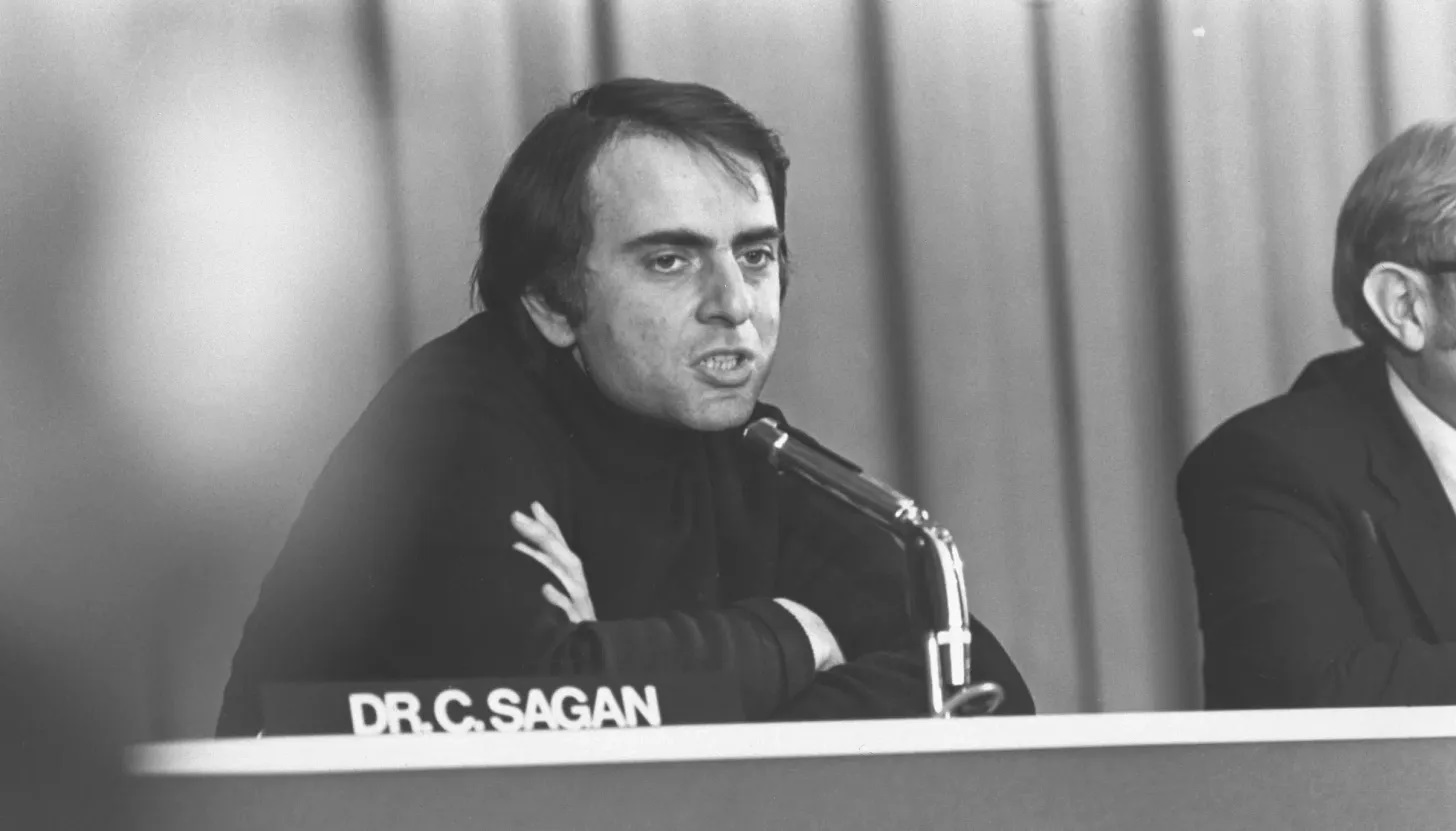



 MJ Jin from Pixabay” width=”223″ height=”396″>
 Gerd Altmann from Pixabay” width=”366″ height=”244″>
 Virgo Gemini from Pixabay” width=”178″ height=”300″>
 Amy from Pixabay” width=”237″ height=”300″>
 Enrique Meseguer from Pixabay” width=”200″ height=”300″>



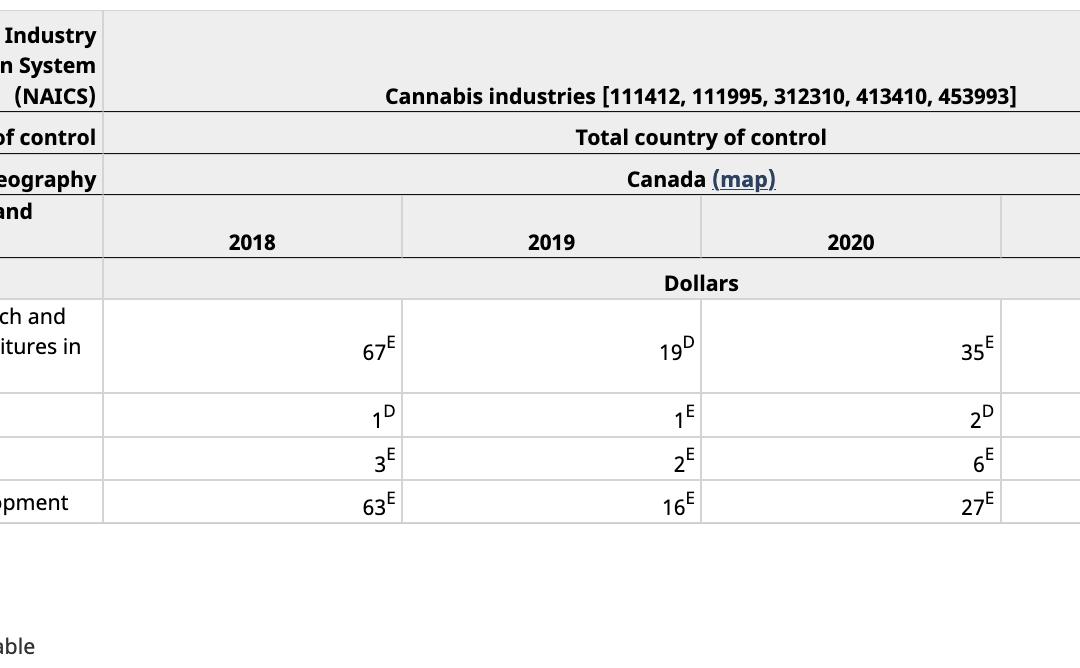
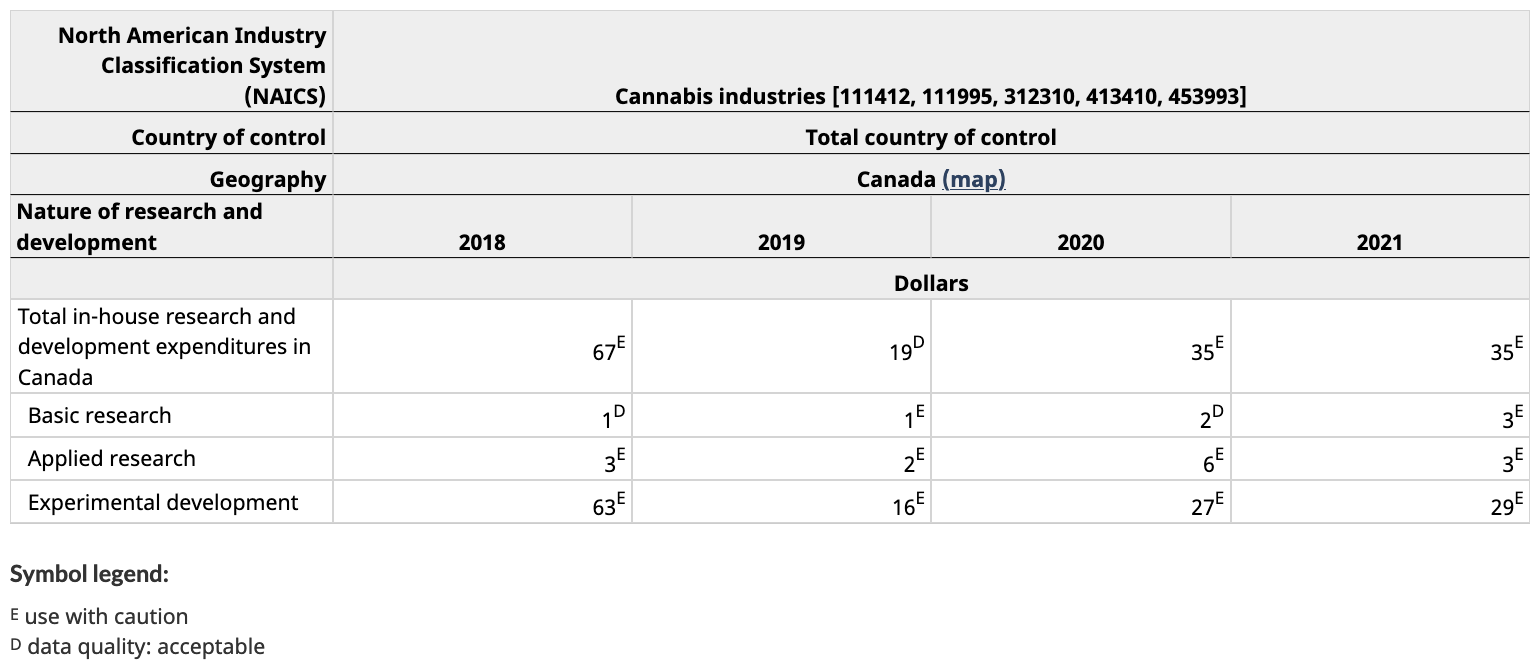

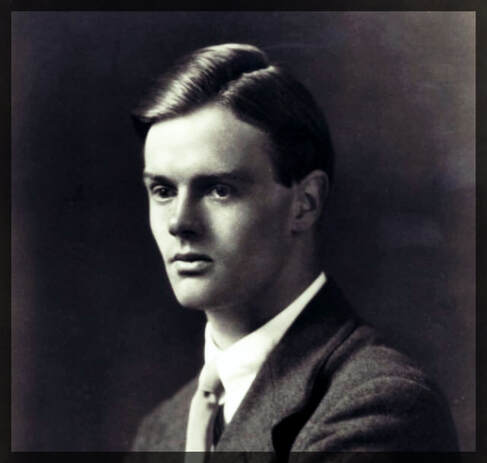
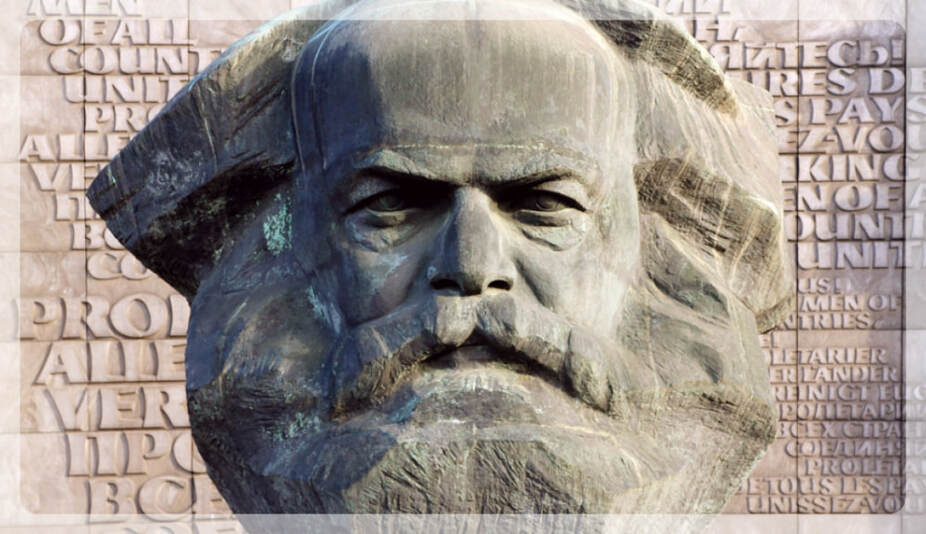

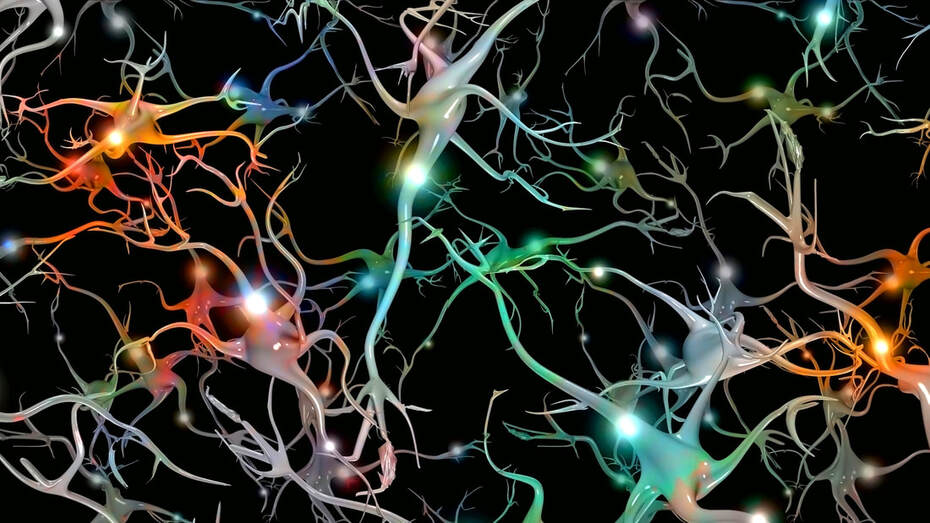

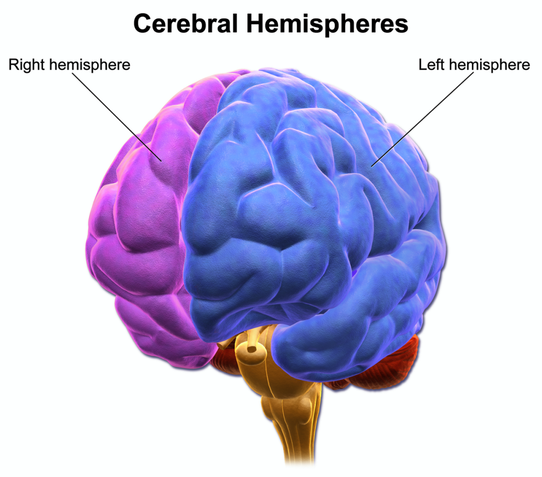
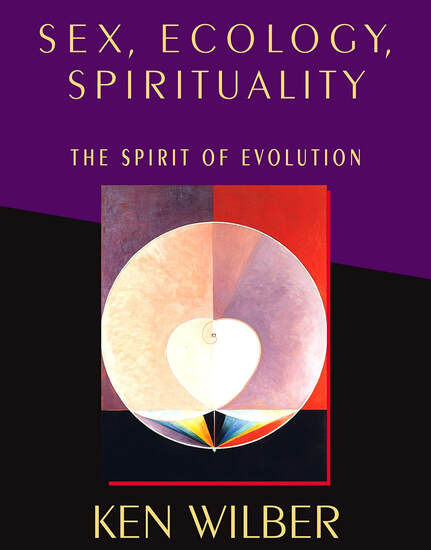
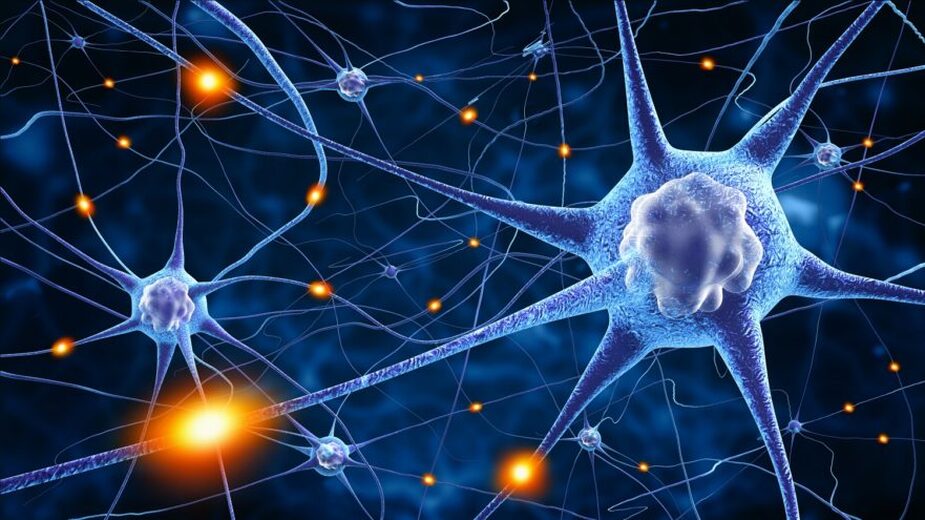

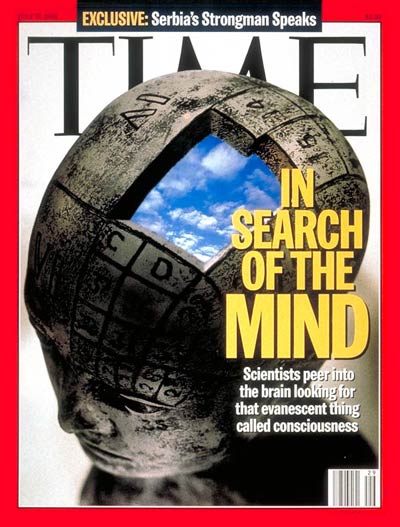






Recent Comments