


What Are The Advantages Of Short Path Distillation
The natural world is almost never simple. Finding something that is a pure compound almost never exists on its own. However, in the world of chemistry, it is possible to isolate and concentrate chemical compounds. In fact, it is even possible to take complex mixtures found in the natural world and simplify them into their purest constituents. This is possible through a process called distillation. Distillation is essentially the isolation and separation of individual compounds from a complex mixture based on their boiling point, through continual evaporation and condensation. One of the most common forms is called short path distillation, which has clear advantages for both the user and finished product. [1]
How does Short Path Distillation Work?
Short path distillation gets its name from the short distance that the solution has to travel. Depending on the precise configuration of equipment, this distance is often only a few centimeters, meaning it only requires a small amount of lab space to be performed. To start, the solution of extraction material is added to a flask. This flask serves as a feeding vessel to the distillation system.
Slowly, the temperature is raised, which allows for evaporation to occur. To lower the amount of heat necessary to achieve vaporization, short path distillation is performed putting the system under vacuum. [2] Within the vacuum, ambient pressure is raised, utilizing aspects of Charles’ Law to lower the boiling point of the material to be distilled. [3] As the extraction material vaporizes, it rises into a fractionalization tube, where it mixes with additional vapors like water or air to aid in the cooling and condensation of the material. [4]
This condensed material is siphoned off into a separate flask where it transitions from a vapor back to a liquid. In order to ensure a purity of the distilled material, the additional vapors used to cool the extraction material are separated out of the vacuum. This creates two separate flasks, one with a concentrated extract and the other with the distilled and recondensed products that can both be unwanted byproducts or precious pure compounds of interest. To ensure the highest purity and the maximum yield, this process of short path distillation can be performed multiple times.
Advantages of Short Path Distillation
There are several advantages to short path distillation compared to other distillation methods. As the name implies, the short path means that the extracted material only has to travel a few centimeters. [5] This means that the equipment needed only takes up a small amount of space, and can be performed with basic flasks, tubes and heating sources. The set-up, while simplified and small, allows for continuous feeding of extraction material to the distillation system. [6] This means that the process can be automated and can shorten the time needed to isolate the materials.
In addition to the simplified arrangement of equipment, the vacuum provides some advantages as well. First, by reducing the pressure in the equipment, the boiling and vaporization point of the extraction material is lower than it would be at a standard external pressure. This means that less heat is needed to start the distillation, which can lower costs over an extended time frame. There is a second advantage to using less heat, short path distillation works exceptionally well with products that are sensitive to heat. [7]
On top of the lower heat exposure, short path distillation’s vacuum also leaves both purified extraction materials and purified solvents. [8] This allows for various solvents to be recycled, cutting costs even further. Finally, in addition to the ease of use, continuous feeding, and benefits from the vacuum, short path distillation creates high yields of final products with exceptional levels of purity. [9] This advantage is twofold: first, whatever the desired extract is has fewer flaws and contaminants, making it more appealing for any further uses. And second, there are less harmful byproducts in the leftover material, because any other additional materials within the initial solution can either be isolated themselves.
Common Applications of Short Path Distillation
Short path distillation is one of the most commonly used procedures in the extraction process. This is due to its various advantages, but its ubiquity breeds familiarity. In the food industry, this type of distillation is most commonly used with various oils. This may come in the form of concentrated essential oils or deodorizing fats and oils from animal products. [10][11]
Additionally, alcoholic beverages rely on distillation to remove the methanol from the initial plant mash, but also to infuse the beverage with plant aromas in steam current. [12] In a similar vein, the entire perfume industry uses short path distillation. [13] Starting with a complex mix of aromas, the final fragrances are a product of the concentration and purification of the essential ingredients into a small bottle.
Another industry that prioritizes taste and smell is the cannabis industry. [14] Using short path distillation allows cannabis extracts to preserve complex terpene profiles while avoiding any loss of flavors due to overexposure to heat. Finally, the lower usage costs make it the preferred distillation method for several heavy industries. In petroleum refinement, hydrocarbon chains need to be separated from crude oil to convert to valuable petroleum. [15] As previously stated, volatile products that are sensitive to heat utilize the increase in pressure to lower the amount of heat needed. The same principle also applies to the related petrochemical industry. Hydrocarbon chains also need to be removed to create polyethylene and polyurethane. [15][16] Because these products are also sensitive to high temperatures, short path distillation can be used effectively with minimal risk.
References:
- Oterhals, Åge, Bjørn Kvamme, and Marc HG Berntssen. “Modeling of a short-path distillation process to remove persistent organic pollutants in fish oil based on process parameters and quantitative structure properties relationships.” Chemosphere 80.2 (2010): 83-92.
- Bethge, Daniel. “Short path and molecular distillation.” Vacuum Technology in the Chemical Industry (2014): 281-294.
- Adcock, Louis H. “The egg in the bottle revisited: Air pressure and Amontons’ law (Charles’ Law).” Journal of chemical education 75.12 (1998): 1567.
- Hu, Hui, et al. “Simulation of vapor flows in short path distillation.” Computers & Chemical Engineering 49 (2013): 127-135.
- Pietsch, Arne, and Philip Jaeger. “Concentration of squalene from shark liver oil by short‐path distillation.” European journal of lipid science and technology 109.11 (2007): 1077-1082.
- Galy, Nicolas, et al. “Glycerol oligomerization in continuous flow reactor.” Journal of Industrial and Engineering Chemistry 51 (2017): 312-318.
- Zou, Long, and Casimir C. Akoh. “Identification of tocopherols, tocotrienols, and their fatty acid esters in residues and distillates of structured lipids purified by short-path distillation.” Journal of agricultural and food chemistry 61.1 (2013): 238-246.
- Redmann, Ines, et al. “Fructose mono-and polycaprylate purification by molecular distillation.” Biotechnology techniques 9.2 (1995): 123-126.
- Abd Maurad, Zulina, et al. “Combined esterification and short‐path distillation for high‐purity Pentaerythritol Ester from palm kernel for biolubricants.” Journal of the American Oil Chemists’ Society 95.11 (2018): 1421-1429.
- Tovar, Laura P., et al. “Short-Path-Distillation process of lemongrass essential oil: Physicochemical characterization and assessment quality of the distillate and the residue products.” Industrial & engineering chemistry research 50.13 (2011): 8185-8194.
- Xu, Xuebing, et al. “Purification and deodorization of structured lipids by short path distillation.” european Journal of Lipid science and technology 104.11 (2002): 745-755.
- Bieber, Lothar W., and Maria CF De Araújo. “Short and efficient synthesis of optically active N-tosyl aziridines from 2-amino alcohols.” Molecules 7.12 (2002): 902-906.
- Lovchik, Martin A., Chi-Lam Tse, and Simon Ellwood. “Process Research and Scale-Up Synthesis of 3-(4-Isobutyl-2-methylphenyl) propanal, a Safe and Uniquely Performing Perfumery Ingredient.” Organic Process Research & Development 24.12 (2020): 2906-2914.
- Teräsvalli, Heini. “Extraction and purification of cannabidiol.” (2020).
- Lee, Frank Sen-Chun. “Characterization of Petroleum Resid Components Fractionated by High Vacuum Short Path Distillation and Gel Permeation Chromatography.” PREPRINTS OF PAPERS-AMERICAN CHEMICAL SOCIETY DIVISION FUEL CHEMISTRY 40 (1995): 497-497.
- Chongcharoenyanon, Busarin, et al. “Extraction of volatile flavour compounds from butter oil in a low‐density polyethylene membrane pouch.” Flavour and fragrance journal 27.5 (2012): 367-371.
- Heijkants, R. G. J. C., et al. “Design, synthesis and properties of a degradable polyurethane scaffold for meniscus regeneration.” Journal of Materials Science: Materials in Medicine 15 (2004): 423-427.

420 with CNW — Congressional Researchers Say High Federal Taxes on Marijuana May Hamper Industry’s Economic Potential

The Congressional Research Service recently published a report that cautions legislators to consider the possible consequences of levying high taxes on cannabis products in the event that marijuana gets legalized federally. This comes as Congress considers several reform initiatives and the DEA concludes its review of marijuana scheduling and makes a decision on whether or not to reclassify cannabis as a Schedule 3 drug under the Controlled Substances Act, as recommended by the U.S. Health and Human Services Department.
In a previous report, the nonpartisan research body argued that the DEA was likely to reschedule cannabis based on previous precedents. In its most recent report, the body states that the potential economic impacts of recreational cannabis could be major considerations in any actions taken by Congress on the drug, warning that reliable federal scientific data on this particular topic is scanty given the substance’s ongoing prohibition.
The report advised that Congress gather additional data through agencies such as the Bureau of Economic Analysis as well as Bureau of Labor Statistics. The report also discussed the possible descheduling or rescheduling of cannabis, arguing that imposing federal taxes on the drug much like the taxes levied on tobacco could affect the drug’s economic development capacity.
The Congressional Research Service explained that a balanced approach was needed when it came to marijuana taxes, noting that legislators would need to consider the benefits of increased revenue vs. the drawbacks of a possible consumer resistance against high taxes that may permit the black market to proliferate. It then cited some studies whose findings posit that high tax rates levied on cannabis — and the consequent high prices for recreational cannabis products could heighten the odds of potential consumers turning to the untaxed illicit market.
The body also presented a counterargument, claiming that high cannabis taxes could even deter some individuals from trying the substance altogether, particularly those who were new to adult-use cannabis and weren’t likely to buy from the illicit market. In addition to this, it pointed out modest bits of legislation that could relieve some of the peculiar financial challenges cannabis businesses in legal states faced due to prohibition. This includes the Secure & Fair Enforcement Regulation (SAFER) Banking Act, which was cleared in September by the Senate’s Banking Committee.
This measure would create a safe haven from federal law for transactions with state-sanctioned recreational cannabis businesses and any entity handling the proceeds from such transactions, as well as restrict the ability of federal regulators to terminate a deposit account for a recreational cannabis business. Currently, however, the bill is yet to advance to the House.
With the right federal regulatory framework in place, enterprises such as Innovative Industrial Properties Inc. (NYSE: IIPR) that serve marijuana businesses could grow and thrive.
About CNW420
CNW420 spotlights the latest developments in the rapidly evolving cannabis industry through the release of two informative articles each business day. Our concise, informative content serves as a gateway for investors interested in the legalized cannabis sector and provides updates on how regulatory developments may impact financial markets. Articles are released each business day at 4:20 a.m. and 4:20 p.m. Eastern – our tribute to the time synonymous with cannabis culture. If marijuana and the burgeoning industry surrounding it are on your radar, CNW420 is for you! Check back daily to stay up-to-date on the latest milestones in the fast -changing world of cannabis.
To receive SMS alerts from CNW, text CANNABIS to 888-902-4192 (U.S. Mobile Phones Only)
For more information, please visit https://www.CannabisNewsWire.com
Please see full terms of use and disclaimers on the CannabisNewsWire website applicable to all content provided by CNW, wherever published or re-published: https://www.CannabisNewsWire.com/Disclaimer
CannabisNewsWire
Denver, CO
www.CannabisNewsWire.com
303.498.7722 Office
Editor@CannabisNewsWire.com
CannabisNewsWire is powered by IBN
420 with CNW — Survey Shows Growing Investor Interest in Cannabis MSOs
A recent survey indicates a growing optimism among institutional investors towards U.S. marijuana multistate operators (MSOs). Conducted by Calgary-based ATB Capital Markets, the survey involved 23 institutional investors, primarily hedge funds.
Frederico Gomes, the lead author of the report and a marijuana equity analyst, highlighted the increased bullish sentiment among investors, driven primarily by the potential rescheduling of marijuana by the federal government. The survey reveals that about 61% of respondents believe U.S. marijuana MSOs will outperform the S&P 500 in the next year. However, despite this positive sentiment, Gomes notes that the capital influx has not yet aligned with the bullish outlook from an institutional perspective.
The likelihood of the U.S. government rescheduling cannabis from Schedule 1 to 3 within the next 18 months was perceived as 75% by the surveyed investors. Yet, the majority of them reported either no change or reduced exposure to MSOs in the past six months. This indicates a cautious approach, possibly due to past regulatory uncertainties.
Investors expressed a 50% probability of Congress passing the SAFER Banking Act, legislation facilitating financial institutions to serve state-legal marijuana businesses without federal repercussions. This uncertainty is attributed to past failures in marijuana banking reform legislation and political ambiguities surrounding the new GOP speaker of the U.S. House of Representatives, Mike Johnson.
ATB sought to understand the factors influencing investors’ willingness to invest more in MSOs. Cannabis rescheduling emerged as the top priority for nearly 61% of respondents. On the other hand, the possibility of more MSO stock listings on the Toronto Stock Exchange (TSE) was deemed to be the least significant element.
Regarding capital allocation preferences, investors indicated a preference for MSOs to prioritize deleveraging and debt repayment, with organic growth being the second-most desired behavior. Mergers and acquisitions were not favored, and share repurchases ranked as the least-desired way for MSOs to allocate capital.
While investors displayed increased bullishness towards U.S. MSOs, their outlook on Canadian licensed retailers and producers was less optimistic, with 60% expecting underperformance compared to the S&P 500. The negative sentiment in Canada is attributed to poor operating results and shareholder dilution.
Interestingly, the survey revealed that only 52% of investors expressed interest in Canadian marijuana retailers and producers. This disparity can point to a possible acquisition opportunity for investors who are not conventional thinkers in the Canadian marijuana market.
Gomes noted that investors are wary due to past setbacks and are waiting for signs of improvement in terms of profitability and sustainable operations. The report notes that achieving sustainable profitability and positive free cash flow is seen as the most crucial factor, followed by a reduction in excise taxes.
As the policy direction of the United States becomes more clear after the U.S. Drug Enforcement Administration releases its rulemaking recommendation, cannabis companies such as Curaleaf Holdings Inc. (CSE: CURA) (OTCQX: CURLF) may attract more investor interest.
About CNW420
CNW420 spotlights the latest developments in the rapidly evolving cannabis industry through the release of two informative articles each business day. Our concise, informative content serves as a gateway for investors interested in the legalized cannabis sector and provides updates on how regulatory developments may impact financial markets. Articles are released each business day at 4:20 a.m. and 4:20 p.m. Eastern – our tribute to the time synonymous with cannabis culture. If marijuana and the burgeoning industry surrounding it are on your radar, CNW420 is for you! Check back daily to stay up-to-date on the latest milestones in the fast -changing world of cannabis.
To receive SMS alerts from CNW, text CANNABIS to 888-902-4192 (U.S. Mobile Phones Only)
For more information, please visit https://www.CannabisNewsWire.com
Please see full terms of use and disclaimers on the CannabisNewsWire website applicable to all content provided by CNW, wherever published or re-published: https://www.CannabisNewsWire.com/Disclaimer
CannabisNewsWire
Denver, CO
www.CannabisNewsWire.com
303.498.7722 Office
Editor@CannabisNewsWire.com
CannabisNewsWire is powered by IBN

Psychedelics Offer Hope to Trans People Facing Mental-Health Challenges
Many experts believe psychedelic-assisted therapy represents a new frontier in psychiatric treatments. A growing body of scientific literature has connected various psychedelics with significant and long-term improvements in mental health with barely any side effects. Consequently, plenty of experts in the scientific and medical communities now consider psychedelics as potential treatments for debilitating mental conditions such as post-traumatic stress disorder (PTSD), treatment-resistant depression and eating disorders.
But with psychedelic research still in its infancy, scientists are studying hallucinogens such as psilocybin, LSD and ayahuasca diligently and making discoveries regularly. Recent research efforts have found that hallucinogens may also be able to help trans people deal with mental-health challenges.
While scientists don’t fully understand the mechanisms behind psychedelics, we know that they can induce profound realizations and help people change how they perceive themselves and the world around them. For Mikayla, a trans woman who had dealt with gender dysphoria and suicidal thoughts since early puberty, this aspect of the psychedelic experience changed her life. Although a few of the studies she read online explored using psychedelic conversion therapies to “cure” trans people, Mikayla’s experience with psychedelics was wildly different.
She took psilocybin mushrooms and was filled with the realization that there was nothing inherently wrong with her. Rather than relieve her of the “burden” of being trans, the psychedelic helped her finally start to love herself as she was and begin the process of shedding a lifetime of self-hatred.
Most psychedelic research efforts have focused on more common conditions such as depression, anxiety and PTSD, but hallucinogens may also have applications for trans people dealing with various mental issues. Research shows that psychedelic therapy is especially effective when combined with guided talk therapy because it provides patients with the help they need to make sense of their psychedelic experiences and integrate any realizations they had during the experience into their lives.
Members of the transgender community tend to suffer from mental-health conditions such as anxiety, depression and suicidal thoughts, often from a young age. However, this community is severely underrepresented in clinical trials, especially ones with the potential to offer significant relief, such as psychedelic-related clinical trials. These trials often have long wait lists of prospective enrollees and strict criteria that exclude a majority of hopefuls.
Since clinical studies are essentially the only legal way to access psychedelic treatments (except ketamine) in the United States, many trans individuals such as Mikayla have to act outside the medical system to get the relief they desperately need.
Enterprises such as Seelos Therapeutics Inc. (NASDAQ: SEEL) are doubling down on their efforts to advance their psychedelic drug pipelines so that different categories of patients can benefit from these revolutionary treatments.
About PsychedelicNewsWire
PsychedelicNewsWire (“PNW”) is a specialized communications platform with a focus on all aspects of psychedelics and the latest developments and advances in the psychedelics sector. It is one of 60+ brands within the Dynamic Brand Portfolio @ IBN that delivers: (1) access to a vast network of wire solutions via InvestorWire to efficiently and effectively reach a myriad of target markets, demographics and diverse industries; (2) article and editorial syndication to 5,000+ outlets; (3) enhanced press release enhancement to ensure maximum impact; (4) social media distribution via IBN to millions of social media followers; and (5) a full array of tailored corporate communications solutions. With broad reach and a seasoned team of contributing journalists and writers, PNW is uniquely positioned to best serve private and public companies that want to reach a wide audience of investors, influencers, consumers, journalists and the general public. By cutting through the overload of information in today’s market, PNW brings its clients unparalleled recognition and brand awareness. PNW is where breaking news, insightful content and actionable information converge.
To receive SMS alerts from PsychedelicNewsWire, text “Groovy” to 888-902-4192 (U.S. Mobile Phones Only)
For more information, please visit https://www.PsychedelicNewsWire.com
Please see full terms of use and disclaimers on the PsychedelicNewsWire website applicable to all content provided by PNW, wherever published or re-published: https://www.PsychedelicNewsWire.com/Disclaimer
PsychedelicNewsWire
San Francisco, CA
www.PsychedelicNewsWire.com
415.949.5050 Office
Editor@PsychedelicNewsWire.com
PsychedelicNewsWire is powered by IBN
The Good Weed Board, part five
SHOWCASING CANADA’S BEST DRIED FLOWER PRODUCTS
Welcome to the Good Weed Board on StratCann – part five! To kick off the previous four columns, I’ve expounded on some of the flaws of cannabis marketing and quality grading. For this piece, I had another critique prepared. But at some point, I remembered the intention of the Good Weed Board is to celebrate good weed. I decided to cut the critique to praise the producers and ensure their products don’t go unnoticed.
It’s a fact that in five years, the regulated industry has not become all it was hyped up to be. There are significant flaws at every level. It feels like the wrong types have often ended up pulling the strings. Investors degrade the commodity and watch a culture crumble as a consequence. Maybe we all set out initially because we saw an opportunity to gain power or get rich. Perhaps now we’re all just paying the price for our misguidance.
Yet despite all the flaws, good weed still exists in the regulated system. Sometimes, I need to remind myself it’s only been five years. The market is still bound to mature. People come and go. It’s only so long fake thugs can pretend. Some businesses will shutter, while others will start anew. The legacy of good weed carries on.
So, let’s jump straight to the Part Five ratings.
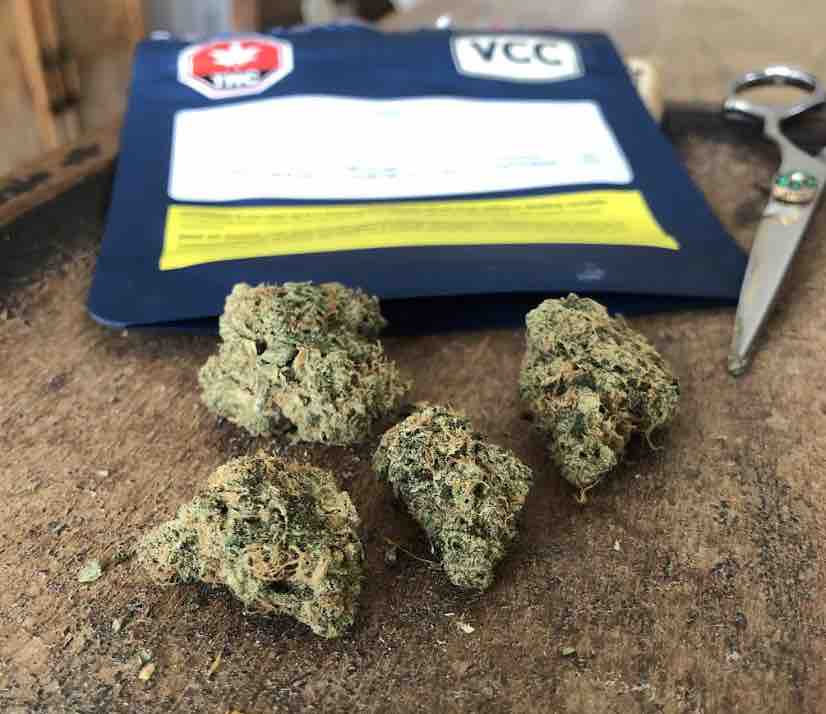
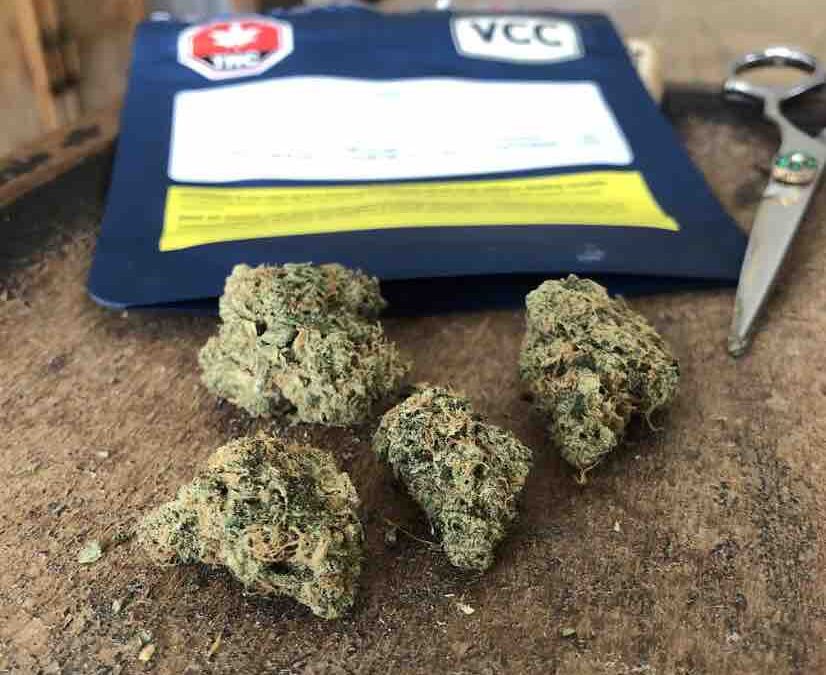
The first entry is Pomelo Skunk by Victoria Cannabis Company. The Victoria Cannabis Company is a micro-cultivation team of traditional market operators growing craft flower in the heart of Victoria, BC. The VCC’s slogan is ‘The Nose Knows’, a clever barb at the marketing of terpene percentages.
Pomelo Skunk is a cross of Rockstar and Citrique, bred by Life Cycle Botanics. Packaged in a 3.5g format, the back label provides both cultivar and grow information, along with harvest facts that include the water activity and cure time. VCC also proudly advertises the practice of no irradiation or e-beam.
Lemon zest dominates this one, with sweet skunk on the exhale. Reminiscent of various Haze cuts from the traditional market. Nice to blaze on warm sunny days, and smooth to the very end. OG Rating = 81/100.
The second entry for Part Five is Super Lemon Haze by Homestead Cannabis Supply. Homestead offers certified organic flower grown in BC’s Fraser Valley by Rubicon Organics. Part of their Bandwagon rotating SKU, I purchased this 28-gram offering from Numo Cannabis in Edmonton for around $130.
Super Lemon Haze originates from a cross of Lemon Skunk and Super Silver Haze. This flower was grown in living soil, hang-dried for 14 days, cold-cured and non-irradiated. As advertised on the package, the appearance is bright green with orange pistils. The profile is a combination of lemon, sweet and tart. OG Rating = 84/100.

The third entry is GMDough by Book Club Selects. The brainchild of Adolfo Gonzalez, Book Club is a cannabis curation and innovation company that works with cannabis community leaders to develop and launch the next generation of cultivars and product formats. They also host an event space on East 10th Ave in Vancouver.
GMDough was grown by Zevk Cultivation in Weyburn, Saskatchewan, using deep water culture methods. The lineage is Chem91 x GMO x Project Strudel. I purchased this 14-gram offering from the Burb Tuscany Village store in Victoria, BC.
Less is more when it comes to extra space in packaging. This flower was placed into a small bag—perfect size for a 14g. The package features a detailed back label like VCC, which includes flavour profile, cultivar, farm, grow, and harvest information. Inside the bag, I discovered small but spongy buds with perfect moisture content.

A profile of dough mixed with vanilla rose from the undisturbed flower. Sweet gas blended with lime wafted out from the inner layers as I broke it apart. The combination revealed a minty aroma that reminded me of Secret Mintz by Dunn Cannabis. The burn was supreme. Lots of flavour and a potency signalling oil ring. OG Rating = 84/100.
The final entry for Part Five is Punch Mints by Partake Cannabis. Partake is a small-scale indoor cannabis garden in Edmonton, Alberta. Their slogan is Real. Craft. Flower. I purchased the Punch Mints 3.5-gram from Enlightened Herb in Diamond Valley.
My purchase occurred two weeks after the package date. One Boost pack was included in the small glass jar, adequately sized for a 3.5g. The moisture content was balanced. I would still love to know the harvest date of this particular batch.
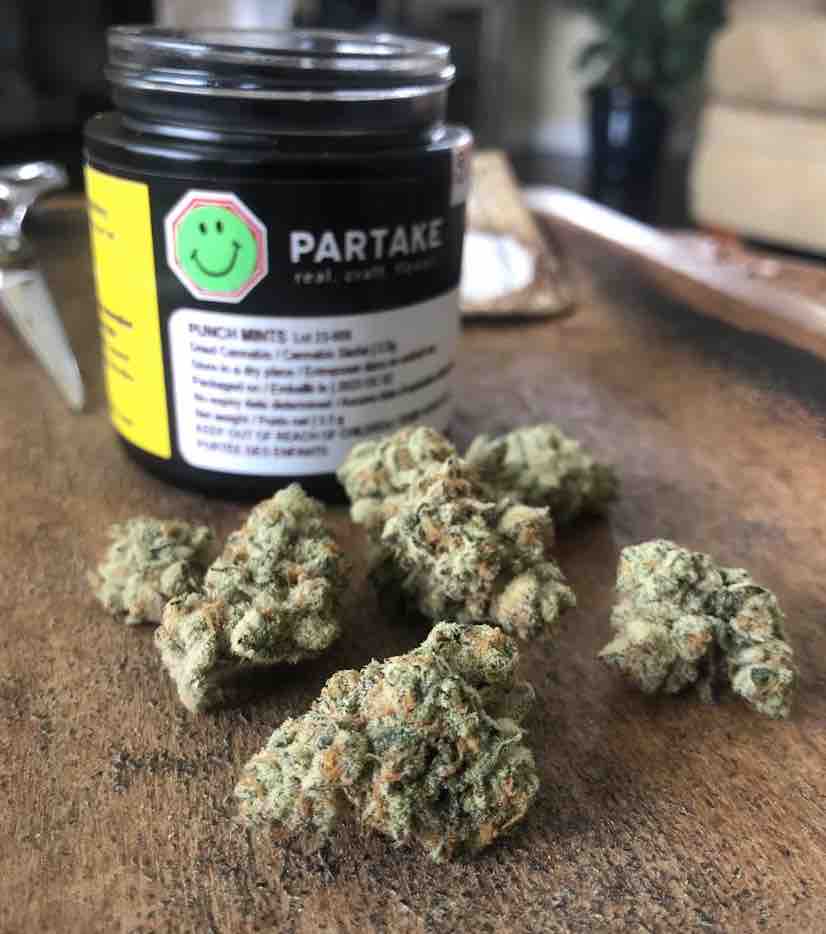
Inside the jar were small but impressive buds. A berry punch aroma erupted from my chopping tray as I worked the scissors. The smoke provided a pine-cleaner flavour, similar to menthol. Nice, smooth burn. OG Rating = 80/100.
That’s all for Part Five. My next column will showcase four more products from the Good Weed Board. Stay tuned to find out if any break the current record score of 86. Happy blazing!
Marty Wig is the cofounder of Overgrown Gardens, and creator of the OG Rating Guide. He has been grading cannabis since 2003.
Related Articles

Raids on magic mushroom dispensaries are a knee-jerk reaction, but taking a blind-eye approach only allows the market to run wild
By Daniel Eisenkraft Klein
On Nov. 3, police raided three Vancouver magic mushroom dispensaries and seized tens of thousands of dollars worth of psilocybin and other psychedelics.
One store has already re-opened, with the owner saying the other two will reopen soon.
Psychedelics remain predominantly illegal in Canada. But storefronts advertising psychedelics are popping up throughout downtown Toronto and Vancouver. And there are hundreds more Canadian options online.
Advertisement
Mushrooming trade
As Canada lags on approving therapeutic psilocybin products, the illicit market is flourishing. Operating in a legal grey area, Canadian stores and websites are increasingly selling psilocybin, MDMA, ketamine and more. To date, the government has largely turned a blind eye to these stores.
We have seen this story before: repeated raids on cannabis dispensaries failed to dissuade owners while using up vast police resources.
Yet simply ignoring the growing psychedelics storefronts allows stores to prioritize commercial interests over public health: with no regulations, sellers make wild assertions about their products with no oversight. Age checks — particularly online — are rarely conducted.
Perhaps most egregiously, public-facing marketing is totally unrestricted: while cannabis stores cannot even allow products to be viewable from the outdoors nor make any health claims about their products, psychedelics stores regularly showcase splashy branding and make unsubstantiated claims about psychedelics’ possibilities.
The lack of a regulated supply also impedes shops from making reliable dosing recommendations — those would require full knowledge of the actual ingredients.
An unrealistic medical model
To date, the Canadian government has solely focused on medical use of psychedelics. In June, Canada invested nearly $3 million into researching the benefits of psilocybin-assisted psychotherapy.
For now, the government suggests seeking out clinical trials to anyone interested in using psychedelics.
While the medical model is appealing, it also ignores the realities of psychedelics use in Canada. A recent survey found that less than 34 per cent of Canadians who reported using psychedelics did so to self-medicate a health condition.
This means that about two-thirds of those using psychedelics would be unaffected by medical authorization unless able to convince a practitioner that they require the substance.
The recreational and medicinal markets are far more intertwined than many are aware. As so often happens, our denial of medical access has become intertwined with a burgeoning illicit market. We have seen this phenomenon with cannabis and opioids, and it now appears to be happening with psychedelics.
A better way forward
Policy reactions to illegal recreational drugs often fall within two categories: ignore the reality and hope the stores simply disappear; or overreact, executing ineffective and costly raids that do little to dissuade store owners (all while promising medical access that takes far too long to transpire). At present, the government appears to be missing the mark on both ends.
Instead of repeating history, a public-health approach would involve providing objective information about the risks and downsides, banning all marketing and promotion, and encouraging substance testing services.
Basic age verification, as with tobacco and alcohol, should be required.
Those interested in purchasing should be provided with third-party, objective information on the health risks and benefits. Customers should, for instance, be made aware that psychedelics have a well-established risk of exacerbating psychotic symptoms. They are therefore highly discouraged for those with psychotic disorders, such as schizophrenic tendencies.
Similarly, customers should understand that Hallucinogen Persisting Perception Disorder (HPPD), often known as “flashbacks,” are a rare but noteworthy condition linked to psychedelics use. There are also real risks during trips of acute increases in anxiety, fear, heart rate and blood pressure.
Notwithstanding, adults should also not face fear-mongering around psychedelics. Research suggests that psilocybin has low physiological toxicity, minimal potential for addiction, and that overdoses are rare.
In short: adults should be trusted to make the right decisions about the non-addictive psychedelic drugs they wish to use. As such, policymakers should ensure that customers do so fully informed about the benefits and risks, conscious of the ingredients in the products, and without commercial pressure.
Psychedelics are an opportunity to do better than our past drug control strategies. Policymakers can avoid fearmongering while preventing commercial interests from running wild. We only have to look back at cannabis to know that our current approach will not be sustainable.

American Pot Story at DWF:NY on Dec. 3, 2023
Award-winning documentary American Pot Story: Oaksterdam continues on the film festival circuit with its New York premiere during Dances with Films New York.
WHAT: A screening and afterparty for Slamdance Audience Award-winning documentary feature American Pot Story: Oaksterdam
WHEN: Sunday, December 3rd at 4:15 p.m. (Red Carpet at 3:30 p.m.), followed by an afterparty across the street at Everything’s Jake.
WHERE: Regal Union Square, 850 Broadway, New York, NY 10003
WHO: Director/Producer Ravit Markus and film participants Dale Sky Jones and Jeff Jones of Oaksterdam University will attend, plus surprise guests (prior screening events featured Tommy Chong, Redman, and Big Steve Parish). Additional notable film participants are Richard Lee, Tommy Chong, Danny Glover, Governor Gavin Newsom, and Congresswoman Barbara Lee.
WHY: American Pot Story: Oaksterdam has won several awards and nominations at prestigious film festivals around the country and the world. It is deemed “a must-watch for every American” by the publication Film Threat.
HOW: A ticket to the film gets you into the exclusive afterparty hosted by the Oaksterdam Nonprofit for Education. Buy tickets at: https://tinyurl.com/NY-PREMIERE
Get more info on the film at www.AmericanPotStory.com and follow on IG and FB @AmericanPotStory and @oaksterdamuniversity for ongoing updates.
The Ontario Court Has Approved the Settlement Agreement Relating to the Auxly Cannabis Group Inc. Class Action
Lexaria Bioscience Corp. (NASDAQ: LEXX) Looking to Generate Sizable License Revenue from IP Growth, Expanding Patent Suite
- Lexaria, a global innovator in drug delivery platforms, has, since 2014, continuously worked on its patented DehydraTECH(TM) drug delivery technology
- The technology has demonstrated overall effectiveness in enhanced delivery of fat-soluble molecules through the human gastrointestinal system, as affirmed by clinical testing
- This overall effectiveness and push for its development has earned Lexaria 37 granted patents globally, with many patents pending
- The company is constantly enhancing its patent portfolio, since granted patents can support an increase in licensing revenue
Lexaria Bioscience (NASDAQ: LEXX), a global innovator in drug delivery platforms, is eyeing growth in license revenue from its intellectual property (“IP”). Since 2014, the company has continuously worked on its flagship technology – the patented DehydraTECH(TM) drug delivery technology – which has demonstrated the improvement of speed of onset, brain absorption, and bioavailability (https://cnw.fm/HZKIV). It is being investigated in association with dementia treatment, nicotine replacement, hypertension, and heart disease treatment, among other applications (https://cnw.fm/y5ECe).
So far, Lexaria has received 37 granted patents globally, with many patents pending. The company is aggressively pushing its patent application process as it recognizes the viable commercial application of its flagship technology. In addition, the company understands that successfully granted patents can lead to an increase in shareholder value as a recognized growing market leader.
“Because of the applicability of DehydraTECH to many market sectors across the globe, we have taken the necessary steps to protect that intellectual property internationally,” notes the company’s 2022 Form 10-K annual report (https://cnw.fm/dosqC).
Lexaria’s patent portfolio currently spreads across the US, Australia, Japan, Mexico, the European Union, Canada and India. Its strategic approach of filing for applications in lucrative markets is a move to maximize potential revenue for years to come, mainly since out-licensing is a significant revenue stream for the company. DehydraTECH applications have shown that it can be applied in the consumer-packaged goods industry and the drug and pharmaceutical sectors. It has demonstrated suitability in various consumer formats such as oral suspensions, capsules, pills and tablets, nutraceuticals, registered drugs, and topical applications (https://cnw.fm/5vsVt).
This is all made possible by DehydraTECH’s overall effectiveness in delivering most fat-soluble molecules through the human gastrointestinal system, as demonstrated by its overall effectiveness in crossing the blood-brain barrier once within blood plasma. Test data, both in vitro, in vivo, and human clinical testing, has shown that DehydraTECH reduces the time required to enter the bloodstream. It has also shown an increase in absorption rate, as well as the improvement of the taste and smell of edible products.
“Our current patent portfolio includes patent family applications or grants pertaining to our method of improving bioavailability and taste, and the use of DehydraTECH as a delivery platform for a wide variety of APIs including, but not limited to fat-soluble vitamins; anti-viral drugs; phosphodiesterase inhibitors; human hormones; regulated cannabinoids; and nicotine and its analogs,” notes Lexaria’s most recent Form 10-Q quarterly report (https://cnw.fm/IRLo2).
In June 2023, Lexaria received its latest two granted patents in Canada, bringing the total in the country to five. This followed the staggered receipts of three patents in the country in less than a year, a milestone that recognizes and protects the company’s improved compositions and methods for transdermal and dermal delivery of cannabinoids such as tetrahydrocannabinol (“THC”) and CBD. As it continues to push for more approvals, the company is steadily propping itself up for even more success, stamping its position as a leader in its space. More importantly, it is echoing its commitment to creating shareholder value.
For more information, visit the company’s website at www.LexariaBioscience.com.
NOTE TO INVESTORS: The latest news and updates relating to LEXX are available in the company’s newsroom at https://cnw.fm/LEXX
About CannabisNewsWire
CannabisNewsWire (“CNW”) is a specialized communications platform with a focus on cannabis news and the cannabis sector. It is one of 60+ brands within the Dynamic Brand Portfolio @ IBN that delivers: (1) access to a vast network of wire solutions via InvestorWire to efficiently and effectively reach a myriad of target markets, demographics and diverse industries; (2) article and editorial syndication to 5,000+ outlets; (3) enhanced press release enhancement to ensure maximum impact; (4) social media distribution via IBN to millions of social media followers; and (5) a full array of tailored corporate communications solutions. With broad reach and a seasoned team of contributing journalists and writers, CNW is uniquely positioned to best serve private and public companies that want to reach a wide audience of investors, influencers, consumers, journalists and the general public. By cutting through the overload of information in today’s market, CNW brings its clients unparalleled recognition and brand awareness. CNW is where breaking news, insightful content and actionable information converge.
To receive SMS alerts from CNW, text CANNABIS to 888-902-4192 (U.S. Mobile Phones Only)
For more information, please visit https://www.CannabisNewsWire.com
Please see full terms of use and disclaimers on the CannabisNewsWire website applicable to all content provided by CNW, wherever published or re-published: https://www.CannabisNewsWire.com/Disclaimer
CannabisNewsWire
Denver, CO
www.CannabisNewsWire.com
303.498.7722 Office
Editor@CannabisNewsWire.com
CannabisNewsWire is powered by IBN
Recent Comments