Last week, the governor of Ohio urged legislators to revise the state’s cannabis legalization law before adult possession and cultivation became legal in December. The measure in question, Issue 2, was approved by voters a few days prior. Gov. Mike DeWine appealed to GOP leadership in the legislature to amend provisions that would limit public consumption, alleviate risk of impaired driving and restrict advertising.
The governor has already scheduled a meeting with House Speaker Jason Stephens and Senate President Matt Huffman to discuss how to address what he terms as “holes” in this statutory measure. In his statement, the governor stated that while individuals could now smoke marijuana having been afforded the right to by the initiative, other individuals had a right to not be exposed to the smell of marijuana.
Both Stephens and Huffman have already talked about their independent interests in amending the marijuana law, centering on tax policy and limits of THC. The approved measure, Issue 2, already contains restrictions on the consumption of marijuana in public as individuals are prohibited from smoking cannabis in places where the smoking of tobacco is not allowed.
The governor’s aim may be to clarify or expand the law’s provisions on consumption, which needs to be done soon, given the limited time remaining to act on this before the legislation takes effect.
Some believe that this move does not respect the will of the voters, however, with Coalition to Regulate Marijuana Like Alcohol spokesperson Tom Haren noting that he couldn’t believe elected officials weren’t respecting the outcome of an election.
The coalition is focused on establishing regulatory frameworks to allow individuals aged 21 years of age and older to grow, possess and buy marijuana in Ohio. Haren added that every voter in the state of Ohio had a right to expect that elected officials would respect and implement their will.
This sentiment was also echoed by Representative Casey Weinstein, who sponsored the bipartisan legalization measure and championed for marijuana reform in the legislature. Weinstein stated in a recent interview that voters in Ohio were very clear at the ballot, noting that legislators needed to heed the call and uphold the will of the voters.
Following the resolution’s approval, the Ohio Department of Commerce published an FAQ guide for residents to learn about the new law and timeline for implementation. However, regulators continued to emphasize that the policies may be subject to change depending on how the legislature acts.
Regardless of the final form that the legalization law takes, Ohio entrepreneurs could finally have a chance to start and run recreational marijuana companies that grow to reach the level of entities such as Trulieve Cannabis Corp. (CSE: TRUL) (OTCQX: TCNNF) that are thriving in other legal marijuana markets.
About CNW420
CNW420 spotlights the latest developments in the rapidly evolving cannabis industry through the release of two informative articles each business day. Our concise, informative content serves as a gateway for investors interested in the legalized cannabis sector and provides updates on how regulatory developments may impact financial markets. Articles are released each business day at 4:20 a.m. and 4:20 p.m. Eastern – our tribute to the time synonymous with cannabis culture. If marijuana and the burgeoning industry surrounding it are on your radar, CNW420 is for you! Check back daily to stay up-to-date on the latest milestones in the fast -changing world of cannabis.
To receive SMS alerts from CNW, text CANNABIS to 888-902-4192 (U.S. Mobile Phones Only)
Please see full terms of use and disclaimers on the CannabisNewsWire website applicable to all content provided by CNW, wherever published or re-published: https://www.CannabisNewsWire.com/Disclaimer
The ladybugs keep coming. From where I do not know. They come in swarms all summer Their spots rain down like snow.
They crawl indoors and lay their eggs They hatch all winter long. My daddy vacuums every room Until he thinks they’re gone.
My sister cannot stand them, She screams until she’s red. She wakes me up each morning When she spots one in her bed.
My brother likes to play with them, He hunts them night and day. But they don’t last too long because He flushes them away.
My mother does a funny dance When one lands in her hair. She turns and jumps and runs around. And then she disappears.
I used to let them crawl on me, when I went out to play. But then they started biting. Now I watch from far away.
What happened to the ladybugs? The ones I used to know. They used to come in summertime, and leave before it snowed.
Myriams-Fotos from Pixabay” width=”300″ height=”200″>
They used to fly in ones and twos, they used to sleep outside, I thought they ate the aphid bugs, I thought they liked to hide.
Now they’re on the windowsills, the curtains, and the bed. Inside they don’t eat insects, they drink lemonade instead.
Before you try to squish one, you’d better stop and think. ‘Cause if you scare it, it gets mad and makes an awful stink!
These ladybugs are tricky. They’re not like bees or flies. They hide their wings beneath their shell. They’re beetles in disguise!
Their polka dots can’t fool me. but one thing I can’t see, If any of these ladybugs might really be a he.
PIRO from Pixabay” width=”320″ height=”175″>
The beetle bugs are everywhere. They’re in and all about. So plug your nose, and shut your doors, And get your vacuums out.
Oh look, two more…..now twenty-four! They’re on the walls and floor. I’ve never seen so many spots It’s ladybugs galore!
Ladybug Facts:
There are over 3,000 different kinds of ladybugs in the world. In North Amrerica, there are about 400 known types.
Aphids are a ladybug’s favorite food.
If you squeeze a ladybug it will bite you, but the bite won’t hurt.
Ladybugs make a chemical that smells and tastes terrible so that birds and other predators won’t eat them.
The spots on a ladybug become lighter as the ladybug gets older. Ladybugs can have no spots or twenty spots.
The Asian beetle is also known as the Japanese Ladybug. They were shipped to the United States to kill a pest that was harming citrus trees and have stayed ever since.
Large numbers of lady beetles infesting homes and buildings in the United States were first reported in the early 1990s. Swarms of lady beetles typically fly to buildings in September though November depending on locale to escape the cold weather. Ladybugs eat plant pests. They should not be killed if at all possible.
Rosanne Lindsay is a Naturopath, Herbalist, writer, and author who wrote children’s poems while raising three children to pass the time and document life’s little experiences. This poem is revived in honor of friends who are dealing with this year’s Asian beetle infestation. Get out the vacuum!
2. When the customer enters the floralive site (thru your link) they must add EITHER
A. add 3 Healing Support (combination essence) and 3 Blue Eyed Grass to the shopping cart, then go to checkout and enter the coupon code for this promo which is: HSHOLIDAYS (not case sensitive).
This will charge them for the Healing Support and they will get the Blue Eyed Grass free
Or
B. Add 6 Heartmend to shopping cart, go to checkout, there will be a charge for 4 Heartmend and two free when the coupon code HMHOLIDAYS is used.
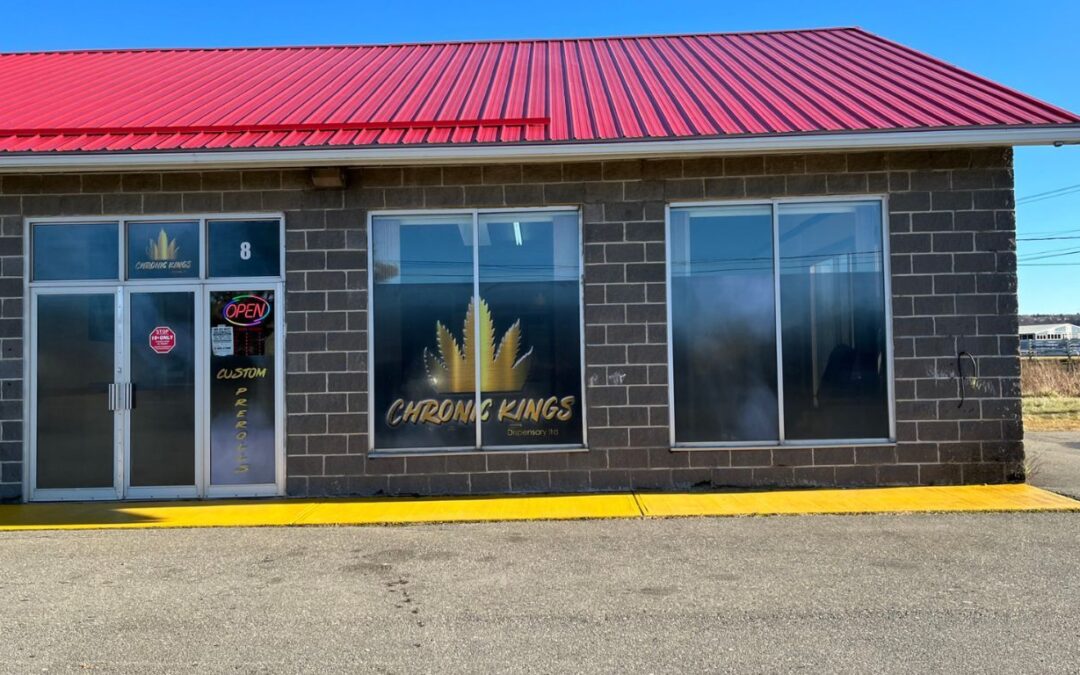
Officers from the New Brunswick Department of Justice and Public Safety recently seized cannabis products at an unlicensed dispensary in Saint John, with one man arrested.
The cannabis store, Chronic Kings, operating out of a former car wash at 8 Simpson Dr. in Saint John, was raided on November 1 when public safety officers executed a search warrant. Peace officers seized dried cannabis, edibles, concentrates, vape pens, and cash.
The man arrested, a 47-year-old from Saint John, was later released from custody and is scheduled to appear in court on January 30, 2024. The investigation is ongoing.
Officers seized:
· 2.7 kilograms of dried cannabis
· 116.3 grams of hashish
· 141.6 grams of cannabis resin (brick form)
· About 1,007 grams of extracted resin/oil
· 362 packages of edible gummies
· 119 packages of edible food products
· 175 jars/packs of shatter
· 43 packages of cannabis distillate vape oil
· 114 THC vape pens
· 91 pre-rolled joints
· About four pounds of homemade gummies
Additionally, about $1,200 in cash was seized from the property. A Facebook page for the business appears to show it had been operating since at least December 2021.
The Government of New Brunswick operates provincially-run Cannabis NB stores and also licenses a handful of privately-run cannabis stores in the province.
Late last year, voters in the state of Colorado approved the Natural Medicine Health Act, which decriminalized the personal use of substances such as psilocybin mushrooms for those aged 21 years and older. This year, another measure that legalized testing laboratories for psychedelic substances was approved.
The Psychedelic Club of Denver, a volunteer-run nonprofit organization, is focused on community education, harm reduction and destigmatization of psychedelic substances. The club recently hosted its first-ever competition for homegrown psilocybin mushrooms, called the Psychedelic Cup.
The goal of the event was to collect data on different psilocybin mushrooms that was previously unknown in order to better meet the differing needs of patients. The competition, which was organized by Jonathan Cherkoss, was a great success, both for psychedelic mushrooms as well as the general public, with almost 200 growers presenting their mushrooms for sampling at the Mile High Station in Denver.
The popularity of the event demonstrates growing curiosity about psilocybin mushrooms, which has been bolstered by their decriminalization and mainstream appeal. This has, in turn, elevated the substances’ potential for recreational and medicinal use. The competition had different categories, including most envious and best in show, which led to long lines of individuals eager to name their favorite mushrooms during the award ceremony.
The potency analysis for each mushroom, which focused on determining the levels of psilocybin, was done by Altitude Consulting. This was rated from lowest level detectable to highest level detectable.
Altitude Consulting’s lab manager, Colton Brook, stated that it was the only laboratory in the country that held a global accreditation for psychedelic testing. Brook added that most of the growers who took part in the competition had never had their mushrooms tested for psilocybin levels, noting that he hoped the information gathered could help researchers and clinical trials.
In an interview, Cherkoss noted that the competition went wild after it sold out, having drawn more than 400 attendees and cultivators from Colorado as well as other states. The organizers of the event also revealed that more than 500 samples were submitted, which allowed them to compile the biggest ever public database of psilocybin mushrooms.
Chase Quatela, a microbiologist at Altitude, added that he was interested in seeing how individuals would use the data from the awards to vamp up their psilocybin mushroom products.
It should be noted that the competition did not have judges, and no mushrooms were consumed. Growers received awards based on a seven-panel test done by Altitude Consulting.
Such events indirectly draw attention to the research and development work being done by enterprises such as Compass Pathways PLC (NASDAQ: CMPS) with the aim of bringing FDA-approved psychedelic medicines onto the market.
About PsychedelicNewsWire
PsychedelicNewsWire (“PNW”) is a specialized communications platform with a focus on all aspects of psychedelics and the latest developments and advances in the psychedelics sector. It is one of 60+ brands within the Dynamic Brand Portfolio @ IBN that delivers: (1) access to a vast network of wire solutions via InvestorWire to efficiently and effectively reach a myriad of target markets, demographics and diverse industries; (2) article and editorial syndication to 5,000+ outlets; (3) enhanced press release enhancement to ensure maximum impact; (4) social media distribution via IBN to millions of social media followers; and (5) a full array of tailored corporate communications solutions. With broad reach and a seasoned team of contributing journalists and writers, PNW is uniquely positioned to best serve private and public companies that want to reach a wide audience of investors, influencers, consumers, journalists and the general public. By cutting through the overload of information in today’s market, PNW brings its clients unparalleled recognition and brand awareness. PNW is where breaking news, insightful content and actionable information converge.
To receive SMS alerts from PsychedelicNewsWire, text “Groovy” to 888-902-4192 (U.S. Mobile Phones Only)
Please see full terms of use and disclaimers on the PsychedelicNewsWire website applicable to all content provided by PNW, wherever published or re-published: https://www.PsychedelicNewsWire.com/Disclaimer
Ontario Provincial Police (OPP) say they found several kilograms of dried cannabis, along with a few illicit edibles and a vape pen during a recent traffic stop for speeding.
In a tweet shared by OPP East Region, it explains that officers with the Stormont, Dundas, and Glengarry detattachment, a county south of Ottawa, made a stop of a vehicle for speeding on 401 near Long Sault.
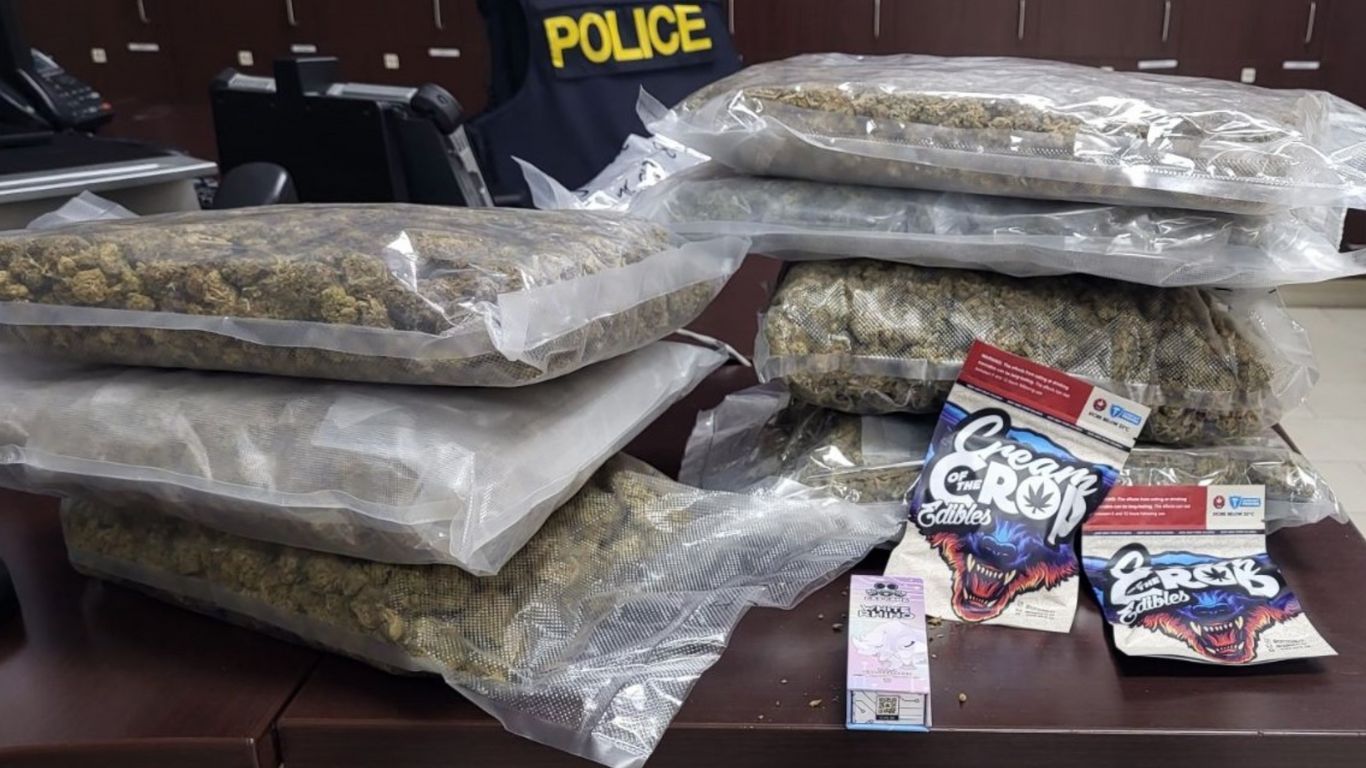
In the course of the stop, officers discovered and seized 3,415 grams of bulk-packaged cannabis (or about seven and a half pounds), along with edible cannabis products and vape pen. Police say the total is valued at $12,000, or about $3.50 a gram.
The edibles displayed by police are labelled as the Cream of the Crop brand and the vape pen appears to be a Gas Gang White rhino vape cart, both sold in the illicit market.
The driver, already a prohibited driver, was said to be “charged accordingly.”
#SDGOPP traffic stop on a speeding motor vehicle on highway 401 near Long Sault, revealed 3415g of marijuana, edible cannabis products and vape pen, total valued at $12,000. Driver charged accordingly and was also a prohibited driver. pic.twitter.com/zzk9GDBChu
By Timothy Schafer, Local Journalism Initiative Reporter
THE NELSON DAILY
The City is moving to level the playing field for some Nelson businesses.
A significant reduction will be coming to the business licence fee that cannabis retail operations pay to the City of Nelson, after a request from cannabis retailers was made in 2022 to reduce license fees for “retail: recreational cannabis” was given third reading.
Advertisement
The current fee for a recreational cannabis retail store is $2,500 per year. However, a City staff report recommended that it was “reasonable” to amend the cannabis retail business license fees to match “retail wine and beer” — dropping the fee from $2,500 to $210.
“This will bring the business licence fee in line with other similar businesses,” said City director of Development Services and Climate Leadership, Sebastien Arcand, in his report to council on Nov. 7.
It would be appropriate for the City to lower the cannabis retail business licence fee to match that for retail wine and beer, Arcand said in his report.
“The high cannabis retail business licence fee reflects that when they were first created in the wake of legalization, there was some speculation that the City resources these businesses might require would be higher than of a typical business,” said Arcand.
City departments involved with business licensing – for the departments of issuance, inspection and enforcement – determined that cannabis retail did not require additional resources. In addition, neighbouring municipalities were also consulted to compare fees for cannabis retail.
The review concluded that the fees in Nelson were significantly higher.
Cannabis retailers will be informed of the amendment once council adopts it.
Modification of business licence fees requires an amendment to the Fees and Charges Bylaw.
By the numbers
In 2023, the City issued four business licenses for cannabis retailers.
Should this number remain the same in 2024, the City would see a reduction of $9,160 in business licensing revenues.
In review
At the time of request, City staff considered reviewing the entire Business License Bylaw and associated business license fees to ensure that all fees are fair and reasonable.
A comprehensive review of the Business License Bylaw and associated fees will be required in the next few years.
A complete review of the bylaw would be a significant undertaking and should be adequately resourced and included in departmental workplans. Staff will be determining when and how the review should best take place in the future, said Arcand.
Patients in Alberta are able to legally consider adding psychedelic-assisted therapy to the list of treatment options available for mental illnesses.
Alberta psychiatrists and policymakers suggest that they are getting ahead of the curve by creating regulations to ensure the safe use of these hallucinogenic substances in a therapeutically supported environment. As of Jan. 16, the option is available only through registered and licensed psychiatrists in the province.
Alberta’s new policy may set a precedent that moves Canadians one step closer to accepting psychedelics as medicinal substances, but historically these drugs were widely sought out for recreational and non-clinical purposes. And, if cannabis has taught us anything, medicalizing may simply be a short stop before decriminalizing and commercializing.
Advertisement
Psychedelic drugs — including LSD, psilocybin (magic mushrooms), MDMA (ecstasy) and DMT (ayahuasca) — are criminalized substances in most jurisdictions around the world, but some people are suggesting it is time to re-imagine them as medicines. A few places are even considering decriminalizing psychedelics altogether, claiming that naturally occurring plants like mushrooms, even “magic” ones, should not be subject to legal restrictions.
In the wake of cannabis reforms, it appears that psychedelics may be the next target in the dismantling of the war on drugs. Canada made bold strides internationally with its widespread cannabis decriminalization, but are Canadians ready to lead the psychedelic renaissance?
Regulation and criminalization
Most legal psychedelics ground to a halt in the 1970s with a set of regulatory prohibitions and cultural backlash. In public health reports since the 1970s, psychedelics have been described as objects of unethical research, recreational abuse and personal risk including injury and even death.
Underground chemists and consumers tried to combat this image, suggesting that psychedelics provided intellectual and spiritual insights and enhanced creativity.
Most jurisdictions around the world criminalized psychedelics, whether for clinical research or personal experimentation. Indigenous and non-western uses of hallucinogenic plants of course stretch back even further in history, and these too came under legal scrutiny through a combination of colonial pressures to assimilate and a looming war on drugs that did not distinguish between religious practices and drug-seeking behaviours.
The return of psychedelics
In the last decade, regulations prohibiting psychedelics have started relaxing. The U.S. Food and Drug Administration has designated breakthrough therapy status to MDMA and psilocybin, based on their performance in clinical trials with post-traumatic stress disorder (PTSD) and treatment-resistant depression, respectively.
Health Canada has provided exemptions for the use of psilocybin for patients with end-of-life anxiety, and has started approving suppliers and therapists interested in working with psychedelic-assisted psychotherapy. Training programs for psychedelic therapists are popping up across Canada, perhaps anticipating a change in regulation and the current lack of trained professionals ready to deliver psychedelic medicine.
At the moment, the next generation of scientific research on psychedelics still lags behind the popular enthusiasm that has catapulted these substances into the mainstream. Celebrity testimonials and compelling patient accounts are competing for our attention.
Meanwhile, the growing burden of mental illness continues to overwhelm our health-care systems. Psychedelics are being held up as a potential solution. But, magic mushrooms are not magic bullets.
Beyond the medical marketplace
Historically hallucinogenic substances have defied simple categorization as medicines, spiritual enhancers, toxins, sacred substances, rave drugs, etc. Whether or not Health Canada, or the province of Alberta, reclassifies psychedelics as a bona fide therapeutic option, these psychoactive substances will continue to attract consumers outside of clinical settings.
Canada has an opportunity to take the lead once more in this so-called psychedelic renaissance. But, it might be our chance to invest in more sustainable solutions to harm reduction and ways of including Indigenous perspectives, rather than racing to push psychedelics into the medical marketplace.
Indigenous approaches to sacred plants are not only about consuming substances, but involve preparation, intention and integration, often structured in ritualistic settings that are as much about spiritual health as physical or mental health.
This cosmology and approach does not easily fit under the Canada Health Act, nor is it obvious who should be responsible for regulating or administering rituals that sit outside of our health-care system. These differences in how we might imagine the value of psychedelics is an opportunity to rethink the place of Indigenous knowledge in health systems.
We are well positioned to take a sober approach to the psychedelic hype, which has been driven in large part by financial interests, and consider what aspects of the psychedelic experience we want to preserve.
Now may be a good time to reinvest in our public institutions to ensure that psychedelics don’t simply become another pharmaceutical option that profits private investors. Instead, we have an opportunity with psychedelics to rethink how a war on drugs has harmed individuals and communities and how we might want to build a better relationship with pharmaceuticals.
Author: Erika Dyck, professor and Canada research chair in the history of health and social justice, University of Saskatchewan
Disclosure statement: Erika Dyck receives funding from Social Sciences and Humanities Research Council. She is a board member of the US not-for-profit Chacruna Institute for Psychedelic Plant Medicines.






 Myriams-Fotos from Pixabay” width=”300″ height=”200″>
 PIRO from Pixabay” width=”320″ height=”175″>









Recent Comments