

Minerva Cannabis Dispensary Celebrates 2-Year Anniversary with Comedy Night
The Good Shroom Receives Health Canada Approval for a Standard Processing Licence
Canopy Growth Announces EU GMP Certification of Kincardine Cultivation Facility

Canada’s first Indigenous Premier could change Manitoba’s strict cannabis laws

In Manitoba on October 3, Canadian history was made when Wab Kinew of the New Democrat Party was elected to become the first Indigenous premier in Canada. The son of an Anishinaabe chief from the Onigaming First Nations, representing Fort Rouge, will be replacing the Progressive Conservative Party’s Heather Stefanson, who has represented Manitoba since November 2, 2021. Stefanson also made history when she was elected, becoming the province’s first female premier.
As much as the Manitoba government has made waves in the last four years through equitable representation with the first female premier of the province and now the first Aboriginal premier of Canada, many cannabis industry workers, advocates, and government leadership believe there is still a large gap to be filled for cannabis legislation.
With this upcoming change in leadership, people in the cannabis industry are beginning to buzz on the news, predicting that significant changes will occur in the foreseeable future. In the past, Kinew criticized the Progressive Conservative government’s shift away from focusing on the federal cannabis regulations and the province’s choice to keep a firm stance on restricting many aspects of recreational cannabis.
Kinew’s Stance on Cannabis Regulations
In the summer of 2019, it was reported that Kinew did not seek to change cannabis legislation for retailers. However, there was contemplation of whether there would be refinement to Manitoba’s consumption laws.
“I think the (ban in) provincial parks, we’d take a look at, just because—let’s be realistic—people are smoking weed in provincial parks as it is right now,” Kinew said.
He also continued stating that consumption in public could also be revisited, as well as the high taxes placed by the provincial government on cannabis products, with the intention to revisit changing the amount previously established.
Manitoba’s Harsh Restrictions
Currently in Manitoba, cannabis cannot be consumed publicly in any capacity without raising a $672 fine, whether in city parks or 6 meters away from the door. Also, the four-plant limit for recreational consumers, established under federal law, is prohibited in Manitoba, which can result in a $2,542 fine.
Cannabis Industry Looks Forward to Change
Steven Stairs, the Chairperson for the Cannabis Business Association of Manitoba, shared his team’s excitement with StratCann on the change in government and the expected impact on cannabis laws. He wrote to the newly elected official stating his eagerness to show support for their future goals.
Stairs reached out to the media, saying that “the NDP were key allies In supporting the cannabis industry’s fight to end the Social Responsibility Fee (SRF). As such, we believe they will be a key working ally in the provincial government. Legislative changes are still needed for the industry.” He continued highlighting the much-needed progression in areas such as farmgate, private and public cannabis consumption lounges, home grow restrictions, and medical consumption in provincial parks and public spaces.
Adrienne Guillou, Store Manager from Flint & Embers Cannabis Co, an Indigenous-owned cannabis retail store on urban reserve land, shared their team’s excitement at the escalation of indigenous rights and representation with Kinew’s recent win.
Guillou says her team is on par with the NPD’s current stance on cannabis policies in the province. She continued, stating that “we are celebrating this win two-fold. We believe that consumers should be allowed to grow four cannabis plants in the comfort of their personal homes. There has been a long-standing fight to lift the ban on personal growing in Manitoba, and it looks like there’s finally going to be some headway made.”
The most exciting aspect of this scenario for Guillou is the much-needed leadership from indigenous individuals and communities in the country; she also expressed immense gratitude towards the generational impact and importance of the upcoming change in and out of the cannabis sector.
Melanie Bekevich, Owner of Mistik Cannabis Co. alongside Peace Pipe Cannabis Co., also expressed a positive response and anticipation. “As an Indigenous-owned store, we are very proud of Wab Kinew’s historic win in this election as Canada’s first Indigenous premier. The NDP has been very responsive and accessible to the industry, especially small businesses. Now that they are forming government, we believe there may be a review of the cannabis portfolio, emphasizing levelling the playing field for small independent retailers. I believe the new government will be open to reviewing requirements for window coverings and re-evaluating the controlled access licensing tier that permits corner stores and gas stations to sell cannabis. We’re excited to see what Premier Wab Kinew and his team will do.”
AKB is a biracial indigenous writer & strategy consultant based out of Kelowna, BC.

“Invasion of the Body Snatchers” Comes to Life
www.awakeninthedream.com
“Invasion of the Body Snatchers” Comes to Life
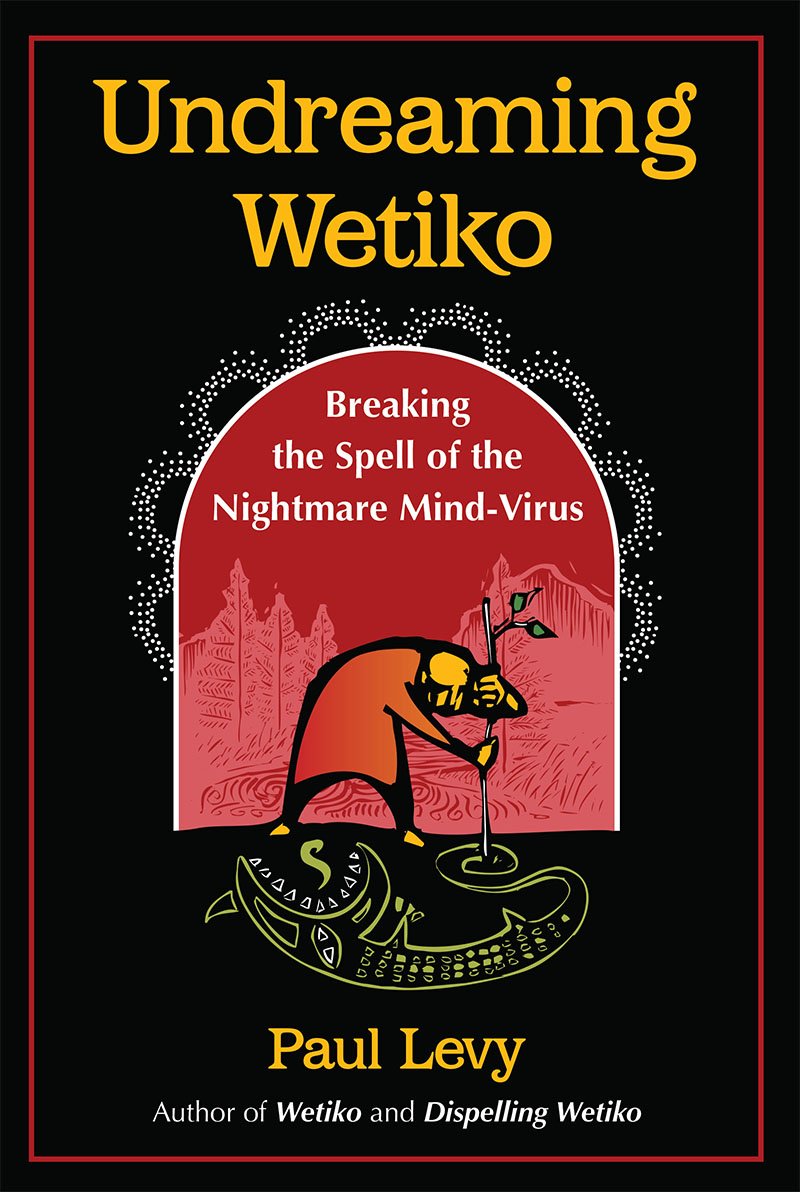
by Paul Levy
Though I am no historian, I feel confident in saying that we are living through the strangest time in all of human history. Jung writes, “That the unconscious has come up and taken possession of the conscious personality is a peculiarity of our time.”[1] The unconscious is the source of our dreams; it is more and more as if our species is collectively acting out—and dreaming up—our unconscious to manifest in fully materialized form in the world. To say this differently: It is as if we are having a collectively shared dream that is informed and shaped by—as well as being a direct expression of—our unconscious. To the extent that this process remains unconscious, however, we are fated to benightedly create an ever-deepening nightmare as is clearly evidenced by what is happening in the world today.
What is happening in our world is a living revelation, but what is taking place will only show its revelatory aspect if we consciously recognize what is being revealed to us. If we don’t recognize the light that is being revealed through the darkness, however, the nightmare will only become stronger and more horrific, potentially killing all of us in the process. The root of this whole process is to be found within the human psyche—where else could the source of our collective madness be found? A major part of what is being revealed to us is the central role, just like in a dreamworld, that the human psyche plays in creating events that are playing out in our world.
Our species is not only asleep, but it’s as if there’s something within us that is invested in keeping us in the dark. As Jung points out, under the circumstances it is imperative that we gain insight into “the spirit that is against us.”[2] This spirit that seems to be obstructing our light is what the Native Americans call “wetiko,”[3] which can be conceived of as being a mind-virus. Shedding light on the covert operations of this virus of the mind serves us beyond measure.
What is happening in our world is so sci-fi, as if we are living in a dystopian Philip K. Dick novel. It is as if the movie “Invasion of the Body Snatchers” has come to life in our world. So many people, even close friends and family members, have fallen prey to the never-ending stream of lies, disinformation and propaganda that is fed to us on a daily basis through the media. Once someone has become influenced and has sufficiently been “taken in” by the mind-controlling propaganda, it is as if their minds become “taken over”—possessed—by something, such that, unbeknownst to themselves, they then become an outpost, a link in a dark chain, to further propagate the spell that they themselves have fallen under.
Due to its mind-altering function, propaganda itself is a form of black magic. When someone has sufficiently imbibed the propaganda and become entranced by the internal logic and seeming coherence of a false narrative, they typically are of the opinion that they are in no way under the propaganda, which is nothing other than the propaganda itself speaking through them. Convinced they are in possession of the truth, they have then become an organ of and mouthpiece for the propaganda to spread, all the while thinking that people who haven’t fallen under the spell of the propaganda are the ones who are propagandized. It is as if something has possessed them.
“Possession,” as Jung points out, is “the original condition of mankind.”[4] To quote Jung, man “is necessarily possessed inasmuch as his consciousness is weak.”[5] Jung is of the opinion that, developmentally speaking, our species’ level of consciousness is at the stage of an adolescent whose sense of both self and the world is still forming. As if beginning to emerge from a deep sleep, our species is evolving out of being identical with—and hence, blind to and possessed by—the unconscious, which is why our task as human beings is to make the unconscious conscious, i.e., to generate as much consciousness as possible. Our species is suffering from a form of psychic blindness,[6] a peculiar form of self-created blindness that not only doesn’t know it is blind, but thinks it sees more clearly than people who are clear-sighted. Our task is to heal our blindness, which always starts with ourselves.
When people fall into—and become taken over—by their unconscious, something within their unconscious has been activated that they are unable to bring to consciousness, which results in their self-reflective consciousness being pulled down, as if by a magnet, into the unconscious and disabled such that it can even be dissolved in its depths. Becoming identical with—and hence, embodying—the unconscious, the person so possessed can’t help but to compulsively act out the unconscious in a destructive way. In this cursed condition, they have unwittingly become an instrument for the darker forces of the unconscious to act themselves out. Describing this very process, Jung says, “the person in question becomes a mere automaton. Such a person is no longer there.”[7]. Truly vacant, they become a conduit for the darker aspects of the unconscious to come through them, while the person so afflicted is simultaneously the living revelation of these darker forces—if we have the eyes to see what is taking place in them.
It is as if such people have become hollowed out by psychic termites, resulting in a vacancy within them that becomes lodging for “something other” than themselves to take up residence within them. As if no longer home, the people so possessed—often by ideas and beliefs—become unself-reflective robotic automatons (with no creative potential operating in them), as they are compulsively driven by something that is riding them from beneath their conscious awareness. These people are so disconnected from their authentic selves and from their ability to think for themselves that “something other” than themselves, to which they are completely unaware, uses them as its unwitting instrument to think for and through them in order to fulfill its agenda (at the person’s own expense). This “something other” wants nothing more than to insert itself into a person’s mind such that the person so afflicted becomes the channel for this darker force to incarnate into our world.
People so taken over become programed like machines in order to spread the very same psychospiritual infection that they are possessed by in order to fulfill the underlying sinister agenda of the archetypal darker forces that are unconsciously driving them. As Jung points out, when someone has been taken over in this way—a situation in which their psyche has been hijacked and colonized by forces other than themselves—“It is one of the most invisible experiences we can have.”[8] As if having blinders on, people so afflicted are utterly blind to their affliction.
Abnegating their own intrinsic power and agency, people so stricken have outsourced their own meaning-making to outside authorities. Fixed in a particular viewpoint, completely convinced they are in possession of the truth, they have a pre-existing, non-negotiable commitment to some idea, ideology or belief which forecloses upon their ability to consider that any other perspective (which they experience as a threat to their very worldview) has any validity whatsoever. Becoming solidified in their viewpoint is the diametric opposite of a fluid, flexible and more open-ended omni-perspectival awareness, which reflects upon what is happening in our world from as many different—and oftentimes contradictory—viewpoints as can be imagined, without snapping into a premature judgement that they know what is, in fact, happening.
Along with being rigidly entrenched in their point of view, their curiosity concerning any evidence that contradicts their concretized perspective goes out the window, not to mention their ability to discern truth from falsehood. Philosopher Hannah Arendt points out that an inability to self-reflectively think about ourselves—similar to how a vampire casts no reflection in a mirror—is one of the primary characteristics of evil.
Dialoguing with people who have fallen into this state is like talking to a single algorithm that is also running in millions of other similar people’s brains, producing a kind of collective hive-mind in which no original thought is allowed to take place. It is like a computer program has gotten implanted in their brains to automatically react to stimuli, turning them into automatons. In essence, they have become part of the machine. To quote Arendt, “the greatest evil perpetrated is the evil committed by nobodies, that is, by human beings who refuse to be persons.”[9] Refusing to be a person, the person so afflicted becomes more like a zombie than a human being.
When someone falls into this damned state, the psyche’s internal monitoring system (an inner reflection of the external regulatory agencies of the government), whose job it is to be on the lookout for external invaders, has been captured by the very forces that it is supposed to monitor and protect the person from. A shadow government gets secretly installed within the afflicted person’s psyche that dictates to the ego. The executive function of their psyche, which is supposed to be working for the best interests of the organism, has been co-opted and is secretly in service to the shadowy force that has, in Philip K. Dick’s phrase “usurped the throne.” It is as if the person has been replaced or deposed by something alien to themselves that has “taken on” their form. It is like there has been a coup within the psyche, with the psyche itself left in the dark about what has taken place.
The people so programmed are oblivious—they literally have no idea—about the insidious nature of the situation that they have fallen into, oftentimes convincing themselves that they have come to their viewpoint through their own volition. Not realizing how their perceptions are being manipulated and managed by outside forces, they can easily convince themselves that they have done their own independent research and analysis, while in fact they are simply parroting the very point of view that the powers-that-be—the very powers that are behind the evil that is playing out in our world—want them to have. When this is reflected back to them—a situation which one would think would get their attention—they typically react with disinterest, lacking any curiosity about the reflection being offered.
People who have internalized the propaganda within their own minds have a smug certainty that they are right—after all, evidence to that effect is continually supplied to confirm the rightness of their point of view by the never-ending stream of propaganda—while the truth is that few, if any of us are in a position to be absolutely certain about anything. Most people can’t wrap their minds around the pervasiveness and extent of the propaganda that we are swimming in 24/7, all designed to psychically massage our minds into the desired viewpoint that the powers-that-be want us to have.
In a real mind-warp, the people under the propaganda—as if looking in a mirror—are seeing their own reflection in those who reflect back to them that they have fallen under the spell of the propaganda, who, in an inversion of reality, they see as the ones’ who are under the propaganda.[10] It is a horrifying realization to take in that those closest to us—oftentimes our siblings, parents, children and close friends—are actually out of touch with reality and aren’t interested in hearing about it.
People whose minds have been influenced in this way typically have never felt more themselves, while in truth the self they are imagining they are is an artificial simulation of themselves—an imposter—that they have taken to be themselves. They have unknowingly fallen under the spell of “the counterfeiting spirit”[11] of the Apocryphal texts, which “puts us on,” (i.e., fools us), as it impersonates us—we then become impersonations of what it is to be a human being. People who have been sufficiently propagandized are living in the self-reinforcing echo chamber of their own programmed and stunted imagination, a limited, self-blinding and crazy-making scenario which they themselves are unknowingly buying into and thereby perpetuating in each and every moment. In essence, they have entranced and brainwashed themselves, putting themselves under a mind-created spell of their own making.
Jung refers to this process of pulling “the wool over one’s eyes” as nothing other than “black magic”[12]—a form of this darker art-form that one is ultimately perpetrating on oneself. We have then tricked ourselves out of our own (right) mind. It is noteworthy that when we fall under our own self-deception, we necessarily lose contact with the real world. Jung repeatedly warned of the great danger that when a sufficient number of people fall prey to their own unconscious in this way, the result is invariably a psychic epidemic—a collective psychosis[13]—which is exactly what is happening in the world today. This process, as Jung endlessly points out, starts with—and can only be resolved—within the individual.
Jung understood that the great danger facing humanity is for people to make what he calls “the great mistake”[14]—to identify with what he calls “the fictive personality” or “the artificial self.”[15] He points out that “if you think you are separated” (from others, as well as the universe itself), you are suffering from “a neurotic imagination,”[16] which once sufficiently identified with, becomes self-generating, supplying all the evidence needed for proof of its own seemingly real existence. This mistaken notion of who you are implicitly brings with it the assumption of the corresponding abstract, supposedly rational (but actually flawed) worldview of scientific materialism, which further supports, feeds into and reinforces our sense of existing as a separate self, a process which can’t help but to further alienate us from our authentic self. This whole process is morbid beyond belief. It can’t be repeated often enough—No one else is doing this to us, we are the ones who are ultimately doing this to ourselves.
One of the chief features of this psychological phenomenon is that people’s beliefs, ideas and perspectives become unconsciously tied into and fused with their identity and very sense of self. To introduce them to another viewpoint that questions their way of seeing is experienced as an existential threat to their very sense of self or identity, which can activate their unconscious psychological defense mechanisms as if their ego—and more than that, their very life itself—is being put at risk. The root of this whole process is to be found within the psyche and nowhere else.
STUPIDITY RUN AMOK
Speaking of the mass brainwashing, mind-control and cult-like behavior that took place in Nazi Germany, theologian Dietrich Bonhoeffer wrote about his experience of encountering such people. In describing someone taken over by the wetiko spirit, he characterizes such people as suffering from a form of stupidity, by which I imagine he means people so afflicted are disconnected from their natural intelligence. Bonhoeffer writes, “In conversation with him, one virtually feels that one is dealing not at all with him as a person, but with slogans, catchwords, and the like that have taken possession of him. He is under a spell, blinded, misused, and abused in his very being. Having thus become a mindless tool, the stupid person will also be capable of any evil and at the same time incapable of seeing that it is evil. This is where the danger of diabolical misuse lurks, for it is this that can once and for all destroy human beings.”[17] Bonhoeffer recognizes that the person so possessed, by allowing themselves to be a conduit for unconscious forces to work through them, can easily become an instrument for evil, all the while believing they are on the side of truth, justice and goodness. The person so afflicted, completely unaware of their depraved circumstance in the slightest, becomes a puppet on a string—what Jung calls “the devil’s marionette”—a human instrument for these nonhuman darker forces of deception to act themselves out in our world. Bonhoeffer is speaking from direct experience—he was executed by the Nazis—about the incredible danger when a sufficient number of people become mindless tools of the state.
Evil needs groups of people to effectively spread itself. It is a well-known psychological phenomenon that when individuals mass together in a group, if the primary value of their coming together is something other than to expand their consciousness and deepen their self-reflective awareness, the collective intelligence of the gathering drops to the lowest common denominator, such that the group, in Jung’s words, becomes one big “fathead.” People under the spell of the unconscious continually reinforce each other’s deluded viewpoint, creating an impenetrable psychic bubble around themselves that deflects self-reflection at all costs.
Jung quotes Mark Twain, who in talking about the danger of this situation, says, “the greatest force on earth is mass stupidity, not mass intelligence.” Jung comments, “Stupidity is the extraordinary power and Mark Twain saw it.”[18] Not just stupefied by fear (where people react based on unconscious conditioning, instead of consciously responding out of their own volition), people who have fallen under groupthink have become, to coin a new word, “stupidified” by fear—been made stupid. Fear, it should be remembered, is the most powerful superfood for wetiko that there is.
Jung emphasized that, due to our species’ suggestibility, we all have the potentiality to become taken over by and possessed by the unconscious such that we become stupid and act out—and hence, embody—darker aspects of the collective unconscious that we all share. This insight can open us up to being able to perceive the revelatory nature of what is happening in our world. The darker forces, by subsuming and incorporating people into itself, enlists them into becoming cogs in the wheel of a dehumanizing machine—people so taken over become its unwitting secret agents (their secret being secret even to themselves). In this situation, however, the darkness is becoming potentially transparent, as it is openly showing how it covertly operates.
The darkness in our world—through both individuals, our species as a whole and the systems we have created that structure our society—is itself its own self-revelation. This is to say that the darkness seemingly taking over our world is—in true quantum style, potentially—in service to the light, if and only if it is beheld by the light of conscious human awareness. Everything depends upon whether or not we recognize the light that is being revealed through the darkness. The inner workings of darkness are usually hidden under the cloak of darkness itself, which is why seeing the undercover operations of darkness is such a game-changer. We normally think of illumination as “seeing the light,” but seeing the darkness—in Jung’s famous words, “making the darkness conscious”—is also a form of illumination. This revelation, however, needs our conscious participation in order to unlock its gifts—we can call this a “participatory form of revelation,” as it requires our active and conscious engagement in order to fulfill its revelatory function.
It takes real courage to snap out of this spell, as there is a built-in counter-incentive to do so. As is well known, it is harder to snap someone out of their bamboozlement than bamboozling them in the first place. This is because it is painful—traumatizing—for someone to realize they’ve been had. It is a shock to realize we’ve been wrong about the very convictions we were so certain about. People don’t like to realize they’ve been fooled, but when you have been taken for all you’re worth, if you want to step onto the road to recovery, there’s no way around realizing to what degree you have given yourself away—it is the necessary first step in getting back to yourself. It is a horrifying but necessary insight to realize our complicity in the very evil that we’ve been thinking we’re fighting against.
Similar to having the strength to leave a cult, it is an extraordinary moment that takes incredible courage when we take off our blinders and snap out of the spell we’ve been under. Instead of seeing through the imagined eyes of others, we start to see through our own eyes, which is to connect with our intrinsic agency and the creative power of the true Self within us. We are then beginning to heal the self-induced blindness of wetiko within ourselves and the world at large. Seeing how the darkness covertly operates within us is the necessary step which empowers us to more effectively deal with the darkness that is wreaking havoc throughout our world.


Alien Origins of Sociopathy by Montalk

Alien Origins of Sociopathy by Montalk
Sociopaths or psychopaths are individuals who lack empathy and engage in predatory behavior without remorse or guilt.
In general, this lack of conscience may stem from a conditioned lack of emotional identification with the victim, a narcissistic love of self that overrides any concern for others, or the mechanical inability to feel any emotion other than ones which are chemical or hormonal in origin.
There are different categories of psychopaths depending on the underlying cause for their condition and how well they blend into society.
Criminal and Successful Psychopaths
Criminal psychopaths are those who are crude enough in their manipulations to be identified and apprehended by legal and medical institutions.
They are known as serial killers, con-artists, burglars, mobsters, mad tyrants, rapists, and delinquents. These comprise a small percentage of psychopaths, and only about 1% of the population.
The rest are successful psychopaths who evade detection by optimally conforming to social ideals without compromising their manipulative nature. They are skilled at faking emotions and passing themselves off as charming, caring, and sociable people. Some use their conformity to appear ordinary, others are more ambitious and become symbols of success by using their charm and intellect to rapidly climb the corporate, political, academic, religious, military, or social ladder.
Between 20% and 50% of the population is included in this category. In general, criminal psychopaths consistently violate laws and social norms while successful psychopaths make use of them.
The orthodox medical establishment presently recognizes only the first category under the term “Antisocial Personality Disorder.”
There is no diagnostic term categorizing successful psychopaths, who continue to remain medically unidentified. This is no surprise considering a significant portion of the medical establishment consists of these individuals.
When mainstream media and medical literature use the term “psychopath” or “sociopath,” they are referring to the small minority of criminal psychopaths.
In this article, the term encompasses multiple subcategories and applies to all individuals who lack empathy, whether they are criminals or not.
Expanded Model of Human Behavior
To understand psychopathy, one must first understand human behavior.
The enigma of human behavior is commonly reduced to a question of nature versus nurture, genetics versus environment.
Typical of materialistic determinism, this model is dangerously simplistic because it focuses only upon the physical and causal basis of human behavior, leaving out the metaphysical factors which are equally as important.
An expanded model for human behavior would include the following factors:
environment – physical influences, social conditioning, mind programming, and education
genetics – instinctual bias, physical limitations, and neurochemical makeup
soul nature – metaphysical composition based upon level of metaphysical evolution, acquired and shaped by the experiences of prior incarnations
fate – predestined and synchronistically arranged experiences that improve soul nature and thus change behavior, also the unwitting modification of one’s behavior to accommodate another’s fate
freewill – personal action taken out of choice, entirely non-deterministic
nonphysical influences – divine inspiration, telepathic persuasion, etheric thought-forms, and various hyperdimensional technologies
Souled and Nonsouled Psychopaths
The term “soul” may be defined as a nonphysical unit of consciousness whose core individuality survives death and rebirth.
By this definition, some people have individualized souls, some do not. The latter incarnate with definite soul energy, but nothing sufficiently individualized to avoid dissolution after death.
The individualized consciousness of souled humans affords them the ability to choose what to do with the genetic, environmental, and karmic conditions they acquire upon incarnating.
Nonsouled humans lack this choice and are entirely the product of their environment and genetics.
Psychopaths exist within both categories.
Souled psychopaths are either environmentally programmed to act against their own conscience, or else have made the consistent choice to behave in a narcissistic and predatory manner.
Those who are programmed have chance for recovery, while the attempt to change those who choose psychopathy only reinforces their behavior. Souled psychopaths feel love and hate, but only love for self and hate for others.
This condition is well illustrated by certain Nazis or Zionists who love their own race but feel no guilt about murdering those of another. Souled psychopaths also have empathy and conscience, but these are perverted and reserved for special cases. For example, some mobsters seem to act upon a strong moral code and thus appear as upright heroes to those they protect, but are nevertheless criminal psychopaths.
The greatest tyrants in history were souled psychopaths who passionately pursued their twisted goals.
Since love, empathy, and freewill are qualities associated with having a soul, nonsouled humans are psychopaths by definition. This doesn’t mean all act in obviously predatory ways, just that the severity of their manipulative behavior depends mostly upon environmental and genetic factors, which vary greatly from person to person.
Those who face adversity during childhood often mature into criminal psychopaths, while those who have more secure upbringings are less maladjusted and become successful psychopaths. No amount of education, medication, or programming can instill genuine empathy and love within them, for they lack the soul nature necessary to exude these qualities.
Both souled and nonsouled psychopaths display disregard for the suffering of others.
While the souled psychopath loves himself beyond everyone else and thus feels justified in exploiting them, the nonsouled psychopath freely exploits others because he lacks the ability to love or empathize with anything.
Genetics
Genetic characteristics determine the physical biases, limitations, and capabilities of an individual.
A nonsouled person will be at the mercy of these characteristics while a souled person can choose how to utilize them. Souls often select the bodies into which they incarnate, seeking ones which provide the optimal “toolbox” for their metaphysical needs and best serves their learning agenda or mission.
Thus, genetics and soul nature tend to correspond.
A nonsouled person with a “sharp” set of tools may, in accordance with environmental programming, use his or her intellectual abilities to deceive and manipulate with perfection. For example, the CEO who manipulated his way up the corporate ladder may simply be an nonsouled psychopath who used his genetic gifts to embody the societal norm of material success.
Genetic flaws can also result in brain abnormalities that hinder the balanced expression of emotion, a common condition in criminal psychopaths.
Chemical and electromagnetic factors can exacerbate these tendencies.
The Metaphysical Significance of Bloodlines
Because soul nature and genetics are coupled, the metaphysical significance of bloodlines becomes clear.
Bloodlines are characterized by concentrations of specific genetic traits passed down through generations. Correspondingly, souled members of that bloodline share common metaphysical characteristics, suggesting that bloodlines provide the physical vehicle for the implementation of metaphysical goals requiring multiple generations to accomplish.
Thus there exist a variety of bloodlines, each with unique metaphysical predispositions. While some are altruistic and noble in nature, others exist to engage in parasitical elitism and are genetically biased toward successful psychopathy.
In that case, nonsouled members would have a high probability of being actively psychopathic. Among its souled members, most incarnate to optimally continue their malevolent agendas, while a few deviate and use their acquired abilities for the better. By genealogically tracing bloodlines and correlating them with historical data, one can determine the fundamental destiny of its descendents.
For example, it is well known that US presidential candidates with the strongest royal lineage become elected.
Diffusion of Psychopathic Bloodlines
Due to crossbreeding, many bloodlines transcend racial boundaries and are not geographically isolated.
An exception would be royal lineages where active measures are taken to keep the bloodline pure and geographically concentrated. Nevertheless, the important point is that branches of bloodlines biased toward psychopathy inevitably diffuse into the general population and exist in all races.
This implies several things.
First, it shows that not only is racist prejudice morally repugnant, but it is also logically flawed because its obtuse criteria falsely condemns the innocent among the hated race and excuses the virulent bloodlines within the favored race. For example, the Nazis condemned the entire Jewish people as subhuman psychopaths when only a few non-semitic bloodlines passing themselves off as Jews justified this claim; there were equal concentrations of psychopathic bloodlines within the caucasian race itself, obviously overlooked by the Nazis due to the blind favoritism of their ideology.
Second, unless a bloodline is geographically isolated or physiologically unique, it is impossible to identify psychopaths by these traits alone. The purpose of identification is not to persecute them, but to identify such behavior when it occurs and understand why it happens.
The success of psychopaths depends heavily upon others excusing their action with rationalizations built on false assumptions.
For instance, a nonsouled psychopath may abuse his wife and after she leaves him, he may promise change and use sweet words to appear remorseful. The false assumption is that this person is capable and willing to change for the better. In truth, he is incapable of feeling empathy or remorse and fakes these qualities to perpetuate his manipulations.
Understanding the physical and metaphysical basis of human behavior allows one to avoid making such false assumptions and see through false guises that would otherwise appear as genuine.
Psychopathy and Negative Control Systems
Psychopaths who are most intelligent and powerful tend to use lesser ones to do their bidding.
This forms a web of control, a negative hierarchy of manipulation that spans from elite globalist cabals down to the neighborhood delinquent or psychopathic spouse. This is not to suggest that the global elite are directly commanding local psychopaths, but rather that there exists a hidden element unifying this hierarchy.
This hidden element originates beyond our realm and consists of advanced non-human psychopaths of an alien or demonic nature who use hyperdimensional technology or telepathic influence to direct all lesser psychopaths, most easily nonsouled ones who lack freewill and are thus freely controlled.
This hyperdimensional control system may be appropriately termed the “Matrix,” and the lesser psychopaths may be called “Matrix Agents” due to the similarity between their functions and the themes depicted in the movie.
Empathy is antithetical to control, which is why control systems demand psychopathy as the standard mode of function. Society is best manipulated through an abundant distribution of psychopaths among the lower and upper ranks of society.
Toward this end, certain bloodlines have been created or tweaked by negative alien forces to assist the incarnation of malevolently souled individuals, and thus some instances of psychopathy can be said to have alien origins.
Those not genetically biased toward psychopathic behavior are nevertheless easily programmed into supporting or idolizing such behavior, especially if they lack the freewill and discernment associated with having a well developed soul.
The Human Condition
The problem of psychopathy rests upon the fact that only the minority of souled psychopaths who have been programmed against their conscience are capable of changing for the better.
The other two categories, nonsouled psychopaths and those who choose the path of predation, are in the majority, diffused among the population, and beyond rehabilitation.
Their emulation of social ideals and lack of guilt allows them to rise high in society and exploit the masses at large. Our culture’s idolization of psychopathic qualities such as ego-centrism, ruthless ambition, and superficiality provides warm waters for these sharks.
Thus, lack of knowledge among people concerning the prevalence, subtlety, and guile of psychopaths only perpetuates their behavior.
Because of ignorance of metaphysical factors, it is commonly assumed that all psychopaths are treatable. In truth, souled psychopaths who choose their path and nonsouled psychopaths are beyond hope – any energy invested toward “changing them” will be wasted, or worse, serve to reinforce their predatory behavior.
In short, they abuse your respect, exploit your empathy, and feed upon what energy you put into them.
They are best avoided.
Further Research

420 with CNW — Cannabis Dispensaries Happy That SAFER Banking Act Has Progressed to Senate Floor

Cannabis businesses across the United States have applauded a recent vote by a committee of the U.S. Senate to advance cannabis banking legislation and move it to the senate floor. The committee approved a revised version of a bipartisan marijuana banking bill for the first time last week, raising hopes that America’s state-legal cannabis industry could finally gain access to financial and banking services.
Members of the Senate Banking Committee voted in favor of the Secure and Fair Enforcement Regulation (SAFER) Banking Act in a 14 to 9 vote just a week after bill sponsors Senators Steve Daines and Jeff Merkley officially filed the revised bill. If the measure becomes law, it will provide protections to banks and financial institutions that serve businesses in the cannabis sector from federal reprisal.
America’s state-legal cannabis industry currently cannot access banking services such as bank accounts and cashless payments due to federal prohibition, forcing them to mostly operate on a cash basis. On top of making tax compliance quite difficult, running cash-only operations attracts thieves and increases the likelihood of violent cannabis dispensary robberies, something that is already happening with frightening regularity around the country.
Senate Banking Committee Chair Sherrod Brown has said that the bipartisan cannabis banking bill was necessary as it would help keep cannabis businesses, service providers, and communities safe.
Although the proposal will have to advance past the Senate and House of Representatives before heading to President Joseph Biden’s desk for his signature, cannabis dispensaries are pleased with the progress it has made so far. Herban Underground’s Clif Gordon said he wants to run his cannabis business like any other business in the country but limited access to banking makes this difficult. His establishment is functions like any other business, but federal prohibition prevents his from taking credit cards or any other cashless payment systems, limiting his business to cash-only transactions.
Former Colorado Representative Ed Perlmutter has been championing cannabis banking for close to a decade to help business owners like Gordon. He explains that the SAFER Banking Act would finally allow banks to serve the state-legal cannabis sector as it serves other legitimate industries. That would include granting the industry access to deposit accounts, credit cards, payroll accounts, and other banking and financial services that are immediately accessible to other businesses.
Mason Tvert from Colorado Leads says operating on a cash-only basis and essentially keeping a pile of cash on hand presents a safety issue for cannabis businesses and their employees. He says the SAFER BANKING Act is a “critical public safety legislation” that will allow access to critical banking services while providing social equity and small businesses with the financial products they need to grow.
If this act gains Congressional approval and is signed into law, it could result in more marijuana companies accessing financial services, thereby having positive downstream effects such as causing a spike in the number of clients ancillary firms such as Innovative Industrial Properties Inc. (NYSE: IIPR) serve.
About CNW420
CNW420 spotlights the latest developments in the rapidly evolving cannabis industry through the release of two informative articles each business day. Our concise, informative content serves as a gateway for investors interested in the legalized cannabis sector and provides updates on how regulatory developments may impact financial markets. Articles are released each business day at 4:20 a.m. and 4:20 p.m. Eastern – our tribute to the time synonymous with cannabis culture. If marijuana and the burgeoning industry surrounding it are on your radar, CNW420 is for you! Check back daily to stay up-to-date on the latest milestones in the fast -changing world of cannabis.
To receive SMS alerts from CNW, text CANNABIS to 844-397-5787 (U.S. Mobile Phones Only)
For more information, please visit https://www.CannabisNewsWire.com
Please see full terms of use and disclaimers on the CannabisNewsWire website applicable to all content provided by CNW, wherever published or re-published: https://www.CannabisNewsWire.com/Disclaimer
CannabisNewsWire
Denver, CO
www.CannabisNewsWire.com
303.498.7722 Office
Editor@CannabisNewsWire.com
CannabisNewsWire is powered by IBN

Scientists are trying to teach our phones to know when we’re stoned
Researchers in Canada and the US are trying to teach your smartphone to know when you’re high.
A new study recently shared online sought to see if artificial intelligence could be used to monitor cannabis intoxication in a more immediate way than other impairment-testing methods.
Researchers collected data from 33 people’s personal smartphone sensors and a Fitbit to monitor their heart rate, step counts, and sleep quality for up to thirty days, collecting information on their cannabis use (if at all), as well as other aspects of their mood, location, and activities.
About one quarter (24 percent) of participants reported using cannabis daily, 9 percent reported use 5-6 times per week, and one third (66.7 percent) reported use 2-4 times per week.
By having the participants self-report their cannabis use, they hoped to correlate feedback from the Fitbit and smartphone with cannabis use. Sensors on the participants’ phones also provided information on their “micromovements,” such as how they held their phones, in order to measure their stability and coordination.
Since smoking cannabis has been shown to cause an increase in resting heart rate, researchers hope to better distinguish between someone being intoxicated vs simply having THC in their system, and potentially being able to warn someone they are too impaired to drive, for example.

The app collected data from the participants’ smartphones, which ran continuously in the background collecting information about their actions and behaviour, including conversations and background audio and lighting. Such features were only extracted from time intervals based on reported consumption to gain insight into the social setting of consumption.
The Fitbit was used to collect information on heart rate, sleep, and steps.
The app also allowed participants to enter reports of their cannabis use 15 minutes prior to smoking or vaping, and then later rate how high they feel on a scale of 1-10. They were also asked about how much they consumed and using what method, and to report when they then no longer felt high.
One of the goals of the study was simply to understand if such data collection is a viable way to measure cannabis use and intoxication. Although researchers acknowledge numerous challenges ensuring the user-reported data on cannabis use like the degree and length of high, they conclude the approach can be beneficial in “real world” settings.
Moving forward, they hope to refine their approach by improving the smartphone and Fitbit algorithms and collecting more complete data from larger sample sizes.
420 with CNW — Marijuana Companies in Canada Tap Government Funding Programs
An increasing number of Canadian marijuana companies are tapping into funding sources from the government to expand their research projects amid reduced investor interest in the cannabis industry. According to a recent MJBizDaily report, cannabis companies in Canada have accessed more than $2.2 million (C$3 million) in federal funding over the past 12 months.
Cannabis companies in Canada and the United States have struggled to secure capital investment indecent years. The Canadian marijuana sector has registered especially poor performance, law firm Miller Thomson notes, costing investors some $131 billion and significantly damaging investor confidence in the industry.
With no other alternative, players in Canada’s marijuana industry had no choice but to turn to federal funding to support their capital needs. Canada’s government has been happy to oblige, providing around $24 million (C$32.8 million) in funding since the country legalized adult-use marijuana in 2018 to cannabis businesses via business-support programs.
Canada legalized recreational cannabis in October 2018 and allowed the possession of up to 30 grams of domestically produced marijuana, and up to four marijuana plants per household with adults aged 18 and older. In addition, provinces have the option of increasing the minimum age limit for purchasing, possessing and using cannabis. Furthermore, the cannabis legalization measure allowed businesses to produce cannabis under federal licensing while the distribution and sale of recreational cannabis was under the authority of provincial governments.
Thanks to limited investor interest in the sector, the Canadian government has provided millions of dollars to recreational cannabis companies. While most of the federal funding was invested in research-related activities, recreational cannabis companies also used the funding for business expansion.
In 2020, the now-defunct Tantalus Labs received $2.1 million (C$2.9 million) from the federal economic development body Western Economic Diversification Canada to expand a greenhouse. Tantalus Labs received the funding through the Regional Economic Growth’s Innovation Program.
Pbg Biopharma also secured $3.95 million (C$5.4 million) via the innovation program while Ricci Cannabis received $5,398 (C$7,380) through the National Research Council of Canada’s Industrial Research Assistance Program to commercialize a nonalcoholic marijuana beverage.
Cannabis company executives say federal funding is key to carrying out targeted research and development projects but caution against relying on government funding for regular business costs. Canna Stream Solutions CEO and cofounder Usukuma Ekuere says that without grant funding from the Canadian government, companies such as Canna Stream Solutions (which received $365,000 in funding) wouldn’t have gotten as far as they have.
U.S.-based marijuana companies, such as Curaleaf Holdings Inc. (CSE: CURA) (OTCQX: CURLF), also hope to one day operate in an environment in which they can access federal government support in the same way that actors in other industries can obtain funding to grow their businesses.
About CNW420
CNW420 spotlights the latest developments in the rapidly evolving cannabis industry through the release of two informative articles each business day. Our concise, informative content serves as a gateway for investors interested in the legalized cannabis sector and provides updates on how regulatory developments may impact financial markets. Articles are released each business day at 4:20 a.m. and 4:20 p.m. Eastern – our tribute to the time synonymous with cannabis culture. If marijuana and the burgeoning industry surrounding it are on your radar, CNW420 is for you! Check back daily to stay up-to-date on the latest milestones in the fast -changing world of cannabis.
To receive SMS alerts from CNW, text CANNABIS to 844-397-5787 (U.S. Mobile Phones Only)
For more information, please visit https://www.CannabisNewsWire.com
Please see full terms of use and disclaimers on the CannabisNewsWire website applicable to all content provided by CNW, wherever published or re-published: https://www.CannabisNewsWire.com/Disclaimer
CannabisNewsWire
Denver, CO
www.CannabisNewsWire.com
303.498.7722 Office
Editor@CannabisNewsWire.com
CannabisNewsWire is powered by IBN
Recent Comments