The owner of a chain of cannabis stores across Canada is launching a new consumer-facing digital magazine.
High Tide, the owner of the Canna Cabana chain of retail stores, is launching Cabanalytics Consumer Insights, which they say will be an extension of their Cabanalytics “business data and insights platform.”
Canna Cabana currently has 156 locations across Canada, making High Tide the largest retailer in the country.
Beginning September 14, and continuing monthly, the company says in a press release that over 1.1 million ELITE and Cabana Club members will receive the free digital publication, covering topics such as the best-selling cannabis products and accessories and reports on consumer behaviour.
Over time, the company plans to expand their distribution into other markets like the US.
“Innovation is a key part of High Tide’s DNA, which led to the launch of our unique discount club model two years ago and our paid membership tier ELITE almost a year ago,” said Raj Grover, President and CEO of High Tide in a press release while acknowledging the program’s success is subject to provincial and federal regulations. “Today, I’m thrilled to announce the launch of Cabanalytics Consumer Insights, an extension of our highly successful Cabanalytics business data and insights platform.”
Grover adds that the company aims to monetize the platform by utilizing a captive audience of consumers, and he hopes to expand its coverage to include topics such as data on hydroponics, cannabis seeds, and growing equipment.
High Tide’s third-quarter results will be published on September 14. Cabanalytics data sales were $6.4 million in the second fiscal quarter of 2023, compared to $5.1 million for the same quarter last year and $6.6 million in the first fiscal quarter of 2023. Gross profits in Q2 2023 for High Tide were $31.6 million.
The chairman of a key Senate committee has revealed that he discussed the possibility of advancing bipartisan cannabis banking legislation within the next six weeks with Senate Majority Leader Chuck Schumer. During a recent interview with Punchbowl News, Senate Banking Committee chair Sherrod Brown said that he talked to Schumer about moving the Secure and Fair Enforcement (SAFE) Banking Act alongside several other major bills within the next one and a half months.
Cannabis banking has been a contentious issue since states began legalizing medical and recreational cannabis in the United States nearly two decades ago. Although dozens of states now have legal cannabis programs, federal law still classifies marijuana as a Schedule I drug with no medical application. As a result of federal prohibition, licensed cannabis operators find it nigh impossible to access critical financial services such as banking, cashless payments, capital and financial aid.
This forces cannabis businesses to operate on a mostly cash-only basis and puts these businesses at significant risk of violent robberies, something that has been occurring in recent months with increasing frequency. The SAFE Banking Act was introduced to address the lack of access to financial services in America’s multibillion-dollar cannabis industry.
In a recent floor speech and in a letter to fellow lawmakers, Schumer said providing the cannabis industry with access to banking is a priority. He noted that although “making progress on cannabis” via banking legislation was a legislative priority, the legislation wouldn’t progress on the Senate floor without bipartisan support on cannabis reform and related issues, including capping insulin prices and competing with China on the global scale. Additionally, spending legislation will take up a lot of the Senators’ time in the next few weeks, likely reducing the time they have to discuss cannabis banking.
One key section of the SAFE Banking Act (Section 10) has also been subject to intense debate among lawmakers in recent months and even prevented the measure from passing during the summer legislative session.
In late July, Schumer said lawmakers having bipartisan negotiations over the SAFE Banking Act were “making good progress.” The Senate Majority leader reportedly told a lobbyist at the time that Senate lawmakers were working on cannabis banking. He had previously stated that he wished to address marijuana banking reform during the summer session but constant debate over sections of the cannabis banking bill have kept the measure from advancing until the end of the session.
The marijuana industry and its leading entities such as Green Thumb Industries Inc. (CSE: GTII) (OTCQX: GTBIF) have heard such promises before and are unlikely to get too excited by these new pronouncements until actual banking reform is enacted at the federal level.
About CNW420
CNW420 spotlights the latest developments in the rapidly evolving cannabis industry through the release of two informative articles each business day. Our concise, informative content serves as a gateway for investors interested in the legalized cannabis sector and provides updates on how regulatory developments may impact financial markets. Articles are released each business day at 4:20 a.m. and 4:20 p.m. Eastern – our tribute to the time synonymous with cannabis culture. If marijuana and the burgeoning industry surrounding it are on your radar, CNW420 is for you! Check back daily to stay up-to-date on the latest milestones in the fast -changing world of cannabis.
To receive SMS alerts from CNW, text CANNABIS to 844-397-5787 (U.S. Mobile Phones Only)
Please see full terms of use and disclaimers on the CannabisNewsWire website applicable to all content provided by CNW, wherever published or re-published: https://www.CannabisNewsWire.com/Disclaimer
Thanks to our sponsors for supporting StratCann’s work!
Why build something from scratch when you can buy this turn-key experience? Discover an exciting business purchase opportunity within the Cannabis industry. This investment offers substantial profit potential and a bright future. Seize this chance for success today!
Welcome to STU FARMS, your gateway to pioneering cannabis cultivation solutions with a focus on profitability and efficiency.
We invite you to delve into a tour of our state-of-the-art facility, located in Arthur, Ontario, tailored to meet the needs of your business.
A Commitment to Your Business’s Success: STU FARMS is designed to elevate your business’s cannabis cultivation operations. Our modern, environmentally conscious design signifies a commitment to sustainable practices, aligning your brand with responsible and ethical cultivation.
Advanced Grow Rooms for Your Business: Within our facility, you’ll find four cutting-edge grow rooms, each meticulously designed to cater to different growth stages. Precise climate control, customized lighting replicating natural sunlight, and automated nutrient systems ensure consistent, high-quality yields, optimizing your production process.
Beginning with Propagation: Your business starts with our dedicated propagation room, where young plants are expertly nurtured from seeds or cuttings. This controlled environment fosters robust germination and early-stage growth, setting a strong foundation for your crop.
Unparalleled Flowering Potential: The heart of STU FARMS lies in our three larger grow rooms, fine-tuned for the flowering phase. Tailored light schedules and CO2 augmentation stimulate substantial flower growth, resulting in amplified harvests and potency – precisely what your business needs to thrive.
Efficiency at Every Step: In our processing area, your harvested plants undergo precise trimming, drying, curing, and packaging, all optimized for quality and efficiency. With cutting-edge machinery and a skilled team, you can trust in the consistency and excellence of your cannabis products.
Smart Storage Solutions for Business: Efficient storage is vital for minimizing overhead costs. Our facility includes secure, climate-controlled storage spaces for harvested cannabis products, packaging materials, and equipment, ensuring your inventory stays fresh and ready for market.
Maximizing Business Profit Through Innovation: At STU FARMS, we’re synonymous with efficiency and cost reduction. We harness renewable energy sources, employ automated systems, and utilize finely tuned cultivation techniques to minimize operational expenses. Our advanced monitoring and data analysis capabilities enable you to optimize yields and profitability continually.
STU FARMS represents the pinnacle of cannabis cultivation, offering a strategic partnership that merges cutting-edge technology with expert horticultural practices to enhance your business’s profitability. Your purchase of STU FARMS is not just an investment; it’s a strategic move toward increased productivity and success in the cannabis industry. Explore our tailored solutions for your business needs and experience the difference today!
For information and enquiries, contact Alroy Brouwer, Broker Realty Executives On The Bay Inc., Brokerage at 705-220-8758 or [email protected].
Content sponsored by: Alroy Brouwer, Broker Realty Executives On The Bay Inc.
Insight & News
Browse Categories
Thanks to our sponsors supporting StratCann’s work!
Recent Articles
Are you of legal age in your jurisdiction? By clicking “Enter” you are verifying you are of legal age to view the content of this website, or click “Exit” to leave.
“And the word “courage” should be reserved to characterize the man or woman who leaves the infantile sanctuary of the mass mind.”
Sam Keen, Fire in the Belly
In the privacy of our minds many of us disagree with the ideologies, political agendas, and government mandates of our day, yet in public we comply. We do what we are told, say what is politically correct, and justify our hypocrisy by telling ourselves that we are powerless to change society, and so we might as well blend in with the crowd. In this video, we explain why publicly conforming to what we privately disagree with makes us complicit in tyranny, and why each of us has far more power to influence society than we have been led to believe.
In the 1950s, the social psychologist Solomon Asch conducted an experiment which demonstrated the degree to which individuals will reject what they think is true in order to conform to the majority. In the experiment, Asch showed a test subject two cards. On the first card was a single line, and on the second card were three lines, A, B, and C, with only line C being the same length as the line on the first card. Asch instructed the test subject to state which line on the second card was the same length as the line on the first card. However, before the test subject gave an answer, they witnessed 7 confederates – or individuals who were in on the experiment – state that line B was the same length as the line on the first card. Rather than state the obvious truth, the test subjects gave the same wrong answer as the group 37% of the time, and of the 123 test subjects who took part in this experiment, two thirds went along with the group at least once. Asch’s experiment confirms what philosophers have been reiterating for thousands of years: for most human beings conforming to what others say and do – no matter how objectively false or absurd – takes precedence over adapting to reality and discovering the truth. In reflecting on Asch’s experiment, the psychologist Todd Rose explains:
“…we care about being in the numerical majority even when we don’t necessarily care about the group and even when the group opinion is merely an illusion. Acting on instinct, in social situations our brains don’t actually bother to make the distinction between appearance and reality…Even in the absence of intentional pressure or incentives, we like to go along with what we think is the consensus because, quite simply, we’re biologically wired to do so.”
Todd Rose, Collective Illusions
Our inclination to go along with what we think is the consensus makes us vulnerable to propaganda and easily manipulated. For one of the primary ways that governments, corporations, and global institutions influence public opinion and shape mass behavior is by manufacturing illusions of consensus. They harness the power of the mainstream media and social media for the express purpose of making it seem as if the majority supports certain agendas, ideologies, and mandates. Slanted narratives, biased reports, rhetoric that appeals to emotion, misleading “fact checks”, outright lies, dubious opinion polls, and social bots are some of the weapons used in this subtle form of psychological warfare. Todd Rose heads an organization which investigates the misconceptions that people hold regarding what is the consensus on social and political issues, and as he explains:
“Name anything that truly matters to you, and I’ll wager that you are flat-out wrong about what the majority of people really think about at least half of them. And that’s being generous.”
Todd Rose, Collective Illusions
These illusions of consensus lead many of us to censor our real opinions, and to comply with socially destructive agendas and ideologies. Todd Rose references a study conducted in July of 2020 which revealed that nearly two thirds of Americans are not comfortable voicing their political opinions in public. But to make matters worse, when others see us conforming in public, they assume that we agree with what we are conforming to, and this heightens their inclination to conform and opens the door for collective illusions to form and spread throughout society. Or as Todd Rose explains:
“Collective illusions are social lies. They occur in situations where a majority of individuals in a group privately reject a particular opinion, but they go along with it because they (incorrectly) assume that most other people accept it. The result is a pernicious, self-fulfilling prophecy. By making blind and ultimately false assumptions about the opinions of those around us and worrying that we are in the minority, we become more likely to perpetuate the very views we and others do not hold. Worse, because the very same people who disagree with the status quo are the ones enforcing it, it becomes all but impossible to dismantle the illusion.”
Todd Rose, Collective Illusions
Collective illusions play a critical role in the rise and solidification of tyranny. To illustrate how this dynamic plays out, and how it can be stopped, we can turn to the allegory of the greengrocer from Vaclav Havel’s book, The Power of the Powerless.
In Communist Czechoslovakia, there was a man who sold fruit and vegetables in a corner store. Each morning he hung a government-endorsed sign in the window which read “Workers of the World, Unite!”. The greengrocer did not believe in the message of the sign – to him it was nothing more than cliche propaganda. After decades of harsh political oppression, it was clear to him that the government’s alleged concern for the workers of the world was an ideological front to conceal their thirst for power. Yet even though the greengrocer knew that the sign was propaganda, each morning he hung the sign anyways, because that’s what everyone else did. Government-endorsed signs hung in the window of every shop; they formed a part of what Vaclav Havel called “the panorama of everyday life” which helped to create, and sustain, the collective illusion that the majority supported the government. And it was this collective illusion of consensus, more than any other factor, which secured mass compliance. Or as Timothy Snyder explains in the Introduction to The Power of the Powerless:
“The greengrocer hangs his sign not because he receives an order, but because he sees that others do likewise. Others, in turn, follow his example. The system is totalitarian not because some individual has total power, but because power is shared in conditions of total irresponsibility.”
Timothy Snyder, Introduction to The Power of the Powerless
Or as Havel explained:
“…without the greengrocer’s slogan the office worker’s slogan could not exist, and vice versa…by exhibiting their slogans, each compels the other to accept the rules of the game and to confirm thereby the power that requires the slogans in the first place. Quite simply, each helps the other to be obedient…In the totalitarian system everyone in his or her own way is both a victim and a supporter of the system.”
Václav Havel, The Power of the Powerless
One day, the greengrocer decided he was sick of supporting an authoritarian government, and so he stopped hanging the sign in his window. What is more, he stopped voting in what he considered to be farcical elections, stopped regurgitating government propaganda, and started to publicly express his real opinions. These seemingly simple acts initiated a remarkable ripple effect, for as Todd Rose writes:
“…surprisingly, with amazing speed, the greengrocer began to gain support for the simple reason that everyone else in the city felt exactly the same way he did. Tired of living under oppression, the tailor and the baker and the office worker followed his lead. The moment the greengrocer stopped cooperating, he sent a signal to everyone else that they could do likewise.”
Todd Rose, Collective Illusions
The story of the greengrocer is a personification allegory; he represents all the individuals in communist Czechoslovakia whose noncompliant actions helped destroy the collective illusion of consensus support upon which the entire edifice of tyranny was built. The destruction of this collective illusion culminated in the Velvet Revolution, one of the only historical occurrences of a peaceful revolution which toppled an oppressive regime. How this revolution came to be, and how it achieved such profound political change in just 11 days, puzzles some historians. However, what is often overlooked is the fact that the seeds of this revolution were planted in the years prior by all the unsung heroes of Czechoslovakia whose behavior was patterned in accordance with the allegory of the greengrocer. Or as Vaclav Havel explained:
“By breaking the rules of the game [of tyranny], the greengrocer disrupted the game…He exposed it as a mere game…He said that the emperor is naked. And because the emperor is in fact naked, something extremely dangerous happened: by his action, the greengrocer…enabled everyone to peer behind the curtain. He showed everyone that it is possible to live within the truth.”
Václav Havel, The Power of the Powerless
As highly social beings, what we say and do influences the people we encounter, and even minor displays of noncompliance and nonconformity have the power to ripple outward and initiate a butterfly effect that changes society in dramatic ways. Hence why Aleksandr Solzhenitsyn stated that a single individual speaking the truth could bring down a tyranny, or as Henry Melvill observed:
“Our lives are connected by a thousand invisible threads, and along these sympathetic fibers, our actions run as causes and return to us as results.”
Henry Melvill
Some of us, however, face economic, social, or physical repercussions for being too forthright in our beliefs. If the consequences of living fully in the truth are too severe, Rose recommends the strategy of sowing seeds of doubt in the minds of others, or as he explains:
“For example, you can say something like, “I haven’t made up my mind yet” or “On the one hand, I can see the value of x, but on the other…” You can also suggest other options by saying things like “I have a friend who…” or “I read somewhere that…” Doing this gives you plausible deniability while retaining your sense of control. It also offers an escape hatch for others who have been afraid to speak up. Often all it takes is a single spark of ambivalence or mixed opinion. Once you crack open the door, others can gain the courage to follow.”
Todd Rose, Collective Illusions
If, on the other hand, we adopt hypocrisy as a way of life and fully comply with political agendas, ideologies, and mandates which we do not agree with, then we will not only be a victim of the creeping tyranny that is suffocating our society, but also an active supporter. Referring to the government-endorsed lies which the majority of citizens in communist Czechoslovakia complied with, Vaclav Havel wrote:
“Individuals need not believe all these mystifications, but they must behave as though they did, or they must at least tolerate them in silence, or get along well with those who work with them. For this reason, however, they must live within a lie. They need not accept the lie. It is enough for them to have accepted their life with it and in it. For by this very fact, individuals confirm the system, fulfil the system, make the system, are the system.”
The Western world in general does not realize that most of the major advances in science have come through imaginative thinking – Albert Linderman
Throughout my work I consider the difference between the Will to Power and Will to Meaning. I speak about the underlying drive of consciousness to regain a sense of lost wholeness, and how this quest has in recent decades ceased to be important to most people.
The state of affairs also entails dissociation, historical amnesia and disinterest in the warnings and lessons of the past. It leads to an obsession with religion, and, creatively, to the poisoning and degradation of Imagination.
Imagination, although accepted as important by artistic types, is usually considered something inessential and airy-fairy. It’s usually relegated to a position below logic, intellect and rationality.
However, like William Blake before her, Ayn Rand emphasized that imagination undergirds reason, which cannot function correctly without it.
In her important book The Romantic Manifesto, Rand explores the dynamic between Self and World, and analyzes the reasons for art and creativity. Her insights are exceptionally instructive for those wishing to understand consciousness and the purpose of human beings.
Art does have a purpose and does serve a human need, only it is not a material need, but a need of man’s consciousness. Art is inextricably tied to man’s survival – not to his physical survival, but to that on which his physical survival depends: to the preservation and survival of his consciousness – Ayn Rand (The Romantic Manifesto)
Ayn Rand’s masterly book analyzes the deep connections between consciousness and nature or Self and World
In her book and larger corpus, Rand emphasizes that consciousness does what it does and is what it is because of orderliness and context. A consciousness in chaos, with clashing thoughts and emotions, has no solid, sane grasp of reality, and never will. Many are those who fall into this category. Indeed, we understand neurosis and madness in contrast to their opposites. In terms of pathology, we know the “abnormal” because we encounter and favor the normal.
Of course, according to Rand and other thinkers, the “normal” – the sane, sensitive, rational, independent and heroic – is under attack from all sides. Rand addresses why this is and what can be done about it.
The structure, orderliness and independence of mind comes about when there is a healthy flow between Perception and Conception, two of the main functions of consciousness. The flow is not in a single direction. It also runs backwards from Conception to Perception. In fact, without this latter flow there would be no art in our world. We’d know nothing of painting, poetry, music, architecture or craftsmanship.
True art, explains Rand, is the result of mental orderliness. Bad art signals the opposite, arising due to a breakdown in mental orderliness or some other malignancy compromising the natural flow from Perception to Conception and back again.
By organizing his perceptual material into concepts, and his concepts into wider and still wider concepts, man is able to grasp and retain, to identify and integrate an unlimited amount of knowledge, a knowledge extending beyond the immediate concretes of any given immediate moment – Ayn Rand
By way of perception we introject objects and entities encountered in the world. Their images stand before us, to become part of us by way of our acts of perception. We know these as “ideas,” although we rarely consider how and why they exist.
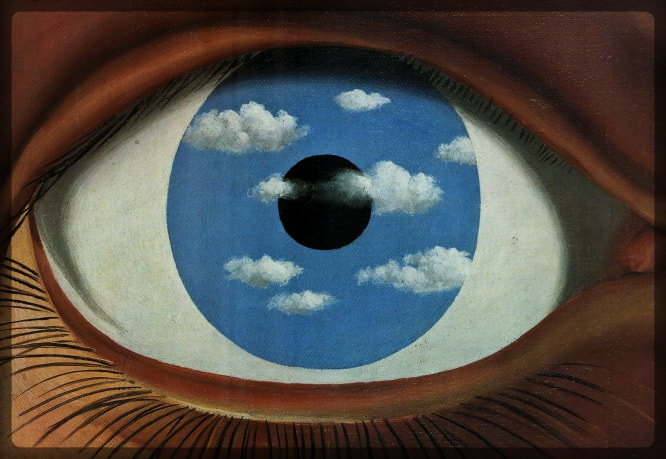
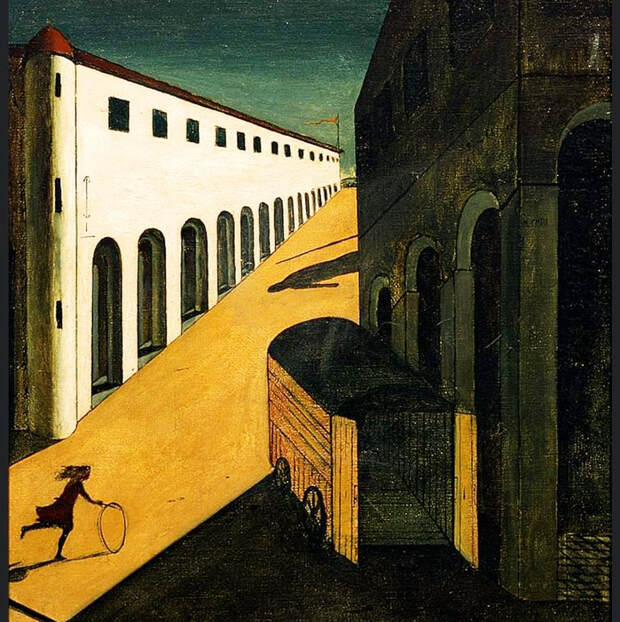
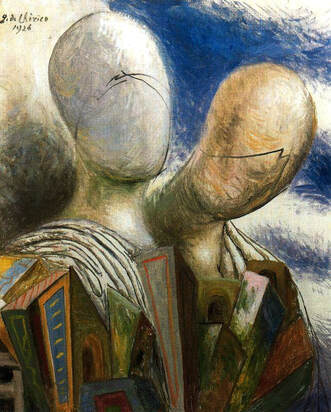
Perception was of utmost importance to certain philosophers, such as George Berkeley and Maurice Merleau-Ponty, and to ingenious artists such as Salvador Dali, Rene Magritte, Henri Rousseau and Georges de Chirico, who not only painted and recorded what they saw, but also frequently incorporated comment on the act of seeing.
Artists of this caliber knew that perception is far from passive. The images of everything we look at are taken into the mind to become part of us. Moreover, these images are changed by perception. They become malleable and sometimes radically different from what they were before encountering a mind. Indeed, as certain philosophers warned, the world’s objects and entities – indeed the world itself – can’t be seen as they really are due to our mind’s ability to not only see reality but to transform it.
In other words what we see is what we see, not what is really there in the world. This implies that an inherent ambiguity exists because of our acts of perception. Our gaze reveals and also conceals what we wish to see. It separates inner and outer worlds, images and substance, subject and object. This has enormous consequences for our personal connection with reality and relationship with Self and World.
The striking fact is that what we encounter and experience isn’t a world but an image. As the German philosopher Immanuel Kant first demonstrated, we are only ever in contact with images, never things in themselves. Additionally, images, being ambivalent, reveal and also conceal what we deign to call “reality.”
What is rarely if ever noticed is that our acts of perception implicitly include acknowledgement of mystery. What seems to be a simple, direct act is anything but. Materialists construe sensual awareness as immediate and uncomplicated, something guaranteeing a concrete material world. Nothing could be more flagrantly absurd and false. What the materialist doesn’t face, is that mystery exists permanently and irrevocably because of our very own senses. To exist is to be enveloped by mystery whether one likes it or not. Artists like William Blake keep this fact very near to their hearts.
Considering the reciprocal relationship between Self and World, it is as if the stuff of the world also leans toward us, yielding to our gaze and mental capacities. Despite the concealed essence and ambivalence of objects, paradoxically they do not resist being altered by mind. Indeed, they become something more than what they once were after undergoing transmutation from perception to conception.
This movement and transmutation is fundamentally important to true Artists, giving rise to what we know as creativity.
When we observe the world, we encounter not only external objects and entities, but the Self perceiving them; a Self which can observe itself. In this sense, perception nucleates duality, bringing the external within, and making the material mental or ideal. English artist, William Blake, believed that this intaking or absorption of the world is made possible by Imagination, without which other mental capacities are relatively blind and ineffectual.
Intellectus in Latin means “perception” – Nicholas Hagger
Perception is the means by which the apparently external “material” world becomes psychic or mental, which means that its externality is nullified to a degree. Perhaps this is why sages like Blake, Berkeley and Merleau-Ponty so highly rated the mysteries of perception. For them our acts of seeing are quite magical.
The eye symbol turns up in prehistoric art, especially in ancient Egypt, where the so-called Eye of Horus had a life of its own, going about having all sorts of experiences. Perhaps the Egyptians were simply trying to figuratively describe the experience of everyone’s eyes that reach out to encounter a world and uncover its meaning. In this sense the eye is the instrument of psychic intentionality, our innate inclination toward reality.
Perhaps the Egyptian artists wanted to stress that the human eye is an object in the world, as are the things it observes. An eye is detached but also in amongst the world of things it beholds. It is at the same time superior to and equal to worldly phenomena.
The human eye is a portal or gateway where Self and World meet. High art is chiefly a discourse on this encounter.
So in one sense reality leans toward us, yielding to our gaze and Will to Meaning. This is why Rand explicitly deals with the differences between low and high art. Her point is that the world has no inherent meaning or value beyond what a mind attributes to it. Weak, lazy, uninspired types project no meaning upon the world, preferring to live as uncreative consumer-types utterly disinterested in the numinous encounter between Self and World and all it implies. If creativity appears at all, it’s usually that of other people, there to merely decorate one’s inauthentic and largely vacuous life.
Laziness factors in for Rand at the level of conception. In the dynamic, perception is relatively passive. But at the stage when a mind processes and arranges the world’s incoming content, libido is definitely involved. The lazy, indifferent mind is disinclined to organize or structure sense data, or to assign meaning to it. Whatever significance is assigned to things and thoughts is that of a mundane nature. It’s merely pragmatic and utilitarian.
Nathaniel Branden was an American psychologist and philosopher. As Ayn Rand’s closest colleague, his many fine books extrapolate on her ideas, particularly on the connections between perception, conception, reason and values.
Rand’s successor, Nathaniel Branden, continued to unpack her ideas on the anatomy of consciousness. He too emphasizes how lazy, uncreative types fail to assign value to their lives, experiences and concepts. In effect, their concepts stand like a flimsy house of cards. Refusing to waste energy organizing sense data, they are incapable of awakening meaning from within.
Their unstructured, shrunken concepts and ideas in turn disaffect perception, thereby causing epistemological impoverishment. Branden states that for this type, self-concept and world-concept are emaciated and irrational. Instead of being infused with meaning, purpose and value, the lazy mind is satisfied to remain passive, chaotic and uncreative. Such a type’s psycho-epistemology is malignant and deranged. Indeed, their thinking works to contradict and cancel itself, because if one does not value themselves – and the life they’ve been given – they can hardly value anything or anyone else, except on a primitive superficial level.
Very often this type, in order to compensate for their existential malaise, turns to religion, hoping to camouflage their greyness behind a facade of intelligence and purpose.
According to Rand and Branden, such a type lacks true individuality and independence. Consequently they are bound to value the voice of the masses and depend upon the will of the necrophilous Crowd. Any direction or inspiration received and felt comes from external sources. Meaning is never generated from within.
What does the lack of individuality mean for one’s perception of reality? Can reality even be perceived through the haze of the Many?
What Branden refers to by the term “psycho-epistemology” is our ability to value our minds and ability to think. Every human being has the capacity to think, but not everyone puts in the work to think sanely, efficiently and reverently. Far from it.
For Rand the main problems are our negation of reality and penchant for reality-distortion, the latter being endorsed by the Collective. She highlights our inability to attend to nature and attune our minds to it correctly, a problem made more difficult by our incarceration in sterile urban environments. In fact, some thinkers believe we purposely build towns and cities in order to perpetuate mental docility. We shut nature out with our plate glass, concrete and steel, because to encounter nature demands mental and physical energy. It demands we attend to nature and ignore the Collective. It demands we sensitively come up against the numinous mysteries of nature, which in turn opens up new levels of Self-understanding. This is because any and every encounter with nature (Umwelt) is simultaneously an encounter with Self, and vice versa. One is the mirror of the other.
Rand’s Artist finds the energy to attune himself with nature. He is never wholly unaware of his awareness, becoming an artist to enhance his dialogue with nature, that he might benefit from nature’s subtle instruction.
High art exists as the means by which concepts reemerge in the world as ideas and percepts to be re-contemplated by mind. Rather than remaining as concepts in one’s head, they appear before us to be reviewed, revisioned and reabsorbed. In this sense the conceptual mind is self-reflexive. According to Rand, this process is the necessary foundation of healthy societies and explains why we experience two worlds: the inner and outer. Neither is illusory. They exist as epiphenomena of the flow of images between outer and inner worlds.
The man who values his capacity to think and reason attends to the world of nature, fully aware of the dire consequences for not doing so. He knows that to avoid doing so lowers the quality of his life. It’s a sacrifice he’s not willing to make just to win society’s approval or a fleeting sense of security.
For Rand and Branden the artist is any person who wishes on some level to explicitly celebrate their attunement with nature and enhanced awareness of reality. Their creative ideas and productions display sophisticated thinking, feeling, understanding and wonder, thereby inspiring and directing onlookers and admirers. This is why great art captivates us, encapsulating and narrating the vast process by which perceptions become conceptions. This is why it awakens a sense of wonder and deep feeling.
Creativity is the power to connect the seemingly unconnected
– William Plomer
The Self is the Artist, and the Artist is the Self.
The two terms are synonymous.
We normally enjoy art because it embodies and expresses our underlying understanding of intentionality or natural inclination toward reality. We enjoy gazing at great paintings not only for what they objectively contain, but for what they perpetually bring forth from within us. By way of art we learn about ourselves. We also learn that Self-discovery is a process without end.
The deeper we delve into the mysteries of material nature, the more we become aware of the inadequacy of objective, physical principles and processes to explain the organic unity of individual consciousness and human experience – Gary Jacobs (Intelligence of the Cosmos)
This is what makes art and artistry fascinating. Again, we’re talking about the mysteries of perception and the basal metaphysical Template of Wholeness by which context and meaning are generated.
The mental organization of sense data (or images) is a complex and vast process. It is the process by which we get a world in our head, so to speak. Because it occurs naturally, we give it little attention. However, at times during the omnidirectional process, conceptions are disgorged, as it were, becoming the ideas appearing in our artwork. It is as if we return to the world that which we took from it in the form of perceptions. In this sense it cannot be denied that mind effects matter to a great extent. The world around us is shaped by human concepts which, in the form of ideas, return from whence they came, changing the world we see. Nothing remains static, not the person, not his world.
As far as Merleau-Ponty was concerned, this reciprocal exchange between Self and World is to be understood as an empathic relationship, similar to that existing between individuals. We not only lean toward world by way of innate intentionality, but we bring world within our being, giving it dimensions it perhaps does not possess in itself.
He understood that for all we take from the world by way of voracious perceptions, we give back in the form of rich conceptions. Indeed, after all is said and done, might it not be the cosmos that thinks and imagines through us? As Nietzsche questioned, do we really control our thoughts and know where they come from?
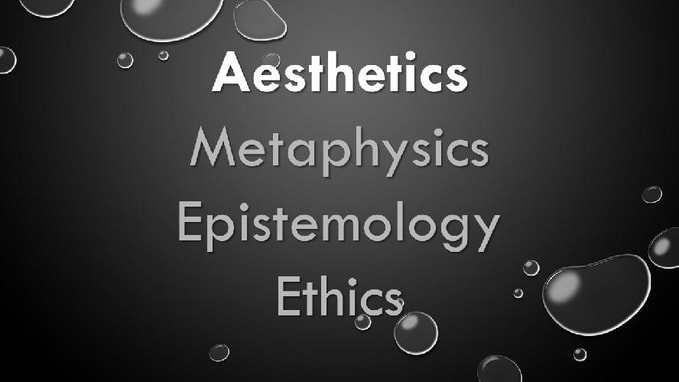
Since we are speaking primarily of images and their interaction, it follows that we must position the philosophy of Aesthetics above Metaphysics, Epistemology, Ethics and Politics. Rand’s Romantic Manifesto stands as an excellent guide for this radical reconstitution of philosophical paradigms. She succinctly argues that high art is nothing less than the sign of a person’s sanity, demonstrating their vivid acknowledgement of the world around them, as transformed by conception (or Imagination).
The eye and other senses are the physical means by which we express intentionality and Will to Meaning. However, once our psychic exchange shrinks and ceases, we end up inhabiting an ugly sterile world suitable only for creative mediocrities.
To reduce man’s consciousness to the level of sensations, with no capacity to integrate them, is the intention behind the reducing of language to grunts, of literature to “moods,” of painting to smears, of sculpture to slabs, of music to noise – Ayn Rand
.
The tree which moves some to tears of joy is in the eyes of others only a green thing that stands in the way. Some see in nature all ridicule and deformity…and some scarce see nature at all. But to the eyes of the man of imagination, nature is imagination itself – William Blake
Although she does not refer to him, I believe William Blake would have agreed with Ayn Rand’s philosophy on many points. Instead of speaking about “conception,” he preferred the word “Imagination.” Essentially, however, he meant the process spoken about here, by which perception becomes conception and vice versa.
He also included the undergirding Template of Wholeness without which no order can be imposed on or by mind. This underlying template is not consciously or wilfully foisted on sense data. It’s an innate category existing far below conscious awareness. For Blake, it is as if external sensual objects have a intrinsic relationship with this mental template.
As stated earlier, worldly objects do not physically enter our heads. Rather, their images are introjected. Hence Blake’s exaltation of Imagination. Whatever a mind does to these images is therefore undeniably an Aesthetic act. And for a mind to influence and transform an image means that mind itself is imagistic. This was axiomatic for Blake, Rilke, Magritte, Marcel, Croce, Gibran and other thinkers who knew that when we say idea we really mean image.
Whatever structure is imposed by mind upon an image isn’t necessarily foreign and antithetical to it. For Blake, mind enhances the perceived identity of objects. Identity is, in this sense, revealed. More of an object’s inherent nature is brought into the light, its normally hidden dimensions exposed. It is as if the object finds fuller expression when – by way of a great artist – it is brought into the proximity of the Template of Wholeness.
Blake’s philosophy, in this regard, is close to that of Gabriel Marcel, Benedetto Croce, Merleau-Ponty and Martin Heidegger, each of whom considered art to be of a higher order than philosophy.
When concepts reappear in the world as high art, man gains invaluable insight into his core nature. He gets to see the lineaments of his consciousness, both the positive and negatives. He sees that he is indeed a seeker, and that he innately strives to upgrade his understanding of Self and World. He acknowledges the task before him, and summoning will and Self-esteem he heroically commits to the great journey toward greater revelation and Self-realization. In this way, heroism, Self-esteem and art are deeply connected, the latter serving as a mirror in which man espies his heroic identity. Art is the means by which we extend beyond limits, and by which we return to ourselves again to assess our progress or regress. It is how we realize the two ways of seeing, the inner (conception) and outer (perception), and attend to the dynamic relationship between them. Ultimately, the Artist is one who upgrades his Aesthetic Sensibility and sense of the Sublime. Throughout my work I stress the importance of upgrading Aesthetic Intelligence by which our being becomes increasingly transparent to us. (Here for more…)
Heidegger was careful to distinguish Aesthetics from artistry that is little more than mere decoration. To understand why Aesthetics must supersede other philosophical paradigms is to radically revision human consciousness along non-materialistic lines. Our conventional notions of identity, perception, vision and perspective must undergo transmutation. It’s an impossible task, however, unless one becomes an Artist to thereby work closely with images and be instructed and led by them.
In a similar sense as Rand, Blake explains that we get up close to the world not by intellect or reason alone but by Imagination. He used this word to include our natural tendency for intentionality, our reaching toward the world and its yielding to our gaze.
There was no doubt in Blake’s mind that what is experienced of a world is determined by ideas or images. Unlike conventional Rationalists he did not acknowledge that mind is separate from the world. He knew that what we know of “the world” is based on its image in our heads. It can never be any other way.
This is not to say that the world has no inherent substance and meaning. However, whatever meaning we find in the world is ultimately a matter of inference, and the world giving back what we mentally extend to it. In this regard Blake is consistent with Rand who stressed that without a healthy psycho-epistemology there can only be chaos and vacuity.
Each and every moment, our experience of the world is made possible by the activity of Imagination, which not only attributes meaning to our experience of persons and things, but personalizes their influence upon us. What we experience is always our experience. Otherwise one person’s experience would be a matter of dry mechanical mental processes. One’s reality, and image/idea of the world, would be practically identical to another’s, and freedom would cease being the essential nucleus of consciousness.
Each person’s experience of the world is different from others because beneath the Template of Wholeness lies freedom. Without freedom at the base of consciousness, identity and being, man would not be able to produce artwork of any significance. This is because a person’s creations express something about their core nature. Art without uniqueness has little to no meaning, being merely functionally decorative. As stated earlier, art exists as the means by which we express in images who we are as Selves, and also as the means by which we continually experience new revelations about Self and World. Ideally, the process is without end.
For Blake, Imagination matters because it not only draws forth the hidden essences of things, but also of the Self. After all, our experience of any other thing impacts the Self as experiencer. In each and every encounter with the external world we inevitably experience an act of Self-positing, albeit in the background of awareness. In any case, as Selves we are always involved in every thought, deed and relationship. Where the other is, so the Self must also be. It’s astonishing how little contemplation this fact receives from millions of truly selfless people.
Blake’s Imagination is therefore identical with the Template of Wholeness by which images of things and Selves blend, commune, self-reveal, morph and sublate. The process of revelation is highly enigmatic, however, since what is also revealed to a Self is Self’s eternal mysteriousness.
After all, what we refer to as Self is really an image and matter of art. Moreover, our image of Self is not static. It changes constantly as it encounters the world of which it is a part. Suggestively, the physical body also stands like any other object in time and space, like a table, tree or mountain. However, there is no denying that essentially it too is an image introjected by way of perception, enveloped and transmuted by way of conception. Crucially, we see that the perceiving Self transcends the subject-object polarity, being at the same time both perceiver and perceived.
Conception is inner seeing, without which there can be neither Self nor meaning. Who is the Hidden Observer behind the Self?
The whole business of man is Art and all things common – William Blake
In different ways Blake and Heidegger emphasize that when it comes to the Self there are definite limits to knowledge. Paradoxically, we know about the Self by way of the Self. But the Self’s extent cannot be wholly circumscribed, even by itself. What we know of Self always stands alongside what we do not and cannot know about it. Simply put, Self is a mystery to Self, and as Blake knew all too well, Imagination is the primary means by which a Self seeks to unveil the mystery of itself. All other mental capacities – intellect, logic, reason, intuition, memory, emotion, etc – being servants in Imagination’s cause, with little value in and of themselves.
In other words, as far as Blake, Rilke, Marcel, Merleau-Ponty and Heidegger were concerned, perception and conception (or Imagination) are instrumental to our encounter with mystery, as it pertains to Self and World. Indeed, without this abyssal aspect of the Self, we’d not be inclined to press up against the world or lean out toward reality, given that in doing so we develop Self-knowledge. Likewise, every concept is bound to include the presence and influence of the world. This empathic relationship and reciprocal exchange – along with process, progress, Self-esteem and mystery – is therefore an absolute when it comes to the Self and its enigmatic relationship with itself.
Consequently, our Being in the World is to be understood as a means to this end, the ongoing encounter with Self and its eternal mystery.
Almost a year after the President Biden administration initiated the process urging the Department of Health and Human Services (HSS) to swiftly evaluate the federal scheduling of marijuana, HHS Secretary Xavier Becerra has affirmed the agency’s recommendation to reclassify cannabis from a Schedule I drug to a lower classification. Although the specific details of the HHS recommendation remain undisclosed, recent Bloomberg News reports indicate that the department advocates moving cannabis to Schedule III within the federal Controlled Substances Act (CSA).
This proposed alteration has garnered praise from certain quarters, particularly within the commercial marijuana industry, as a significant stride forward. Conversely, entities such as NORML have adopted a more measured stance. NORML asserts that there are three key reasons why cannabis ought to be descheduled rather than rescheduled.
First, moving cannabis to a lower schedule under the CSA continues to exaggerate the plant’s purported safety risks in comparison to other controlled drugs, including benzodiazepines (classified as Schedule IV), ketamine and anabolic steroids (presently under Schedule III), or alcohol, which remains unscheduled.
Secondly, moving marijuana to Schedule III deviates from cultural and public consensus. Americans do not wish to equate cannabis with heroin, as it currently stands, but they also oppose its association with Schedule III substances such as ketamine, which can only be legally possessed with a physician’s prescription.
Most crucially, this proposed alteration doesn’t do much to reconcile the growing disparity between federal and state-legal cannabis legislation. If the administration reclassifies cannabis as a Schedule III substance, all state laws currently in conflict with federal-level legislation will persist in their conflict.
Conversely, NORML has consistently advocated for the complete descheduling of cannabis, effectively removing it from the CSA. This approach would empower states, rather than the federal government, to regulate cannabis according to their preferences without violating federal legislation. In a NORML blog post addressing this matter, Paul Armentano, NORML deputy director, expressed his ongoing efforts in promoting NORML’s descheduling initiative to numerous mainstream media channels, including PBS, UPI, the Washington Post and the Associated Press, thereby reaching millions of individuals.
During one of his appearances on CNN, Armentano stated that alcohol and tobacco are conspicuously absent from the CSA, yet they are widely acknowledged to pose significantly greater health hazards than cannabis. He thus argued that cannabis should receive the same treatment when it comes to federal scheduling.
NORML positions itself as a grassroots organization championing freedom and civil liberties while advocating for the interests of responsible cannabis consumers and remaining committed to advancing the case for sensible marijuana policies, including descheduling.
Leading marijuana companies such as Cresco Labs Inc. (CSE: CL) (OTCQX: CRLBF) are likely to follow the events in Washington, D.C., until a final decision on marijuana’s current status under the CSA is announced by the DEA.
About CNW420
CNW420 spotlights the latest developments in the rapidly evolving cannabis industry through the release of two informative articles each business day. Our concise, informative content serves as a gateway for investors interested in the legalized cannabis sector and provides updates on how regulatory developments may impact financial markets. Articles are released each business day at 4:20 a.m. and 4:20 p.m. Eastern – our tribute to the time synonymous with cannabis culture. If marijuana and the burgeoning industry surrounding it are on your radar, CNW420 is for you! Check back daily to stay up-to-date on the latest milestones in the fast -changing world of cannabis.
To receive SMS alerts from CNW, text CANNABIS to 844-397-5787 (U.S. Mobile Phones Only)
Please see full terms of use and disclaimers on the CannabisNewsWire website applicable to all content provided by CNW, wherever published or re-published: https://www.CannabisNewsWire.com/Disclaimer
Michigan lawmakers want the U.S. Congress, the Department of Veteran Affairs (VA) and the Department of Defense (DOD) to make psychedelic research a priority. Policymakers are calling on Congress to prioritize investment in the research of “nontechnology treatment options” such as psychedelics to expand treatment options for psychological trauma in active and retired military service members.
Last week, the Michigan Senate passed a resolution stating that controlled psychedelic clinical trials paired with approaches such as buddy-to-buddy programs, expanded access to service animals and outdoor therapy have “shown promise” as alternative mental-health treatments for veterans. Since House lawmakers advanced the same resolution in June and no gubernatorial action is required, copies of the resolution will be sent to U.S. Senate and House leadership, ranking members and chairs of veteran affairs federal committees and Congressional representatives in Michigan.
Psychedelics are part of the ongoing wave of drug reform that left dozens of states across the United States with either recreational or medical cannabis industries.
Recent advances in psychedelic research have revealed that hallucinogens such as psilocybin (magic mushrooms), LSD, ayahuasca, and DMT may be able to treat debilitating mental disorders including PTSD, treatment-resistant depression and even eating disorders. Their purported effectiveness against especially hard-to-treat mental disorders has put psychedelics at the forefront as the next evolution of mental-health treatments.
As veterans tend to suffer from debilitating conditions such as PTSD and depression due to their wartime experiences and often fail to respond to conventional treatments, lawmakers in states such as Michigan are looking to increase access to alternative treatments, including psychedelics.
From 2001 to 2020, the average number of suicides among U.S. military veterans went up from 81.1 to 212.0 per day. Michigan, which has the 11th largest population of veterans in the country (550,000), reportedly lost 882 veterans to suicide between 2016 and 2020. In June, resolution sponsor Representative Jeniffer Conlin issued a press release stressing the importance of providing veterans with the support they need and deserve.
For decades, American veterans have struggled to access proper care for the physical and mental injuries they sustained during war. Research indicates that 11% to 20% of veterans experience PTSD in a given year and more than one-half of all veterans in the country have not received proper diagnosis or treatment for mental-health issues.
Although Michigan still outlaws psychedelics at the state level, the cities of Detroit, Ferndale, Hazel Park and Ann Arbor have decriminalized entheogenic fungi and plant-based psychedelics, including ayahuasca and psilocybin.
The work being done by enterprises such as Compass Pathways PLC (NASDAQ: CMPS) is undoubtedly helping to spur awareness about the potential of psychedelics, and we are bound to see more advocacy efforts calling for drug-policy reform at the state and national levels.
About PsychedelicNewsWire
PsychedelicNewsWire (“PNW”) is a specialized communications platform with a focus on all aspects of psychedelics and the latest developments and advances in the psychedelics sector. It is one of 60+ brands within the Dynamic Brand Portfolio @ IBN that delivers: (1) access to a vast network of wire solutions via InvestorWire to efficiently and effectively reach a myriad of target markets, demographics and diverse industries; (2) article and editorial syndication to 5,000+ outlets; (3) enhanced press release enhancement to ensure maximum impact; (4) social media distribution via IBN to millions of social media followers; and (5) a full array of tailored corporate communications solutions. With broad reach and a seasoned team of contributing journalists and writers, PNW is uniquely positioned to best serve private and public companies that want to reach a wide audience of investors, influencers, consumers, journalists and the general public. By cutting through the overload of information in today’s market, PNW brings its clients unparalleled recognition and brand awareness. PNW is where breaking news, insightful content and actionable information converge.
To receive SMS alerts from PsychedelicNewsWire, text “Groovy” to 21000 (U.S. Mobile Phones Only)
Please see full terms of use and disclaimers on the PsychedelicNewsWire website applicable to all content provided by PNW, wherever published or re-published: https://www.PsychedelicNewsWire.com/Disclaimer
California lawmakers are working through hundreds of bills before the legislative session ends on Thursday.
If approved, the bills go to Democratic Gov. Gavin Newsom, who will have until Oct. 14 to decide whether to sign them into law, veto them or let them become law without his signature.
The state Legislature almost never overrides a veto from the governor, no matter what political party is in charge.
Advertisement
[See below for cannabis cafes]
Chemicals in food
Lawmakers on Tuesday voted to become the first state to ban four chemicals from processed food and drinks sold in California by 2027.
The chemicals – red dye no. 3, potassium bromate, brominated vegetable oil and propyl paraben – are still used in popular products like Peeps, the popular marshmallow chicks most associated with Easter.
Democratic Assemblymember Jesse Gabriel, the author of the bill, said those chemicals have already been banned by the European Union and other countries because of scientific research linking them to health problems, including cancer.
“It is unacceptable that the U.S. is so far behind the rest of the world when it comes to food safety,” Gabriel said. “This bill will not ban any foods or products – it simply will require food companies to make minor modifications to their recipes.”
An earlier version of the bill would also have banned titanium dioxide, which is used in Skittles. But amendments in the state Senate removed that chemical from the ban.
Disclosing financial risks of climate change
The state Assembly approved a bill requiring companies making more than $500 million annually to disclose what financial risks climate change poses to their businesses and how they plan to address those risks.
State Sen. Henry Stern, a Democrat from Los Angeles who introduced the legislation, said the information would be useful for individuals and lawmakers when making public and private investment decisions. The bill was changed recently to require companies to begin reporting the information in 2026, instead of 2024, and mandate that they report every other year, instead of annually.
The changes would help make it more feasible for businesses to follow through with reporting requirements, said Anne DiGrazia, a spokesperson for Stern.
The bill was among the biggest climate proposals in the state Legislature this year, collecting support from major companies including IKEA and Microsoft, as well as former California Air Resources Board Chair Mary D. Nichols.
Opponents of the bill say it would be too burdensome for companies and is premature. The U.S. Securities and Exchange Commission could approve rules requiring public companies to disclose their direct and indirect emissions, as well as how climate risk affects their business.
The proposed California mandate would apply to more than 10,000 companies, according to Ceres, a policy group supporting it. The vote comes after the state Legislature sent another bill to Newsom that would require companies making more than $1 billion annually to report their direct and indirect greenhouse gas emissions.
Climate change school curriculum
The Senate passed a bill that would require schools to teach students, from first grade through high school, about the causes and effects of climate change. The bill also would mandate lessons on how to mitigate and adapt to the effects of the changing climate.
Proponents of the bill say lessons about climate change are already a part of school curricula in other countries including Italy and New Zealand. Oregon also introduced legislation this year to mandate climate change lessons, but the bill did not advance.
It would still need final approval in the Assembly before ending up on Newsom’s desk.
Cannabis cafes
The Legislature sent a bill to Newsom’s desk that could create more so-called “cannabis cafes,” inspired by establishments in Amsterdam where customers can socialize and purchase cannabis, coffee and other products.
The bill would allow local governments to give licenses to cannabis dispensaries to sell non-cannabis food, beverages and tickets to live music events.
Democratic Assembly member Matt Haney of San Francisco, who introduced the bill, said it would give a boost to small cannabis businesses. He said many people want to be able to socialize and listen to live music while consuming cannabis.
“There’s absolutely no good reason from an economic, health or safety standpoint that the state should make that illegal,” Haney said in a statement.
Agriculture marks the first major technological revolution in human history. [1] With a consistent and reliable supply of food, humans were able to transition from hunters and gatherers to community minded city dwellers. This became the foundation that lead to the written word, the scientific method, and all other technological advancements in human history. There was one problem with this development of having a constant supply of food: how to store the abundance of food so it would last through times of scarcity? For centuries, various civilizations relied on techniques like salting, smoking, or cold weather to preserve their food for extended periods, but in 1834 the first vapor compression refrigeration system was invented. [2] Finally, consistent storage capabilities were possible for large amounts of food. Freezing has even gone a step further into a technique called “deep freezing.” But what is the difference between freezing and deep freezing, and which method is more beneficial?
The Differences Between Freezing from Deep Freezing
While the process may sound similar, there are some key differences that are worth identify before delving into which process is more ideal. Freezing involves slowly cooling the desired product over an extended period of time.[3] This cooling can take anywhere from one to 24 hours before the internal core temperature eventually reaches -18º C. This temperature is the target for both freezing and deep freezing, as it allows for extended storage by limiting the growth of microorganisms. This variation of freezing, by slowly exposing products to the cold, is the way most people are familiar with in their standard kitchen appliance.
Deep-freezing, in contrast, uses a more aggressive approach to reach the same target of -18º C. [4] Instead of extending the cooling period, deep-freezers involves the exposure of the stored material to temperatures ranging from -30º C to -60º C for typically less than an hour. This forces the desired material to reach that frozen core temperature much faster, before it is deposited into long term storage to maintain its frozen stasis. The end result for both procedures is the same. Both minimize microorganism thereby preventing the degradation of food quality. There are some key differences though, and, while subtle, these differences are significant factors in how the final product turns out.
Physical Differences on a Microscopic Level
The similarities between these two procedures are obvious, but the differences become clear when evaluating the frozen products on a molecular level. In both instances, water molecules transition into their crystallized form of ice. When freezing, these ice crystals tend to be bigger, as they can grow more slowly with the extended time to develop. [5] With a deep freeze, the sudden onset of cold forces more crystals to develop simultaneously, making them significantly smaller by comparison. Basically, the total volume of ice is the same, but there is a difference in the quantity and size of the ice crystals. This may not seem significant, but it plays a major role when thawing the frozen products. The larger ice crystals from freezing create undesirable results, especially in material with a lot of water. When items with high water content freeze, the ice crystals tear through the cell walls, breaking down the organic material. An example of this comes from putting leafy vegetables in a household freezer. When the vegetables come out, the freezing reduces their freshness, smell, taste, and nutritional content. The higher water content in these kinds of vegetables makes freezing them an impossibility, as their cellular structures are often destroyed to the point where they are inedible. This explains why deep freezing is the preferred method for keeping vegetables fresh for long periods of time. Say a farmer grows some spinach, and they need it to go from the farm and a grocery store. The smaller ice crystals from the deep freeze ensure that no structural damage occurs in the spinach. This small difference ends up having a profound effect in markets all over the world. The smaller crystallization of moisture allows the plants to be kept for longer periods of time, and still maintain their freshness, texture, and vitamins by the time they are thawed. This ensures food security by allowing the food to be kept longer and by allowing the food to be sourced from further distances.
Which Requires More Energy?
In terms of maintaining quality for the frozen products, it would appear that deep-freezing holds the advantage. Another aspect to consider when evaluating which method is superior is energy consumption. It would seem that deep-freezers probably require more energy to operate, considering it takes more power to reach the colder temperatures. In fact, the opposite is true. A normal freezer consumes an average of 41.69 W of electricity per day, compared to a deep-freezer’s average of 24.91 W per day. That equates to 40.24% less electricity for deep-freezing. [5] There are two reasons for this. Though it takes a lot of energy to cool a deep freezer, that energy is used for a significantly shorter period of time. Once the frozen products reach their desired core temperature of -18º C, they can be moved to long term storage, where they can remain indefinitely until they need to be thawed. The long term storage requires less energy than the initial freezing, meaning the higher energy usage is not consistently being employed. The spikes and troughs from deep freezing leads to a lower overall average consumption over extended periods. The second reason deep freezers typically use less energy than freezers has to do with how often they are accessed. Household freezers also experience spikes in energy as well, but it comes from customers opening them more regularly. Most people open their freezers less than frequently than their refrigerators, but every time a freezer is opened, some cold air escapes. This causes the system to overwork to make up the difference lost, thereby maintaining those freezing temperatures. This produces smaller energy spikes, but they come at more regular intervals. So while the differences between the peaks and valleys are smaller, the wavelengths are shorter.
Way to Improve Freezing Techniques
It’s logical that deep freezing is more advantageous over freezing. If freezing were perfect in the first place there would have been no need to push the technology to improve results. Even now, new techniques are being developed to further optimize deep freezing. [7] Deep freezing may be superior in most ways, but freezing does have one advantage itself: it is a less complicated system to set up and use. Deep freezers require higher technical specifications, and if their standards aren’t met then the products can spoil. [8] This is why standard freezers are more common. Due to this complexity, deep freezing is typically better suited to large institutions, whereas freezing tends to serve individuals better. This being the case, there are a few things individuals can do to minimize the downsides of freezing. In terms of damages coming from larger ice crystals, it is possible to reduce the moisture of the items being frozen prior to putting them in the freezer. Depending on the product, this may take the form of dehydration or may be more reasonable to use vacuum sealing. For something like meat or fish, sealing moisture out of containers tends to be sufficient. For various fruits and vegetables, dehydration may be preferred, but this is not feasible for all organic products. Another way to prevent increased freezer damage is to keep an item frozen until it is ready to be thawed. Continually thawing and refreezing items means that the water molecules will grow and expand in new directions, creating more molecular damage than with a single freeze. Some experts advocate rotating items within a freezer to prevent freezer burn, but doing so may increase energy consumption. Instead, it is better to avoid opening the freezer until it is time to thaw the desired items. The more often the door is opened, the more often freezers lose their cold air and have to increase their outputs. These are not perfect solutions, and they do not necessarily raise freezing to the level of deep freezing, but they may produce positive results.
References:
Maisels, Charles Keith. The emergence of civilization: from hunting and gathering to agriculture, cities, and the state in the Near East. Psychology Press, 1993.
Ding, Guo-liang. “Recent developments in simulation techniques for vapour-compression refrigeration systems.” International journal of refrigeration 30.7 (2007): 1119-1133.
Assegehegn, Getachew, et al. “The importance of understanding the freezing step and its impact on freeze-drying process performance.” Journal of pharmaceutical sciences 108.4 (2019): 1378-1395.
Lee, SangYoon, et al. “Deep freezing to maintain the freshness of pork loin during long-term storage.” Food Science and Biotechnology 30.5 (2021): 701-710.
Tan, Mingtang, Jun Mei, and Jing Xie. “The formation and control of ice crystal and its impact on the quality of frozen aquatic products: A review.” Crystals 11.1 (2021): 68.
Le Pierrès, Nolwenn, Driss Stitou, and Nathalie Mazet. “New deep-freezing process using renewable low-grade heat: From the conceptual design to experimental results.” Energy 32.4 (2007): 600-608.
National Cold Chain Management Information System. (2015, July 21). Technical Specifications – Deep Freezer (Large). nccmis.org. Retrieved August 14, 2023, from https://nccvmtc.org/pdf1/spec.deep%20freezer(L).pdf
(CNW) Long Beach, Calif. and Toronto — Glass House Brands Inc., one of the fastest-growing, vertically-integrated cannabis companies in the U.S., announced that its co-founder, chairman and chief executive officer, Kyle Kazan, co-founder, president and board director, Graham Farrar, and chief financial officer, Mark Vendetti will participate in the ATB Capital Markets 2023 Life Sciences Institutional Investor Conference to be held September 20, 2023 in New York, NY.
Kazan will participate in a panel discussion: “Thriving in Difficult Markets: Lessons from California and New York,” on Wednesday, September 20, 2023 at 9:30am ET. Management will be available to meet with investors at the conference. To schedule a meeting, please contact your ATB representative or email KCSA strategic communications at GlassHouse@kcsa.com.

























Recent Comments