
by Grow Up Conference | Nov 10, 2023 | Cannabis News Wire, Media Partners
Home values in states with legal cannabis markets have grown at significantly faster rates over the past decade compared to prohibitionist states. According to a Leafly and Real Estate Witch study, homes in cannabis states are 41% higher in value than homes in states without legal cannabis markets.
The paper looked at the potential impact of recreational or medical cannabis markets on average American home prices from 2014–2023.
Although states such as California began legalizing medical cannabis more than a decade ago, the past decade has seen a multitude of states legalize the controversial plant. With dozens of states now allowing medical and recreational cannabis, tens of millions of Americans now have access to either medical or adult-use marijuana.
However, several states still outlaw both recreational and medical cannabis, meaning there are plenty of Americans who are still criminalized for cannabis possession and use.
Cannabis remains the most used drug in the country, even in states that still criminalize it, and it seems the drug may now be affecting real estate values across the country. The analysis revealed that average home prices in states with recreational cannabis markets increased by $185,075 since 2014 compared to $136,092 in states without adult-use markets.
As a result, average home prices in recreational cannabis states hit $417,625 by the end of the study period while average home prices in nonrecreational marijuana states were 41% lower at $295,338. States with medical marijuana markets also registered faster home value growth compared to states without medical cannabis reform, growing by an average of $166,609 since 2014 compared to $137,320 in prohibitionist states.
According to the report, it isn’t surprising that states that embraced cannabis reform are registering significant increases in home values because real estate always appreciates over time. However, the gap between states with cannabis markets and prohibitionist states “sticks out like a green thumb,” the report noted.
There was even evidence of cannabis reform affecting home values at local levels with cities that had licensed cannabis retailers seeing an average home price increase of $168,292 since 2014. In comparison, cities without cannabis dispensaries saw an increase of only $100,933 in the same period, indicating that cannabis legalization may have some effect on property values.
Leafly vice president of brand and communication Josh deBerge said the report is evidence of what many cannabis community insiders have known for a long time: cannabis reform does not diminish property values. Rather, licensing cannabis firms such as Curaleaf Holdings Inc. (CSE: CURA) (OTCQX: CURLF) boosts demand for residential and commercial property.
About CNW420
CNW420 spotlights the latest developments in the rapidly evolving cannabis industry through the release of two informative articles each business day. Our concise, informative content serves as a gateway for investors interested in the legalized cannabis sector and provides updates on how regulatory developments may impact financial markets. Articles are released each business day at 4:20 a.m. and 4:20 p.m. Eastern – our tribute to the time synonymous with cannabis culture. If marijuana and the burgeoning industry surrounding it are on your radar, CNW420 is for you! Check back daily to stay up-to-date on the latest milestones in the fast -changing world of cannabis.
To receive SMS alerts from CNW, text CANNABIS to 888-902-4192 (U.S. Mobile Phones Only)
For more information, please visit https://www.CannabisNewsWire.com
Please see full terms of use and disclaimers on the CannabisNewsWire website applicable to all content provided by CNW, wherever published or re-published: https://www.CannabisNewsWire.com/Disclaimer
CannabisNewsWire
Denver, CO
www.CannabisNewsWire.com
303.498.7722 Office
Editor@CannabisNewsWire.com
CannabisNewsWire is powered by IBN
by Grow Up Conference | Nov 10, 2023 | Media Partners, Stratcann
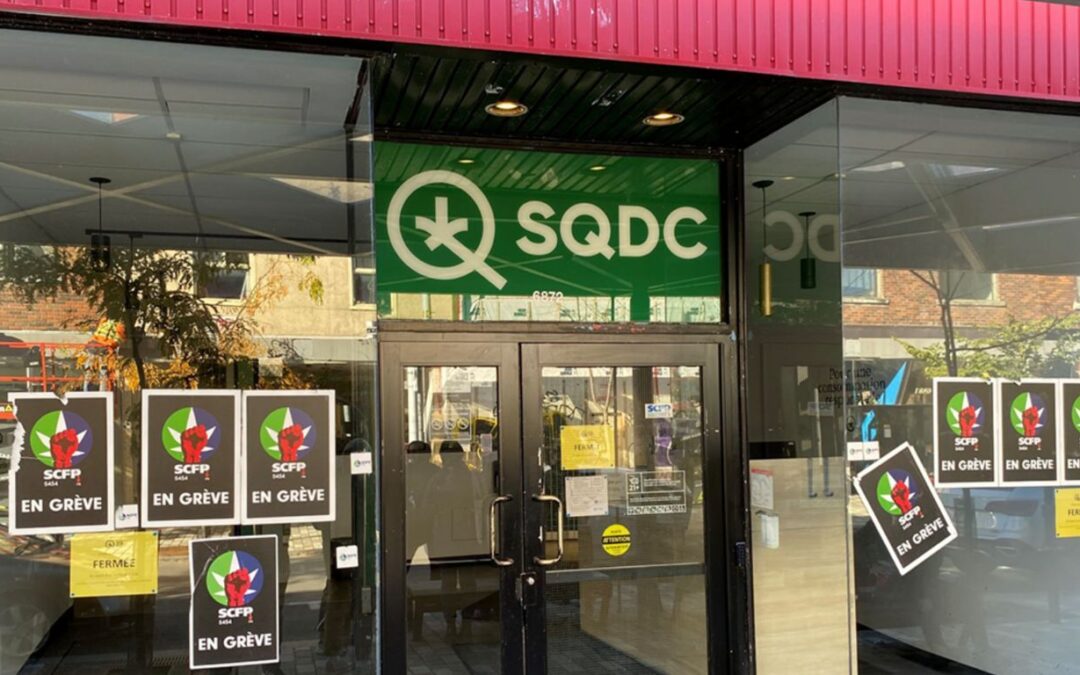
A strike that has been affecting 24 SQDC cannabis retail outlets across Quebec could be ending soon, says the union behind the action.
On November 7, both parties received a recommendation from a mediator, which both accepted. The union will now present it to the approximately 230 members of CUPE 5454 to renew their collective agreement in a vote at a special meeting on November 12. It will be recommending acceptance of the decision.
CUPE 5454 (The Canadian Union of Public Employees) is one of the unions representing employees of some province-run SQDC cannabis stores. The union called a general strike in May of this year in response to the suspension of the president and vice-president of the union, along with 75 employees.
The union has been calling for better working conditions and wages for their 300 members currently employed in two dozen SQDC branches. The SQDC has said that they hope to reach a negotiated agreement to the satisfaction of all parties involved.
“We managed to put an end to this crisis, which will finally enable the workers we represent to be paid wages befitting a Crown Corporation. They will have the last word, but our bargaining committee believes that this recommendation deserves acceptance,” commented CUPE representative Daniel Morin.
SQDC has not yet released a comment on the topic. In an update posted on October 29, the provincial agency listed several striking locations that were expected to occasionally close over “the next few weeks.”
Earlier this year, a Superior Court of Quebec issued an injunction to limit union “pressure tactics” against SQDC.

by Grow Up Conference | Nov 9, 2023 | Grow Opportunity, Media Partners
Edmonton — Aurora Cannabis Inc. says it earned $256,000 in the second quarter, up from a loss a year earlier of $45.5 million.
The Edmonton-based cannabis company says net revenue for the quarter was $63.4 million, up from $48.6 million during the same quarter a year earlier.
The company attributed the increase to growth in its global medical cannabis business and quarterly revenue in its plant propagation business.
CEO Miguel Martin says it was the company’s strongest fiscal year to date.
He says Aurora is experiencing the benefits of diversification across its cannabis and non-cannabis platforms.
The company’s net revenue from medical cannabis rose 42 per cent from a year earlier, while revenues from consumer cannabis were slightly lower.

by Grow Up Conference | Nov 9, 2023 | Media Partners, Stratcann
Aurora Cannabis is seeing an increase in sales of cannabis for medical purposes, buoyed by export markets, as well as a decline in sales in the non medical market.
The Canadian cannabis producer released its financial and operational results for the second quarter of fiscal year 2024 ending September 30, 2023.
Total net revenue was $63.4 million in Q2 2023, compared to $48.6 million in the same period in 2022. As in the previous quarter, Aurora attributes their increase from the prior period to growth in our global medical cannabis business and quarterly revenue in their plant propagation business, Bevo.
The company sold nearly 13.6 million kilograms of cannabis at a cost of $4.75 per 2 grams of cannabis. This is a decrease in the sale price from the same quarter in 2022 at $5.21 for two grams of cannabis.
Medical cannabis net revenue was $43.8 million in the most recent quarter, a 42% increase from the prior year quarter, delivering 69% of Aurora’s Q2 2024 consolidated net revenue and 85% of Adjusted gross profit before fair value adjustments.
The company accrued $6.5 million in excise taxes from cannabis sales (2.3 million in medical sale and $4.2 in non medical sales. The company also wrote off $4.6 million in inventory and biological assets fair value and impairment adjustments, compared to a gain of $25.6 million in the same quarter in 2022 and a write-down of $3.3 million in the previous quarter.
Aurora says this increase in net revenue of $12.8 million was mostly due to growth in its European business, which benefited from the introduction of new proprietary high potency cultivars, and higher volumes sold to Australia.
However, Aurora’s consumer cannabis net revenue for Q2 2023 was $12 million, down from $13.7 million in the prior year quarter. This decline in revenue is attributed to Aurora’s previously announced exit from the US CBD market and destruction of Reliva CBD inventory resulting from the Company’s decision to wind down its Reliva operations, as well as a “refocus” on premium categories.
Aurora’s recent shift of one of its greenhouses in Alberta to a cut (non-cannabis) flower facility contributed $7.2 million of net revenue, about half of what non medical cannabis sales brought in.
Net income from continuing operations for the three months ended September 30, 2023 was $300,000 compared to a net loss of $45.5 million for the same period in 2022. Aurora attributes the decrease in net loss of $45.7 million from the comparative prior year quarter to an increase in gross profit of $33.5 million, an increase in other income of $19.1 million, and a decrease in G&A expense of $6.1 million.
Related Articles
by Grow Up Conference | Nov 9, 2023 | Cannabis News Wire, Media Partners
Despite differing opinions among ardent supporters, cannabis legalization in Ohio could entail certain drawbacks. Nonetheless, an economic analysis published last week suggests that the advantages would surpass these drawbacks by a yearly sum of $250 million. Issue 2, a proposal to legalize recreational cannabis in Ohio, is set for the upcoming election on Tuesday.
A study conducted by Scioto Analysis sought to assess the potential benefits and drawbacks of such a step in a state where medical cannabis is already legal. To conduct the analysis, the research group drew on findings from states such as Colorado and Washington, where recreational cannabis has been legal for some time. To understand how the advantages and disadvantages identified in those states might apply to Ohio, the researchers used demographic and economic data, as well as crime statistics.
The most significant advantage they identified relates to the additional revenue that Issue 2’s passage would generate, thanks to its 10% excise tax in addition to Ohio’s regular sales tax. However, the report clarifies that the benefit doesn’t solely stem from the anticipated yearly tax revenue of $190 million but rather from how a substantial portion of these funds would be utilized.
According to the report, benefits are realized when services and goods procured by governments yield positive spillover effects. The researchers pinpointed positive spillovers from the 25% and 36% of Issue 2’s revenue allocated to the Substance Abuse Addiction and Marijuana Social Equity and Jobs Funds, respectively. Drawing from analyses of similar funds in other states, the group estimated that the Ohio equity and jobs fund would generate $5.76 in benefits for every dollar spent, and the substance abuse fund would yield $9.19. The report suggests that directing revenue to these two funds could potentially create $820 million worth of benefits for Ohioans annually.
Additionally, the new industry would directly create jobs. The report projects approximately $190 million in wage benefits during the first year of legalization for workers across the state, encompassing both full-time and part-time positions.
Recreational marijuana users would also enjoy benefits, as Issue 2 would reduce the annual marijuana expenditure of this group by $98 million compared to what they would pay otherwise. Furthermore, the legalization of recreational marijuana would likely lead to a reduction in arrests.
When it comes to the cons, one significant drawback is the decrease in worker productivity observed in states where legalization has already occurred. Citing a study from 2017, the report suggests that average productivity per worker dipped by just over 1% in certain industries in states that legalized recreational cannabis. Monetarily, this translates to roughly $900 of lost productivity per worker in Ohio. The report utilized federal employment data to estimate that legalization could cost Ohio workers approximately $760 million in lost productivity in the first year alone.
Moreover, concerns about public safety emerge with the possibility of more intoxicated drivers on the roads, leading to increased accidents causing injuries, property damage and even fatalities. The report estimates an additional 1,700 intoxicated-driving arrests annually in Ohio, with an associated cost of $130 million.
Considering these positives and negatives, the study suggests that if Issue 2 is passed, Ohioans could potentially gain annual benefits of $260 million.
This analysis of the forecast benefits of ending marijuana prohibition in Ohio goes to show what an impact companies such as Cresco Labs Inc. (CSE: CL) (OTCQX: CRLBF) might have once a legal cannabis market is launched and entrepreneurs are allowed to address the needs of customers.
About CNW420
CNW420 spotlights the latest developments in the rapidly evolving cannabis industry through the release of two informative articles each business day. Our concise, informative content serves as a gateway for investors interested in the legalized cannabis sector and provides updates on how regulatory developments may impact financial markets. Articles are released each business day at 4:20 a.m. and 4:20 p.m. Eastern – our tribute to the time synonymous with cannabis culture. If marijuana and the burgeoning industry surrounding it are on your radar, CNW420 is for you! Check back daily to stay up-to-date on the latest milestones in the fast -changing world of cannabis.
To receive SMS alerts from CNW, text CANNABIS to 888-902-4192 (U.S. Mobile Phones Only)
For more information, please visit https://www.CannabisNewsWire.com
Please see full terms of use and disclaimers on the CannabisNewsWire website applicable to all content provided by CNW, wherever published or re-published: https://www.CannabisNewsWire.com/Disclaimer
CannabisNewsWire
Denver, CO
www.CannabisNewsWire.com
303.498.7722 Office
Editor@CannabisNewsWire.com
CannabisNewsWire is powered by IBN
by Grow Up Conference | Nov 9, 2023 | Media Partners, Stratcann
Health Canada’s 2022–2023 Departmental Results Report shows the cannabis industry in Canada continuing to evolve and expand.
In the past year, the federal health regulator granted an additional 179 licences for the cultivation, processing, and sale of cannabis for medical purposes, 125 licences for research, analytical testing, and/or cannabis drug, and 120 for industrial hemp. The agency also granted 1,805 import and export permits, primarily for export.
The number of Canadians utilizing the legal market has also increased, with the proportion of household spending on cannabis in the legal market growing from 9% in Q3 2018 to 71% in Q4 of 2022.
Health Canada also continues to oversee the country’s medical cannabis framework. In April 2022, Health Canada published the Guidance on Personal Production of Cannabis for Medical Purposes, based on stakeholder feedback, outlining factors that Health Canada may use when considering whether to refuse or revoke a registration for personal or designated production of cannabis for medical purposes.
In addition, Health Canada has been seeking additional evidence from healthcare practitioners to substantiate or support authorizations for high daily amounts of cannabis and communicated concerning trends to the appropriate healthcare practitioner, often the Provincial College of Physicians.
Health Canada has been increasingly using its authority to refuse a request for authorization for medical cannabis if it was not supported by evidence, and could be considered to represent a risk to public health and safety, especially if it is believed the cannabis was being diverted to an illicit market or activity.
Health Canada also made amendments to the Cannabis Act and its Regulations that came into force in December 2022 that sought to better facilitate cannabis testing by improving access to testing materials and broadening the educational qualifications for those responsible for testing cannabis at licensed sites, as well as increase the public possession limit for cannabis beverages to better align with other cannabis products.
Related Articles
In March 2023, Health Canada published a Notice of Intent in the Canada Gazette, Part I, seeking feedback on potential amendments to the Cannabis Regulations. The agency’s goal with these potential amendments is to streamline and clarify existing requirements; eliminate duplicative requirements; and reduce burdens where possible.
A public opinion research report that gathered information on the views and practices of patients and healthcare practitioners on access to cannabis for medical purposes was published in October 2022.
In that report, Health Canada screened 91 instances of adverse reactions associated with cannabis products (24% required hospitalization and 4% were reported as life-threatening). The Department also published two annual reports highlighting adverse reactions involving cannabis products (October 17, 2018 – December 31, 2019 and January 1, 2020 – December 31, 2020).
In the past fiscal year, Health Canada also continued to conduct scientific assessments to characterize any possible risks associated with certain formulations or ingredients in cannabis products and responded to over 250 risk-related requests.
In collaboration with research partners, the Department also published three peer-reviewed research reports:one of these issues was related to the pharmacological differences between different intoxicating cannabinoids;one on the characterization of by-products of components of cannabis vaping emissions; andone on the characterization of metal contaminants in cannabis vaping liquids.
Health Canada says it also continued to deliver public education and awareness campaigns in 2022-23. The Department updated and relaunched its Pursue Your Passion marketing campaign as both a virtual, ambassador-led program in schools and a teacher-led interactive lesson focussed on educating youth aged 13-15 on the physical and mental health effects of cannabis use. In March 2023, over 120 of these “ambassador-led sessions” were hosted in schools across Canada.
In May 2022, Health Canada also launched its s Reduce your risk: Choose legal cannabis campaign—a social media outreach campaign designed to provide Canadians with information on the risks of illicit cannabis products and how to recognize the differences between legal and illegal cannabis products. The campaign utilized web content, infographics, video, and various social media content.
Lastly, the Department also published two other resources to the Cannabis Resource Series—a set of public education resources built to provide Canadians with additional health and safety information related to cannabis: Growing cannabis at home safely and d Cannabis accessories for inhalation: minimizing your risk when smoking, vaping and dabbing.
Health Canada also invested over $9.6 million in contribution agreements In 2022-23 through its Substance Use and Addictions Program (SUAP) to support 24 projects related to the use of cannabis and its health effects, with a focus on youth and Indigenous populations. The majority of these projects were completed in 2022-23.
The federal health agency also led the development of multiple marketing campaigns on cannabis to raise awareness of the risks of cannabis and help prevent cannabis-related harms, especially to children.
Health Canada’s Indigenous Navigator Service, which supports Indigenous-affiliated applicants through the federal commercial cannabis licensing process to encourage Indigenous participation in the industry, supported an additional 13 licences for cultivating or processing cannabis to Indigenous-owned or affiliated applicants in 2022-23. This brings the total of licensed Indigenous businesses in Canada to 56. In addition, six licences were awarded in 2022-23 to Indigenous-owned or affiliated applicants to cultivate or process industrial hemp, for a total of 27.
Featured image via Organnicraft
Related Articles

by Grow Up Conference | Nov 9, 2023 | Media Partners, Psychedelic News Wire
Psychedelic-assisted therapy has the potential to revolutionize mental-health treatments over the next couple of decades. This is an entirely new mode of treatment that involves putting patients under the influence of various hallucinogens to trigger psychedelic experiences, followed by talk therapy. A recent study has found that the combination of psychedelics and psychotherapy can induce rapid changes in the brain, potentially resulting in the treatment’s high efficacy.
As psychedelic research is still a relatively new field, scientists are constantly studying hallucinogens such as psilocybin (magic mushrooms), LSD and ayahuasca to try and understand how they deliver their benefits at a biological and molecular level. Research has found that psychedelic-assisted therapy can be incredibly effective against a myriad of mental-health disorders, offering long-term benefits at relatively low doses and with barely any side effects.
The recent study found that the combination of psychedelics and psychotherapy can induce rapid changes in the brain, potentially resulting in the treatment’s high efficacy. Human brains have an ability called neuroplasticity that allows them to change in response to intrinsic and extrinsic stimuli, albeit slowly and over a long time. Learning new skills, such as foreign languages or sports, as well as recovering from a stroke, are all activities that trigger the brain’s inherent changing ability.
Neuroplasticity can also be instrumental in helping people with crippling mental disorders, including post-traumatic stress disorder (PTSD), substance use disorders and treatment-resistant depression, overcome their issues. While such positive neural changes will take some time, beneficial neural changes can occur quite rapidly thanks to near-death experiences, spiritual awakening or intense feelings of awe experienced in nature.
Such events are referred to as pivotal mental states or psychologically transformative experiences, and they are presumed to trigger quick “rewiring” in the brain. Scientists have now discovered that psychedelic-assisted therapy may also trigger similar rapid neural changes. In some cases, patients have reported going through profound and transformative experiences after just a single six-hour session with psilocybin, the main hallucinogenic agent in magic mushrooms combined with talk therapy.
Many terminal cancer patients have also reported experiencing relief from extreme mental distress and gaining acceptance of their possible deaths after taking part in psychedelic-assisted therapy.
Psychedelics are known to interact with neural receptors to deliver their effects, and new research is now indicating that these interactions may also induce rapid changes in the brain. A Yale study proved the theory that a single dose of psilocybin can trigger rapid spine formation, albeit in the prefrontal cortexes of mice, which kicked in within just a day of initial dosage and lasted for more than a month.
The therapeutic formulations that are being developed by numerous companies such as Lucy Scientific Discovery Inc. (NASDAQ: LSDI) all seek to leverage this ability of psychedelics to trigger rapid beneficial changes in the brain.
NOTE TO INVESTORS: The latest news and updates relating to Lucy Scientific Discovery Inc. (NASDAQ: LSDI) are available in the company’s newsroom at https://ibn.fm/LSDI
About PsychedelicNewsWire
PsychedelicNewsWire (“PNW”) is a specialized communications platform with a focus on all aspects of psychedelics and the latest developments and advances in the psychedelics sector. It is one of 60+ brands within the Dynamic Brand Portfolio @ IBN that delivers: (1) access to a vast network of wire solutions via InvestorWire to efficiently and effectively reach a myriad of target markets, demographics and diverse industries; (2) article and editorial syndication to 5,000+ outlets; (3) enhanced press release enhancement to ensure maximum impact; (4) social media distribution via IBN to millions of social media followers; and (5) a full array of tailored corporate communications solutions. With broad reach and a seasoned team of contributing journalists and writers, PNW is uniquely positioned to best serve private and public companies that want to reach a wide audience of investors, influencers, consumers, journalists and the general public. By cutting through the overload of information in today’s market, PNW brings its clients unparalleled recognition and brand awareness. PNW is where breaking news, insightful content and actionable information converge.
To receive SMS alerts from PsychedelicNewsWire, text “Groovy” to 888-902-4192 (U.S. Mobile Phones Only)
For more information, please visit https://www.PsychedelicNewsWire.com
Please see full terms of use and disclaimers on the PsychedelicNewsWire website applicable to all content provided by PNW, wherever published or re-published: https://www.PsychedelicNewsWire.com/Disclaimer
PsychedelicNewsWire
San Francisco, CA
www.PsychedelicNewsWire.com
415.949.5050 Office
Editor@PsychedelicNewsWire.com
PsychedelicNewsWire is powered by IBN
by Grow Up Conference | Nov 9, 2023 | Grow Opportunity, Media Partners
(Globe Newswire) Toronto – Red White & Bloom Brands Inc. is excited to announce its entry into the rapidly growing Ohio cannabis market through the execution of a licensing arrangement with a first mover, vertically integrated Ohio distributor. This strategic partnership allows RWB to leverage the distributor’s retail network to introduce its renowned Platinum Vape cartridges and disposable vapes, available in various formats, across more than ninety licensed retail locations in the state.
Colby De Zen, president of RWB, expressed enthusiasm about the company’s recent entry into Ohio. “RWB takes great pride in expanding its presence in emerging adult-use markets in the United States. Ohio represents another pivotal entry point for RWB, allowing us to leverage the continually strengthening brand equity of Platinum, which has consistently excelled in the vape categories in neighboring Michigan. RWB remains focused on ensuring that each of its’ expansion efforts are reinforced by well-established licensing partners who recognize the value of premium Platinum cannabis products. These partners contribute to enhancing the consumer experience and also possess the commercial capacity to meet the growing demand for our esteemed Platinum product line, supported by RWB’s targeted marketing efforts.”
The launch of Platinum vape products in Ohio aligns seamlessly with the state’s evolving cannabis landscape. The approval of Ohio’s adult-use marijuana legalization ballot measure on November 7th, 2023, marks a milestone for the state, positioning it as the 24th state to adopt progressive cannabis reform. Adult-use sales in Ohio have been projected to total between $1.5 billion to $2 billion in the first year, post legalization, reaching $3.5 billion to $4 billion by the fourth year, further underlining the immense potential of this market. The “yes” vote in Ohio means people aged 21 and over in the state will be able to use, grow or sell marijuana under a regulation-and-tax program imposed by the state. The measure takes effect in 30 days.
Further to the news release issued on October 30, 2023, the company has closed the asset purchase by a wholly-owned subsidiary of the company and issued 700,000 common shares at a deemed price of $0.06 per share, as final consideration for the asset purchase. All securities issued pursuant to the asset purchase are subject to a statutory hold period which will expire on March 8, 2024. None of the securities issued in connection with the asset purchase will be registered under the United States Securities Act of 1933, as amended, and none of them will be offered or sold in the United States absent registration or an applicable exemption from the registration requirements of the 1933 Act. This news release shall not constitute an offer to sell or a solicitation of an offer to buy nor shall there be any sale of the securities in any state where such offer, solicitation, or sale would be unlawful.
by Grow Up Conference | Nov 9, 2023 | Media Partners, Stratcann
The race to the bottom in prices is good for consumers but bad for growers, says Darren Brisebois, President of OGEN Cannabis, which closed the doors at its Calgary facility last week after going into receivership.
The company, which suddenly had to let nearly ninety employees go after hearing the news of receivership from their lender, has around 25,000 cannabis plants at various stages of production now scheduled for destruction. Its vaults, though, are mostly empty, says Brisebois, with their products selling quickly into several provincial markets.
Moving product wasn’t enough for OGEN to keep the lights on and payroll fulfilled. The company was at a difficult crossroads, he explains, struggling with the debt taken on to build their 60,000 sq ft facility (35,000 sq ft of cultivation space) while seeing the cost of cannabis products continue to drop.
The only path out that he could see, continues Brisebois, was to increase production somehow to lower the overall cost per gram to be able to eke out a profit in a market with wholesale indoor dried flower going for under $2 a gram, and production costs often over the $2 a gram mark. While his facility was producing about 5,000 kilograms of cannabis a year, he figured he needed to double that within the same facility to pay his bills and bring in a profit.
“We’re chasing this down, and the only way to be sustainable is to produce more. All of our costs are fixed.”
“Everyone on the market, they want to buy it for a buck, buck fifty right now,” he adds. “And the smaller producers can’t get the economies of scale that I have. So if you’re a small producer, I can’t see you getting below two (dollars a gram), indoor.”
The other big problem, he says, is government taxes and fees, both at the federal and provincial levels.
“When I look at my profit and loss statement, I’m paying somewhere between forty and forty-five percent right off the top to various government agencies. The selling price is now well below the cost of production.”
In addition, as more companies are closing and their supply gets sold at below-market rates, prices are further eroded, creating a downward spiral.
“The B2B market is really a big factor in this with a lot of different facilities closing. That puts even more downward pressure on the selling price per gram.”
Brisebois says the decision to close was not his, it was at the discretion of their lenders as well as pressures from the CRA.
Despite this need to get bigger, he says he also sees the pitfalls of growing too large and taking on too much debt—something he attributes to the early days of legalization when the industry was flush with cash.
Being small carries some advantages, but he thinks it can be a bit of a trap where it’s tough to really grow as a business.
“I wouldn’t want to be really big. I would rather be really small, frankly. And maybe there’s a labour of love in it. But it’s a catch-22 because maybe you can break even on that scale. Then how do you grow to establish yourself across the country?”
Another issue, he says, is the increasing cost of power in some parts of the country. In Alberta, this has been increasing significantly, contends Brisebois. Although he was able to lock in a low rate a few years ago, if paying current market prices, he says he would have seen his monthly electricity bill double from about $170,000 a month to more than $300,000.
This is exacerbated by an increasing cost to build, meaning anyone wanting to expand right now will have a hard time, especially with capital markets shunning most of the cannabis industry.
The future is probably somewhat bleak, he says.
“I think there’s going to be a handful of companies that will own portfolios of brands. I see a consolidation of market share.”
Companies will continue to swoop up the successful brands, he says, or just start their own brands with distressed assets they get from other closing companies. This is ultimately driven by consumer demand and what provinces buy, and is impacted by an enormous amount of regulatory and tax burden.
“It’s a very price-sensitive market. Price and THC. It’s really unfortunate, but that’s how it is for most consumers.”
Featured image via pancakenap.com
Related Articles

by Grow Up Conference | Nov 9, 2023 | Cannabis Prospect Magazine, Media Partners






Recent Comments