

Aurora Cannabis Partners With Leading Brazilian Company Herbarium to Expand CBD Portfolio Into Brazil
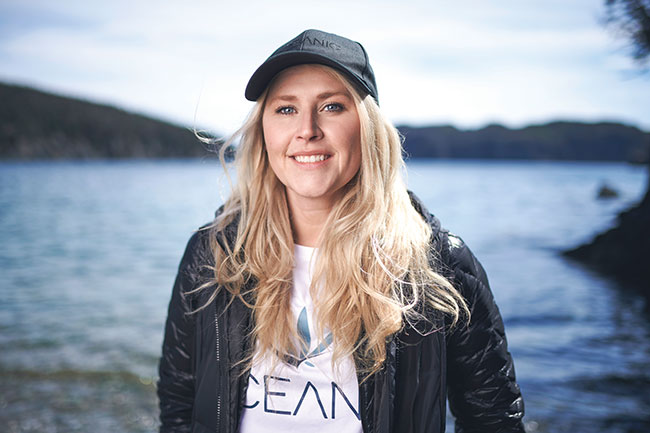
Q&A with Taylor Giovannini: Changing lives within the community
After wrapping St. John, Newfoundland’s George Street Festival this summer as the only cannabis company on site, promoting the launch of their new app and sharing information about their nine retail locations representing nearly a quarter of cannabis retailers in the province, Oceanic Releaf owner and CEO Taylor Giovannini reflects on the remarkable growth of her company as it occurred in tandem with the plant’s transformative impact on her own life.
GO: Why was Oceanic created?
TG: Oceanic was created because everyone in the world understands the ocean as healing. It was founded organically and accidentally through helping a family member on his journey, which I wasn’t aware was actually my own. I made a batch of brownies for my husband’s grandfather and really helped alleviate his pain. It was an ‘aha moment’ for me, born out of medical need and the dream of helping as many people as possible.
GO: How did you work inclusivity into your branding?
Advertisement
TG: Oceanic evolved by leaning into the recreational side of things and having the opportunity here in Newfoundland to open up stores. I understood very quickly that there was a stigma, and that the stigma would hinder anyone who really needed the plant because of what they’ve been taught. So, I focused wholly and truly on creating a space and an atmosphere that was comfortable and stripped of stigma. That’s what Oceanic represents – it’s this brand of acceptance and education.
GO: What other methods are you using for differentiation?
TG: From my own experience, I didn’t want to ask stupid questions when I went into a store, so I was trying to figure out how to strip this completely down. How do we do that? We sell coffee! We sell coffee to differentiate ourselves from cannabis and to educate people. And then we also had the first drive-through in Canada. I have been super keen on that from day one; for parents. At the time cannabis became legal, my son was two and he’s literally attached to my hip. I thought, how do I physically go in stores when I can’t leave my baby?
GO: Was there any pushback from the community when you began operations?
TG: I’ve never seen any pushback whatsoever. I believe people listened to me because I don’t look like the stigma and because I’m very upfront and transparent about learning about this plant. Even though I’m the CEO and owner of Oceanic, I’m on the same beginner journey as everyone else. I engage with the communities and they’re more than happy to have safe and responsible cannabis rather than their local drug dealer.
GO: Can you describe more of your retail landscape?
TG: We have nine stores, and the ninth will open likely in August. There are four tiers in Newfoundland and all our stores are tier one, which are standalone stores that only sell cannabis. Three of our nine have drive-throughs and we’re working on a fourth. We also sell coffee from a local roaster in all of our stores and cannabis apparel and accessories. Of course, the number one question we get is asked is “is your coffee infused?” We have a little meme that says: Our coffee is plain Jane, not Mary Jane.
GO: Were you cultivating before retail? What brands have you sold?
TG: No, actually we opened up the stores first while we were in the process of getting our license. Our store opened first and then we got our cultivation license and then our sales license. We hold 60 per cent of our shelf space with our three in-house brands: Oceanic, our homegrown flower and pre-rolls, Seaweed is our curated brand from other craft growers in Canada, and Booty is our value brand. Then we also have partnership brands. Higgs is an L.A. brand that is super cool – we just launched it. Of course cannabis can’t cross borders, but brands can! Then the other 40 per cent of shelf space are carefully selected partners like Organigram, Delta 9, and Aqualitas. We’re also already in the German medical market and, I mean, I want to be global.
GO: How has the personal journey of Oceanic changed your life?
TG: I believe in Oceanic and what it’s capable of doing. I’ve also learned that this is a lifestyle. It’s a complete lifestyle change in so many aspects of my life, and I’m a better everything because of cannabis. Now I’m a better mother, I exercise, I meditate; I use it for everything and it elevates my life in all aspects.
We’ve got a long way to go still to be, what I would consider, successful, but I think the groundwork has been laid, especially with the partners that we have in place.
Taylor Giovannini is the owner & CEO of Newfoundland’s Oceanic Releaf.
St. Peter’s Drinks partners with Nana Pharma Tech to build Canada’s newest cannabis drinks facility
(Globe Newswire) Montreal — St. Peter’s Spirits Inc., with its award-winning Green Monke cannabis sodas, has partnered with Nana Pharma Tech, a licensed cannabis producer based in Montreal, Quebec, to build Canada’s newest cannabis beverage manufacturing facility. St. Peter’s designed and financed the canning line at Nana Pharma’s licensed facility. The initial annual canning capacity at this new facility of 2,000,000 cans will be dedicated to serving the demand for Green Monke beverages across Canada.
“Building upon our two plus years in the Canadian market, we are pleased with the most recent successes that we have enjoyed with the Green Monke brand, including a Top 10 sales position in Ontario on the launch of our Tropical Citrus 10mg THC + 20 mg CBD Happy Soda, the launch of our co-branded Cookies x Green Monke drinks in July, and record sales out of British Columbia.
“To continue to grow the Green Monke brand, we needed to have more control over the manufacturing and supply of our drinks. In Nana Pharma, we have found an ideal partner, who embodies our three fundamental organizing principles: insist on high quality, great-tasting beverages; provide best-in-class customer service; and, always use recyclable packaging. This new partnership allows us to use just-in-time printed cans that have an even higher rate of recyclability, making our drinks even more attractive to our target market. We are extremely excited to see how much farther we can grow the Green Monke brand now that we have control over the supply of our drinks and we are working in partnership with Nana Pharma.” — Pat Gleeson, CEO, Saint Peter’s
The canning line and related equipment installed at Nana Pharma is expandable and adaptable to better position us to react to the high growth and customer demand for more production. We are looking to replicate this business model in select U.S. states to address the lack of cannabis beverage-making infrastructure in the individual states. This business model works best with a trusted local partner, like Nana Pharma, who is an efficient and proven cannabis operating company.
Advertisement
“Quebec has a storied history of making world-leading adult beverages. We are extremely proud of Nana Pharma’s role continuing this history and trail-blazing into cannabis drinks, which all projections indicate will win a significant share of the adult beverage market over the next five years. We believe that the Green Monke lineup of drinks represents the quality, taste and values we look for in partnering with a brand. Green Monke, with over five years of history as an infused beverage company, has high brand recognition, a quality product and respected management with whom we are proud to be working. With our production coming online, we are excited to provide consistent and dependable supply of Green Monke product to the regulated dispensaries across Canada that have been craving more!” — Jean-Christophe Parisien-LaSalle, president, Nana Pharma
Budtender’s Guide in High Times

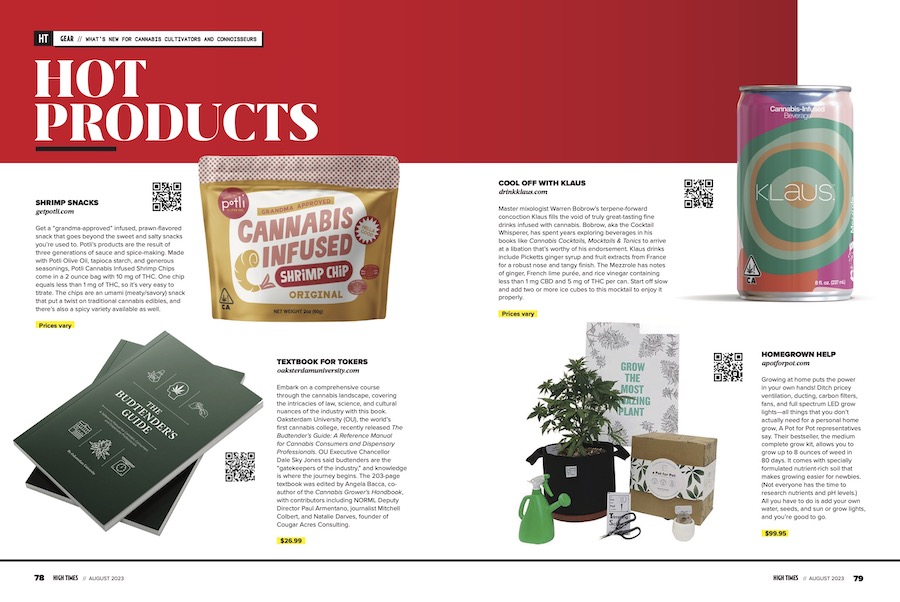
Oaksterdam University’s Budtender’s Guide is featured in the September, 2023 print issue of High Times. Here’s what the iconic magazine had to say about our “Textbook for Tokers”:
“Embark on a comprehensive course through the cannabis landscape, covering the intricacies of law, science, and cultural nuances of the industry with this book. Oaksterdam University (OU), the world’s first cannabis college, recently released The Budtender’s Guide: A Reference Manual for Cannabis Consumers and Dispensary Professionals. OU Executive Chancellor Dale Sky Jones said budtenders are the “gatekeepers of the industry,” and knowledge is where the journey begins. The 203-page textbook was edited by Angela Bacca, co- author of the Cannabis Grower’s Handbook, with contributors including NORML Deputy Director Paul Armentano, journalist Mitchell Colbert, and Natalie Darves, founder of Cougar Acres Consulting.”

420 with CNW — DeSantis Reaffirms Opposition to Federal Cannabis Legalization

Ron DeSantis, the Florida governor and a contender for the 2024 presidential election on the Republican ticket, has restated his firm stance against the legalization of marijuana if he were to assume office. His argument asserts that the legalization of marijuana has contributed to the growth of the illegal market in Colorado — despite evidence to the contrary.
While engaging with supporters during a campaign event in Iowa over the weekend, a concerned attendee shared stories of individuals whose children had developed cannabis-induced psychosis. The individual queried DeSantis about his position on legalizing or rescheduling cannabis at the federal level should he ascend to the presidency. DeSantis responded, reiterating his unwavering stance against legalization, echoing viewpoints he had expressed in a similar vein back in June.
The conversation then shifted toward a broader discourse on the negative consequences of substance abuse. DeSantis highlighted the existence of an unregulated drug market in San Francisco, using it as an example to underscore his belief that prevailing policies have contributed to the deterioration of society by enabling drug use.
DeSantis acknowledged the existence of medical cannabis access in Florida through a voter-approved constitutional amendment. However, he emphasized that different states have handled cannabis regulation differently, and he expressed his disinclination to further increase its accessibility under his leadership.
The fate of cannabis legalization in Florida might not solely rely on DeSantis’s stance, as the state Supreme Court is currently deliberating on the inclusion of a marijuana legalization initiative on the 2024 ballot.
Although DeSantis didn’t substantiate his argument with data or references, various government and private analyses suggest that Colorado has witnessed a considerable reduction in illicit market influence since implementing legalization. Notably, a report by Whitney Economics and Leafly from the previous year indicated that the regulated industry accounts for 99% of adult-use cannabis sales in Colorado, signifying a successful transition from the illicit market.
Recent data from the city of Denver further bolstered the case for legalization. The report indicated a significant decrease in law enforcement’s handling of illegal marijuana in 2022, providing tangible evidence of legalization’s effectiveness in curbing illicit sales.
DeSantis’s opposition to marijuana legalization, despite a growing bipartisan trend in support of reform, is consistent with his historical stance. This standpoint is only one aspect of his multifaceted position on the matter, as he competes to maintain his position as the second-leading candidate in the Republican presidential nomination race.
On a policy level, DeSantis signed a bill that recently came into effect in Florida, imposing stricter regulations on medical marijuana advertising and manufacturing. The law prohibits any promotional content related to “recreational” marijuana use while also imposing more rigorous eligibility criteria for individuals working in the cannabis industry. Additionally, DeSantis signed a bill in June that prevents residents of sober living facilities from possessing or using medical marijuana, even if they possess a doctor’s certification for therapeutic use. This restriction does not extend to other doctor-prescribed medications.
In the same month, the governor enacted legislation prohibiting the sale of consumable hemp products, including cannabis-infused chewing gum, to individuals under the age of 21. This expanded the existing restriction on the purchase of smokable hemp by young individuals.
DeSantis’ opposition to federal cannabis legalization suggests that it may still take a while for politicians on Capitol Hill to enact federal drug policy reforms that align with the wishes of the people, just in the same way that the current U.S. president hasn’t pushed for major reforms as had been expected when he was elected. Countrywide cannabis legalization as enjoyed by companies such as Green Thumb Industries Inc. (CSE: GTII) (OTCQX: GTBIF) in Canada is still a dream for American enterprises.
About CNW420
CNW420 spotlights the latest developments in the rapidly evolving cannabis industry through the release of two informative articles each business day. Our concise, informative content serves as a gateway for investors interested in the legalized cannabis sector and provides updates on how regulatory developments may impact financial markets. Articles are released each business day at 4:20 a.m. and 4:20 p.m. Eastern – our tribute to the time synonymous with cannabis culture. If marijuana and the burgeoning industry surrounding it are on your radar, CNW420 is for you! Check back daily to stay up-to-date on the latest milestones in the fast -changing world of cannabis.
To receive SMS alerts from CNW, text CANNABIS to 844-397-5787 (U.S. Mobile Phones Only)
For more information, please visit https://www.CannabisNewsWire.com
Please see full terms of use and disclaimers on the CannabisNewsWire website applicable to all content provided by CNW, wherever published or re-published: https://www.CannabisNewsWire.com/Disclaimer
CannabisNewsWire
Denver, CO
www.CannabisNewsWire.com
303.498.7722 Office
Editor@CannabisNewsWire.com
CannabisNewsWire is powered by IBN
Russia Through the Looking Glass
Russia Through the Looking Glass
Russia gets into your blood. It got into mine when I studied Russian at the United Nations Language School in New York in the 1980s and 90s while working as a UN information officer, having already learned the basics when I was 19.
I can still hear our teacher Alla coming into the classroom and saying: “Today, my dear students, we going to study our beautiful Russian verbs – first the imperfective and then the perfective verbs.” Who could fail to fall in love with Russian verbs with such a charming teacher? If you happen to read this, Alla, I send you a big wave.
But it was not only the verbs. Other intricacies of Russian grammar intrigued me – rules like “don’t forget that if the verb is negative the noun has to be in the genitive.” And the beautiful Cyrillic alphabet would dance before my inner eyes. Then there was my Russian girlfriend around the same time, who told me that “to sound like a Russian you must smile inwardly when you speak.” Indeed, they do this even when they are conveying something sad or, more likely, sad and funny at the same time – a combination at which the Russians excel.
Russian literature, too, captivated me. I became familiar with Dostoyevsky’s Idiot, Andrei Bely’s extraordinary novel Petersburg and the equally extraordinary Master and Margarita by Mikhail Bulgakov. Reading these works, one becomes aware of the deeply spiritual nature of the Russian soul. Furthermore, these last two authors revealed another side to Russia that intrigued me, namely a strong current of fascination for things magical, esoteric and other-worldly. I decided to go deeper into this domain, and my latest book Occult Russia was the result.
Of course, I was devastated when the war in the Ukraine began, and I feel deeply for all my Russian and Ukrainian friends. As I write I can only pray that the conflict will not be prolonged. As a stop-press item, I must express my deep outrage and sadness at the death of Alexander Dugin’s daughter Darya who was killed on 20 August 2022 by a car bomb possibly intended for her father. Through this cowardly act, the life of a radiant human being has been tragically cut short. My deepest sympathy goes out to all her family.
I offer the book Occult Russia in the hope that it will contribute to a deeper understanding of the Russian mind and soul. What follows is a foretaste of it, abridged and edited from the Introduction.
• • •
Upon hearing the word “Russia” you may think of military parades in Red Square, the war in the Ukraine, the annexation of the Crimea, gangsters, internet hackers, assassinations of journalists and imprisonment of opposition politicians. This book is not about those things but about a different Russia that is invisible to many people in the West – namely the inner Russia, the Russia of mysticism, myth, magic, the esoteric and the spiritual. Like a vast river, long ice-bound, the spiritual force deep in the Russian soul is moving again. In the wake of the collapse of communism, the Russian people are seeking new – or often old – ways of giving meaning to their lives. This search has given rise both to a revival of ancient spiritual traditions and to a plethora of new movements, cults, sects, -isms and -ologies, most of which would have been banned in the Soviet era. Out of this ferment exciting things are emerging.

Today’s spiritual quest in Russia covers an enormous spectrum. Millions are turning or returning to the Orthodox Church, and thousands of new churches are being built. As for alternative forms of spirituality, many people are turning to doctrines such as Theosophy, Anthroposophy and the teachings of Nikolai and Helena Roerich. Another group is turning back to the pre-Christian gods of Russia or to shamanism, often of the variety practiced by the urban intelligentsia. Meanwhile the indigenous pagan communities such as the Mari and the various shamanic peoples of Siberia are enjoying a new lease of life. In Russia the shamanic and pagan traditions have long existed side by side with the Orthodox religion – if not always in peaceful co-existence at least in a modus vivendi that the Russians call dvoeverie (dual faith).
History can be driven by mythical motifs, and this perhaps applies particularly strongly to Russia. One useful term for such a motif is the word “meme,” coined by the British biologist Richard Dawkins in his 1976 book The Selfish Gene. Originally used in the biological context, it has come to mean an idea or notion that spreads like a message through a society, transmitted from person to person or through the media.
A phenomenon with some similarities to the meme, but operating at a deeper level, is that of the egregore, a collective thought-form on the invisible plane, created by many people focusing on the same ideas and symbols. Deriving from a Greek word meaning “watcher,” an egregore can take an infinite variety of forms – an angel or demon, a god or goddess, a hero or heroine, an object of special veneration, a sacred place or a compelling narrative. The concept of the egregore overlaps to some extent with the notion, developed by the psychologist Carl Gustav Jung, of the archetype, an inherited motif in the collective unconscious of humanity. In exploring Russia’s mystical quest we find various powerful memes, egregores and archetypes at work. They include the following:
Holy Russia
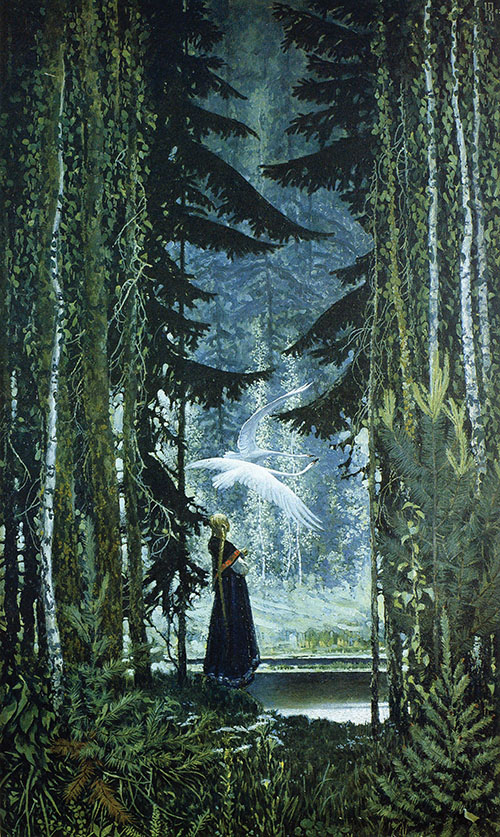
The notion of Holy Russia is searchingly explored by Gary Lachman in his book of that title. Deeply engrained in the Russian collective soul is the conviction that Russia has a special spiritual mission. This is reflected in the powerful mystique of the Orthodox Church and the concept of the “Third Rome” – the first Rome being the city on the Tiber, the second being Constantinople and the third and final one being Moscow. All of this has given rise to an egregore of enormous vitality, which has enabled the Orthodox religion to flourish anew after the communist era.
The Warrior Hero
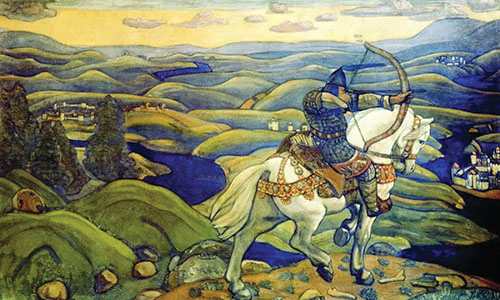
An early example of this figure is the semi-legendary Ilya Muromets, who features in various Russian epics as well as in films, novels and art. Probably a composite of various different people, he appears as a defender of Kievan Rus in the 10th century and in later incarnations he fought the Mongols and saved the Byzantine Emperor from a monster. He eventually became a saint of the Orthodox Church. The role of the warrior hero has also been played by certain real historical figures such as Prince Alexander Nevsky who defeated the Teutonic Knights in the thirteenth century, Tsar Peter the Great, and even Joseph Stalin.
The Never-Never Land
This motif crops up repeatedly in Russian history in various forms and under various names: Byelovodye (Land of the White Waters); Opona, the utopia of peasant folklore; and Hyperborea, the vanished promised land in the north. The Never-Never Land is also thought of as the source of an ancient wisdom tradition that has the power to transform human life if one could only access it.
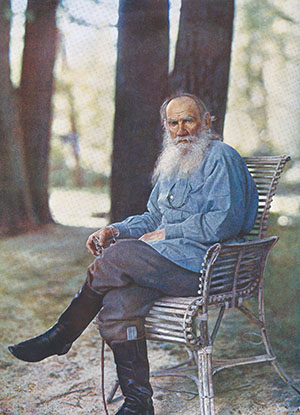
The Rustic Sage
This figure is typified by Tolstoy’s character of Platon Karataev, the wise peasant who is a fellow prisoner of the hero Pierre Bezukhov in War and Peace. Tolstoy himself adopted this persona in his later years.
The Holy Fool
Alternatively “fool for Christ,” this term is applied to someone who adopts an apparently mad way of life, marked by great austerity and extreme piety. It can overlap with the concept of the starets, the independent, god-illuminated holy man or woman. It has been pointed out to me by my correspondent Dana Makaridina that there are two kinds of holy fool, namely the blazhennyi (“blessed”) and the yurodiviy (“foolish”). The distinction is subtle. The former are characterised by a state of saintly bliss, whereas the latter are conspicuous by their craziness and weird, antisocial behaviour. Both are associated with freedom, being unconstrained by any social norms and able to communicate directly with God. Dana Makaridina mentions a friend who has had the nickname blazhennyi since childhood because of his strange, otherworldly behaviour. She writes that “now he is an extravagant rock musician and performance artist dealing with topics of freedom and death.”
The New Messiah
Prophets and messiah figures have abounded in Russian history, overlapping somewhat with the starets and the fool for Christ, and they continue to appear in the present day. A typical example is the case of Sergei Anatoljewitsch Torop, an artist and jack-of-all-trades who, in 1991, proclaimed himself to be Jesus Christ returned. Adopting the name Vissarion, he founded a community called the Church of the Last Testament, gathered several thousand followers and established an ecospiritual settlement in Siberia. At the time of writing he is in prison facing a charge of extorting money from his followers and subjecting them to emotional abuse.
The Woman Clothed with the Sun

This figure originates in a passage in chapter 12 of the book of Revelation in the New Testament. To quote the King James Bible:
And there appeared a great wonder in heaven; a woman clothed with the sun, and the moon under her feet, and upon her head a crown of twelve stars.
This image of the woman clothed with the sun crops up repeatedly in Russian prophetic writings.
My own perception of Russia has been through different stages. As far as I can remember, the country meant little to me until 1953, when I was nine years old, and one morning at breakfast my father picked up the newspaper and remarked that Stalin had died. I may have asked who Stalin was and been told that he had been the leader of our powerful eastern ally during the Second World War.
Later I absorbed the Cold War propaganda. Russia came to mean the suppression of the Hungarian uprising, defectors from the West like Burgess and Maclean, Khrushchev banging his shoe on the table at United Nations General Assembly, the Cuban missile crisis, the crushing of the Prague Spring, the persecution of dissidents.
At the same time I was fascinated enough by Russia to start learning the language when I was nineteen years old, a process that I resumed in my fifties, by which time I had witnessed the advent of Gorbachev and perestroika, shortly to be followed by the break-up of the Soviet empire and the collapse of communism itself. While these tumultuous changes were going on I visited Russia for the first time in 1991 with an American contingent of very amiable born-again Christians, whose tour group I was able to join through the facilitation of an acquaintance.
A particularly vivid memory of that trip was visiting a Russian Orthodox seminary near Saint Petersburg. On entering the building I found myself transported into another world, marked by candlelit icons, the fragrance of incense and an atmosphere of still reverence. There was a quiet dignity about the priests and seminarists moving about in the dim corridors. One of them, looking startling like the photographs I had seen of the wild-eyed prophet Rasputin, was a young man with long, black hair and a solemn expression, dressed all in black in a sort of peasant’s tunic, trousers, and boots. We were shown to the chapel of the seminary where a service was held, and I began to understand why Madame Blavatsky, non-Christian though she was, always vehemently defended the Orthodox Church.
At the present time, in the wake of the collapse of communism, the Orthodox religion is once again playing a central role in the life of the nation. Churches are full, and thousands of new ones are being built, with the state playing a supporting role. But not everyone is happy with the current situation, and some of the initial post-perestroika religious enthusiasm is waning. Many believers oppose what they see as an increasing tendency towards a merger of state and Church, while people of other persuasions do not want Orthodox Christianity to be imposed on the population.
Visiting Russia reinforced my view that it has a special destiny, as many prophets have predicted. One of them, the German writer Oswald Spengler, wrote in an essay entitled “The Two Faces of Russia” (1922):
The bolshevism of the early years has thus had a double meaning. It has destroyed an artificial, foreign structure, leaving only itself as a remaining integral part. But beyond this, it has made the way clear for a new culture that will some day awaken between “Europe” and East Asia. It is more a beginning than an end.

Bild-Kunst, Bonn 2022.
Thirteen years later Spengler’s vision for Russia was illustrated in a cartoon by the artist Olaf Gulbransson, which appeared in 1935 in a literary-satirical journal originally produced in Munich under the name Simplicissimus, but by then published in exile in Prague under the title Simpl. The cartoon, entitled Melancholia, is a parody of Albrecht Dürer’s famous engraving known under the same title.
In the foreground sits a melancholy Spengler, quill pen in hand, beside an even more melancholy dog and various other objects including an obstetric forceps, perhaps indicating that the New Age in Russia will have a difficult birth. In the background is an image of the New Age itself in the form of a naked young woman riding a rather complacent-looking bear, both framed in a large rising sun. The woman in the background riding a bear symbolises Spengler’s prediction that a new culture will come out of Russia.
Gulbransson’s cartoon appeared in 1935 during a troubled time. Germany had been through a military defeat, followed by the ravages of inflation and depression and then by the Nazi seizure of power in 1933. In Russia the Bolsheviks ruled. Another war was on the horizon. But Gulbransson pictured a bright future coming from the direction of Russia and symbolised by the maiden riding the bear. Between then and now there are certain parallels. The present era is overshadowed by war and by high tensions between Russia and the West. But I believe the maiden riding the bear still carries a hopeful message. J
Christopher McIntosh’s book, Occult Russia: Pagan, Esoteric, and Mystical Traditions, is available from Inner Traditions International (ISBN-13: 9781644114186).

newnow@newagora.ca for Questions or to Book Your Spot!


Beyond Visible Light

“Speak I of Ancient Atlantis, speak of the days of the Kingdom of Shadows, speak of the coming of the children of shadows.
Out of the great deep were they called by the wisdom of earth-men, called for the purpose of gaining great power.
Far in the past before Atlantis existed, men there were who delved into darkness, using dark magic, calling up beings from the great deep below us.
Forth came they into this cycle.
Formless were they of another vibration, existing unseen by the children of earth-men. Only through blood could they have formed being.
Only through man could they live in the world.” The Emerald Tablet of Thoth. No 8.
Not alone in this reality
In my last post Spirit Shine, we talked about the matrix game, its players, its purpose, and the visible light spectrum that creates the physical game board called reality.

Our world is dual. We have a physical side to our being and an unseen energetic side. Because our spiritual centres, our energetic decoders have been switched off, (third eye and crown chakras)we are in ignorance about what lies beyond visible light and the world of touch, taste and smell. The inability to decode the spiritual worlds, realities that share the same space as we do has led to a lot of problems for our species. Demonic possession, psychic attacks, murder, suicide, and mental illness to name a few.
Disembodied entities
Man is an emotional being and is constantly discharging the energy of love/hate into the ether and all the variations of polarity in between. Due to harmonic resonance human beings attract disembodied entities vibrating on the same harmonic to their auric field. We cannot see these entities but sometimes we can feel their presence. Have you ever felt an irrational fear when entering a room especially in an old building? Picking up on the vibes of the place. Times when the hairs stand up on your arms? Or that slow cold fear creep up the back of your neck? The feeling of being observed?
I think we all have.
This rainbow world is only a very tiny part of the electromagnetic system that exists within the levels of the matrix. Many entities share the same space as we do, get their sexual kicks from us, feed on our emotions and vampirise our energy. Such entities are energetic wave forms and like other types of self aware energies, can move through this space-time continuum without major limitations….appear and disappear and walk through solid objects. This is not fantasy. I wish it was. But it is not.
Yes, they are there in the shadows. Does Thoth not call them “The children of shadows?”
A fearful resonance
I had a pretty rough beginning in this reality. My resonance was fearful and as a result of my childhood ‘otherworldly experiences’ I have suffered with chronic anxiety syndrome most of my life. I have been cursed or 
 gifted with second sight, and because of this ability, I saw all kinds of demonic forms in my early life, and suffered from psychic attacks. In an effort to understand what was happening to me, I joined The Ancient and Mystical Order of the Rosae Cross. I was a desperate fifteen year old.
As I progressed through the degrees, my questions were answered and synchronicity led me into metaphysics and occult practice.
I have written many posts about elementals, spirit helpers, possession, etc, because I have had first hand experience of these beings. From my perspective some are ‘neutral; some are good and some are bad.
I can assure you, the unseen world is very present, very real, and a very dangerous place for the self inflated ego and, for the undisciplined mind….madness awaits.
Possession and delusion
I had a friend who had been abused as a child. The trauma haunted him and feeling powerless in the physical arena of his life, he turned to ceremonial John Dee type magic, and summoned spirits in an effort to gain mastery over his own fear. His fearful resonance attracted some very negative entities, and once invited into his energy, wreaked havoc with his body and his mind. It drove him to numerous suicide attempts. I have seen the same pattern repeat itself many times.
Entities normally attach to childhood trauma and can trigger the emotional aspect of said trauma in adults. Rehashing and rehashing the painful events of the past. Incubi and succubi are always present when there is sexual abuse. Dr Harry Oldfield with his PIP photography has photographed a sexual demon sprawled across the abdomen of a meth addict.
I don’t know what got into him or her
People fly into inexplicable rages for no apparent reason. Spin in emotional turmoil. Commit acts of barbarism especially against children, the elderly and the animal kingdom. And, just think of the horrific crimes perpetrated by drunks and drug addicts. People say “I don’t know what got into him/her.”
I do…..
These invisible beings are real. They can attach to our energy, take over when we abdicate self through drink or drugs and can directly or indirectly affect our behaviour and our consciousness. They can also lead us into a delusional world of self worship. My mentors always told me “Be careful who you pray with.” Something I have practiced for a long time. Why? Because very often in a spiritual setting behind the smiles of love and light lurks a monster. From my observation over the years, I have noticed that many people who practice ‘spiritual way’ are largely oriented to fulfilling their own selfish desires and aspirations, and therefore are confined within strong ego-structures, defense mechanisms, and fear. They don’t understand that all reality is electromagnetic in essence and the laws of attraction apply…whether you think you are a saint or a sinner. The manifestation of reality is our own responsibility. We create it moment by moment with our thinking. We are where we have put ourselves even though the super ego likes to put the blame somewhere else.
Thought forms

 Through internal focus thought forms can be created. These can be good or bad depending on the resonance of the person building the form. When we intentionally focus on a goal, a wave form energy spontaneously arises.
When our little group of warriors went out to sabotage the blood-sport meets, we were united around a common goal: to save the hunted animal. Over the years, our thoughts and emotions accumulated and formed what is known as a spiritual ally which was like an intuitive super mind. Our thought form grew…. powered by the thoughts and emotions which created it.
Reality can be modulated. See my post Psychic Sabotage.
So dear friends, let us return to Thoth:
Formless were they of another vibration, existing unseen by the children of earth-men. Only through blood could they have formed being.
Only through man could they live in the world.”
“Be sure you do not eat the blood, because the blood is the life, and you must not eat the life with the meat. You must not eat the blood; pour it out on the ground like water” Deuteronomy 12 v23
Resonance is everything
The Shift of Ages is upon us. Freedom from the matrix is at hand. So, let’s keep our resonance high even though we are surrounded by bio-sims, cruelty and madness.
Much love….
About the Author

[embedded content]
420 with CNW — Survey Shows Patients Satisfied with Marijuana as Neuropathy Treatment
A recent survey has found that marijuana is equally effective in alleviating neuropathy symptoms as opioids, raising questions about the validity of previous studies that utilized government-grown cannabis with lower potency. The survey was conducted by NuggMD, a company that connects patients with medical marijuana recommendations, and it involved 603 participants who used marijuana primarily or secondarily for neuropathy.
In the study, neuropathy, a painful condition, was measured by patients who assessed their pain levels on a scale of 1 to 10 both prior to and after using marijuana as a remedy. The outcomes were promising, indicating considerable relief. The average pain score prior to using cannabis was 7.64, and it decreased to 3.44 after consumption, resulting in an average pain relief of 4.2 out of 10.
These findings were on par with or even better than conventional treatments such as prescription opioids, as demonstrated by previous research. For instance, a 2017 trial illustrated that acetaminophen and oxycodone, acetaminophen and ibuprofen, acetaminophen and codeine, and acetaminophen and hydrocodone provided pain relief scores of 4.4, 4.3, 3.9 and 3.5, respectively.
Only 10 states explicitly recognize neuropathy as a qualifying condition for medical cannabis.
The researchers also noted that although increasing cannabinoid dosages didn’t consistently lead to greater relief, patients generally benefitted from higher-potency marijuana containing over 20% THC. This observation might explain the discrepancy between NuggMD’s findings and previous studies that employed lower-THC marijuana.
Among the surveyed patients, the majority (58.6%) used cannabis flower with THC exceeding 20%. Fewer participants used concentrates (26.3%), sub-20% THC flower (11.1%), or noninhalable products (3.9%). In essence, patients who found cannabis effective predominantly chose high-potency products, which are widely available and notably more potent than research-grade government cannabis.
The study’s authors highlighted that the consistency lay in the use of high-potency marijuana with 20% or higher THC. They pointed out that much of the pain-relief research used cannabis products with less than 20% THC, leading to claims that THC isn’t effective for pain relief.
Until recently, federally sanctioned marijuana research solely utilized cannabis from a DEA-authorized farm, which was widely criticized for its quality. This research monopoly was disrupted when the DEA approved additional growers, offering a more diverse range of cannabis strains.
However, NuggMD’s findings imply that prior neuropathy studies might have been compromised due to low-THC products. Lawmakers have voiced concerns about researchers’ limited access to cannabis that resembles what’s actually available in dispensaries. Efforts to change this policy have advanced in Congress but have yet to pass. Despite President Joe Biden’s move to ease marijuana research last year, the final bill didn’t include provisions for scientists to acquire retail cannabis.
NIDA Director Nora Volkow also highlighted that this restriction, combined with cannabis’s Schedule I classification, has hindered comprehensive research into its benefits and risks.
The NuggMD study doesn’t establish causal evidence of cannabis’s efficacy in treating neuropathic pain but underscores patients’ preference for medical marijuana over alternative treatments. When asked about their choice if they lacked access to medical cannabis, most respondents were inclined to tolerate symptoms (128) or use alcohol (36) rather than opt for opioids (112).
This survey suggests that patients aren’t just buying medical cannabis products from enterprises such as Cresco Labs Inc. (CSE: CL) (OTCQX: CRLBF) as part of a fad. The patients keep using those products because they experience relief from their symptoms.
About CNW420
CNW420 spotlights the latest developments in the rapidly evolving cannabis industry through the release of two informative articles each business day. Our concise, informative content serves as a gateway for investors interested in the legalized cannabis sector and provides updates on how regulatory developments may impact financial markets. Articles are released each business day at 4:20 a.m. and 4:20 p.m. Eastern – our tribute to the time synonymous with cannabis culture. If marijuana and the burgeoning industry surrounding it are on your radar, CNW420 is for you! Check back daily to stay up-to-date on the latest milestones in the fast -changing world of cannabis.
To receive SMS alerts from CNW, text CANNABIS to 844-397-5787 (U.S. Mobile Phones Only)
For more information, please visit https://www.CannabisNewsWire.com
Please see full terms of use and disclaimers on the CannabisNewsWire website applicable to all content provided by CNW, wherever published or re-published: https://www.CannabisNewsWire.com/Disclaimer
CannabisNewsWire
Denver, CO
www.CannabisNewsWire.com
303.498.7722 Office
Editor@CannabisNewsWire.com
CannabisNewsWire is powered by IBN

RCMP considering changes to cannabis policy for some employees

The RCMP is considering changing its policy that currently requires many employees, including front-line officers, to refrain from consuming cannabis for four weeks prior to duty.
According to The Canadian Press, a briefing note from the Royal Canadian Mounted Police recommends changing to a 24-hour restriction, with some exceptions.
An RCMP spokesperson tells the Canadian Press that the policy proposal is still under review.
RCMP originally put the policy in place when cannabis was legalized in 2018, concerned with officers coming to work still impaired.
The policy requires RCMP employees in safety-sensitive positions to not use cannabis for at least 28 days before reporting to work. The rule did not apply to those authorized to use cannabis for medical purposes.

The RCMP says it based its policy on the scientific information on the impairing effects of cannabis available at the time.
“Science shows that cannabis can intoxicate beyond initial consumption and that there are no established safe limits or data on how it affects performance. Without established scientific information about cannabis impairment, the RCMP policy is taking a careful approach at this time, to ensure workplace and public safety is maintained at all times. RCMP employees will not be subject to random substance testing.”
The Ontario Provincial Police, the second largest police force in Canada after the RCMP, have a policy that says members of the OPP are allowed to use cannabis products when not on the job but must report to work fit for duty.
Recent Comments