
by Grow Up Conference | Sep 1, 2023 | Cannabis News Wire, Media Partners
Recent research suggests that lesser-known cannabinoids derived from marijuana and hemp, such as CBN, CBM, CBC, CBDV and THCV, might hold promise in treating dermatological conditions INCLUDING acne, psoriasis and eczema. The study, published recently in the peer-reviewed journal “Molecules,” highlights the potential therapeutic value of these minor cannabinoids in managing skin disorders as well as presenting new avenues for patient care and well-being enhancement.
The research, led by Polish scholars Dorota Kowalczuk and Emilia Kwiecień, involved an extensive review of existing scientific literature. The team observed that minor cannabinoids exhibit a range of pharmacological activities, encompassing anti-itch, analgesic, antimicrobial and anti-inflammatory properties. These cannabinoids have also shown efficacy in alleviating symptoms linked to various dermatological issues, including pruritus, acne, eczema and psoriasis.
Some minor cannabinoids appeared particularly suited for targeting specific skin conditions. For instance, CBDV, due to its anti-inflammatory characteristics, can potentially soothe itching and inflammation related to atopic dermatitis. Additionally, its antioxidant properties could aid in healing acne lesions.
Similarly, other recently identified cannabinoids such as CBE and CBM display anti-inflammatory potential and open new avenues for research into targeted disease conditions. CBC, known for its anti-inflammatory and antioxidant effects, may offer benefits for treating psoriasis, acne and atopic dermatitis.
THCV stands out for its potential in combating acne because it appears to regulate sebum production. Its anti-inflammatory and antibacterial attributes contribute to alleviating inflammation and targeting bacteria linked to acne development.
The researchers highlighted the therapeutic potential of minor cannabinoids, including cannabinol (CBN), cannabigerol (CBG), cannabigerolic acid (CBGA), tetrahydrocannabivarin (THCV), cannabichromene (CBC), cannabidiforol (CBDP) and cannabidivarin (CBDV), as well as newer discoveries such as cannabielsoin (CBE) and cannabimovone (CBM).
The effects are believed to stem from interactions between cannabinoids and the body’s endocannabinoid system, a central regulatory mechanism crucial for maintaining organism health and function. This system plays a pivotal role in regulating skin functions, immune responses, cell differentiation, proliferation and survival, thereby effectively mitigating skin inflammation. Furthermore, topical application of these minor cannabinoids may hold promise for mitigating aging-related effects on the skin.
However, the researchers caution that more in-depth research is essential to validate their safety and effectiveness. Multiple challenges, including impact on the nervous system, product quality and regulation concerns, and ethical and legal considerations, need comprehensive exploration.
They concluded that despite the encouraging therapeutic potential, the utilization of cannabinoids, particularly minor ones, requires continued research, stringent regulations and a balanced approach to maximize benefits while minimizing any potential risks to health and society.
Companies such as Canopy Growth Corp. (NASDAQ: CGC) (TSX: WEED) selling marijuana for both medical and recreational use could be helping people combat more symptoms or conditions than the patients themselves intend.
About CNW420
CNW420 spotlights the latest developments in the rapidly evolving cannabis industry through the release of two informative articles each business day. Our concise, informative content serves as a gateway for investors interested in the legalized cannabis sector and provides updates on how regulatory developments may impact financial markets. Articles are released each business day at 4:20 a.m. and 4:20 p.m. Eastern – our tribute to the time synonymous with cannabis culture. If marijuana and the burgeoning industry surrounding it are on your radar, CNW420 is for you! Check back daily to stay up-to-date on the latest milestones in the fast -changing world of cannabis.
To receive instant SMS alerts, text CANNABIS to 21000 (U.S. Mobile Phones Only)
For more information please visit https://www.CNW420.com
Please see full terms of use and disclaimers on the CannabisNewsWire website applicable to all content provided by CNW420, wherever published or re-published: http://CNW.fm/Disclaimer
Do you have questions or are you interested in working with CNW420? Ask our Editor
CannabisNewsWire420
Denver, Colorado
http://www.CNW420.com
303.498.7722 Office
Editor@CannabisNewsWire.com
CNW420 is part of the InvestorBrandNetwork.
by Grow Up Conference | Sep 1, 2023 | Media Partners, Psychedelic News Wire
A group of indigenous peoples with a history of traditional and spiritual psychedelic use called the Native Coalition of Colorado protested its lack of involvement in psychedelic discussions during the recent psychedelic conference in Denver.
Held during five days in Denver, the Psychedelic Science Conference attracted more than 11,000 attendees from various professions and covered everything from the therapeutic potential of psychedelics to psychedelic-related businesses. The conference was a major indication of America’s increasing acceptance of psychedelics in various industries and is a great indication of the future of psychedelics in America.
However, Indigenous peoples who have been using psychedelics for their therapeutic and spiritual properties long before the substances gained mainstream acceptance are now fighting for the right to continue using psychedelics as sacred medicines. Clinical counselor and Boulder, Colorado, resident Kuthoomi Castro trained in Ecuador with Indigenous elders for more than 16 years before he started a practice that involves giving people ayahuasca in guided traditional ceremonies.
Because psychedelics have long been a part of his culture, Castro along with other Indigenous people who are part of the Native Coalition of Colorado protested their lack of involvement in discussions around psychedelics at the conference. The coalition’s members argue that given their rich and sustained history with psychedelics, they shouldn’t just be part of psychedelic-related discussions, they should be leading them.
Now that Denver decriminalized several psychedelics and the state of Colorado recently decriminalized psilocybin (magic mushrooms), Indigenous people worry that wealthy people will have the opportunity to profit from the misuse and abuse of psychedelics. Furthermore, they are concerned that commercializing psychedelics will make it harder for Indigenous communities to obtain the hallucinogens they use in their traditional practices.
The Native Coalition of Colorado is looking to increase awareness about how psychedelic commercialization could impact Native communities, especially now that a recently established advisory board is working to create psychedelic retail rules and establish licenses for psychedelic healing centers. Speaking during the Psychedelic Science Conference, Castro explained that while the Western system is currently going through a psychedelic renaissance, Indigenous peoples have been using plant medicines such as psychedelics for decades. These communities availed their plant medicines to other people to promote healing, not for their medicines to be stolen and “cultures erased,” the coalition said.
For the past few years, scientific and mainstream interest in psychedelics has increased significantly thanks to a growing number of studies pointing to psychedelics as potential treatments for various mental-health disorders.
Researchers in several countries are now working to perfect psychedelic-assisted therapies before deploying them to the mass market. As businesses such as Seelos Therapeutics Inc. (NASDAQ: SEEL) complete their psychedelic drug-development programs, patients will be able to choose from a variety of novel treatments.
About PsychedelicNewsWire
PsychedelicNewsWire (“PNW”) is a specialized communications platform with a focus on all aspects of psychedelics and the latest developments and advances in the psychedelics sector. It is one of 60+ brands within the Dynamic Brand Portfolio @ IBN that delivers: (1) access to a vast network of wire solutions via InvestorWire to efficiently and effectively reach a myriad of target markets, demographics and diverse industries; (2) article and editorial syndication to 5,000+ outlets; (3) enhanced press release enhancement to ensure maximum impact; (4) social media distribution via IBN to millions of social media followers; and (5) a full array of tailored corporate communications solutions. With broad reach and a seasoned team of contributing journalists and writers, PNW is uniquely positioned to best serve private and public companies that want to reach a wide audience of investors, influencers, consumers, journalists and the general public. By cutting through the overload of information in today’s market, PNW brings its clients unparalleled recognition and brand awareness. PNW is where breaking news, insightful content and actionable information converge.
To receive SMS alerts from PsychedelicNewsWire, text “Groovy” to 21000 (U.S. Mobile Phones Only)
For more information, please visit https://www.PsychedelicNewsWire.com
Please see full terms of use and disclaimers on the PsychedelicNewsWire website applicable to all content provided by PNW, wherever published or re-published: https://www.PsychedelicNewsWire.com/Disclaimer
PsychedelicNewsWire
San Francisco, CA
www.PsychedelicNewsWire.com
415.949.5050 Office
Editor@PsychedelicNewsWire.com
PsychedelicNewsWire is powered by IBN

by Grow Up Conference | Sep 1, 2023 | Media Partners, Oaksterdam University
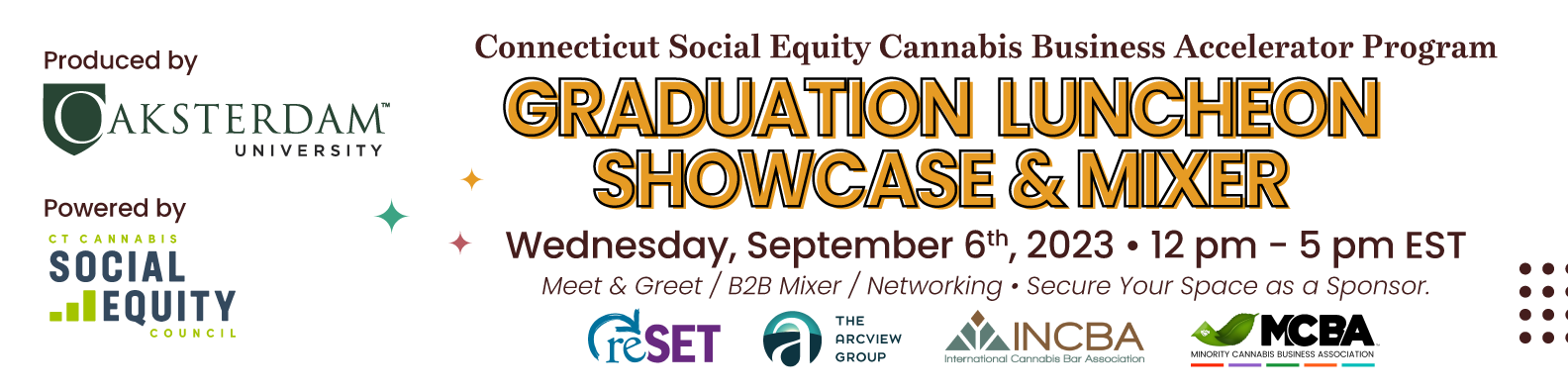
Connecticut’s Social Equity Council is preparing to celebrate its first cohort with a Graduation, Business Showcase & Cannabis Industry Mixer on Sept. 6, 2023. The public is invited, as are potential investors and cannabis businesses who would like to network with movers and shakers in the industry.
The day celebrates the inaugural class that completed the Connecticut Cannabis Business Accelerator Program. Graduates will receive certificates from CT Social Equity Council and Oaksterdam University during the event, set for 10 a.m.-5 p.m. at the Norwalk Inn & Conference Center in Norwalk, Conn. The graduation day and showcase brings together many groups who have been foundational in helping social equity license entrepreneurs in Connecticut, spearheaded by the Connecticut Social Equity Council, including Oaksterdam University (OU), reSET, Arcview Capital, Minority Cannabis Business Association (MCBA), and the International Cannabis Bar Association (INCBA).
Among the graduating entrepreneurs is Denisha.
Denisha and her team have been approved for a Sec. 149 Social Equity Cultivator license, a valuable commodity in Connecticut’s limited license market. Denisha will collect her certificate, and then attend a pitch event where she and the other social equity licensees in her cohort are eager to find investors.
“We are so excited to pitch,” Denisha says. “We put in the work and we’re ready. It’s truly a great opportunity.”

Soulstar: A Vertically-Integrated Business Plan
Denisha and her team are launching Soulstar, a female-led cannabis company building a portfolio of diverse and high-performing businesses in the Northeast’s emerging adult-use markets. Soulstar’s Phase I roll-out in Connecticut will include opening two dispensaries under their retail brand, “Nightjar,” with the first location secured in East Lyme, Conn. Phase II includes cultivation and manufacturing with national licensing opportunities.
The company has raised $750,000 of its initial $3 million goal. Soulstar’s projections show it earning $8 million in its first year of operation, making it a lucrative proposition for investors.
“Connecticut has a problem and that’s lack of supply and choice. There are only four cultivators and 23 dispensaries in the entire state,” Denisha says. “Our market is so young and there’s plenty of opportunity.”
Sales in Connecticut have grown month over month since medical legalization in 2012 and adult use legalization in 2021. Sales reached $24 million in June alone.
“In the next five years, Connecticut should surpass $2.5 billion in total sales,” Denisha says.

Righting the Wrongs of Prohibition
Connecticut’s Social Equity program was built into the state’s adult use legislation. It aims to promote and encourage full participation in the cannabis industry by people from communities disproportionately harmed by cannabis prohibition.
Denisha is among those who qualified for a social equity license during a one-time application process that closed in May 2022.
The area where Denisha grew up is designated as a Disproportionately Impacted Area (DIA), based on a poverty rate metric and a ranking of historical conviction rates for drug-related offenses as determined by the Connecticut Social Equity Council.
In addition to a license, Denisha received training, coaching and mentorship through the CT Social Equity Council, with technical assistance provided by Oaksterdam University, along with partners reSET, the social enterprise entrepreneurial support nonprofit located in Hartford, and Arcview Capital, which has over a decade of experience assisting thousands of cannabis operators to prepare to raise capital to launch and scale their businesses
“Oaksterdam has done so much for me personally. It has not only taught me the history of cannabis but shown me the future potential of where this could lead,” she says. “It literally provided me with a cannabis community.”
Overcoming Obstacles Through Hard Work
Denisha was born and raised in Nepal and her family won a Diversity Visa Lottery and came to America in 2006. Her father grew up as a child slave and when conflict broke out in Nepal, he sought escape for himself, his wife, his daughter Denisha, and her younger brother. Although he is a famous artist in his home country, he had trouble finding work in the U.S.
Denisha got a job at a corner store to support her family, working shifts before and after school.
“As soon as we came to America, my parents couldn’t speak the language so I instantly became the breadwinner,” she says.
After graduating from Central High School in Bridgeport, Conn., Denisha earned a Bachelor’s Degree in Business Administration from the University of Connecticut and then put herself through Quinnipiac Law School.
“Hard work has been the theme of my life,” Denisha says. “This has given me a lot of practice in removing obstacles that come my way to ultimately get to the finish line.”
The Road to Cannabis Entrepreneurship
A long-time proponent of cannabis legalization, Denisha got excited when Connecticut legalized cannabis for adult use. She immediately called her best friend from law school, Katie Covett, who had been working in the cannabis field as senior manager of internal communications for New England Treatment Access (NETA), one of the largest vertically-integrated cannabis companies in Massachusetts.
Denisha and Katie sat down at her kitchen table and began the process of applying for a social equity license. Denisha was approved, and the seeds for Soulstar’s project in Connecticut were planted. Katie is one of the co-founders of Soulstar.
While enrolled in the Connecticut Cannabis Business Accelerator Program, Denisha got one-on-one coaching from Precious Osagie Erese, co-founder and COO of Roll Up Life Inc. in East Orange, New Jersey.
Denisha says she looks forward to following in the footsteps of the successful female entrepreneurs she has met in the cannabis space and hiring people who need a second chance after unjust cannabis convictions.
“Cannabis is very empowering. It creates communities. The state gave us this license and the Social Equity Council brought us together and gave us resources like Oaksterdam,” she says. “There is strength in numbers and now we have connections with each other for long-term success. We are cohorts.”
Learn more about the Connecticut Equity Business Showcase & Cannabis Industry Mixer here. Purchase tickets here. Get your business seen by becoming a sponsor or getting a vendor table at the event. Download the Sponsor Deck here.
by Grow Up Conference | Sep 1, 2023 | Cannabis News Wire, Media Partners
- The ADA reports that 37.3 million Americans had diabetes in 2019, and the number has been growing by an average 1.4 million each year
- 95% of Americans with diabetes are diagnosed with type 2 diabetes, which can lead to heart disease, stroke, kidney damage, and nerve damage when left untreated
- Lexaria’s DIAB-A22-1 pre-clinical diabetes study using DehydraTECH(TM)-CBD in obese diabetic-conditioned animals shows promising results, prompting the company to investigate for human trial
Lexaria Bioscience (NASDAQ: LEXX), a global innovator in drug delivery platforms, recently announced its intent to conduct a human clinical trial to examine its patented DehydraTECH(TM)-processed cannabidiol (“CBD”) for diabetes control and weight loss. The company’s pre-clinical diabetes study, DIAB-A22-1, in obese diabetic-conditioned animals, provided successful results and has driven Lexaria’s management to investigate whether animal improvements will be evidenced in humans.
Diabetes can impact various parts of the body, including the heart, kidneys, eyes, feet, and legs. The longer a person lives with the condition at high blood sugar levels, the more serious complications can become. Diabetes is manageable, but its impact on overall health is often underestimated.
According to the American Diabetes Association (“ADA”), 37.3 million Americans reported having diabetes in 2019. Of those 37.3 million, 28.7 million were diagnosed, and 8.5 million were not. Each year, the ADA reports an additional 1.4 million Americans are diagnosed with diabetes (https://cnw.fm/5ZFeZ). When left untreated, diabetes can lead to complications, including heart disease, stroke, kidney damage, and nerve damage. “Non-alcoholic fatty liver disease (‘NAFLD’), which doctors historically have diagnosed in adults, is rapidly increasing in children, driven by the obesity epidemic” (https://cnw.fm/ImCtn).
More than 95% of the people diagnosed with diabetes fall into the category of Type 2 diabetes, which affects how the body uses sugar for energy. Over time, type 2 diabetes can cause serious damage to the body if it is not managed. Often preventable, factors that contribute to the development of type 2 diabetes are obesity, lack of exercise, and genetics (https://cnw.fm/sgqWK).
Lexaria designed DehydraTECH for formulating and delivering lipophilic drugs and active pharmaceutical ingredients. The benefits of DehydraTECH include faster drug delivery times, increased bioavailability, increased brain absorption, higher drug potency, reduced drug administration costs, masking tastes, and reduced use of sugars.
DehydraTECH is suitable for various product formats, including pharmaceuticals, nutraceuticals, consumer packaged goods, topicals, and over-the-counter pills, capsules, tablets, and oral suspensions. Lexaria has already shown value in the hypertension and nicotine pouch industries through the use of its DehydraTECH formulations.
Lexaria’s DIAB-A22-1 study in obese diabetic-conditioned animals utilized its DehydraTECH-CBD formulation, which showed an ability to reduce animal blood sugar levels – warranting additional investigation. Lexaria reported:
- Lowered blood glucose levels by 19.9% (p<0>
- Lowered overall body weight by 7% sustained over eight weeks
- Witnessed a statistically significant increase in locomotor activity (p<0>
- Lowered triglyceride levels by more than 25% (p<0>
- Lowered blood urea nitrogen levels by 27.9% (p<0>
The company is very interested in discovering if a similar formulation might effectively control human blood sugar levels – strongly suggesting that DehydraTECH-CBD may be a potential solution for treating diabetes and its complications in humans.
Lexaria intends to conduct the study, which is currently being designed, at the same medical research hospital in Europe that it used for its recent human clinical hypertension studies. The cost-effective approach allows Lexaria to complete the most research possible at a fraction of the cost of US-based registered study programs. Once the study has been designed and approved, Lexaria will provide additional information, including timelines and study details, as they become available.
For more information, visit the company’s website at www.LexariaBioscience.com.
NOTE TO INVESTORS: The latest news and updates relating to LEXX are available in the company’s newsroom at https://cnw.fm/LEXX
About CannabisNewsWire
CannabisNewsWire (“CNW”) is a specialized communications platform with a focus on cannabis news and the cannabis sector. It is one of 60+ brands within the Dynamic Brand Portfolio @ IBN that delivers: (1) access to a vast network of wire solutions via InvestorWire to efficiently and effectively reach a myriad of target markets, demographics and diverse industries; (2) article and editorial syndication to 5,000+ outlets; (3) enhanced press release enhancement to ensure maximum impact; (4) social media distribution via IBN to millions of social media followers; and (5) a full array of tailored corporate communications solutions. With broad reach and a seasoned team of contributing journalists and writers, CNW is uniquely positioned to best serve private and public companies that want to reach a wide audience of investors, influencers, consumers, journalists and the general public. By cutting through the overload of information in today’s market, CNW brings its clients unparalleled recognition and brand awareness. CNW is where breaking news, insightful content and actionable information converge.
To receive SMS alerts from CNW, text CANNABIS to 844-397-5787 (U.S. Mobile Phones Only)
For more information, please visit https://www.CannabisNewsWire.com
Please see full terms of use and disclaimers on the CannabisNewsWire website applicable to all content provided by CNW, wherever published or re-published: https://www.CannabisNewsWire.com/Disclaimer
CannabisNewsWire
Denver, CO
www.CannabisNewsWire.com
303.498.7722 Office
Editor@CannabisNewsWire.com
CannabisNewsWire is powered by IBN

by Grow Up Conference | Sep 1, 2023 | Cannabis Prospect Magazine, Media Partners
by Grow Up Conference | Sep 1, 2023 | Cannabis Prospect Magazine, Media Partners

by Grow Up Conference | Sep 1, 2023 | Grow Opportunity, Media Partners
B.C. to Ontario, the Maritimes and now Alberta – with each new edition we offer a look at operations from across our nation. This issue includes a glimpse inside two Calgary-based LPs, stacked with an additional story sourcing three other producers. As we showcase five LPs of varying sizes, spanning three separate provinces just in time for the harvest, we at Grow Opportunity are pleased to say we’ve reconnected with our cultivation roots.
It has now been five years since adult-use cannabis became federally regulated in Canada. Despite difficult growing pains, this industry is not going anywhere, and as such, producers have had the opportunity to readjust business practices while those still emerging onto the scene employ their recent findings.
Regardless, the global cannabis conversation that Canada lit on fire is worthy of celebrating, especially the international expansion, while we continue to adapt to change.
This September/October issue also brings new topics outside the realm of industry into consideration, by the deepening of introspection brought about by waning daylight. This season, with its crisp air and warm hues, inspires us to get back into reflection before ramping back up for the holidays and the changing calendar year.
As a preliminary introduction to psychedelics in the magazine, we embark on a journey beyond Canadian confines and into the Amazon rainforest. We move beyond mere business and into the tapestry of origins and identity.
As more producers are granted dealer’s licences, the elephant in the room remains the acknowledgment of the complex issue of cultural appropriation.
Journalist Devon Scoble shares two perspectives on this issue in her latest feature for Grow Opportunity, urging non-Indigenous users of traditional medicines to respect Indigenous authority in psychedelics. The use of theses sacred plant medicines – ayahuasca, psilocybin and peyote in particular – is a space that still warrants gatekeeping, rather than being blown open strictly for profit.
But below the ethereal world brought on by the psychedelic experience is the density of our day-to-day affairs, which, in this trade pub, surrounds the cannabis marketplace.
Inside you’ll find the nuts and bolts of digital marketing and trade-dress in an informative Legal Matters column written by two members of Torkin Manes LLP. Denis Gertler’s Vantage Point column reads between the lines of the Competition Bureau’s recommendations comprising regulatory information in need of consistent monitoring, and our latest Cultivation column by Jim Strain breaks down his most effective post-harvest techniques.
We’re also pleased to present a Q&A with Oceanic Releaf CEO Taylor Giovannini anchoring the back of this issue, whose task of supplying cannabis to Newfoundland consumers through nearly a quarter of the province’s retail locations serves as a reminder of what this industry is working towards. While Oceanic is an effective vertical business model of retail and cultivation, Giovannini finds the most meaning in the task of shared health and wellbeing between herself and her community.
As we celebrate five years of cannabis legalization, we reflect on the remarkable progress made, the lessons learned and the milestones yet to come.
Here at Grow Opportunity, we look forward to announcing the two winners of Canada’s Top Grower Award gracing the cover of our final issue of 2023, and, as always, we look forward to continue working alongside those at the helm of the mighty Canadian cannabis enterprise.
Until next time.
by Grow Up Conference | Sep 1, 2023 | Cannabis Prospect Magazine, Media Partners
by Grow Up Conference | Sep 1, 2023 | Cannabis Prospect Magazine, Media Partners
by Grow Up Conference | Sep 1, 2023 | Grow Opportunity, Media Partners
Lisbon, Portugal — SOMA Pharmaceuticals Unipessoal LDA, the largest European pharmaceutical cannabis product manufacturer, is pleased to announce that it has received authorisation for its facility located in Lisbon, Portugal from the Portuguese Health Authority INFRAMED (authorisation number 42/V01 de 25/08/2023).
This authorisation permits the company to manufacture, import, and export medicinal cannabis products to numerous global markets and represents a significant step for the company towards revenue generation. The company also announces that it has successfully raised (euro)5 million of new capital to fund its ambitious growth plans.
This INFRAMED authorisation awards the company a GMP Certificate Part I and Part II, enabling it to execute its plan to own distribution channels in Australia and Germany and to establish distribution partnerships in another eight countries whilst developing a comprehensive brand of medical cannabis products. SOMA’s goal is to be a singular brand that services all doctors’ and patients’ needs through multiple delivery systems and novel formulations.
Michael Sassano, SOMA’s Founder and CEO, stated: “We started construction in November 2021. We began manufacturing after an initial inspection 12 months later. Now, after receiving full GMP Part I and Part II, we have proven that it is possible to be in the market with pharmaceutical products in under two years. Furthermore, not only are products continually rolling out of stability from earlier this year, but we continue to create a full suite of next-generation products based on the future needs of patients.”
Anton Nakhodkin, Board Member and Managing Director, stated: “Our focus pivots from development to full commercialization and growth by servicing all the current major markets and preparing smaller and new markets to open to medical cannabis. Management hit and exceeded all targets and unlocked another (euro)5 million euros of new investment to build out an international sales and distribution force.”
SOMA remains extremely confident that the market for finished dosage form medical cannabis products has enormous potential. With the largest suite of products, SOMA is invested in that future, and the company is already witnessing global demand and interest in its products from both legacy and new markets.


Recent Comments