New data from Health Canada has revealed that Australia and Israel were the top buyers of Canada’s medical marijuana exports in 2022. Figures shared through MJBizDaily show that the two nations were the largest markets for Canadian medical cannabis importers amid a surge in cannabis exports from Canada.
Medical cannabis flower exports from the North American nation totaled around 132,200 pounds for fiscal year April 2022 through March 2023 and went up by 48% from the previous fiscal year’s roughly 90,000 pounds. Close to 80% of medical marijuana flower exports from Canada (104,000 pounds) went to Australia and Israel and 16% (21,000 pounds) went to Germany.
Canada has exported 277,000 pounds (126,025 kilograms) of medical marijuana flower for commercial and scientific use since 2017, MJBizDaily reports. The value of Canada’s medical marijuana exports in 2022 also increased by 50% from the fiscal year 2021–2022 to around $118 million. However, while players in the cannabis industry are likely pleased with the increased international demand for their cannabis flower, relying on three nations for the majority of exports puts the Canadian medical marijuana export segment at significant risk.
According to Miguel Martin, the CEO of Edmonton, Canada, cannabis producer Aurora Cannabis, investing in medical marijuana flower exports is a “long-term play.” He noted that export margins are 2.5 times higher than margins in the local recreational marijuana market and are “not declining.”
Although Australia and Israel were both major importers of Canadian medical cannabis flower, Australia imported most of Canada’s cannabis extracts in 2022. Of the 2,388 gallons of medical cannabis extract Canada exported last year, 2,217 gallons went to Australia followed by the Cayman Islands at 845 gallons, and Brazil, Barbados and South Africa at 35 gallons, 27 gallons and 23 gallons respectively.
Cannabis producers in Canada have become increasingly focused on the international market due to higher margins compared to the Canadian market, which is plagued with issues such as oversaturation and oversupply. Additionally, excise taxes levied by Canadian authorities on cannabis products reduce margins for cannabis producers in local markets and incentivize them to seek business partnerships with buyers in other nations.
Thanks to significantly reduced competition in foreign markets such as Israel and Australia, Canadian medical cannabis exporters don’t have to worry about sharing their market with an increasing number of sellers. However, nations such as Denmark and Columbia are becoming increasingly relevant in the global cannabis trade and may soon begin eating into Canada’s market share. Companies such as SNDL Inc. (NASDAQ: SNDL) therefore have to step up their innovativeness even more in order to stay ahead of the competition.
About CNW420
CNW420 spotlights the latest developments in the rapidly evolving cannabis industry through the release of two informative articles each business day. Our concise, informative content serves as a gateway for investors interested in the legalized cannabis sector and provides updates on how regulatory developments may impact financial markets. Articles are released each business day at 4:20 a.m. and 4:20 p.m. Eastern – our tribute to the time synonymous with cannabis culture. If marijuana and the burgeoning industry surrounding it are on your radar, CNW420 is for you! Check back daily to stay up-to-date on the latest milestones in the fast -changing world of cannabis.
To receive SMS alerts from CNW, text CANNABIS to 844-397-5787 (U.S. Mobile Phones Only)
Please see full terms of use and disclaimers on the CannabisNewsWire website applicable to all content provided by CNW, wherever published or re-published: https://www.CannabisNewsWire.com/Disclaimer
In a 7-2 vote in a city council meeting on September 14, The Victoria Cannabis Company (VCC) received approval from the city to move one step closer to building its cannabis farmgate space in Victoria West.
The VCC rezoning application has now passed third reading to build their cannabis farmgate store at the site of their production facility that is currently home to a nursery, two micro cultivation sites, and a standard processing site.
There is one formality left in place before the cannabis producer can begin building out their retail store. VCC president Kyp Rowe tells StratCann they now need to sign a business agreement with the city to build a sidewalk in front of their facility. Once that is signed, their application will go back to council for a fourth reading and final approval. At that point, formal construction on the store can begin.
Once finished, VCC will receive a final inspection from both the city and the province to get final approval to open the store. VCC hopes to have their farmgate store open for business around the end of the year, depending on the speed of construction and permits.
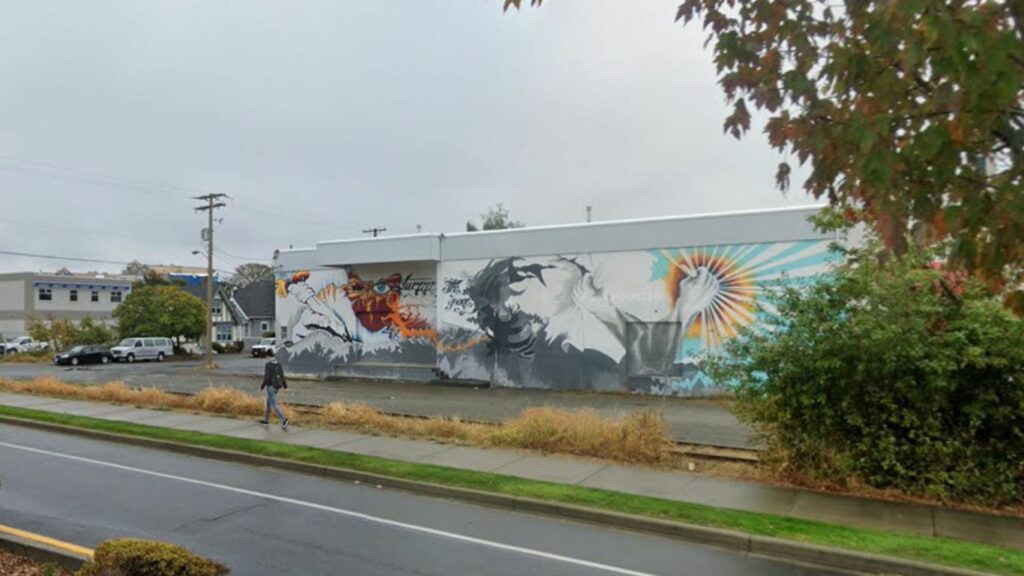
Outside the facility near the corner of Mary St. and Esquimalt Rd. in Vic West. Image via Google Maps, September 2021.
“We couldn’t be more pleased with the Victoria City Council’s decision to grant our rezoning request to allow us to go to a fourth reading for our Farmgate store,” says Rowe. “We are hoping to be open for Christmas this year.
“What we are most excited about is that we will finally be given the opportunity to have a forum to educate the public on all things cannabis while at the same time creating a larger revenue stream for the business during these very challenging times in our industry.”
Located at the corner of Mary St. and Esquimalt Rd., the VCC is situated along the Galloping Goose trail. Rowe told council the goal is to be a community centre that showcases products grown and produced on site, as well as products from other local BC growers.
The licence still requires final approval from the province and, once approved, would be the second official Farmgate licence, referred to as a Producer Retail Store (PRS). The first was ShuCanna in Salmon Arm, licensed in August. ShuCanna tells StratCann they hope to open by next week.
The province charges an application fee of $7,500, a first-year licensing fee of $1,500, and an annual renewal fee of $1,500. The licence allows federally licensed cannabis growers to also operate a retail store licence, a PRS, at the same site as their production facility or farm.
Ontario and New Brunswick also have formal farmgate licensing, with a handful of stores in each province.
Recent research investigating the interaction between psychedelics and opioids has found that using the two together to treat chronic pain may not be a good idea. Opioids have been the go-to treatment for pain disorders for a long time, but they have lost popularity over the past decade, especially as the public became increasingly aware of their side effects amid a deadly opioid crisis.
As a wave of drug reform swept across the country, cannabis emerged as one of the most popular alternative treatments for chronic pain because it is generally safer to use and doesn’t have side effects such as respiratory depression, addiction and physical dependence.
With more than 20 states now allowing marijuana for medical use, lawmakers in several states are working to advance psychedelic legislation and legalize psychedelic-assisted therapies. Most of the ongoing research on psychedelics has found that they can be effective at alleviating a myriad of hard-to-treat conditions, especially when paired with traditional talk therapy. Some research has also found that psychedelics may relieve chronic pain while boosting functionality and improving the quality of life in patients with chronic pain.
With this in mind, some people may think taking psychedelics along with opioids to treat chronic pain will grant them the best of both worlds, allowing them to alleviate their pain and improve their well-being all in one go. However, the study on psychedelic-opioid interactions found that this may have unintended consequences based on the doses and type of opioids and psychedelics consumed.
Researchers using mouse models discovered that low opioid doses could dampen the pain-relieving effects of LSD and DMT while larger doses made them more effective. In some cases, mixing opioids and psychedelics for chronic pain could potentially result in an opioid overdose that, if left untreated, could cause the patient to fall into a coma, suffer brain damage and even die.
Such cases call for immediate medical intervention to prevent the affected individual from suffering any permanent damage or dying. Symptoms of a potential overdose after mixing opioids and psychedelics to treat chronic pain include confusion, vomiting, slowed heartbeat, pale, discolored lips and skin, trouble breathing and loss of consciousness.
Mixing the two types of drugs can also result in respiratory system and central nervous system depression. Although there is some evidence pointing to psychedelics as potential chronic pain treatments, taking them with opioids seems to have more risks than benefits.
Ensure you follow your doctor’s opioid prescription carefully and avoid taking your painkillers with any other substances to prevent deadly or even fatal interactions.
Given that many people are currently self-prescribing psychedelics, it is paramount that psychedelics companies such as atai Life Sciences N.V. (NASDAQ: ATAI) expedite their drug-development programs so that those in need can access safe psychedelic treatments approved by the FDA. This will minimize adverse events since the psychedelics will be used in accordance to doctors’ orders.
About PsychedelicNewsWire
PsychedelicNewsWire (“PNW”) is a specialized communications platform with a focus on all aspects of psychedelics and the latest developments and advances in the psychedelics sector. It is one of 60+ brands within the Dynamic Brand Portfolio @ IBN that delivers: (1) access to a vast network of wire solutions via InvestorWire to efficiently and effectively reach a myriad of target markets, demographics and diverse industries; (2) article and editorial syndication to 5,000+ outlets; (3) enhanced press release enhancement to ensure maximum impact; (4) social media distribution via IBN to millions of social media followers; and (5) a full array of tailored corporate communications solutions. With broad reach and a seasoned team of contributing journalists and writers, PNW is uniquely positioned to best serve private and public companies that want to reach a wide audience of investors, influencers, consumers, journalists and the general public. By cutting through the overload of information in today’s market, PNW brings its clients unparalleled recognition and brand awareness. PNW is where breaking news, insightful content and actionable information converge.
To receive SMS alerts from PsychedelicNewsWire, text “Groovy” to 21000 (U.S. Mobile Phones Only)
Please see full terms of use and disclaimers on the PsychedelicNewsWire website applicable to all content provided by PNW, wherever published or re-published: https://www.PsychedelicNewsWire.com/Disclaimer
(Globe Newswire) Toronto — Entourage Health Corp., a Canadian producer and distributor of award-winning cannabis products, announced it has entered into an amended supply agreement with HEXO Corp.
The amendments, amongst other things, extend the initial term of the agreement, securing Entourage’s ongoing access to high-quality bulk cannabis biomass for its product portfolio. The prices of all products supplied under the supply agreement are fixed but subject to limited and periodical adjustments depending on prevailing production costs.
The amended terms follow HEXO’s acquisition by Tilray Brands, Inc., prompting Entourage to shift its sourcing strategy, now obtaining bulk cannabis from Tilray cultivation sites as needed. Simultaneously, the obligations of HEXO under the supply agreement have been assigned to Aphria Inc., Tilray’s principal operating entity and license holder.
Throughout this transition, Entourage has remained proactive, fostering continuous collaboration with Tilray to address all amendments. This effort represents a commitment to not only secure a consistent, high-quality cannabis supply but also to explore further opportunities.
Advertisement
“We take pride in the exceptional quality of our cannabis products. Our partnership with HEXO has consistently delivered impressive results. Moving ahead with Tilray, a highly respected company, we share a common goal — to develop a partnership deeply rooted in our promise to ensure our products continue to meet and exceed the highest standard of quality and satisfaction for our patients and consumers. We are excited to work together towards this shared objective with Tilray.” — George Scorsis, CEO and chair
(Globe Newswire) Vancouver — Rubicon Organics Inc., a licensed producer focused on cultivating and selling organic certified, premium cannabis, is pleased to announce the voting results from its annual general meeting of the shareholders, held on September 14, 2023.
A total of 40,649,434 shares were represented in person or by proxy at the meeting, constituting approximately 72 per cent of the Company’s total issued and outstanding common shares as of the record date.
Results of the AGM
The following matters put forward before shareholders for consideration and approval as set out in Rubicon Organics’ management information circular dated August 9, 2023 were approved by the shareholders:
— Setting the number of directors of the company at eight;
Advertisement
— Electing Margaret Brodie, John Pigott, David Donnan, Michael Detlefsen, Karen Proud, Len Boggio, Ian Gordon, and Doris Bitz as directors of the company for the ensuing year until the next annual meeting of the company; and
— Appointing PricewaterhouseCoopers LLP as the company’s auditors for the ensuing year with the company’s directors authorized to fix their remuneration.
An updated corporate presentation presented at the Meeting is available for viewing on Rubicon Organics’ website at www.rubiconorganics.com.
Appointment of board of directors members and chair
The board of directors is pleased to announce the appointment of Len Boggio to chair of the board of directors.
“The company stands on a solid foundation poised for success, even in the face of the current challenging market conditions in the Canadian cannabis industry. Rubicon Organics is well-positioned to capitalize on our sustained growth, leveraging our diverse portfolio of brands and driven by our formidable team.” — Len Boggio, chair of the board
About the independent directors
Len Boggio
Len Boggio is a Fellow Chartered Professional Accountant (FCPA) with significant experience as an auditor, advisor and independent director of public companies. During his 30 years at PwC in Vancouver and the UK, Len’s clients included Canadian and multi-national enterprises listed on stock exchanges in Canada, USA, UK, Europe and Australia. Since his retirement from PwC in 2012, he has served as an independent director of several public and private companies, and crown corporations, and agencies. Len has served as the chair of the Canadian Institute of Chartered Accountants (now CPA Canada) and president of the Institute of Chartered Accountants of British Columbia (now CPA BC), and played a senior role in the unification of the Canadian accounting profession. He holds both Bachelor of Arts and Bachelor of Commerce degrees (Honours) from the University of Windsor Ontario and is a member of the Institute of Corporate Directors (ICD.D).
Michael Detlefsen
Michael Detlefsen is the Managing Director of Pomegranate Capital Advisors, an active investor advisory firm based in Toronto. He has extensive strategic, operating, board and investor experience. He has held senior executive roles at Air Canada, Bell Canada/BCI, Maple Leaf Foods and Ceres Global Ag Corp. and has worked in the consulting practices of Monitor Company and PwC, as well as for the Government of Canada. He has advised and served on many boards, and is well-known and highly respected in the North American business community and within governments for his strategic acumen, operational insights, objective perspective, and ability to fix and grow businesses under challenging circumstances. Michael holds a Bachelor of Commerce (Honours) from Queen’s University and a Master in Public Policy from the Harvard Kennedy School and is a member of the Institute of Corporate Directors (ICD.D). He was named to Canada’s Top 40 Under 40 in 2002.
David Donnan
David Donnan is a leader in the global food and agricultural sector with over 40 years of experience working in consumer and food products, technology and retail industries. He is a Partner Emeritus at Kearney, an international management consulting firm and was previously a Senior Partner at the firm where he led their global food and beverage team. Currently David is an Adjunct Professor at Northwestern University in Chicago as well as an investor in new ventures in agtech and foodtech. He is a board member of Protein Industries Canada and the Foundation for Food and Agriculture Research in Washington DC.
Ian Gordon
Ian Gordon recently retired as the Senior Vice President of Loblaw Brands Limited where he led the development and innovation behind some of Canada’s largest consumer brands including President’s Choice, no name and Life Brand. With the growing issue of plastic waste in the environment, Ian now leads Loblaw’s plastic reduction strategy, overseeing the company’s cross-functional steering committee. Prior to Loblaw, Ian held senior sales and marketing roles at leading CPG companies including Unilever and International Multifoods, and President of ACLC Advertising. Ian is a board member of Recycle BC, The Canada Plastics Pact, and the Food from Thought research program at the University of Guelph. Ian is a graduate of Queen’s University.
John Pigott
John Pigott is the CEO of Club Coffee, a leading Canadian roaster, contract manufacturer and distributor of packaged coffees. He is also the President and CEO of Morrison Lamothe Inc., an independent Canadian Food & Beverage processor. John has extensive experience in strategic planning, sales and product development in manufacturing frozen food products for many national and retailer owned brands and is committed to creating eco-friendly products. John has been an active force in his community for almost 40 years and has served on numerous private company and industry boards, task forces, and associations including the Canadian Association of Family Business, the University of Ottawa — Faculty of Administration and the Young Presidents Organization.
Karen Proud
Karen Proud is a policy strategist who has over 20 years experience in government relations, policy development, and regulatory and legislative affairs. Karen is currently the President & CEO of Fertilizer Canada. Prior to joining Fertilizer Canada, Karen served as the Chief Operating Officer for Food, Health and Consumer Products Canada, President of Consumer Health Products Canada, and Vice President of Federal Government Affairs for the Retail Council of Canada. Karen is a board member of Nutrients for Life, a charitable organization focusing on soil science and agricultural sustainability. Karen is also a past board member of the Global Self Care Federation, Labour Watch, as well as the Canadian Partnership for Consumer Food Safety Education. Karen holds a Bachelor of Applied Science from Toronto Metropolitan University (formerly Ryerson University).
Doris Bitz
Doris Bitz has over 30 years of experience successfully building, scaling and growing manufacturing and CPG businesses in North America. In Doris’ most recent assignment as President, Retail of Dessert Holdings, a leading manufacturer of high-quality dessert products sold through retail and food service customers, Doris was responsible for the vision, strategy and commercial operations that propelled the business from annual revenues of $65 million to nearly $1 billion through organic growth and M&A. Doris has also held executive marketing positions at top-tier CPG companies including PepsiCo Canada and General Mills. Doris holds an HBA and an MBA from the Ivey School of Business at Western University.
Lexaria’s IND application for its U.S. Phase 1b Hypertension Clinical Study, HYPER-H23-1, remains on track despite setbacks
Work mostly under Lexaria’s control was completed earlier this year, while work that is outside its control remains delayed
Regardless, Lexaria continues to make progress, even as it looks to take advantage of the growing global cardiovascular drugs market, which is projected to post a CAGR of 3.1% between 2021 and 2026
Chris Bunka, Lexaria’s CEO, has lauded the company’s exceptional discovery, which demonstrates the ability of the patented DehydraTECH-processed CBD to lower blood pressure in the patient population
Lexaria Bioscience (NASDAQ: LEXX), a global innovator in drug delivery platforms, remains on track for its upcoming submission of an Investigational New Drug (“IND”) application for its planned U.S. Phase 1b Hypertension Clinical Trial, dubbed HYPER-H23-1. The study, entitled “A Phase 1b Randomized, Double-Blind, Placebo-Controlled Study of the Safety, Pharmacokinetics, and Pharmacodynamics of DehydraTECH-CBD in Subjects with Stage 1 or Stage 2 Hypertension,” looks to evaluate the safety and tolerability of Lexaria’s patented DehydraTECH(TM)-processed CBD in hypertensive patients (https://cnw.fm/8q5JV).
This study builds on five previous human clinical studies conducted from 2018 to 2022, which will be integral to the successful filing and review of the planned IND submission. Most notably, the studies, which involved 134 healthy and hypertensive persons, evidenced significant reductions in resting blood pressure over both acute and multi-week dosing regimens. In addition, the studies also showed zero serious adverse events, evidencing DehydraTECH-CBD’s potential to have pronounced clinical benefits relative to available anti-hypertensive therapeutics.
Work that is mainly under Lexaria’s control was completed earlier this year. This included batch manufacturing of DehydraTECH-CBD and placebo materials necessary for the application. However, work outside of Lexaria’s control remains delayed. This includes the provision of required documentation by a materials supplier and stability testing of the material. As such, Lexaria cannot yet submit the IND package to the FDA until the delays have been addressed, although progress is still being made.
In 2021, the global cardiovascular drugs market was estimated at $146.51 billion. By 2026, the market is expected to be valued at $173.48 billion, posting a CAGR of 3.1% (https://cnw.fm/ry230). Lexaria looks to capitalize on this growth while carving a decent market share. The IND application with the FDA will be integral to the company realizing this goal and bringing relief to the many people living with cardiovascular conditions.
“That we were able to lower blood pressure in our patient population over multiple weeks using DehydraTECH-CBD is an exceptional discovery, given that previous studies by others using other oral CBD formulations have failed to evidence this sustained benefit,” noted Chris Bunka, Lexaria’s CEO (https://cnw.fm/f76N9).
So far, Lexaria is aware of only a handful of other published research studies that have investigated whether a sustained decrease in resting blood pressure is possible following multiple weeks of oral CBD dosing. However, it notes that none have succeeded in achieving this, proving DehydraTECH-CBD’s superior power to reduce blood pressure over other oral CBD formulations.
NOTE TO INVESTORS: The latest news and updates relating to LEXX are available in the company’s newsroom at https://cnw.fm/LEXX
About CannabisNewsWire
CannabisNewsWire (“CNW”) is a specialized communications platform with a focus on cannabis news and the cannabis sector. It is one of 60+ brands within the Dynamic Brand Portfolio @ IBN that delivers: (1) access to a vast network of wire solutions via InvestorWire to efficiently and effectively reach a myriad of target markets, demographics and diverse industries; (2) article and editorial syndication to 5,000+ outlets; (3) enhanced press release enhancement to ensure maximum impact; (4) social media distribution via IBN to millions of social media followers; and (5) a full array of tailored corporate communications solutions. With broad reach and a seasoned team of contributing journalists and writers, CNW is uniquely positioned to best serve private and public companies that want to reach a wide audience of investors, influencers, consumers, journalists and the general public. By cutting through the overload of information in today’s market, CNW brings its clients unparalleled recognition and brand awareness. CNW is where breaking news, insightful content and actionable information converge.
To receive SMS alerts from CNW, text CANNABIS to 844-397-5787 (U.S. Mobile Phones Only)
Please see full terms of use and disclaimers on the CannabisNewsWire website applicable to all content provided by CNW, wherever published or re-published: https://www.CannabisNewsWire.com/Disclaimer
Nestled in the heart of Cumberland, BC, Trugreen Cannabis is pioneering a project that promises to transform the landscape of cannabis consumption spaces. Under the visionary leadership of Michael Arneja, President of Trugreen Cannabis, this endeavour is set to establish one of British Columbia’s first outdoor cannabis consumption lounges.
This ambitious project first took root with a series of pop-up spaces adjacent to Trugreen Cannabis, serving as a summer pilot project. The goal was to gather insights and pave the way for a more permanent and official community space, slated to be unveiled by the end of 2024 under the moniker “CUB,” short for the Community Urban Bazaar.
Arneja’s vision extends beyond the mere creation of a cannabis consumption area: it seeks to nurture “a stigma-free space where the community can gather and celebrate the cannabis culture with a responsible blend of cannabis use and community building.”
“We’ve been operating these pop-ups to see what the space could look like, and to get feedback from the community on what they want it to look like,” he adds, highlighting the project’s community-driven nature.
An artist rendering of the future Community Urban Bazaar
The space, occupying an adjoining lot next to Trugreen, was initially conceived as an “incubator” for local entrepreneurs. However, the overwhelming interest from existing businesses in the area has led to the expectation that CUB will soon house a bakery, coffee shop, fish and chips establishment, and serve as a venue for community activities like yoga and live music.
Guiding this unique endeavour alongside Arneja is Max Oudendag, who has been instrumental in curating a space that seamlessly combines family-friendly community activities with responsible cannabis consumption. Their mission is clear: prioritize being kid and family-friendly while establishing a legal and community-accepted cannabis consumption area.
“We’re excited to be in a position to explore how to break down the stigma of cannabis consumption and find a way to integrate that into a healthy community gathering space,” Oudendag emphasizes.
Their dedication has not gone unnoticed. The project is on a “shortlist” to become one of the first legal consumption spaces in British Columbia. Earlier this year, British Columbia released a “What We Heard” report, soliciting input on the nature of cannabis consumption spaces in the province. This feedback will significantly influence provincial decisions regarding the allowance and regulation of such spaces.
British Columbia’s stance on indoor smoking and vaping restrictions has made outdoor consumption spaces like the one in Cumberland an attractive option. Arneja recognizes that the ability to promote and formally consume cannabis in an outdoor setting is vital for the success of their venture.
“We still have a lot of work to do, but we hope to be the first, if not one of the first, community consumption spaces of this kind in British Columbia.”
As the journey unfolds, Cumberland’s cannabis culture landscape is set for a remarkable transformation. Trugreen Cannabis and the Community Urban Bazaar aim to redefine how cannabis is perceived and enjoyed, all while fostering a vibrant and inclusive community hub. In this pioneering project, British Columbia may find a blueprint for responsible and community-driven cannabis consumption.
~Michael Arneja
For inquiries and further information, please contact Michael Arneja at [email protected] or 250-400-0420, and @cub.space on Instagram.
Join the movement and witness the evolution of cannabis culture in Cumberland, BC.
Color remediation of cannabis extracts is a critical process within the cannabis industry, especially for products intended for consumption. The color of cannabis extracts can vary widely due to factors such as extraction methods, plant material, and post-processing techniques. However, consumers tend to expect certain color profiles in the cannabis products they purchase. So, color remediation is often used to generate a product more in-line with the typical expectations of consumers. Importantly though, color remediation does not only provide aesthetic benefits; it can also affect the potency and overall quality of the product. [1]
Color remediation through Chromatography
Chromatography separates substances according to their chemical characteristics, which aids both in identification and purification. The fundamental principle of chromatography involves the interaction between the components of a mixture (cannabis and its extracts, in this example) and a stationary phase (a solid or liquid) and a mobile phase (a liquid or gas) that moves through or over the stationary phase. As the mobile phase passes through the stationary phase, the different components of the mixture interact with it to varying degrees. This interaction causes the components to separate and move at different rates, leading to their distinct migration and separation.
The most popular approach in cannabis production is a color remediation column (CRC), which targets the removal of dark pigments from the cannabis. So, in color remediation chromatography, the primary goal of the procedure is to selectively pull out color contaminants, while minimizing the loss of desired chemicals in the final product (i.e., cannabinoids, terpenes, and flavonoids). Different stationary phases are used depending on the kind of compounds we want to get rid-off, but a common substrate for color remediation is a mix of bentonite clay and silica gel. [2] The chromatographic process could be not perfectly selective for contaminants. For this reasonmanufacturers must strike a balance between color extraction, desired purity and terpenic profiles.
Pharmaceutical companies producing medical-grade products must ensure the manufacturing of a consistent, reliable product. The color of the product is one common means to verify the quality of the extract and if it has been manufactured as intended (i.e., it is common for pharmacists to check color before dispensing to ensure a medication meets standards – if a drug is “off color”, it is likely to also be “off” in other key domains, including dose). So, establishing color standards is a vital component of drug manufacturing patents.
In the case of cannabis isolates, some patents describes the process for producing “clear colorless solutions” of cannabinoids, and it is defined what the final product should look like.
Risks of color remediation practice
While the legitimate use of color remediation technology aims to enhance the quality and safety of cannabis products for consumers, ethical concerns and potential deceptive practices within the industry arise. The color of cannabis extracts has long been associated with product quality, and consumers often associate vibrant colors with higher quality extracts. However, unscrupulous operators may exploit color remediation techniques to transform lower quality extracts into visually appealing golden products, misrepresenting their quality to consumers. This raises ethical concerns about transparency and consumer trust within the cannabis market.
There is also some question about what should be done about residual solvents, which are used in the color remediation process to remove pigments. Many jurisdictions have specific laws/regulations about how to monitor for residual solvents and what levels are acceptable. Establishing procedures verifying and minimizing residual solvents is important, as these compounds could potentially have health implications. [3] Furthermore, there are also no currently established/widely-used guidelines for labeling a product as having undergone color remediation. Doing so could help boost transparency and inform consumer choice.
In conclusion, color remediation is already commonly used in the cannabis industry. Chromatography is a powerful purification technique and there are already well-established practices for using chromatography to ensure a final product looks the way it should. There is still variation in how consistently different manufacturers adhere to gold-standards of production/extraction. As technology continues to advance, the cannabis industry must navigate the procedural and ethical challenges described herein to establish responsible practices and maintain the integrity of its products.
References:
[1] Kunle, Oluyemisi, F., Egharevba, Henry, O., Ahmadu and Peter, O. Standardization of herbal medicines-A review. International journal of biodiversity and conservation. 2014, 4(3), pp.101-112.
[2] Precision Extraction Team. Color remediation in BHO extraction. Precision Extraction Solutions. Accessed Aug. 16, 2023.
[3] Goldman, S., Bramante, J., Vrdoljak, G., Guo, W., Wang, Y., Marjanovic, O., Orlowicz, S., Di Lorenzo, R., & Noestheden, M. The analytical landscape of cannabis compliance testing, Journal of Liquid Chromatography & Related Technologies, 2021, 44:9-10, 403-420, DOI: 10.1080/10826076.2021.1996390
Marijuana sales crossing state lines have proven to be a lucrative source of revenue for retailers in the United States, and recent data suggests that a similar trend is emerging along international borders, particularly with Mexico. Insights gathered from various sources, including LeafLink, quarterly reports, state agencies and interviews with marijuana companies, support this observation.
LeafLink’s analysis of numerous ZIP codes found that when new recreational marijuana markets open, retailers near state borders tend to increase their inventory orders significantly compared to those located further inland. Over the past three years, wholesale cannabis product purchases by border stores surged by 140% after the introduction of recreational sales. In contrast, retailers situated in more interior regions increased their purchases by only 80%.
Several factors contribute to these trends, with neighboring state marijuana regulations playing a significant role. For example, Illinois retailers near Wisconsin continue to attract Wisconsinites even after four years of recreational sales in Illinois because marijuana possession remains illegal in Wisconsin.
Additionally, varying retail sales taxes play a part. Operators in the St. Louis area are witnessing an influx of shoppers from southern Illinois, where marijuana taxes are triple the rate of Missouri’s.
Missouri’s recent launch of adult-use sales has created a ripple effect in the Midwest, as it borders eight states, with Illinois being the sole state offering recreational marijuana sales. Missouri’s low 6% retail tax on recreational marijuana purchases attracts Illinois consumers, resulting in significant foot traffic across the Mississippi River.
The impact extends to the wholesale market, with wholesale purchases per store in the Kansas City, Missouri, market increasing by 406% after the launch of recreational sales, according to LeafLink data. Similarly, in the St. Louis market, wholesale purchases per store increased by nearly 57%.
In Maryland, which recently entered the recreational cannabis market, retailers along the state’s borders are experiencing increased demand, with some doubling their orders to meet customer needs. Wholesale product orders increased by 115% in Elkton, near the Delaware border, while in the Germantown/Rockville area, monthly wholesale purchases rose by about 42% since recreational sales began.
Across the U.S.-Mexico border, commercial ties run deep, with residents often crossing freely between Sunland Park, El Paso and Juarez for various purposes, including shopping for regulated marijuana. Other border communities, including Hobbs and Clovis, are also witnessing strong sales, indicating that Texans and some Mexicans are crossing the border to purchase marijuana from New Mexico retailers.
It is highly likely that as cannabis retailers along borders see increased sales, other ancillary businesses such as Innovative Industrial Properties Inc. (NYSE: IIPR) may also be benefiting from this boom as demand for their products and services rises.
About CNW420
CNW420 spotlights the latest developments in the rapidly evolving cannabis industry through the release of two informative articles each business day. Our concise, informative content serves as a gateway for investors interested in the legalized cannabis sector and provides updates on how regulatory developments may impact financial markets. Articles are released each business day at 4:20 a.m. and 4:20 p.m. Eastern – our tribute to the time synonymous with cannabis culture. If marijuana and the burgeoning industry surrounding it are on your radar, CNW420 is for you! Check back daily to stay up-to-date on the latest milestones in the fast -changing world of cannabis.
To receive SMS alerts from CNW, text CANNABIS to 844-397-5787 (U.S. Mobile Phones Only)
Please see full terms of use and disclaimers on the CannabisNewsWire website applicable to all content provided by CNW, wherever published or re-published: https://www.CannabisNewsWire.com/Disclaimer
The Many Ways Our Rights Have Been Usurped Since 9/11
By John & Nisha Whitehead
“We the people are the rightful masters of both Congress and the courts, not to overthrow the Constitution but to overthrow the men who pervert the Constitution.” — Abraham Lincoln
Those who gave us the Constitution and the Bill of Rights believed that the government exists at the behest of its citizens. It is there to protect, defend and even enhance our freedoms, not violate them.
Unfortunately, although the Bill of Rights was adopted as a means of protecting the people against government tyranny, in America today, the government does whatever it wants, freedom be damned.
In the 22 years since the USA Patriot Act—a massive 342-page wish list of expanded powers for the FBI and CIA—was rammed through Congress in the wake of the so-called 9/11 terror attacks, it has snowballed into the eradication of every vital safeguard against government overreach, corruption and abuse.
The Patriot Act drove a stake through the heart of the Bill of Rights, violating at least six of the ten original amendments—the First, Fourth, Fifth, Sixth, Seventh and Eighth Amendments—and possibly the Thirteenth and Fourteenth Amendments, as well.
The Patriot Act also redefined terrorism so broadly that many non-terrorist political activities such as protest marches, demonstrations and civil disobedience are now considered potential terrorist acts, thereby rendering anyone desiring to engage in protected First Amendment expressive activities as suspects of the surveillance state.
The Patriot Act justified broader domestic surveillance, the logic being that if government agents knew more about each American, they could distinguish the terrorists from law-abiding citizens—no doubt a reflexive impulse shared by small-town police and federal agents alike.
This, according to Washington Post reporter Robert O’Harrow, Jr., was a fantasy that “had been brewing in the law enforcement world for a long time.” And 9/11 provided the government with the perfect excuse for conducting far-reaching surveillance and collecting mountains of information on even the most law-abiding citizen.
Federal agents and police officers are now authorized to conduct covert black bag “sneak-and-peak” searches of homes and offices while you are away and confiscate your personal property without first notifying you of their intent or their presence.
The law also granted the FBI the right to come to your place of employment, demand your personal records and question your supervisors and fellow employees, all without notifying you; allowed the government access to your medical records, school records and practically every personal record about you; and allowed the government to secretly demand to see records of books or magazines you’ve checked out in any public library and Internet sites you’ve visited (at least 545 libraries received such demands in the first year following passage of the Patriot Act).
In the name of fighting terrorism, government officials are now permitted to monitor religious and political institutions with no suspicion of criminal wrongdoing; prosecute librarians or keepers of any other records if they tell anyone that the government has subpoenaed information related to a terror investigation; monitor conversations between attorneys and clients; search and seize Americans’ papers and effects without showing probable cause; and jail Americans indefinitely without a trial, among other things.
The federal government also made liberal use of its new powers, especially through the use (and abuse) of the nefarious national security letters, which allow the FBI to demand personal customer records from Internet Service Providers, financial institutions and credit companies at the mere say-so of the government agent in charge of a local FBI office and without prior court approval.
In fact, since 9/11, we’ve been spied on by surveillance cameras, eavesdropped on by government agents, had our belongings searched, our phones tapped, our mail opened, our email monitored, our opinions questioned, our purchases scrutinized (under the USA Patriot Act, banks are required to analyze your transactions for any patterns that raise suspicion and to see if you are connected to any objectionable people), and our activities watched.
We’re also being subjected to invasive patdowns and whole-body scans of our persons and seizures of our electronic devices in the nation’s airports. We can’t even purchase certain cold medicines at the pharmacy anymore without it being reported to the government and our names being placed on a watch list.
In this way, “we the people” continue to be terrorized, traumatized, and tricked into a semi-permanent state of compliance by a government that cares nothing for our lives or our liberties.
The bogeyman’s names and faces have changed over time (terrorism, the war on drugs, illegal immigration, a viral pandemic, and more to come), but the end result remains the same: in the so-called name of national security, the Constitution has been steadily chipped away at, undermined, eroded, whittled down, and generally discarded with the support of Congress, the White House, and the courts.
A recitation of the Bill of Rights—set against a backdrop of government surveillance, militarized police, SWAT team raids, asset forfeiture, eminent domain, overcriminalization, armed surveillance drones, whole body scanners, stop and frisk searches, vaccine mandates, lockdowns, and the like (all sanctioned by Congress, the White House, and the courts)—would understandably sound more like a eulogy to freedoms lost than an affirmation of rights we truly possess.
What we are left with today is but a shadow of the robust document adopted more than two centuries ago. Sadly, most of the damage has been inflicted upon the Bill of Rights.
Here is what it means to live under the Constitution, with the nation still suffering blowback from the permanent state of emergency brought about by 9/11 and COVID-19.
The First Amendment is supposed to protect the freedom to speak your mind, assemble and protest nonviolently without being bridled by the government. It also protects the freedom of the media, as well as the right to worship and pray without interference. In other words, Americans should not be silenced by the government. To the founders, all of America was a free speech zone.
Despite the clear protections found in the First Amendment, the freedoms described therein are under constant assault. Increasingly, Americans are being persecuted for exercising their First Amendment rights and speaking out against government corruption. Activists are being arrested and charged for daring to film police officers engaged in harassment or abusive practices. Journalists are being prosecuted for reporting on whistleblowers. States are passing legislation to muzzle reporting on cruel and abusive corporate practices. Religious ministries are being fined for attempting to feed and house the homeless. Protesters are being tear-gassed, beaten, arrested and forced into “free speech zones.” And under the guise of “government speech,” the courts have reasoned that the government can discriminate freely against any First Amendment activity that takes place within a so-called government forum.
The Second Amendment was intended to guarantee “the right of the people to keep and bear arms.” Essentially, this amendment was intended to give the citizenry the means to resist tyrannical government. Yet while gun ownership has been recognized by the U.S. Supreme Court as an individual citizen right, Americans remain powerless to defend themselves against red flag gun laws, militarized police, SWAT team raids, and government agencies armed to the teeth with military weapons better suited to the battlefield.
The Third Amendment reinforces the principle that civilian-elected officials are superior to the military by prohibiting the military from entering any citizen’s home without “the consent of the owner.” With the police increasingly training like the military, acting like the military, and posing as military forces—complete with heavily armed SWAT teams, military weapons, assault vehicles, etc.—it is clear that we now have what the founders feared most—a standing army on American soil.
The Fourth Amendment prohibits government agents from conducting surveillance on you or touching you or encroaching on your private property unless they have evidence that you’re up to something criminal. In other words, the Fourth Amendment ensures privacy and bodily integrity. Unfortunately, the Fourth Amendment has suffered the greatest damage in recent years and has been all but eviscerated by an unwarranted expansion of governmental police powers that include strip searches and even anal and vaginal searches of citizens, surveillance (corporate and otherwise), and intrusions justified in the name of fighting terrorism, as well as the outsourcing of otherwise illegal activities to private contractors.
The Fifth Amendment and the Sixth Amendment work in tandem. These amendments supposedly ensure that you are innocent until proven guilty, and government authorities cannot deprive you of your life, your liberty or your property without the right to an attorney and a fair trial before a civilian judge. However, in the new suspect society in which we live, where surveillance is the norm, these fundamental principles have been upended. Certainly, if the government can arbitrarily freeze, seize or lay claim to your property (money, land or possessions) under government asset forfeiture schemes, you have no true rights.
The Seventh Amendment guarantees citizens the right to a jury trial. Yet when the populace has no idea of what’s in the Constitution—civic education has virtually disappeared from most school curriculums—that inevitably translates to an ignorant jury incapable of distinguishing justice and the law from their own preconceived notions and fears. However, as a growing number of citizens are coming to realize, the power of the jury to nullify the government’s actions—and thereby help balance the scales of justice—is not to be underestimated. Jury nullification reminds the government that “we the people” retain the power to ultimately determine what laws are just.
The Eighth Amendment is similar to the Sixth in that it is supposed to protect the rights of the accused and forbid the use of cruel and unusual punishment. However, the Supreme Court’s determination that what constitutes “cruel and unusual” should be dependent on the “evolving standards of decency that mark the progress of a maturing society” leaves us with little protection in the face of a society lacking in morals altogether.
The Ninth Amendment provides that other rights not enumerated in the Constitution are nonetheless retained by the people. Popular sovereignty—the belief that the power to govern flows upward from the people rather than downward from the rulers—is clearly evident in this amendment. However, it has since been turned on its head by a centralized federal government that sees itself as supreme and which continues to pass more and more laws that restrict our freedoms under the pretext that it has an “important government interest” in doing so.
As for the Tenth Amendment’s reminder that the people and the states retain every authority that is not otherwise mentioned in the Constitution, that assurance of a system of government in which power is divided among local, state and national entities has long since been rendered moot by the centralized Washington, DC, power elite—the president, Congress and the courts.
Thus, if there is any sense to be made from this recitation of freedoms lost, it is simply this: our individual freedoms have been eviscerated so that the government’s powers could be expanded.
It was no idle happenstance that the Constitution, which was adopted 236 years ago on Sept. 17, 1787, opens with these three powerful words: “We the people.” As the Preamble proclaims:
We, the people of the United States, in order to form a more perfect Union, establish justice, insure domestic tranquility, provide for the common defense, promote the general welfare, and secure the blessings of liberty to ourselves and our posterity, do ordain and establish this CONSTITUTION for the United States of America.
In other words, it’s our job to make the government play by the rules of the Constitution.
We are supposed to be the masters and they—the government and its agents—are the servants.
We the American people—the citizenry—are supposed to be the arbiters and ultimate guardians of America’s welfare, defense, liberty, laws and prosperity.
Most citizens have little, if any, knowledge about their basic rights. And our educational system does a poor job of teaching the basic freedoms guaranteed in the Constitution and the Bill of Rights.
Government leaders and politicians are also ill-informed. Although they take an oath to uphold, support and defend the Constitution against “enemies foreign and domestic,” their lack of education about our fundamental rights often causes them to be enemies of the Bill of Rights.
From the President on down, anyone taking public office should have a working knowledge of the Constitution and the Bill of Rights and should be held accountable for upholding their precepts. One way to ensure this would be to require government leaders to take a course on the Constitution and pass a thorough examination thereof before being allowed to take office.
Some critics are advocating that students pass the United States citizenship exam in order to graduate from high school. Others recommend that it must be a prerequisite for attending college. I’d go so far as to argue that students should have to pass the citizenship exam before graduating from grade school.
Here’s an idea to get educated and take a stand for freedom: anyone who signs up to become a member of The Rutherford Institute gets a wallet-sized Bill of Rights card and a Know Your Rights card. Use this card to teach your children the freedoms found in the Bill of Rights.
A healthy, representative government is hard work. It takes a citizenry that is informed about the issues, educated about how the government operates, and willing to do more than grouse and complain.
The powers-that-be want us to remain divided over politics, hostile to those with whom we disagree politically, and intolerant of anyone or anything whose solutions to what ails this country differ from our own. They also want us to believe that our job as citizens begins and ends on Election Day.
Yet there are 330 million of us in this country. Imagine what we could accomplish if we actually worked together, presented a united front, and spoke with one voice.











Recent Comments