We’re excited to share some fantastic updates about the upcoming Grow Up Awards!
Record-Breaking Voting A huge thank you to all who participated in the awards voting this year. We received an incredible 13,000+ votes, shattering all previous records. This amazing turnout is a testament to the vibrant community that makes up the Canadian cannabis industry. Congratulations to our finalists! We encourage you to be part of the event and get the recognition you deserve.
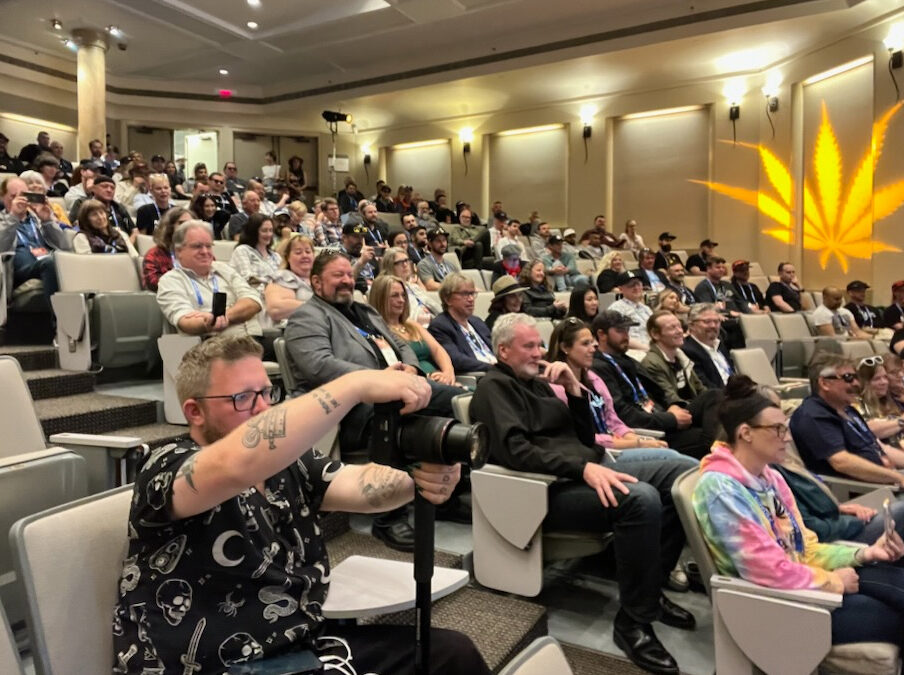
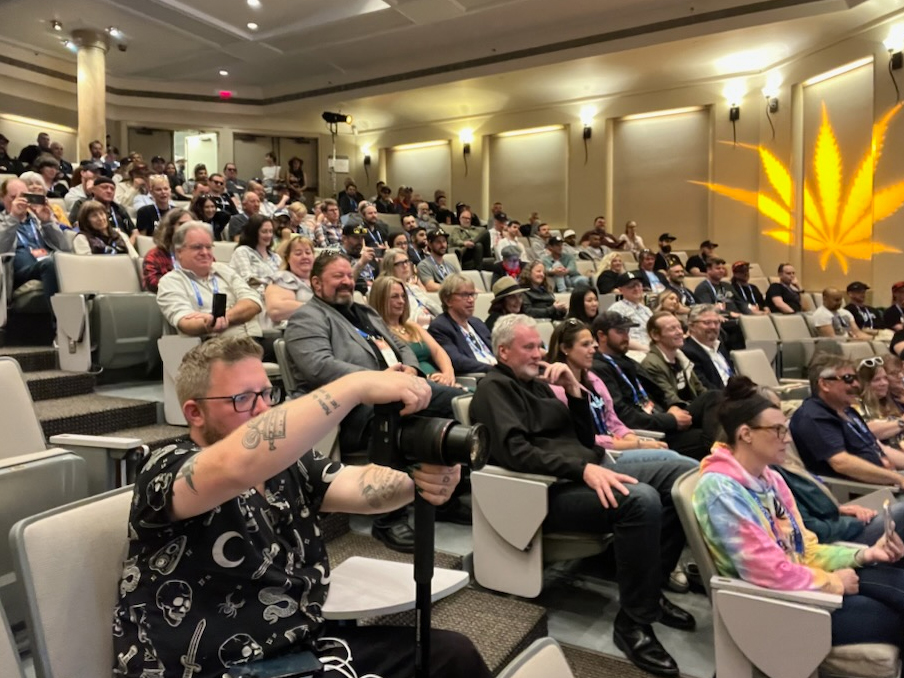
New Format, New Pricing In an effort to make this occasion even more special, we’ve updated the format of our event. Instead of the previous dinner format at the Crystal Gardens, we’re switching to a theatre-style awards celebration in the Lecture Hall at the Victoria Conference Centre, 720 Douglas St. Victoria BC. This allows us to lower the ticket price to just $60 per person and include it in the price of a VIP pass.
Here’s what the evening will look like on Sunday, October 1:
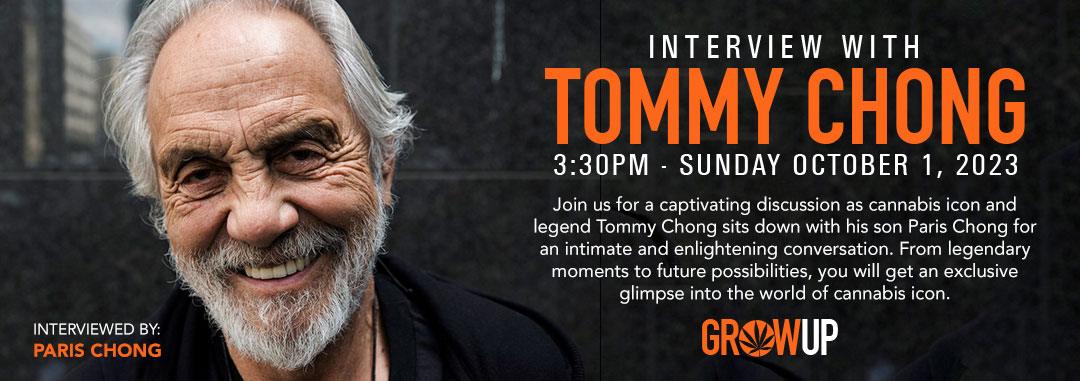
Special awards for: Grower of the Year: To be announced Legends of Cannabis: Tommy Chong Hall of Fame: Kevin Jodrey Pioneer of Cannabis: Wanda James Lifetime Achievement Award: Ted Smith
After-party, Celebrating the Best in Cannabis, at the Sticky Wicket, Open to ticket and badge holders, starting at 8:00 pm
Our goal with this new format is to make the awards more accessible and affordable for everyone who wishes to attend.
We’re thrilled about these changes and we can’t wait to Celebrate the Best in Cannabis with all of you!
Psychedelics have the potential to revolutionize psychiatry by significantly improving treatment outcomes and safety while minimizing side effects. A plethora of studies have revealed that hallucinogenic compounds such as psilocybin can be especially effective when combined with talk therapy, providing patients with immense relief against a myriad of mental-health conditions where conventional mental-health treatments weren’t fully effective.
Although the field of psychedelic research is still quite young, it has delivered such impressive findings that lawmakers in several states are considering legalizing the therapeutic use of psychedelics against mental-health conditions. Some companies have even started covering psychedelic therapy in their employees’ health-benefits packages, indicating that psychedelic-based medications are becoming increasingly accepted by the corporate world.
The influx in psychedelic research comes at a time when mental-health levels in America are at historic lows amid astronomic living costs, rising inflation and increasing distrust in the healthcare industry. Close to 20% of workers in the country report poor or fair mental health, which impacts productivity in the workplace by increasing unplanned absences by more than four times.
At least 50 companies across the country have shown interest in including psychedelic therapy in their employee healthcare plans so far on top of conventional mental-health treatments such as antidepressants. Based on the growing body of research on psychedelics, psychedelic therapy could potentially alleviate conditions such as anxiety and depression that have the potential to impact employee productivity and even reduce company profits in the long term.
Psychedelic-based treatments are especially attractive to companies because they can deliver relatively long-term benefits with single or minimal doses. This eliminates the need for daily antidepressants, saving employees from experiencing the variety of side effects of antidepressants while reducing long-term healthcare plan costs for the employer. Providing employees with the option of using safer and more effective mental-health treatments will undoubtedly keep employees productive and at the top of their game, which will ultimately reflect in the company’s bottom line.
Although the number is still small, employers are working around limitations created by the federal prohibition of psychedelics to include hallucinogenic treatment in health plans. Third-party health insurance administrator Enthea recently partnered with natural soap brand Dr. Bronner’s, making the natural soap producer the first company in the country to provide its employees with coverage for ketamine-assisted therapy. According to Enthea, it will also include coverage for psilocybin-assisted therapy and MDMA-assisted therapy once those treatments receive approval from the FDA.
As entities such as atai Life Sciences N.V. (NASDAQ: ATAI) take their drug-development pipelines through the FDA approval process, more employers are likely to warm up to psychedelics treatments and include them in the health insurance plans they offer their employees.
About PsychedelicNewsWire
PsychedelicNewsWire (PNW) is a specialized content distribution company that (1) aggregates and distributes news and information on the latest developments in all aspects and advances of psychedelics and their use, (2) creates PsychedelicNewsBreaks designed to quickly update investors on important industry news, (3) leverages a team of expert editors to enhance press releases for maximum impact, (4) assists companies with the management and optimization of social media across a range of platforms, and (5) delivers unparalleled corporate communication solutions. PNW stays abreast of the latest information and has established a reputation as the go to source for coverage of psychedelics, therapeutics and emerging market opportunities. Our team of seasoned journalists has a proven track record of helping both public and private companies gain traction with a wide audience of investors, consumers, media outlets and the general public by leveraging our expansive dissemination network of more than 5,000 key syndication outlets. PNW is committed to delivering improved visibility and brand recognition to companies operating in the emerging markets of psychedelics.
To receive instant SMS alerts, text “Groovy” to 844-397-5787 (U.S. Mobile Phones Only)
Please see full terms of use and disclaimers on the PsychedelicNewsWire website applicable to all content provided by PNW, wherever published or re-published: https://www.psychedelicnewswire.com/Disclaimer
Do you have questions or are you interested in working with PNW? Ask our Editor
The largest B2B cannabis industry event in New Jersey – NECANN’s New Jersey Cannabis Convention – returns to Atlantic City on September 8-9, 2023. Now in its 4th year, the event, which is part of the largest cannabis and hemp convention series in the world, continues to grow as the New Jersey cannabis market develops. It comes more than a year after the state legalized the sale of recreational marijuana, which led to the April 2023 opening of the first licensed recreational marijuana dispensary in Atlantic City (https://cnw.fm/KVDTv).
With such stores finally opening and the number of licenses rapidly increasing, the number of ancillary businesses, entrepreneurs, investors, cultivators, medical dispensaries, license holders, and suppliers, is increasing by the day. Conveniently, NECANN’s New Jersey Cannabis Convention is designed for this category of budding industry players and entrants, among others. The event represents everything that touches cannabis and promises to be the perfect setting for attendees to learn about the industry.
“There’s everything here that you could possibly learn about the cannabis industry. Everything from grow lights, payment processors, banking, [and] accounting. If you are looking to start any type of cannabis business, you can come to NECANN and learn whatever you are trying to learn,” said Brian O’Connor of Paybotic, a payment processor that enables cannabis businesses to transact, in a video recapping the 2021 event (https://cnw.fm/HJvmM).
What makes the New Jersey Cannabis Convention particularly appealing to startups is the fact that it is an opportunity to meet similar sprouting businesses. Even so, the event is equally suited for exhibitors drawn from every niche within the cannabis industry. Attracting thousands of cultivators, industry professionals, educators, and advocates, from hundreds of local and national companies, the New Jersey Cannabis Convention promises a lot of foot traffic, much to the advantage of vendors and businesses showcasing their products. In fact, exhibitors who were part of previous editions of the event have lauded its role in bringing them closer to investors and potential business partners. The 2023 event will be no different, so reserve your exhibit space today.
For attendees in pursuit of knowledge, there’s more! The activity-packed two-day event features learnings from expert speakers delivered through dozens of planned sessions. Moreover, there are plenty of networking opportunities. The New Jersey Cannabis Convention is the perfect setting to learn, meet, and network. So do not miss it – register today.
CannabisNewsWire (CNW) is an information service that provides (1) access to our news aggregation and syndication servers, (2) CannabisNewsBreaks that summarize corporate news and information, (3) enhanced press release services, (4) social media distribution and optimization services, and (5) a full array of corporate communication solutions. As a multifaceted financial news and content distribution company with an extensive team of contributing journalists and writers, CNW is uniquely positioned to best serve private and public companies that desire to reach a wide audience of investors, consumers, journalists and the general public. CNW has an ever-growing distribution network of more than 5,000 key syndication outlets across the country. By cutting through the overload of information in today’s market, CNW brings its clients unparalleled visibility, recognition and brand awareness. CNW is where news, content and information converge.
To receive instant SMS alerts, text CANNABIS to 21000 (U.S. Mobile Phones Only)
Please see full terms of use and disclaimers on the CannabisNewsWire website applicable to all content provided by CNW, wherever published or re-published: http://CNW.fm/Disclaimer
Do you have questions or are you interested in working with CNW? Ask our Editor
Efforts to launch an equitable recreational cannabis industry in New York hit another roadblock after a state Supreme Court judge ruled that the licensing process violated state law. The most recent state Supreme Court ruling has now deemed the licensing process for social equity applicants unconstitutional and banned the state Office of Cannabis Management from providing any new retail recreational cannabis licenses until Aug. 25, 2023, when there will be further arguments on the matter.
Like other states with recreational cannabis markets, New York sought to launch an industry that provided equitable access to victims of the failed drug war via social-equity processes such as getting the first crack at the state’s first batch of adult-use cannabis retail licenses. However, a group of disabled veterans looking to enter the nascent cannabis market challenged the preferential licensing process for social-equity applicants in a state Supreme Court lawsuit.
The veterans argued that the Office of Cannabis Management violated state law by only allowing individuals with cannabis-related offenses and their immediate family members to apply for cannabis licenses rather than opening the application process to everyone. This lawsuit came months after multistate cannabis operators with medical marijuana licenses sued New York regulators for shutting them out of the recreational cannabis industry.
Although the ruling by Supreme Court Judge Kevin Bryant will not apply to individuals who had met the licensing conditions before Aug. 7, 2023, it will likely impact the hundreds of business owners looking to apply for Conditional Adult Use Retail Dispensary (CAURD) licenses.
CAURD permits are the only existing licenses for legal recreational cannabis sales in New York, meaning cutting access to these licenses essentially prevents entrepreneurs from entering the cannabis industry.
State regulators may have had their hearts in the right place in terms of social equity when they implemented the selective licensing program, but it has had major repercussions for the state adult-use cannabis market. According to the lawsuit filed by the disabled veterans, the New York Office of Cannabis Management has failed in its mandate to create the marijuana market “envisioned by the Marihuana Regulation and Taxation Act (MRTA),” particularly by preventing disabled military veterans and other minorities from access cannabis licenses.
The suit argued that every day that New York’s recreational cannabis program was limited to CAURD program participants impacted priority groups included in the MRTA as well as New York State farmers.
A spokesperson from the OCM said the agency will appeal the recent state Supreme Court ruling.
If these hiccups to the full launch of the recreational marijuana market in New York State continue, many opportunities are likely to be lost by entrepreneurs, such as those operating ancillary businesses similar to Advanced Container Technologies Inc. (OTC: ACTX).
NOTE TO INVESTORS: The latest news and updates relating to Advanced Container Technologies Inc. (OTC: ACTX) are available in the company’s newsroom at https://cnw.fm/ACTX
About CNW420
CNW420 spotlights the latest developments in the rapidly evolving cannabis industry through the release of two informative articles each business day. Our concise, informative content serves as a gateway for investors interested in the legalized cannabis sector and provides updates on how regulatory developments may impact financial markets. Articles are released each business day at 4:20 a.m. and 4:20 p.m. Eastern – our tribute to the time synonymous with cannabis culture. If marijuana and the burgeoning industry surrounding it are on your radar, CNW420 is for you! Check back daily to stay up-to-date on the latest milestones in the fast -changing world of cannabis.
To receive instant SMS alerts, text CANNABIS to 21000 (U.S. Mobile Phones Only)
Please see full terms of use and disclaimers on the CannabisNewsWire website applicable to all content provided by CNW420, wherever published or re-published: http://CNW.fm/Disclaimer
Do you have questions or are you interested in working with CNW420? Ask our Editor
Now, here’s the thing: I’m not a zen practitioner, nor do I necessarily write for an audience of zen enthusiasts (however, if you are one, that’s awesome!). But there’s a certain term that is quite unknown at the time of writing, which I hope comes more into the mainstream:
Makyo.
If you’re a sincere spiritual practitioner interested in truth over illusion, makyo is a term you need to familiarize yourself with.
If your focus on the spiritual awakening path is to find that which is abiding, doesn’t come and go, and is the ever-present silence beneath the noise – in other words, that which is your True Nature – you’re in luck. Learning about makyo can help tremendously.
On the other hand, if you’re into stuff like crystals, angels, cosmic downloads, achieving special states of altered consciousness, and so on, that’s fine, but this article might be a bit confronting or irrelevant to you at this point on your journey.
Table of contents
What is Makyo?
Makyo (or Makyō) is a term in the Zen tradition that refers to the spiritual delusion of clinging and attaching to the mental phenomena that come up during practices like meditation.
The problem with taking special interest in the various hallucinations and visions that arise in our spiritual practice, according to ancient Zen philosophy, is that it causes us to delude ourselves into believing that we’re extra special or have even reached an enlightened state of consciousness. Such assumptions can easily produce a kind of ego inflation that results in problems like spiritual narcissism and spiritual materialism.
In the words of John Daido Loori, who was the abbot of Zen Mountain Monastery,
Sometimes during sitting people have what we call makyo: a vision or hallucination. Other times it’s a smell or sound. Students often think this means they’re enlightened–particularly if the image is related to Zen, like the Buddha sitting on a golden lotus–and they immediately run off to dokusan (a private interview with one’s teacher) to get it confirmed. The teacher will usually listen and then say something like, “Maybe you’re not sitting straight. Sit straight. Don’t worry, it will go away.” It doesn’t matter whether we attach to a regular thought, or to the thought of enlightenment. Whatever it is, it is still attachment.
(Text in brackets my own)
Why Makyo Can Feel Like a Bitch Slap
As we can see, makyo is all about attachment, and in particular, spiritual attachment, which is a trap and pitfall that we can easily fall into on the spiritual path, especially in the West, where being unique and important is seen as a badge of success and honor.
The irony is that the moment the ego, the “me” starts fixating on a special experience – maybe a vision of an ascended master or an experience of clairaudience – the moment it has appropriated spirituality for its own benefit, that is, to feel special and separate.
And as we know, the ego is at the root of our suffering.
Of course, it’s important to acknowledge that on a human subjective level, we are special. We all have our own gifts, talents, and aptitudes that differentiate us from others. I’m not denying that.
But on a deeper level, the level that precedes the ego, the realm of Spirit or Consciousness, attachment to any experience that reinforces the ego is a distraction and delusion.
Does the concept of makyo feel like a bitch slap yet?
Makyo is a term and core philosophy that essentially says,
“Hey there! Remember all that amazing stuff you experience during meditation or on retreat – and all those visions of angels, past life recalls, and psychedelic fantasies? Yeah … well, they’re ultimately irrelevant. They’re just experiences that come and go. They’re passing mental phenomena. If you want to find out who you truly are, don’t be attached to them. Okay?”
The Good and the Bad News About Makyo
The good news about makyo is that if, for some reason, you find yourself here on this spiritual path and you do not have special experiences, that’s okay.
Suppose you don’t have amazing visions, lucid dreams, messages from spirit guides, kundalini awakening, extrasensory gifts – and all that jazz … oh well! In reality, none of that stuff matters in the end. It can be helpful and illuminating to have some of these experiences, don’t get me wrong. But if your priority on the spiritual path is to awaken to your True Nature and experience the truth of reality, all that stuff is basically irrelevant.
Certainly, having ascended beings give you special messages might feel funky. It might continue to motivate you, keep you engaged in the spiritual search, or externalize disowned internal guidance in a magical way. But at the end of the day, if you’re not having any of these special experiences, it doesn’t ultimately matter.
That’s the good news – it’s a relief to know that special-looking experiences aren’t ultimately important when all is said and done! So you can drop that burden from your shoulders. You don’t need to keep up with the “in crowd” of “super-special-spiritual people” anymore. Phew!
The bad news is that if you do, for some reason, identify with the super-special-spiritual people crowd and have had a lot of amazing spiritual experiences with which you’re strongly identified, the concept of makyo may inevitably feel threatening.
In reality, there is no “good or bad” news here; that’s just a black-and-white labeling of the mind. Maybe “comfortable and uncomfortable” is better to use here.
So the uncomfortable news is that if you’re interested in going beyond these spiritual experiences and labels and finding out who you truly are, you’ve got to drop your attachment to all the stuff that makes you feel extra special and elevated.
And let’s be honest here; there’s a lot of spiritual ego on the spiritual path. I’ve experienced it. You’ve experienced it. We’ve all experienced it.
Crisp and cutting truth is of utmost importance here. Reflect on whether you’re interested in what is true or whether you’re interested in continuing to live under the spell of the mind that has used spirituality to reinforce the very thing authentic spirituality is out to dismantle: the ego. Either way is fine – that’s just how life is choosing to live itself.
11 Examples of Makyo
In Zen, hallucinations are called makyo. It is not unusual for practitioners sitting in meditation for long periods of time to experience makyo. Some people feel like they are levitating, others see visions of the Buddha bathed in light, some hear sounds or voices. This in itself is not a problem. The problem arises when we confuse these experiences with enlightenment … In other words, don’t attach to it.
— Daido Loori Roshi
Let’s get practical here and explore some common examples of makyo that people tend to attach to:
Receiving “cosmic downloads” or “energetic frequency activations.”
Visions from a past life or lives.
Meeting a spirit guide/ascended master/ancestor in one’s dreams or meditations.
Extraordinary visions or experiences that one has during psychedelics and plant medicines.
Seeing otherworldly lights, colors, and geometric patterns.
Visions of angels, aliens, or beings from other realms.
Experiences of clairvoyance, clairaudience, clairsentience, claircognizance.
Uncanny “special” messages that one receives during various forms of divination like tarot, pendulum, and automatic writing.
Hearing sacred names, voices, or conversations.
Unusual supernatural experiences related to “twin flame” or “soul mate” union.
As we can see, makyo usually emerges from spiritual visions such as an unhealed past life trauma or messages from spirit beings that we then attach to and use to reinforce our egos.
The point of makyo isn’t to say that you should totally ignore special spiritual experiences. If you feel the need to heal some trauma that a spiritual experience has revealed, by all means, do it!
If a spiritual vision gives you comfort, that’s wonderful. Enjoy that comfort and reassurance as much as you can. We all need help during difficult times, and spiritual visions can frequently offer a light in the darkness.
Also, if a spiritual vision or experience gives you helpful guidance and clarity, that’s fantastic. Listen to it and make life adjustments.
But at the end of the day, don’t attach to any of these mental/spiritual phenomena. Don’t make any of it into something that reinforces your ego. Don’t add it to the never-ending smorgasbord of “special spiritual person” titles that we all tend to accumulate.
And if you do, do it consciously. Know that these labels and experiences can never define who you truly are. Wear them like a cloak that can easily be taken on and off.
Remember that the point of spirituality is to unlearn more than learn – to let go more than accumulate. “To die before you die, and find that there is no death,” in the words of Eckhart Tolle. Or, in the words of the sacred text of the Tao Te Ching (verse 48),
In pursuit of knowledge,
every day something is added.
In the practice of the Tao,
every day something is dropped.
How to Avoid Spiritual Delusion (Makyo)
Avoiding spiritual delusion is at the heart of practicing spiritual discernment, which is the sword we carry on our paths to cut through the ample BS that often comes our way.
I’ve been subject to a lot of makyo on my path, and I probably still will be because I’m both human and divine. Here’s what I’ve learned so far on how to avoid spiritual delusion:
Make truth your top priority – Prize self-honesty above all else. When you’re willing to be wrong, when truth is more important to you than being right, then there is humility and the authentic possibility of growth and Self-realization.
Practice shadow work – Be willing to look in the places that you avoid internally. What makes you reactive? What triggers you and why? What negative qualities are you projecting onto others and disowning within yourself? Find this out. Our Shadow Work Journal can help.
Ask others for their input (or pay attention to what they point out!) – Having a private and discerning spiritual teacher who can point out where you’re going wrong isn’t accessible to most people in the West. So, instead, ask trusted friends and loved ones for their input. Ask where you might be deluding yourself. But in reality, all you often need to do is notice what people say about you or how they react to your behavior. Do you push back against you? What flaws do they point out? What criticism do they have? Listen up and take it all on board. Don’t delude yourself into being the “untouchable spiritual person who has it all figured out” because that’s a lie.
Get a therapist or a grounded spiritual guide – If getting a therapist or guide is reasonable and accessible to you, do it! You’ll likely find that it’s one of the most illuminating experiences to have your behavior mirrored back to you in a safe container. Talk with the therapist or guide, notice their feedback, and take time to integrate it into your spiritual path. If you want an accessible and ongoing form of shadow work support on your journey, you might be interested in our weekly Shadow & Light Membership.
If you have any other recommendations, I’d love to hear them below in the comments!
Welcome, dear sacred wild one.
We are so humbled and honored that your path has led here!
Here’s a little more about us:
Our Purpose
Listen to your Soul’s calling.
Our goal is to help you embrace the path of the inner lone wolf and listen to your Soul’s calling to reconnect with your True Nature by dissolving the shadows that obscure your inner Light.
Your inner wolf is your inner guardian, protector, warrior, and primal source of instinct, intuition, and insight.
This inner wolf is the fire within you that voyages courageously into the unknown, fights for freedom, and respects your true Self.
For this reason, the inner wolf is our chosen symbol of the wild, powerful, and liberated human Soul.
It’s this empowered force of nature within you that we strive to help you embody and rediscover within yourself.
Your inner wolf is the guardian of your Soul.
When it comes to the content we put out, our goal is to provide a grounded and balanced perspective of spirituality that doesn’t bypass the raw, real, and messy aspects of spiritual growth or psychological development.
We are deeply drawn to exploring and exposing both the light and shadow side of human nature and spirituality.
Like the spirit of the wolf, we do not back away from the shadows, but we shred them apart until the light comes through.
We strive towards integration, balance, wholeness, and embracing both the sacred and wild aspects of being human.
Our Mission Statement
For spiritual rebels and outsiders, our mission is to help you dissolve the shadows that obscure your inner Light and find peace, love, and happiness. Unlike other spiritual spaces, lonerwolf focuses on approaching the spiritual awakening journey in a discerning and down-to-earth-way.
Our Principles
Here are the core principles that guide our lives and this website:
Walk your own path
Be true to yourself
Be a rebel
Be passionate and sincere
Be fiercely discerning
Know and accept yourself
Embrace your humanity and divinity
Awaken to your True Nature
In alignment with our principles and sense of integrity, please never accept what we say as the “truth” unless it checks out with your own intuition and deep sense of inner knowing.
No one is infallible and all-knowing, and that includes every spiritual writer, mentor, teacher, or practitioner on the path, regardless of the degree of awakening they have embodied. So we strongly encourage you to think for yourself, find out for yourself, and always, always trust your instincts – doing so is to embody the spirit of the wolf!
This article will make you question everything you thought you knew about water. The following technique revolutionizes the safety of food and dry flower products sold for human consumption but has been used for decades in the food industry.
One of the biggest issues growers face is keeping their beautiful produce from spoiling and becoming ravaged by microbes. This ‘takeover’ happens in the form of fungal or bacterial growth or increased enzyme activity, causing the breakdown of the structures. The appearance, taste, and smell are affected by this spoilage; some biomass and essential compounds are also lost. These can be nutritionally and medically significant compounds, depending on the plant. But, most importantly, the safety of the product for consumption is compromised.
What Causes Spoilage?
The water present causes this spoilage and reduced shelf life in the plant; the higher the water content, the increased risk of microbial attack. But why do some foods take longer to begin this process?
When water is in an equilibrium state, it moves from a liquid/aqueous state to a gasses/vapor state. Water is also classed as a solvent, and it will happily hold salts and sugars along with many other constituents known as solutes. The addition of solutes to water alters the equilibrium state and its behavior. Not only that, but its temperature also has an effect. Food has many different solutes at differing concentrations. When the water is removed, these concentrations increase and help boost the food’s shelf life.
Various Food Preservation Techniques
Salts and syrups have been used for many years to preserve food. Radiation is another methodology that has been employed, killing anything present on the surface of the produce. However, these methods can be detrimental to some volatile compounds, reducing their nutritional and beneficial properties. Ozone and steam are also food preservation techniques. However, the damage caused to delicate fruit is more problematic than the solution it creates.
Understanding the chemistry behind why food spoils is essential. It allows us to develop a more tailored preservation methodology rather than just adding substances or using treatments that will have anti-microbial effects.
What Is Water Activity?
Water activity is a concept that has been around for over 50 years and has helped with food safety, product design, and shelf-life guarantees. Lowering the water activity of a food substance helps prevent the growth of microbes; it is not classed as a kill step, as cells are viable in powdered milk but never grow.
The strict definition of water activity (aw) is the partial vapor pressure of water in a solution (p) divided by the standard state partial vapor pressure of water (p*).
aw = p/p*
But what does this mean in simple terms?
It is the thermodynamic activity of the water, also known as the energy the water has as a solvent (p) and the relative humidity of the surrounding air (p*). As the temperature increases, so does the aw because it has greater energy. The more energy the water has, the better its capacity to support life. The relative humidity of the air surrounding that water also plays an important role.
Distilled water has an aw of 1, giving it the greatest capacity to support life. On the other hand, dried fruit has an aw of 0.6, reducing the chance of microbial colonization and spoilage. If this dried fruit is exposed to dry air with an aw of 0.5, the water will migrate from the fruit into the air, preserving it further. However, with an aw of 0.8, humidity results in the fruit absorbing the humid air and spoiling faster—the lower the aw of a substance, the less chance of microbial growth due to desiccation.
How To Measure Water
There are a couple of ways to measure water: a resistive electrolytic hygrometer, a capacitance hygrometer, or a dew point hygrometer. The first of the above methods follows the principle of resistance. There are electrolytes in the glass rods of the meter that change resistance directly proportional to the relative humidity. The second method involves water being absorbed into a membrane, increasing its ability to hold a charge, which we can then measure. The fastest and most accurate method is the dew point method, which involves cooling a mirror until the dew point and measuring this with an optical sensor.
So, what is the best aw when curing and preventing mould growth?
Remember, it is not just about the aw of the product you are preserving; it is also the relative humidity of the surrounding air. Using airtight containers and desiccating crystal sachets are perfect ways to gently aid the migration of the water from the cells. An aw of 0.6 is ideal when drying fruit and herbs before placing them into the seal storage vessel, where you can control the humidity. Below 0.6, no microbes can proliferate.
Do not rush the curing process if you want to preserve the flavors of your produce. At the same time, insufficient drying can result in loss through decomposition of the biomass. Although it may seem complicated, using water activity to help prolong shelf life and prevent mould is something all serious growers should try.
References
Rahman, M.S. and Labuza, T.P., 2007. Water activity and food preservation. In Handbook of food preservation (pp. 465-494). CRC Press.
Mathlouthi, M., 2001. Water content, water activity, water structure and the stability of foodstuffs. Food control, 12(7), pp.409-417.
Troller, J., 2012. Water activity and food. Elsevier.
Barbosa-Cánovas, G.V., Fontana Jr, A.J., Schmidt, S.J. and Labuza, T.P. eds., 2020. Water activity in foods: fundamentals and applications. John Wiley & Sons.



















Recent Comments